Your Ultimate Autumn Adventure Bucket List: The Best Mountains to Climb and Trek in October
By Blake Penson · October 11, 2024
Category: destination-guides
7 min read
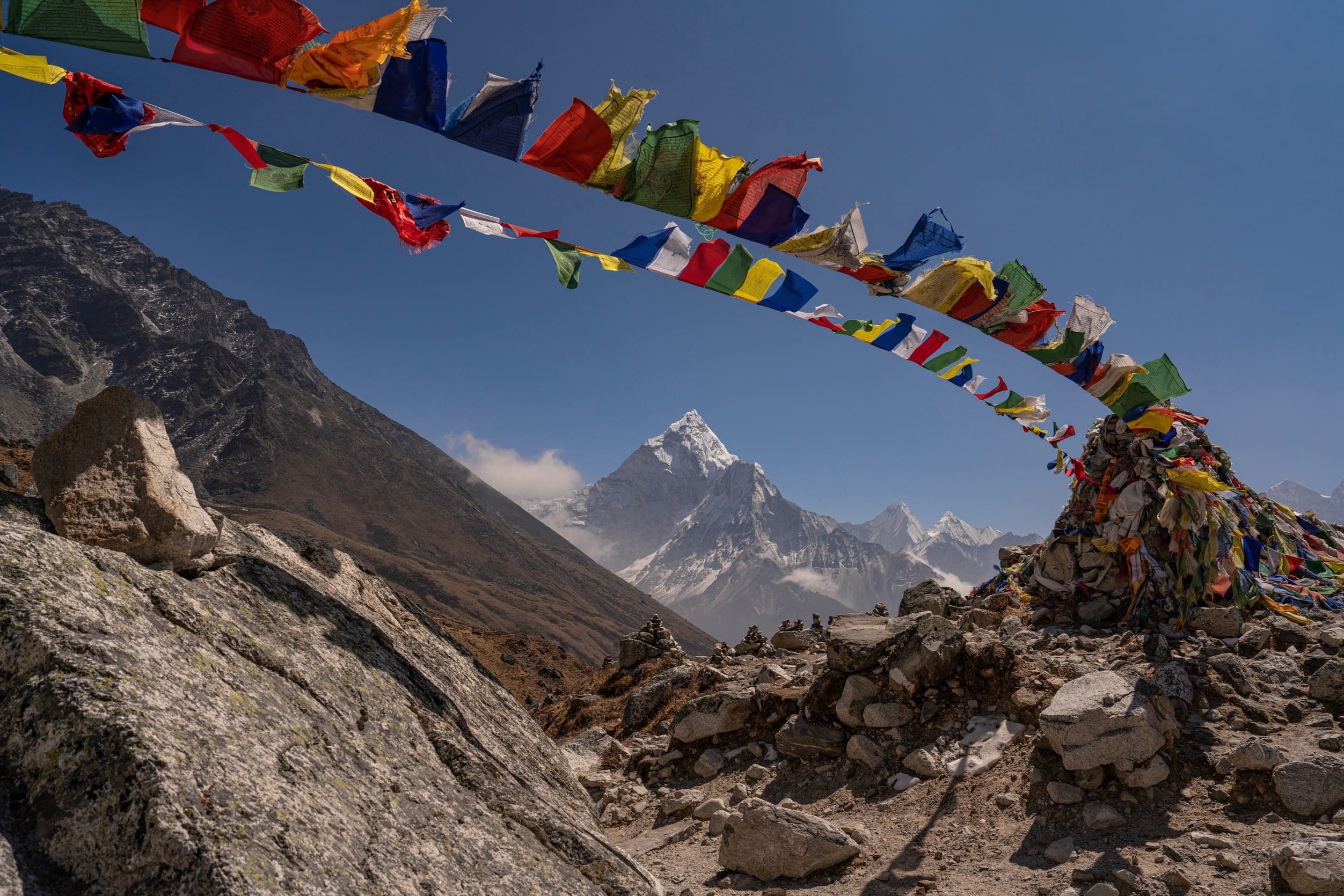
October is one of the best months of the year for mountain adventures. In Nepal, the post-monsoon season brings clear skies and stable weather, making it prime time for the Everest Base Camp trek, the Annapurna Circuit, trekking peaks such as Mera and Island Peak, and Ama Dablam, whose main climbing season runs from about October to November. Manaslu's climbing season is September to early October. Kilimanjaro is in its dry season from about late June to October, and Morocco's High Atlas, including Toubkal, has some of its most settled weather of the year. Two classics are not good October choices: Mont Blanc's main huts usually close in September and the normal route is out of season, and Aconcagua's season does not open until mid-November. Below is a guide to the best autumn objectives, from a first trek to a serious Himalayan climb, with what each involves and how to plan it.
| Adventure | Height | Type | Best autumn window | Typical length |
|---|---|---|---|---|
| Everest Base Camp trek | 5,364 m (Base Camp) | Trek | Late September–November | 12–14 days |
| Annapurna Circuit | 5,416 m (Thorong La) | Trek | October–November | 12–18 days |
| Kilimanjaro | 5,895 m | Trek | Late June–October | 6–9 days |
| Toubkal | 4,167 m | Trek/scramble | September–October | 2–3 days |
| Mera Peak | 6,476 m | Trekking peak | October–November | 16–19 days |
| Island Peak | 6,189 m | Trekking peak | October–November | 16–19 days |
| Ama Dablam | 6,812 m | Technical climb | October–November | 3–4 weeks |
| Manaslu | 8,163 m | 8,000 m expedition | September–early October | 5–6 weeks |
Why autumn is so good in the mountains
In the Himalaya, the monsoon usually ends in September. The rains wash the dust out of the air, and October brings some of the clearest skies of the year, with stable weather, warm days in the valleys and cold, crisp nights higher up. It is the busiest trekking season in Nepal for good reason. In East Africa, October is near the end of Kilimanjaro's long dry season, before the short rains arrive in November. And in North Africa, the summer heat fades, giving clear, comfortable days in the Atlas.
Autumn is not perfect everywhere. In the Alps, the main climbing season ends in September as huts close and snow arrives, and in the Andes, the main season for Aconcagua and many other peaks starts later, in the southern summer. Choosing the right mountain for the month makes all the difference.
1. Everest Base Camp trek, Nepal
The Everest Base Camp trek is the classic Himalayan trek and October is its finest month. The route starts with a flight to Lukla, then follows the Dudh Kosi valley through Sherpa villages, past monasteries and over swinging bridges to Namche Bazaar, the gateway to the Khumbu. From there it continues to Tengboche, Dingboche and Lobuche, with acclimatisation days on the way, before reaching Gorak Shep and Everest Base Camp at about 5,364 m. Many trekkers also climb Kala Patthar, at about 5,600 m, for the classic sunrise view of Everest.
Beyond Everest itself, the trek offers views of Lhotse, Nuptse, Ama Dablam, Makalu and Cho Oyu, and an insight into Sherpa culture in villages like Namche, Khumjung and Pangboche. The main challenge is altitude: follow a sensible itinerary with rest days, and know the signs of altitude sickness. October's popularity means busy lodges and trails, so book flights and lodges early. See our Everest Base Camp trek guides, the trek cost guide and how to choose an operator.
2. Annapurna Circuit, Nepal
The Annapurna Circuit is one of the great treks of the world, circling the Annapurna massif from the green, terraced lowlands of the Marsyangdi valley, through the dry, Tibetan-influenced villages of Manang, to the high pass of Thorong La at 5,416 m, and down to the pilgrimage town of Muktinath and the Kali Gandaki valley. In October, the views of Annapurna II, Gangapurna and Dhaulagiri are at their best, and the pass is usually free of deep snow.
Roads now reach much of the route, but alternative trails avoid most of them, and many trekkers end the trip with a walk up to Poon Hill or a stay in Pokhara. The crossing of Thorong La is a long, high day, so acclimatise well in Manang. See our Annapurna Circuit trek page.
3. Kilimanjaro, Tanzania
At 5,895 m, Kilimanjaro is the highest mountain in Africa and the highest free-standing mountain in the world. No technical skills are needed, but the altitude is serious. October falls in the long dry season, which typically runs from about late June to October, before the short rains of November. Expect clear mornings, dusty lower trails and cold summit nights.
The climb passes through several climate zones, from cultivated land and rainforest through heath and moorland to alpine desert and the glaciers near the summit. Kibo, the highest of its three volcanic cones, is dormant rather than extinct. Choose a route of at least seven days, such as the Lemosho or Machame route, for better acclimatisation and a higher chance of success. See the best Kilimanjaro route, the best time to climb, what it costs and the best Kilimanjaro guide companies.
4. Toubkal and the High Atlas, Morocco
For a short autumn trip, Morocco's High Atlas is hard to beat. In September and October, temperatures cool after the summer, the skies are clear and the walnut and apple harvests are under way in the valleys. Toubkal, at 4,167 m the highest mountain in North Africa, can be climbed in two or three days from the village of Imlil, a short drive from Marrakech. A licensed guide is required for foreign trekkers. Longer treks, such as the Toubkal Circuit, take five to seven days through remote Amazigh villages. See our Toubkal guide and High Atlas trek guide.
5. Mera Peak and Island Peak, Nepal
For trekkers ready to take a step towards mountaineering, Nepal's trekking peaks are ideal in October. Mera Peak, at 6,476 m, is one of the highest trekking peaks in Nepal, reached through the remote Hinku valley. Its summit is a non-technical glacier climb, with views of five 8,000 m peaks on a clear day: Everest, Lhotse, Makalu, Cho Oyu and Kangchenjunga. Island Peak (Imja Tse), at 6,189 m, is shorter but more technical, with fixed ropes up a steep headwall and a narrow summit ridge, and is often combined with the Everest Base Camp trek.
Both need basic mountaineering skills: crampons, an ice axe, jumaring and glacier travel. Most operators include a skills day before the summit. See our Mera Peak and Island Peak pages.
6. Ama Dablam, Nepal
Ama Dablam, at 6,812 m, is one of the most beautiful mountains in the world, and its main climbing season runs from about October to November. The standard Southwest Ridge is a genuine technical climb, with rock, mixed and ice climbing on fixed ropes, exposed camps and a steep final snow face to the summit. The name means "mother's necklace", after the hanging glacier that resembles a traditional pendant worn by Sherpa women.
The first ascent was made on 13 March 1961 by Mike Gill, Barry Bishop, Mike Ward and Wally Romanes, members of Sir Edmund Hillary's Silver Hut scientific expedition. Today, Ama Dablam is a popular objective for climbers preparing for 8,000 m peaks, but it is not a beginner's climb: you need solid experience on rock and ice at altitude. Recent seasons have also seen many rescues. See our Ama Dablam guides, how to choose an Ama Dablam operator and our report on rescues on Ama Dablam.
7. Manaslu, Nepal
Manaslu, at 8,163 m, the eighth-highest mountain in the world, is the most popular 8,000 m peak of the autumn season, with summits usually from late September to early October. Its standard route is less technical than Everest's, with fewer objective hazards than many 8,000 m peaks, though avalanches are a real risk. For many climbers, it is a first 8,000 m peak and a step towards Everest. Since 2021, climbers have also taken more care to reach the true summit rather than the lower foresummit. See our Manaslu guides, finding the true summits of the 8,000ers and what to climb before Everest.
For trekkers, the Manaslu Circuit is a quieter alternative to the Annapurna Circuit, crossing the Larkya La at about 5,100 m. A special restricted-area permit and a licensed guide are required. See our Manaslu Circuit trek guide.
What about Mont Blanc and Aconcagua in October?
Two famous peaks often appear on autumn lists, but they are not good October choices.
Mont Blanc (about 4,806–4,808 m, depending on the survey year), the highest mountain in the Alps, has a main season from about June to September. The Goûter and Tête Rousse huts on the normal route usually close in late September, and October brings shorter days, colder temperatures and fresh snow. Experienced alpinists do climb in autumn with qualified guides, but for most people it is a summer objective. See Mont Blanc guide.
Aconcagua (6,961 m), the highest mountain in the Americas, is climbed in the southern summer. Aconcagua Provincial Park's climbing season usually runs from mid-November to the end of March. In October, the mountain is in winter conditions, with extreme cold and wind and no support services on the mountain. If you are planning Aconcagua, autumn is the time to train and book for a December to February climb. See our Aconcagua guide.
How to choose your autumn adventure
The right objective depends on your experience, fitness and time. For a first big trip, Kilimanjaro, the Everest Base Camp trek and the Annapurna Circuit are excellent choices, with no technical skills needed but serious altitude. For a short break, Toubkal fits into a long weekend from Europe. For those ready to learn mountaineering skills, Mera Peak and Island Peak are the next step. Ama Dablam and Manaslu are for experienced climbers with proven skills at altitude.
Whichever you choose, the essentials are the same: train for several months, choose an operator with a good safety record and verified reviews, plan a sensible acclimatisation schedule, and get insurance that covers the altitude and activity. See our mountaineering training guide and acute mountain sickness.
Packing for autumn in the mountains
Autumn weather in the high mountains swings between extremes. On the Everest trek, you may walk in a T-shirt in the morning sun at Namche and be wrapped in down at Gorak Shep the same evening, with night temperatures well below freezing. On Kilimanjaro, the dry season means dusty lower trails and bitterly cold, often windy summit nights. In the High Atlas, days are warm and nights are cool, with snow possible on the summits by late October.
Pack layers that cover the full range: a base layer, a fleece or light insulated jacket, a warm down jacket, a waterproof shell, warm hat and gloves, sun hat and sunglasses, and high-factor sunscreen, because the sun at altitude is strong even when the air is cold. A good sleeping bag rated well below freezing makes a big difference in lodges and tents. For climbs such as Ama Dablam and Manaslu, your operator will provide a detailed technical kit list. See how to choose mountaineering boots.
Booking for October
October is peak season in Nepal and busy on Kilimanjaro, so book early. Flights to Lukla and lodges on the Everest trek fill up months ahead, and the best operators' departures sell out. For Ama Dablam and Manaslu, book six to twelve months ahead to allow time for training and preparation. For Kilimanjaro, check your route's camp availability and park fees, which your operator handles.
Frequently asked questions
What are the best mountains to climb in October?
Kilimanjaro, Ama Dablam, Manaslu (early October), Mera Peak, Island Peak and Toubkal. For trekkers, the Everest Base Camp trek and the Annapurna Circuit.
Is October a good time for the Everest Base Camp trek?
Yes. It is one of the best months, with clear skies and stable weather, though trails are busy.
Can you climb Mont Blanc in October?
It is out of season. The main huts on the normal route usually close in late September, and conditions are colder and snowier.
Can you climb Aconcagua in October?
No, not in the normal season. Aconcagua's climbing season usually runs from mid-November to the end of March.
Is October a good time to climb Kilimanjaro?
Yes. October falls in the dry season, which usually runs from late June to October.
When is the Ama Dablam season?
The main season is from about October to November.
Which autumn adventure is best for beginners?
The Everest Base Camp trek, the Annapurna Circuit, Kilimanjaro and Toubkal need no technical skills.
Tags: autumn-climbing, kilimanjaro, mont-blanc, aconcagua, ama-dablam, everest-base-camp