True Summits of the 8,000ers: Fore-Summits, Tolerance Zones and Who Really Climbed All 14
By Blake Penson · October 26, 2021
Category: seven-summits
8 min read
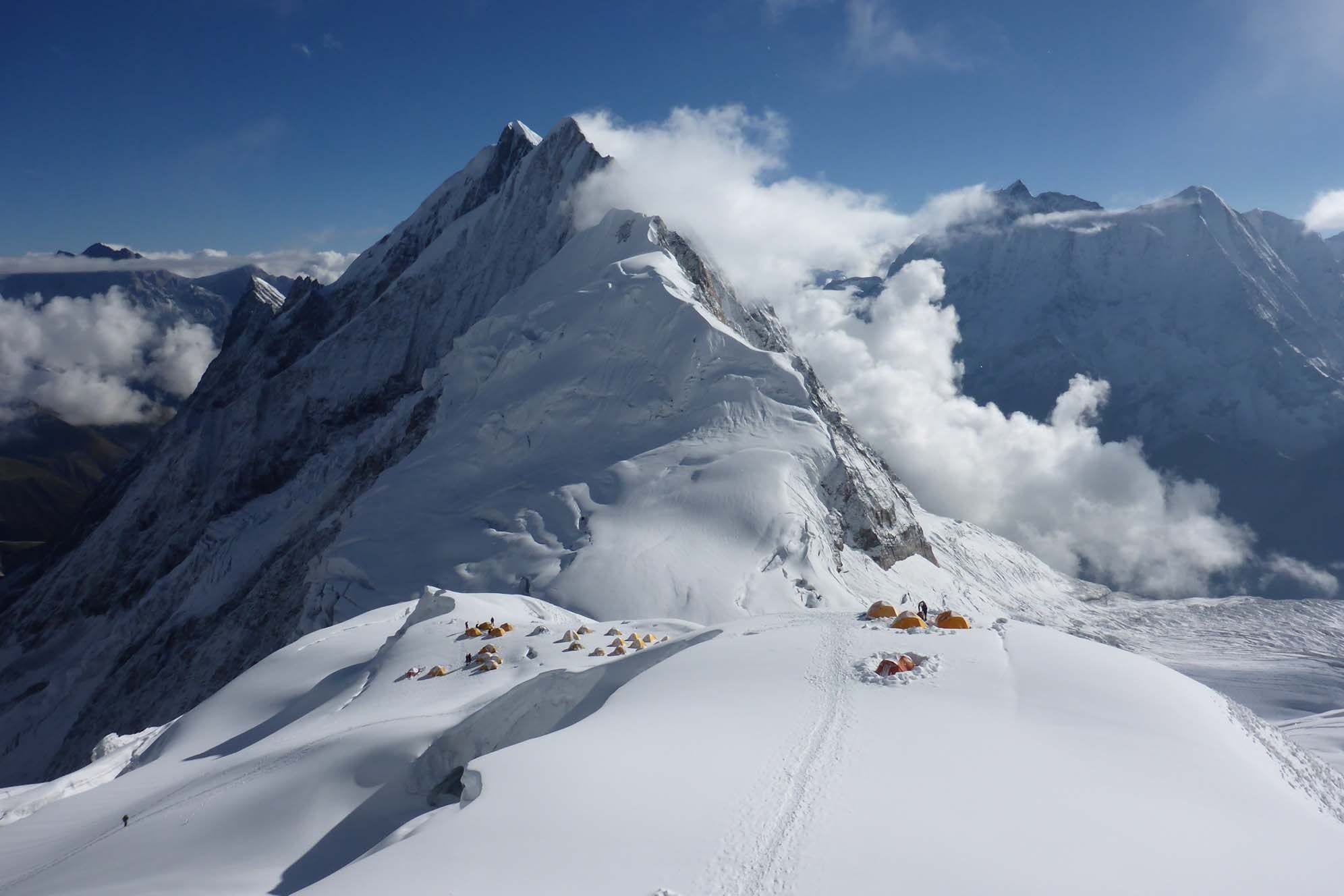
Several of the world's 14 eight-thousanders have summits that are hard to identify, and research has shown that many climbers, including some famous names, stopped on lower points such as fore-summits or ridge bumps instead of the true highest point. The issue was brought into the open by German chronicler Eberhard Jurgalski and his team at 8000ers.com, who studied summit photos, video and GPS data for years. In 2021, 44 people were credited with climbing all 14 eight-thousanders; after the research, Jurgalski's team said only three could be confirmed on all 14 true summits: Ed Viesturs, Veikka Gustafsson and Nirmal Purja. The peaks with the most problems are Manaslu, Annapurna I and Dhaulagiri I, with further questions on Shishapangma, Broad Peak and Cho Oyu. The research also proposed "summit zones of tolerance", so that history could account for genuinely uncertain topography.
| Fact | Detail |
|---|---|
| Research led by | Eberhard Jurgalski and colleagues at 8000ers.com |
| Method | Summit photos, video, GPS, satellite imagery and climber accounts |
| Problem peaks | Manaslu, Annapurna I, Dhaulagiri I (main); Shishapangma, Broad Peak, Cho Oyu (others) |
| 14 x 8,000 m claimants in 2021 | 44 |
| Confirmed on all 14 true summits (2022 research update) | Ed Viesturs, Veikka Gustafsson, Nirmal Purja |
| Proposed solution | "Summit zones of tolerance" and separate lists |
| Why it matters | Records, firsts, national histories and personal honesty |
What is a "true summit"?
A true summit is the single highest point of a mountain. On a classic pyramid peak, it is obvious. On many 8,000 m peaks, however, the top is a long ridge, a broad plateau or a corniced crest with several high points that look similar, especially in cloud, wind or the dark.
Other common terms:
- Fore-summit: A lower high point on the route before the main summit. Climbers sometimes mistake it for the top or turn around there.
- Sub-summit or central summit: A distinct, slightly lower top on the same massif.
- Summit zone of tolerance: A proposed area close to the true summit, within which a climber could be credited because the topography makes the precise high point uncertain or dangerous to reach.
How the issue came to light
Eberhard Jurgalski has spent decades chronicling ascents of the 8,000 m peaks. Working with researchers including Rodolphe Popier, Tobia Bossi, Damien Gildea and others, he compared climbers' summit photos with those of earlier expeditions, panoramas and satellite data.
The research began on Manaslu, where photos from many expeditions showed climbers standing below a further rise on the ridge. The terrain did not match the photos from the first ascent in 1956. As social media and phone cameras made more summit images available, the team found similar patterns on other peaks.
In 2021, the findings received wide coverage in the New York Times and other outlets. The researchers said that of the 44 people credited with all 14 eight-thousanders, possibly none, or only a handful, had stood on every true summit. Their later research confirmed three.
The problem peaks
| Peak | Height | The problem |
|---|---|---|
| Manaslu | 8,163 m | A narrow, corniced summit ridge; many climbers stopped at a lower point before the true top |
| Annapurna I | 8,091 m | A long, complex summit ridge with several high points |
| Dhaulagiri I | 8,167 m | A summit ridge with several bumps and a cornice; many claims lack clear evidence |
| Shishapangma | 8,027 m | A central summit (about 8,008 m) is often reached instead of the main summit, which requires an exposed ridge traverse |
| Broad Peak | 8,051 m | A fore-summit at the end of the summit ridge; the main top is further along the crest |
| Cho Oyu | 8,188 m | A huge summit plateau where the highest point is hard to identify |
Manaslu
On Manaslu, the final ridge is narrow and often corniced. Many commercial teams historically stopped at a point below the true summit, sometimes because fixed ropes ended there. In recent seasons, operators and Sherpa teams have increasingly fixed ropes to the true summit. The research found that of the 14 x 8,000 m claimants, only a small number had stood on Manaslu's true top, including Reinhold Messner, Erhard Loretan, Krzysztof Wielicki, Ed Viesturs, Veikka Gustafsson, Denis Urubko, Mingma David Sherpa and Nirmal Purja.
Annapurna I and Dhaulagiri I
Both have long summit ridges where the highest point is not obvious. On Dhaulagiri I, the researchers said they still needed evidence for around half of the summit claims at the time of their update. Ed Viesturs and Veikka Gustafsson's Dhaulagiri ascents were confirmed only after further research, which is what made them the first two people confirmed on all 14 true summits.
Shishapangma
Shishapangma has a central summit and a slightly higher main summit. Reaching the main summit from the central summit requires a narrow and exposed ridge traverse, and many climbers have stopped at the central top. Most summit lists now distinguish between the two.
Broad Peak and Cho Oyu
On Broad Peak, the route reaches a fore-summit at the end of the ridge, and the main summit is further along the crest. Tired climbers sometimes stop at the fore-summit, especially in poor weather. On Cho Oyu, the summit is a broad plateau; the highest point is some distance across it, often marked by the view of Everest.
Summit zones of tolerance
Rather than strip climbers of ascents for stopping a few metres short, the researchers proposed "summit zones of tolerance". The idea is that, on mountains with uncertain or dangerous tops, an area close to the true summit could still count. Jurgalski also suggested two lists: a general list of those who reached a point within the tolerance zone, and an elite list of those proven to have stood on the true highest point.
This raised difficult questions. Should historic ascents be changed decades later? How close is close enough? The International Climbing and Mountaineering Federation (UIAA) looked into the issue, and some climbers corrected their own records. German climber Ralf Dujmovits, for example, publicly acknowledged that he had not reached the true summit of one of his 14 peaks.
Who has climbed all 14 true summits?
According to the 2022 research update from 8000ers.com:
- Ed Viesturs (USA) was confirmed as the first person on all 14 true summits, without supplementary oxygen.
- Veikka Gustafsson (Finland) was confirmed second, also without supplementary oxygen.
- Nirmal Purja (Nepal/UK) was confirmed third. The research found that during his 2019 Project Possible he had reached sub-summits on Manaslu and Dhaulagiri, and that he completed the true summits on follow-up climbs in 2021.
Since then, more climbers have gone back to correct earlier ascents or deliberately sought out true summits, and the lists continue to change. For up-to-date records, see 8000ers.com and the Himalayan Database. ExpedReview's guides to climbing the 14 eight-thousanders and to Kristin Harila's record cover the wider story.
A special case: Kangchenjunga
Kangchenjunga (8,586 m) shows that "reaching the summit" has never been a purely technical question. On the first ascent in 1955, Joe Brown and George Band stopped just short of the highest point, honouring a promise made to the Maharaja of Sikkim that the summit itself would be left untouched, because the mountain is sacred. Many climbers have since followed the same tradition and stop a short distance below the very top. Summit lists accept these ascents, because the climbers reached the summit area and chose not to tread on the highest point. See ExpedReview's Kangchenjunga page.
What good summit evidence looks like
| Evidence | What it shows |
|---|---|
| Panoramic photo or video from the high point | The view in every direction can be matched to known summit panoramas |
| Photo looking along the ridge | Shows that there is no higher ground ahead |
| GPS waypoint or track | Records location and approximate altitude |
| Photos of known landmarks | Helps researchers fix your position |
| Timestamped images | Confirms when you were there |
| Statements from teammates and guides | Supports the record, especially if visibility was poor |
No single item is perfect. Altitude readings from GPS devices are often inaccurate by tens of metres, and cloud can hide everything. The best evidence combines several of these, and researchers increasingly ask climbers for original, unedited files.
Why true summits matter
- Records and firsts. National firsts, women's firsts, winter firsts and speed records all depend on accurate summit data.
- Honesty and trust. Mountaineering has long relied on climbers' word. Better evidence protects honest climbers too.
- Safety. On some peaks, the extra distance to the true summit is exposed and dangerous. Knowing this in advance helps climbers and guides decide what they are willing to do.
- Value for clients. People paying for a guided expedition should know whether their operator plans to fix ropes and guide to the true summit.
How to make sure you reach the true summit
- Research your peak's summit topography before the expedition. Look at photos of the true summit from reliable sources.
- Ask your operator whether they fix ropes to the true summit and what their policy is if conditions prevent it.
- Carry a GPS device or phone with GPS and take a waypoint at your high point.
- Take clear summit photos and video showing the view in several directions, including known landmarks.
- Do not rely on prayer flags or fixed rope ends, which may not mark the highest point.
- Be honest. If you stop short, record it accurately. Many climbers now go back to complete a true summit.
What it means for climbers on commercial expeditions
On the most popular 8,000 m peaks today, many operators have changed their approach. Teams increasingly fix rope to the true summits of Manaslu and other problem peaks, and some publish summit photos as evidence. When choosing an expedition, read verified client reviews and ask specific questions about summit policy. ExpedReview's Manaslu rankings, Dhaulagiri I page, Annapurna I page and Broad Peak page list operators ranked by verified reviews, and the Manaslu region page covers the wider area.
Frequently asked questions
What is a false summit?
A high point that looks like the top of a mountain but is not the highest point. Climbers may reach it before realising there is more ground to cover, or mistake it for the summit.
Who has climbed all 14 8,000ers to the true summit?
According to the 2022 research by 8000ers.com, Ed Viesturs, Veikka Gustafsson and Nirmal Purja were the first three people confirmed on all 14 true summits.
Who is Eberhard Jurgalski?
A German chronicler of Himalayan climbing who runs 8000ers.com and led the research into true summits on the 8,000 m peaks.
Why is Manaslu's summit controversial?
Its final ridge is narrow and corniced, and for years many climbers stopped at a lower point before the true summit.
What is the central summit of Shishapangma?
A slightly lower top, at about 8,008 m, reached before the main summit at 8,027 m. Reaching the main summit requires an exposed ridge traverse.
Does Broad Peak have a false summit?
Yes. The route reaches a fore-summit before the main summit, which lies further along the summit ridge.
Did Nirmal Purja climb all 14 true summits?
According to 8000ers.com research, he reached sub-summits on Manaslu and Dhaulagiri during Project Possible in 2019 and later climbed the true summits in 2021.
What is a summit zone of tolerance?
A proposed area close to the true summit within which an ascent could be credited, because the exact highest point is uncertain or dangerous to reach.
How many people have climbed all 14 8,000 m peaks?
It depends on how strictly true summits are counted. In 2021, 44 people were credited; research then confirmed only three on all true summits, and the number has grown since as climbers have corrected their ascents.
Do climbers stand on the summit of Kangchenjunga?
By tradition, many stop just below the highest point out of respect for the mountain's sacred status, following the example of the first ascent in 1955.
How can I prove I reached the true summit?
Take panoramic photos and video from your high point, a photo along the ridge showing there is no higher ground, and a GPS waypoint, and keep the original files.
Tags: 8000ers, true-summit, dhaulagiri, manaslu, annapurna, kangchenjunga