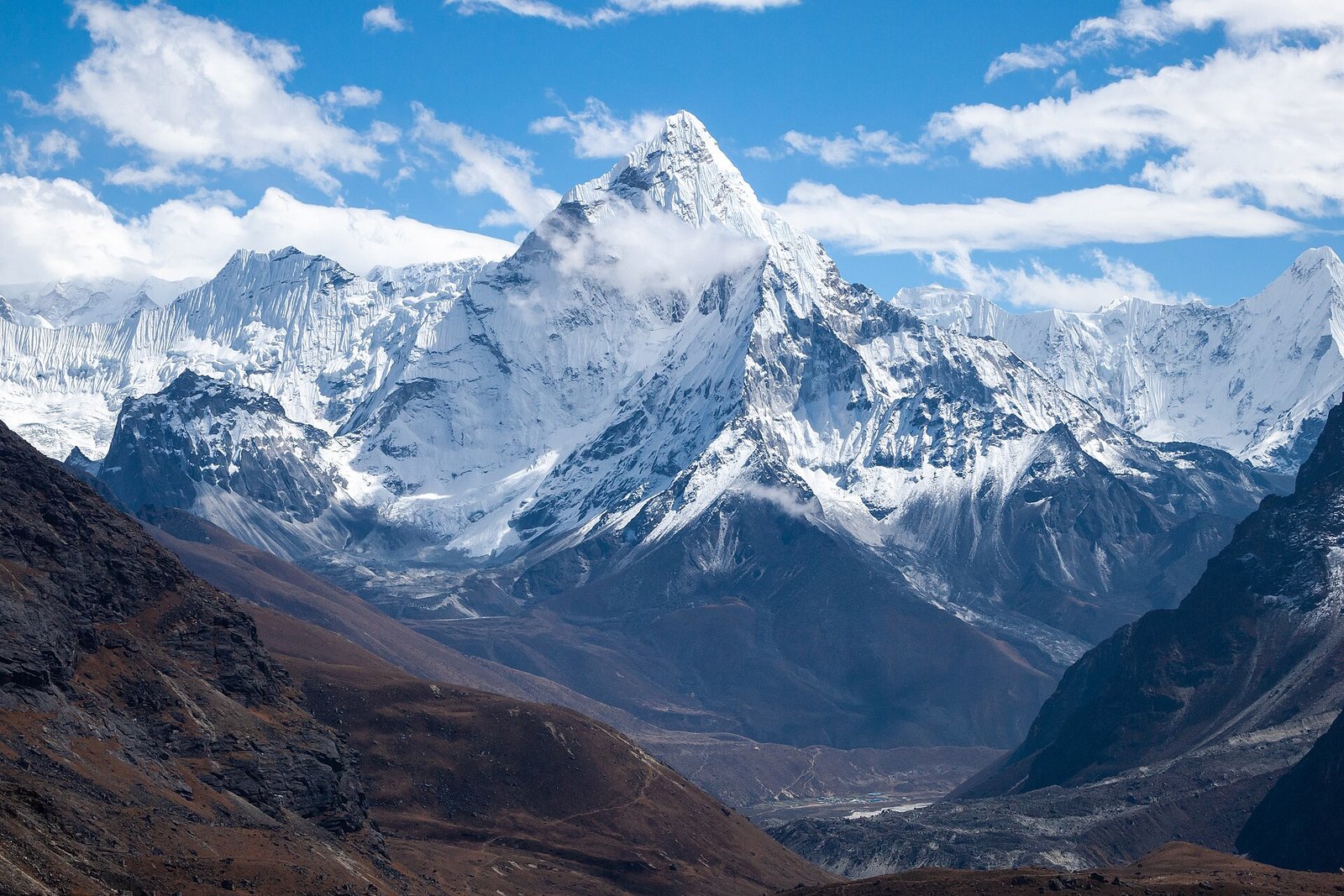
Ama Dablam Climbing Guide: Route, Camps, Season, Cost and Choosing an Operator
Ama Dablam (6,812 m) in Nepal's Khumbu is the most popular technical expedition peak in Nepal: a steep climb of the south-west ridge on rock, snow and ice, on fixed lines, with small exposed camps, usually done in about three to four weeks in autumn or spring. It is not a first mountain, and it has a record of helicopter rescues from the upper camps, so the climb rewards careful preparation and a careful choice of operator: the strength of the guide and Sherpa team, the acclimatisation plan, the experience the operator requires and the rescue plan matter more than the brochure. Since September 2025, Nepal requires at least one licensed mountain guide on every expedition to a peak below 8,000 m, and the royalty for foreign climbers is US$1,000 in spring and autumn. For the operators with the best verified client reviews, ranked one by one with prices, see our best Ama Dablam operators page; for the live ranking, see the Ama Dablam page. Below are the route, camps, season, cost and the questions to ask before you book.
Ama Dablam: key facts | | | |---|---| | Height | 6,812 m (22,349 ft) | | Location | Khumbu, Sagarmatha National Park, Nepal, above Pangboche | | First ascent | 13 March 1961, Mike Gill, Barry Bishop, Mike Ward and Wally Romanes | | Standard route | South-west ridge, fixed lines on rock, snow and ice | | Camps | Base camp about 4,600 m; Camp 1 about 5,700–5,800 m; Camp 2 about 5,900–6,000 m; Camp 3 about 6,300 m | | Typical expedition | About 3–4 weeks from Kathmandu | | Seasons | Autumn (October–November), spring (April–May) | | Nepal rules | At least one licensed mountain guide per sub-8,000 m expedition, since September 2025; royalty US$1,000 per foreign climber in spring and autumn |
The route
Most expeditions fly to Lukla and trek up the Khumbu for about a week, via Namche Bazaar and Tengboche, to Pangboche, then climb to base camp, a broad meadow at about 4,600 m below the south-west ridge. From base camp, a trail climbs grassy slopes and boulder fields to Camp 1 on slabs at about 5,700–5,800 m. Above Camp 1, the route follows the narrowing ridge, with exposed traverses and rock steps, to the Yellow Tower, a short, steep rock pitch that is the technical crux for many climbers, and Camp 2, perched on small platforms among the rocks. From Camp 2, the route climbs the Grey Tower, a steep mixed section, and the exposed Mushroom Ridge, a crest of snow and ice, to Camp 3 below the hanging glacier. Summit day climbs steep snow and ice slopes beside the Dablam to the summit, then returns by the same route with a long series of abseils. The whole route above base camp is on fixed lines, set each season by Sherpa teams.
Who to climb with
We do not repeat the operator ranking here. Our best Ama Dablam operators page profiles each reviewed operator, with prices and what clients say, and the Ama Dablam page shows the current ranking from verified ExpedReview reviews. This page covers what to look for and what to ask, whichever operator you are considering. Five points matter most.
1. Guide and climbing Sherpa ratio
Since September 2025, Nepal's rules require every expedition to a peak below 8,000 m to take at least one licensed mountain guide (Nepal News). That is a minimum for the team, not a ratio. On Ama Dablam, the number that matters is how many climbers each guide or climbing Sherpa looks after above base camp, and especially on summit day. A one-to-one Sherpa ratio on summit day costs more but gives you someone to manage your rope transitions, carry spare gear and turn you around if needed. Ask for the ratio as a number, and ask whether the Western or Nepali lead guide has summited Ama Dablam before, and how many times.
2. Acclimatisation plan
Ama Dablam's camps are small and steep, and many of the rescues from Camp 3 in recent seasons have involved altitude illness as well as exhaustion and frostbite; our article on why there are so many rescues on Ama Dablam explains the pattern. Ask how you will acclimatise: the trek in through the Khumbu, any warm-up peak, the number of nights at base camp, and the rotations to Camp 1 and Camp 2 before the summit push. Several reviewers mention climbing Lobuche East first, and many good operators use it or a similar peak to acclimatise; see our Lobuche page. Be wary of short itineraries sold as an add-on to a trek, which leave little margin for a slow acclimatiser or bad weather.
3. What experience they require
Ama Dablam is not a first mountain. The south-west ridge involves steep rock steps such as the Yellow Tower and the Grey Tower, exposed ridges and steep snow and ice on the summit slopes, all on fixed lines, with many abseils on the descent. You should be confident with crampons on steep ground, using a jumar on fixed lines, abseiling and changing over at anchors in gloves, and moving on exposed rock at altitude. Ask what experience the operator expects, whether it checks it, and whether there is skills training at base camp. An operator that accepts you without asking what you have climbed is not doing you a favour.
4. Camps and summit day
Ama Dablam's camps are cramped platforms on the ridge. Camp 1 sits at about 5,700 to 5,800 m, Camp 2 is perched among the rocks near the Yellow Tower at about 5,900 to 6,000 m, and Camp 3 is on an exposed shoulder at about 6,300 m below the hanging glacier, the Dablam. In November 2006, an ice avalanche from the Dablam swept Camp 3 and killed six climbers, and since then most teams have placed Camp 3 in a more protected position, while many go to the summit directly from Camp 2. Ask which camps you will use, who carries and pitches the tents, what food is provided at each camp, the plan for summit day, and the turnaround time. Past clients often mention camp comfort and food in their reviews, so they matter.
5. Track record and rescue plan
Ask for the operator's Ama Dablam results over several seasons, including how many clients summited and how many were evacuated, and compare them with The Himalayan Database. Ask how a sick or injured climber would get down from Camp 2 or Camp 3: there is no safe helicopter landing at Camp 3, so evacuations from there often need long-line operations, which depend on the weather. Check that your insurance explicitly covers mountaineering on a 6,812 m peak, helicopter search and rescue, long-line operations and medical evacuation, and give the operator the details before you go.
Questions to ask every operator
Put the same questions to every operator on your shortlist, in writing, and compare the answers. What is the climber-to-guide and climber-to-Sherpa ratio above base camp and on summit day? Who leads the expedition, and how many times have they climbed Ama Dablam? What is the acclimatisation plan, including any warm-up peak and the number of rotations? What experience do you require, and how do you check it? Which camps do you use, and where is Camp 3? What is the turnaround time on summit day? How many clients summited and how many were evacuated in each of the last three seasons? What is the rescue plan, and what insurance do you require? What exactly is included in the price, including the permit, tips and oxygen if used?
Red flags
None of these proves an operator is unsafe, but each is a reason to stop and ask more questions. No answer on the guide ratio above base camp: "experienced Sherpas" is not a number. No questions about your experience: an operator that accepts you without asking what you have climbed. A summit success figure with no definition: ask whether it counts everyone who signed up or only those who started the summit push. A vague rescue plan, with no plain answer on how a climber would be brought down from the higher camps. A very short itinerary that relies on a trek for acclimatisation without rotations on the mountain.
Why Ama Dablam is special
Ama Dablam rises above Pangboche in the Khumbu, and its shape, often compared to a mother's arms with the hanging glacier as the traditional pendant, the dablam, makes it one of the most recognisable mountains in the world. It was first climbed on 13 March 1961 by Mike Gill, Barry Bishop, Mike Ward and Wally Romanes, members of Edmund Hillary's Silver Hut scientific expedition. Today it is the most popular technical expedition peak in Nepal, and many climbers use it as a step between trekking peaks and the 8,000 m peaks. That popularity is also why choosing an operator matters: base camp is busy in autumn, and the fixed lines and small camps can be crowded.
How price fits in
Listed prices for Ama Dablam vary by several thousand dollars between operators; see the best Ama Dablam operators page for current prices. Prices vary with the size of the team, the guide and Sherpa ratio, whether a Western guide leads, whether oxygen is used, and how long the itinerary is. Since 1 September 2025, Nepal's royalty for Ama Dablam has been US$1,000 per foreign climber in spring and autumn. Check whether the price includes the permit, flights to Lukla, trekking lodges, base camp food and tents, the Sherpa summit bonus and tips, which can add up. A cheaper trip with a lower Sherpa ratio and a shorter schedule is not good value if it lowers your chance of a safe summit.
When to go
Most Ama Dablam expeditions run in autumn, from October to November, when the weather is usually settled and the base camp is busy. Spring, from April to May, sees fewer expeditions and is popular with climbers combining Ama Dablam with other Khumbu climbs. Late autumn brings cold and wind high on the mountain, which contributes to frostbite on summit day. Autumn base camp can hold many teams, so ask your operator how they manage crowding on the fixed lines.
Local operator or international company?
Operators on Ama Dablam include UK, European and US companies and Nepali operators. International companies usually work with a Nepali partner for permits and Sherpa staff, and often add a Western leader, a smaller team and more pre-trip support at a higher price. Nepali operators are usually cheaper and employ their staff directly, but standards vary widely. Whichever you choose, ask who the Nepali partner is, who will actually lead the team on the mountain, and read reviews from recent seasons.
Preparing yourself
The best operator cannot climb the mountain for you. Train for months, with long days carrying a pack uphill, strength and endurance work and, if you can, days on steep rock and on fixed lines in the cold. Practise abseiling and jumaring with big gloves until it is automatic, as tired climbers fumbling transitions on the descent are part of the reason for the rescues. A good operator will ask about your fitness and experience, give you a training plan and kit list, and tell you honestly if you are not ready.
How we built this page
The rules, royalty and history on this page are linked to their sources or are standard published facts. Operator rankings, reviews and prices are kept on the best Ama Dablam operators page and the Ama Dablam page, so that they stay current in one place. No operator paid to appear on this page.
Frequently asked questions
Who is the best guide for Ama Dablam?
There is no single best operator for every climber. See our best Ama Dablam operators page for the operators with the best verified reviews, and use the questions on this page to compare them.
How much does an Ama Dablam expedition cost?
Prices vary by several thousand dollars between operators, depending on the team size, Sherpa ratio, leadership and itinerary. The Nepal royalty is US$1,000 per foreign climber in spring and autumn.
What experience do I need for Ama Dablam?
You should be confident on fixed lines, with crampons on steep ground, at abseiling and on exposed rock at altitude. Most climbers have climbed several high peaks before.
Do I need a guide for Ama Dablam?
Since September 2025, Nepal requires every expedition to a peak below 8,000 m to include at least one licensed mountain guide.
Why are there so many rescues on Ama Dablam?
Rescues, mostly from Camp 3, have been linked to poor acclimatisation, limited skills, crowding and cold. A good acclimatisation plan, a strong Sherpa ratio and solid preparation reduce the risk.
Related articles
- How to choose a guide
- Best operators
- How Dangerous Is Ama Dablam? Deaths, Hazards and How to Reduce the Risk
Ama Dablam's recorded deaths and summits, why it is technical rather than high, permit fees and the operators verified climbers rate.
- Best Ama Dablam Operators 2027: Ranked by Verified Climber Reviews (US$300 to US$1,000)
The best Ama Dablam expedition operators for 2027, ranked only by verified climber reviews.
- Ama Dablam Rescues: Why So Many Climbers Are Airlifted from Camp 3, Deaths, Risks and How to Prepare
Why Ama Dablam (6,812 m) sees so many helicopter rescues, especially from Camp 3.