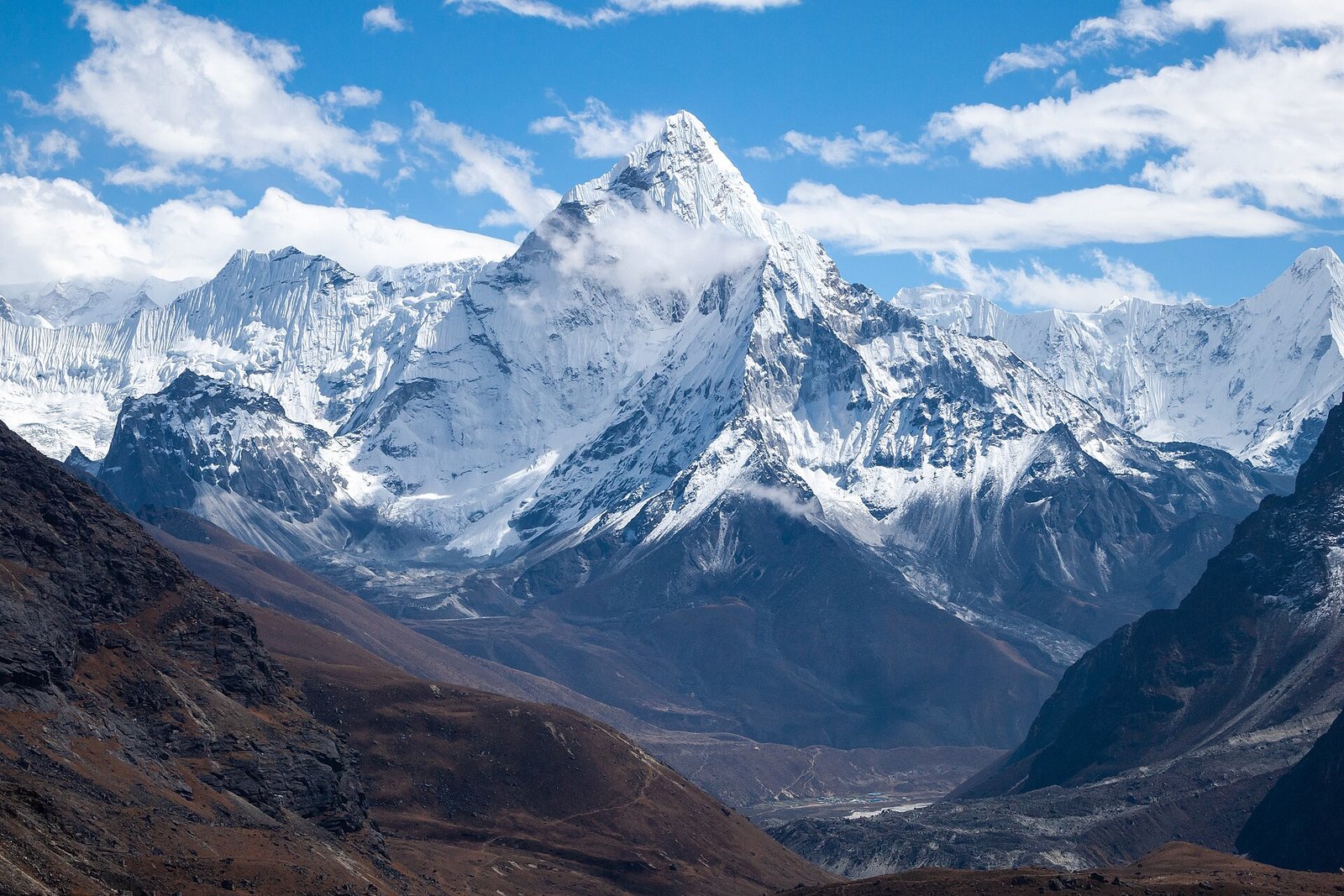
How Dangerous Is Ama Dablam? Deaths, Hazards and How to Reduce the Risk
Ama Dablam is a serious technical climb, but by the numbers it is less deadly than the big 8,000 m peaks. The Himalayan Database records 35 deaths against 6,765 summits on Ama Dablam, about 0.5 deaths per 100 summits, compared with about 2.8 on Manaslu and 1.3 on Cho Oyu. Its risks are technical and objective rather than extreme altitude: sustained climbing on steep rock, snow and ice on the Southwest Ridge, exposed camps, rockfall, and ice falling from the hanging glacier known as the Dablam. In November 2006, a serac collapse from the Dablam swept away Camp 3 and killed six climbers. On ExpedReview, as of 23 October 2026, 8 operators have 31 verified reviews for Ama Dablam, and Tim Mosedale has the most, with 16 five-star reviews. Below are the rankings, then the hazards and how to reduce them.
| Summit | 6,812 m |
| Recorded deaths | 35 (Himalayan Database) |
| Recorded summits | 6,765 (Himalayan Database) |
| Deaths per 100 summits | About 0.5 (derived from Himalayan Database) |
| Normal route | Southwest Ridge |
| Main hazards | Falls, rockfall, serac and ice fall, altitude, cold |
| Worst disaster | Serac collapse at Camp 3, 13 November 2006 |
| Best seasons | Autumn (October–November) and spring |
| ER operators with reviews | 8, with 31 reviews (as of 23 Oct 2026) |
Ama Dablam operators with verified reviews
ExpedReview ranks operators by their verified client reviews for each place: the star rating, adjusted so one or two reviews, or only old ones, count for less than many recent ones. Every review is checked by hand before it is published, critical reviews stay up, and operators cannot pay to appear or rank higher. Prices are the operators' own guide-listed "from" prices, not quotes. Data as of 23 October 2026: 8 operators with 31 verified reviews for Ama Dablam.
| Rank | Operator | Rating here | Reviews | Latest review | Guide-listed price |
|---|---|---|---|---|---|
| 1 | Tim Mosedale | 5.0★ | 16 | January 2023 | No recent price listed |
| 2 | Furtenbach Adventures | 4.9★ | 5 | March 2026 | From US$13,968 |
| 3 | Summitclimb | 4.8★ | 3 | February 2026 | From US$6,850 |
| 4 | 360 Expeditions | 5.0★ | 2 | March 2021 | No recent price listed |
| 5 | Elite Exped | 5.0★ | 2 | November 2021 | No recent price listed |
| 6 | Summit8000 | 5.0★ | 1 | September 2026 | No recent price listed |
| 7 | Madison Mountaineering | 5.0★ | 1 | November 2022 | No recent price listed |
| 8 | Seven Summit Treks | 4.8★ | 1 | May 2022 | No recent price listed |
What clients say
A Summit8000 client who climbed in May 2026 said the guides and Sherpa team were "experienced, friendly, and always there when we needed them". A Furtenbach Adventures client (March 2026) praised "solid and transparent decision making" and "exceptional camp facilities", and said they "always felt safe on the summit push". Summitclimb clients describe a seamless Lobuche and Ama Dablam trip (February 2026) and "extremely skilled" Sherpas (November 2023). Tim Mosedale has the most reviews, all five-star, with one client calling him "the best Expedition Leader I have been with in 20+ years", though his latest Ama Dablam review is from January 2023.
How Ama Dablam compares on risk
| Peak | Deaths | Summits | Deaths per 100 summits (derived) |
|---|---|---|---|
| Ama Dablam | 35 | 6,765 | 0.52 |
| Cho Oyu | 52 | 4,056 | 1.28 |
| Manaslu | 90 | 3,238 | 2.78 |
Source: Himalayan Database. Ratios describe past expeditions, not your personal odds.
Ama Dablam's lower death rate partly reflects its lower altitude: at 6,812 m, it is about 2,000 m lower than Everest, so climbers spend much less time in very thin air. But the mountain is more technical than the normal routes on Everest, Manaslu or Cho Oyu, and falls and objective hazards are its main killers.
The route and where the dangers are
The normal route on Ama Dablam is the Southwest Ridge, first climbed on 13 March 1961 by Mike Gill, Barry Bishop, Mike Ward and Wally Romanes, members of Edmund Hillary's Silver Hut expedition. Climbers start from base camp at about 4,600 m, above the village of Pangboche in the Khumbu.
Base camp to Camp 1. A long walk over grass and moraine leads to boulder fields and slabs, then Camp 1 at about 5,800 m. Camp 1 is on a rocky shoulder, and tent platforms are small.
Camp 1 to Camp 2. The ridge narrows and becomes steep rock climbing on fixed ropes, with exposed traverses and the Yellow Tower, a short, steep rock step near Camp 2. Camp 2, at about 5,900–6,000 m, is perched on tiny platforms with large drops on either side. Falls and rockfall are the main dangers here.
Camp 2 to Camp 3. Above Camp 2, the route becomes mixed rock, snow and ice, including the Grey Tower and the Mushroom Ridge, a corniced snow arête. Camp 3, at about 6,300 m, is below the Dablam, a hanging glacier on the summit face.
Camp 3 to the summit. Climbers follow steep snow and ice slopes to the left of the Dablam to the summit. Many teams now skip sleeping at Camp 3, because of the serac danger, and go to the summit from Camp 2.
The main hazards
Falls. The route is steep and exposed for much of its length, and climbers rely on fixed ropes. A mistake while clipping in, abseiling or moving between ropes can be fatal. Old or damaged fixed ropes are also a risk.
Rockfall. Loose rock is common on the lower ridge, especially when several teams are climbing above one another. Climbers in camps and on ropes below are exposed.
Serac and ice fall. The Dablam can shed ice onto the upper route and the area around Camp 3. On 13 November 2006, a serac collapse destroyed Camp 3 and killed six climbers, three European climbers and three Sherpas. Since then, many operators have moved or avoided Camp 3.
Altitude. At 6,812 m, altitude illness is still a real risk, especially for climbers who have not acclimatised well.
Cold and wind. Autumn climbs often end in November, when winds and cold rise. Frostbite is a risk on summit day.
Crowding. Ama Dablam has become very popular, and busy seasons can bring queues on the fixed ropes, more rockfall from teams above and crowded camps.
The skills you need
Ama Dablam demands more technical skill than most climbers' first big Himalayan peak. Fitness for altitude matters, but rope skills matter more than on the normal routes of Everest, Manaslu or Cho Oyu. Before you go, you should be confident:
- Climbing steep rock in mountaineering boots, roughly to the standard of easy Alpine rock routes.
- Using an ascender, also called a jumar, on steep fixed ropes for hours at a time.
- Abseiling, or rappelling, safely on fixed ropes, including changing over at anchors.
- Moving between ropes while staying clipped in at all times.
- Climbing snow and ice with crampons and an ice axe.
Many climbers build these skills in the Alps or on a technical course before Ama Dablam. Some operators also run training days at base camp. Ask your operator what level of experience it expects.
Descending safely
Many accidents in the mountains happen on the descent, and Ama Dablam is no exception. Climbers descend the whole route by abseiling and down-climbing on fixed ropes, often tired after summit day. Mistakes at anchors, such as unclipping before you are attached to the next rope, can be fatal. Practise abseiling until it is automatic, check every anchor and rope, and follow your guide's instructions. Leave enough time and energy for the descent.
Acclimatisation
Most Ama Dablam expeditions last about three to four weeks, including the trek in from Lukla. Climbers usually acclimatise on the trek and by climbing to Camp 1 and sometimes Camp 2 before the summit push. Many teams first climb a trekking peak such as Lobuche East, which helps acclimatisation and gives a chance to practise rope skills. See our guide to Lobuche East.
The best season
Most Ama Dablam climbs happen in autumn, from October to November, after the monsoon, when the weather is usually stable. Spring is also popular, especially for climbers preparing for Everest. As autumn goes on, winds and cold increase, and late-November climbs can be very cold. Busy seasons bring crowds on the ropes, so ask your operator how it plans around other teams.
Rescue
Rescue from Ama Dablam is difficult because of the steep terrain. In good weather, helicopters can sometimes reach base camp and, in some cases, carry out long-line rescues from higher on the mountain, but this depends on conditions and pilots. Self-rescue and help from Sherpas and other climbers are often the first response. Make sure your insurance covers mountaineering to 6,812 m and helicopter rescue.
How to reduce your risk
You cannot remove the objective dangers of Ama Dablam, but you can reduce your risk by:
- Building technical skills first, especially on fixed ropes and abseiling.
- Choosing an experienced operator with strong Sherpa support and clear decision-making.
- Avoiding Camp 3, or limiting time there, if conditions make the Dablam dangerous.
- Moving efficiently through rockfall-prone sections.
- Wearing a helmet at all times on the mountain.
- Checking fixed ropes and anchors, and never trusting a single old rope.
- Respecting turnaround times.
- Acclimatising well before the summit push.
Choosing an operator for Ama Dablam
Look for an operator with a long record on Ama Dablam, experienced guides and Sherpas, a sensible guide-to-client ratio and clear policies on Camp 3, turnaround times and rescue. Ask how it fixes ropes, how many clients will be on your summit day and how it handles crowds. Read verified reviews, especially those that describe decision-making on the summit push. A Furtenbach Adventures reviewer on ExpedReview (March 2026) said that, after watching other teams, they could "understand why certified guides make a difference on these mountains".
The permit
Every Ama Dablam climber needs a permit from Nepal's Department of Tourism, issued through a registered agency. The royalty varies by season, is lower in winter and summer, and is normally included in guided prices. Ama Dablam has its own fee band, separate from other peaks of similar height. Check the current schedule with your operator.
Is Ama Dablam good preparation for Everest?
Many climbers use Ama Dablam to prepare for Everest, because it builds fixed-rope skills, exposure and experience of Himalayan expeditions. But it does not replace experience above 8,000 m with supplementary oxygen, and many operators also want climbers to have climbed an 8,000 m peak such as Manaslu. See our guide on what to climb before Everest.
Frequently asked questions
How many people have died on Ama Dablam?
The Himalayan Database records 35 deaths.
Is Ama Dablam more dangerous than Everest?
Historically, Ama Dablam has had far fewer deaths per summit than the 8,000 m peaks: the Himalayan Database records about 0.5 deaths per 100 summits, compared with about 2.8 on Manaslu and 1.3 on Cho Oyu, and Everest's extreme altitude adds risks Ama Dablam does not have. But Ama Dablam is more technical, so the risks are different, not absent.
What was the worst disaster on Ama Dablam?
On 13 November 2006, a serac collapse from the Dablam, the hanging glacier on the summit face, destroyed Camp 3 and killed six climbers: three European climbers and three Sherpas. It remains the deadliest single event on the mountain and changed how many operators use Camp 3.
What is the most dangerous part of Ama Dablam?
The steep, exposed climbing between Camp 1 and Camp 2, including the Yellow Tower, carries the most risk of falls and rockfall. Higher up, the area around Camp 3 and below the Dablam is exposed to ice fall. The descent, on fixed ropes when climbers are tired, is also a common time for accidents.
Do I need technical climbing experience for Ama Dablam?
Yes. You should be comfortable climbing steep rock in boots, using an ascender on fixed ropes, abseiling and moving between ropes safely, as well as climbing snow and ice with crampons. Many operators require previous Alpine or high-altitude experience.
Is Ama Dablam safer in spring or autumn?
Both seasons have similar hazards. Autumn is busier and usually more stable after the monsoon, but becomes colder and windier as November goes on. Spring can be quieter on the ropes. Crowding, weather and conditions on the Dablam matter more than the season itself.
Do I need supplementary oxygen on Ama Dablam?
Most climbers do not use supplementary oxygen on Ama Dablam, although some operators offer it on summit day. Acclimatisation is the main protection against altitude illness.
Which operator has the most reviews for Ama Dablam on ExpedReview?
As of 23 October 2026, Tim Mosedale has the most, with 16 five-star reviews, although the latest is from January 2023. Furtenbach Adventures has the most recent reviews among the higher-volume operators, with 5 reviews averaging 4.9★ and the latest from March 2026.
Can operators pay to rank higher on ExpedReview?
No. Operators cannot pay to appear, rank higher or have reviews removed. Rankings come only from verified client reviews, each checked by hand before publication, and critical reviews stay up even when an operator disagrees with them.
Related articles
- How to choose a guide
- Best operators
- Best Ama Dablam Operators 2027: Ranked by Verified Climber Reviews (US$300 to US$1,000)
The best Ama Dablam expedition operators for 2027, ranked only by verified climber reviews.
- Ama Dablam Rescues: Why So Many Climbers Are Airlifted from Camp 3, Deaths, Risks and How to Prepare
Why Ama Dablam (6,812 m) sees so many helicopter rescues, especially from Camp 3.
- Ama Dablam Climbing Guide: Route, Camps, Season, Cost and Choosing an Operator
A practical guide to climbing Ama Dablam (6,812 m): the south-west ridge route and camps, history, season, Nepal's 2025 rules and royalty, cost, experience needed, rescues and what to ask an operator.