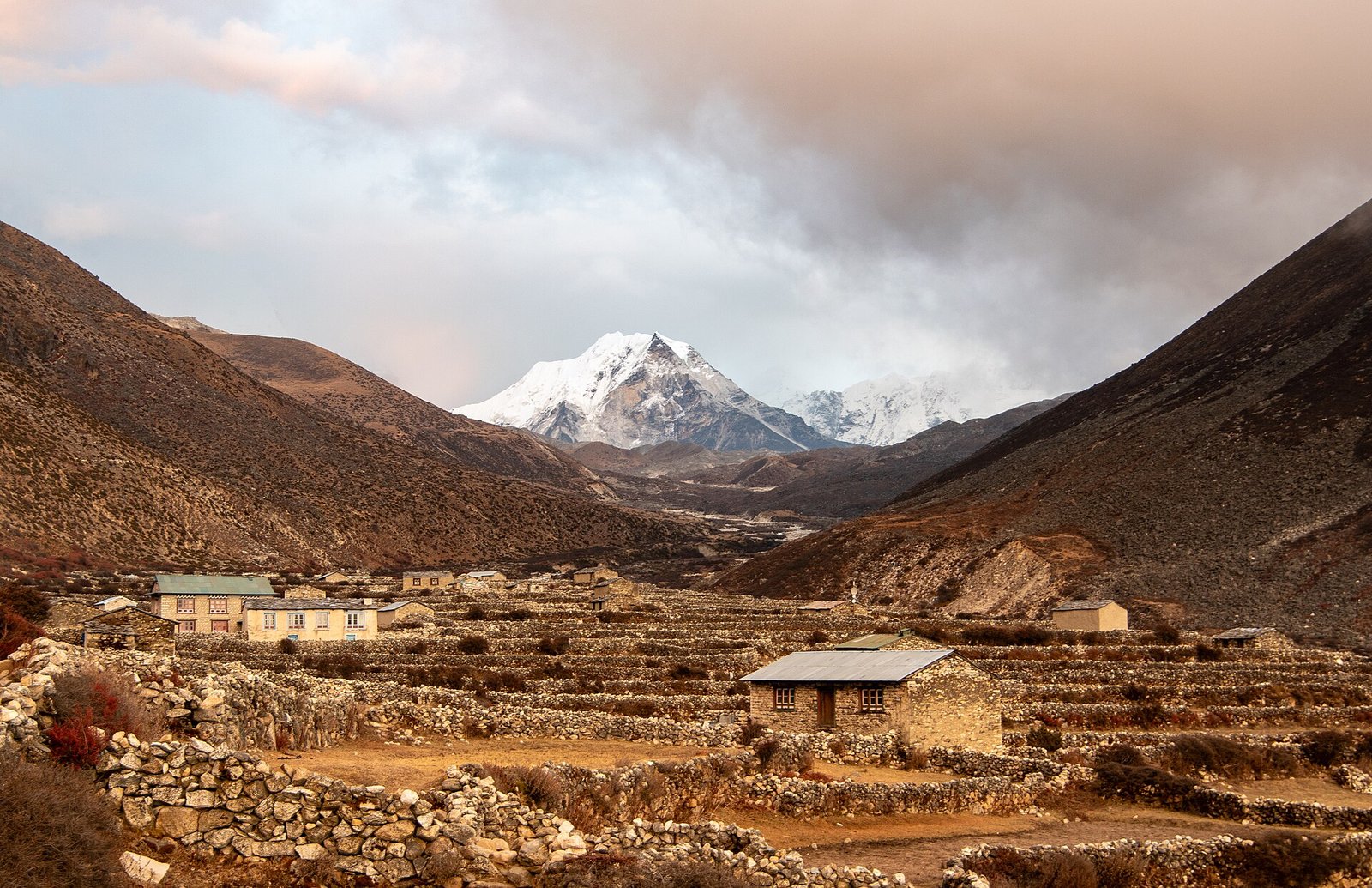
Island Peak (Imja Tse) Climbing Guide: Route, Itinerary, Cost and Verified Reviews (6,189 m)
Island Peak, officially Imja Tse, is a 6,189 m peak in the Khumbu region of Nepal, rising from the Imja valley above Chhukung. It is one of the most popular first Himalayan climbs: a trek and scramble to a crevassed glacier, then a steep snow and ice headwall of about 45 degrees on fixed ropes to a narrow summit ridge. Most trips take 14 to 19 days from Kathmandu, often combined with Everest Base Camp. On ExpedReview, as of 23 October 2026, 6 operators have 7 verified client reviews for Island Peak. Ranked first is 360 Expeditions (5.0★ from 2 reviews), followed by Adventure Magic Treks (5.0★, July 2026, from US$1,950), Adventure Consultants (5.0★, December 2024, from US$6,650), Ian Taylor Trekking, Exped Tribe and Summitclimb (from US$4,450), each 5.0★ from 1 review. Below are the reviews, the route, a sample itinerary, costs and how to choose an operator.
Island Peak: key facts | | | |---|---| | Height | 6,189 m (20,305 ft) | | Official name | Imja Tse | | Location | Imja valley, Khumbu region, Nepal | | First ascent | 1953, by members of the British Everest expedition including Charles Evans and Tenzing Norgay | | Normal route | South-east ridge and summit headwall | | Difficulty | Alpine PD+, fixed ropes on a headwall of about 45° | | Seasons | Spring (April–May) and autumn (October–November) | | Typical trip length | 14–19 days from Kathmandu | | Operators reviewed on ExpedReview | 6, with 7 verified reviews (as of 23 Oct 2026) |
Island Peak operators with verified reviews
ExpedReview ranks operators by their verified client reviews for each place: the star rating, adjusted so one or two reviews, or only old ones, count for less than many recent ones. Every review is checked by hand before it is published, and operators cannot pay to appear or rank higher. Prices are set by the operators themselves. Data as of 23 October 2026.
| Rank | Operator | Based in | Rating here | Reviews | Latest review | Guide-listed price |
|---|---|---|---|---|---|---|
| 1 | 360 Expeditions | United Kingdom | 5.0★ | 2 | May 2022 | No recent price listed |
| 2 | Adventure Magic Treks And Expedition | Nepal | 5.0★ | 1 | July 2026 | From US$1,950 |
| 3 | Adventure Consultants | New Zealand | 5.0★ | 1 | December 2024 | From US$6,650 (up to US$9,900) |
| 4 | Ian Taylor Trekking | United States | 5.0★ | 1 | June 2024 | No recent price listed |
| 5 | Exped Tribe | Switzerland | 5.0★ | 1 | November 2023 | No recent price listed |
| 6 | Summitclimb | United States | 5.0★ | 1 | October 2023 | From US$4,450 (up to US$6,850) |
Also listed for Island Peak, with no reviews here yet: Climbing The Seven Summits, Dream Himalaya Adventures, Bold Himalaya and Everest Trekking Routes.
What clients say
360 Expeditions. One client, new to the Himalaya, climbed Mera Peak, Island Peak and Lobuche East and crossed the Amphu Lapcha pass in 18 days, praising leader Rolfe and his team. Another did a version without Everest Base Camp, describing beautiful lodges, a tough but rewarding summit day with "a little bit of climbing near the end", and good teamwork between the 360 host and local staff.
Adventure Magic Treks. A July 2026 reviewer says everything went smoothly, praising guide Ngati Sherpa as experienced, calm and patient. They note that the online itinerary should be updated, because daily distances differed from what was shown.
Adventure Consultants. A reviewer describes "a gentleman's mountaineering experience", with enough support to keep packs light, guides who adapted to each climber's experience, and excellent November weather.
Ian Taylor Trekking. This client had failed on Island Peak before the pandemic with another company, which they say lacked organisation and safety. In Chhukung they watched Ian Taylor's team practise ladders and ropes and postpone its summit after heavy snow, and chose the company when they returned in 2023. The team also added Lobuche East to the trip.
Exped Tribe. A group of four climbed in October, praising seamless logistics and "upper end service", and plan to return for a 7,000 m peak.
Summitclimb. A client took a double expedition as preparation for Everest a month later, crediting Dan's team and the familiarity with the Khumbu with their later Everest success.
The route
Approach
Island Peak is climbed from Chhukung (about 4,730 m), a side valley off the Everest Base Camp trail above Dingboche. From Chhukung, the trail follows the Imja valley past moraines to Island Peak base camp at about 5,080 m. Some teams use a high camp at around 5,500 to 5,600 m to shorten summit day, but many climb directly from base camp.
Summit day
Teams leave in the early hours, scrambling up a rocky gully and ridge to crampon point at about 5,700 m. From there, they rope up and cross a glacier with crevasses, sometimes bridged by ladders, to the foot of the summit headwall. The headwall rises about 100 to 150 m at up to roughly 45 degrees, with fixed ropes climbed using an ascender. Above it, a narrow, exposed ridge leads to the small summit. Descent is by abseil or arm wrap down the headwall, then back across the glacier. Summit day takes 10 to 14 hours from base camp.
From the summit, climbers see Lhotse's huge south face right above, plus Makalu, Baruntse, Ama Dablam and many other peaks.
Difficulty and skills
Island Peak is steeper and more technical than Mera Peak, but lower. You need to be comfortable in crampons, able to climb fixed ropes with an ascender, descend by abseil, and cross ladders over crevasses. Good operators run a skills day at base camp, but practising on an alpine course or indoor wall at home helps. Fitness for a long, cold day above 5,500 m matters most.
Sample itinerary
A typical 17-day Island Peak trip with Everest Base Camp:
- Arrive in Kathmandu.
- Fly to Lukla and trek to Phakding.
- Trek to Namche Bazaar.
- Acclimatisation day in Namche.
- Trek to Tengboche.
- Trek to Dingboche.
- Acclimatisation day.
- Trek to Lobuche.
- Everest Base Camp and Gorak Shep.
- Kala Patthar, then descend towards Dingboche.
- Trek to Chhukung.
- Trek to Island Peak base camp; skills training.
- Summit day, return to Chhukung.
- Spare day for weather. 15–16. Trek back to Lukla.
- Fly to Kathmandu.
Season
The best seasons are spring (April to May) and autumn (October to November), when weather is most stable. Autumn is often clearer; spring is warmer, but cloud builds in the afternoons. Winter is very cold and windy, and the monsoon brings snow and cloud higher up.
Permits
You will need an Island Peak climbing permit, arranged by your operator through Nepal's permit system, plus the Sagarmatha National Park entry permit (NPR 3,000) and the Khumbu Pasang Lhamu Rural Municipality card (NPR 3,000; NPR 2,000 for SAARC and Chinese nationals). Climbing permit fees vary by season, so ask your operator for the current figure.
Cost
Guide-listed prices on ExpedReview range widely, from US$1,950 for Adventure Magic Treks' package to US$4,450–6,850 with Summitclimb and US$6,650–9,900 with Adventure Consultants. Differences reflect leadership, guide ratios, lodges, group size, added peaks and inclusions such as flights, permits, gear and insurance. Ask for a written list of inclusions before you compare.
Choosing an operator
- Ask about acclimatisation. Avoid itineraries that reach base camp too quickly.
- Ask about training. A skills day on ropes and ladders is essential for beginners.
- Ask about ratios. On the headwall, one guide to two climbers is a good standard.
- Ask about weather and conditions. A good operator will postpone a summit after heavy snow, as one reviewer saw.
- Check the rescue plan and insurance requirements.
- Read recent reviews and ask for references.
History and name
Island Peak got its English name from Eric Shipton's 1951 reconnaissance party, who thought it looked like an island in a sea of ice when seen from Dingboche. In 1983 it was officially renamed Imja Tse, but "Island Peak" is still the name almost everyone uses. The first ascent was made in 1953 by members of the British Everest expedition, including Charles Evans, Alfred Gregory and Tenzing Norgay, who climbed it as training and acclimatisation before Everest. It is technically a southern spur of Lhotse Shar's ridge, which is why Lhotse's south face looms so close to the summit.
The changing mountain
Island Peak's glacier has changed a lot in recent decades. Crevasses have opened, the approach to the headwall has become more broken, and some seasons need several aluminium ladders. Late in a dry autumn, the headwall can turn to hard blue ice, making the climb slower and more tiring. Below the mountain, Imja Lake, a glacial lake that formed only in the second half of the 20th century, has grown rapidly; engineers lowered its level in 2016 to reduce the risk of a flood. Ask your operator about current conditions and how they manage the crevasse crossings.
Altitude and safety
Altitude is the biggest risk. Most people gain more than 5,000 m in under two weeks, and acute mountain sickness is common. A route that visits Everest Base Camp and Kala Patthar first gives better acclimatisation than going straight to Chhukung. On the mountain, the main hazards are falls on the headwall or summit ridge, crevasses, cold injury on the early start, and rockfall in the gully below crampon point. Strong winds on the summit ridge can force teams to turn back. Make sure your insurance covers climbing to at least 6,500 m and helicopter evacuation.
Gear
Bring insulated mountaineering boots that take crampons, crampons, an ice axe, a harness, a helmet, an ascender, a belay/rappel device, locking carabiners and slings, a warm down jacket, waterproof layers, warm gloves and mitts, glacier glasses and a sleeping bag rated to about −20 °C. Gear hire is available in Kathmandu, Namche and Chhukung, but check boots carefully for fit, because cold or painful feet can end a summit day.
Combining Island Peak with other climbs
Island Peak is often paired with Lobuche East, crossing the Kongma La pass (about 5,535 m) between Chhukung and Lobuche, or with Mera Peak via the Amphu Lapcha pass, as in the 360 Expeditions review above. It also fits neatly into the Three Passes trek. See our Lobuche East guide, Mera Peak guide and Three Passes guide. For climbers aiming at Everest or Lhotse, it is useful preparation, as the Summitclimb reviewer found; see our Lhotse guide.
Who Island Peak suits
Island Peak suits fit trekkers who want a real climb with ropes, crampons and a summit, as well as climbers preparing for larger peaks. It is a good second step after a trek such as Everest Base Camp, or after a non-technical summit such as Kilimanjaro. If you have never been above 5,000 m, allow a longer itinerary with Everest Base Camp first.
What a good summit day looks like
On a well-run trip, the guides check everyone's crampons, harness and ascender the evening before, set a firm turnaround time, and climb at a steady pace so the group reaches the headwall before the sun softens the snow. Each client is clipped to the fixed line on the headwall, and guides stay close on the summit ridge. After summiting, the team descends steadily, with plenty of water and food, so that everyone gets back to base camp or Chhukung before dark.
Frequently asked questions
How hard is Island Peak?
It is a moderate alpine climb, with a steep headwall on fixed ropes. Fit trekkers can do it after training, but it is harder than a trek.
Why is it called Island Peak?
The British climber Eric Shipton named it in 1951, because from Dingboche it looks like an island in a sea of ice.
How long does it take to climb Island Peak?
Most trips take 14 to 19 days from Kathmandu. Summit day takes 10 to 14 hours.
How much does it cost to climb Island Peak?
As of 23 October 2026, guide-listed prices on ExpedReview range from US$1,950 to US$9,900, depending on the operator and package.
Which operators have verified reviews for Island Peak?
As of 23 October 2026, 360 Expeditions, Adventure Magic Treks, Adventure Consultants, Ian Taylor Trekking, Exped Tribe and Summitclimb.
Can operators pay to rank higher on ExpedReview?
No. Operators cannot pay to appear, rank higher or have reviews removed.
Do I need climbing experience for Island Peak?
Previous mountaineering experience is not essential, but you must be fit, used to altitude and able to learn fixed-rope and ladder skills. A short alpine or rope course before you go makes the climb safer and more enjoyable.
Is Island Peak harder than Mera Peak?
Island Peak is lower but more technical, with a steep headwall and a narrow summit ridge. Mera is higher but mostly a non-technical glacier walk, so its main challenge is altitude.
When is the best time to climb Island Peak?
Spring (April–May) and autumn (October–November) offer the most stable weather.
Can I climb Island Peak without visiting Everest Base Camp?
Yes. Some itineraries go straight to Chhukung after acclimatising in Dingboche, but including Everest Base Camp improves acclimatisation.