Everest Three Passes Trek Guide: Kongma La, Cho La, Renjo La, Itinerary and Verified Reviews
The Three Passes trek is the toughest classic trek in the Everest region: a loop of about 18 to 21 days from Lukla that crosses three high passes, the Kongma La (about 5,535 m), the Cho La (about 5,420 m) and the Renjo La (about 5,360 m), and also visits Everest Base Camp, Kala Patthar and the Gokyo lakes. It needs no climbing skills, but it includes long days above 5,000 m, steep scree and boulder fields, and a short glacier crossing on the Cho La. On ExpedReview, as of 23 October 2026, one operator has one verified client review for the Three Passes: Himalaya Hub Adventure, based in Nepal (5.0★, October 2026). Below are the review, the route, a sample itinerary, difficulty, season, permits and how to choose an operator.
Three Passes trek: key facts | | | |---|---| | Passes | Kongma La (about 5,535 m), Cho La (about 5,420 m), Renjo La (about 5,360 m) | | Highlights | Everest Base Camp, Kala Patthar (about 5,545 m), Gokyo Ri, Gokyo lakes, Ngozumpa Glacier | | Start and finish | Lukla | | Typical length | 18–21 days from Kathmandu | | Difficulty | Strenuous, non-technical; glacier crossing on the Cho La | | Accommodation | Teahouses (lodges) throughout | | Seasons | Spring (April–May) and autumn (October–November) | | Operators reviewed on ExpedReview | 1, with 1 verified review (as of 23 Oct 2026) |
Three Passes operators with verified reviews
ExpedReview ranks operators by their verified client reviews for each place: the star rating, adjusted so one or two reviews, or only old ones, count for less than many recent ones. Every review is checked by hand before it is published, and operators cannot pay to appear or rank higher. Data as of 23 October 2026.
| Rank | Operator | Based in | Rating here | Reviews | Latest review | Price |
|---|---|---|---|---|---|---|
| 1 | Himalaya Hub Adventure | Nepal | 5.0★ | 1 | October 2026 | No recent price listed |
Also listed for the Three Passes, with no reviews here yet: Adventure Consultants, Alpine Ramble, Bold Himalaya and Everest Trekking Routes.
What the client says
The October 2026 reviewer says choosing Himalaya Hub Adventure was "the best choice we could have made", praising top-notch organisation from the first meeting in Kathmandu through every kilometre on the trail, and the team's professionalism and care. One review is a good start, but ask for references from other recent Three Passes trekkers.
The route
The Three Passes trek is usually done anticlockwise, crossing the Kongma La first, because that direction gives the best acclimatisation and makes the Cho La easier to navigate. The main sections are:
Lukla to Chhukung
From Lukla (2,860 m), the trail follows the classic Everest Base Camp route through Phakding and Namche Bazaar (3,440 m), with an acclimatisation day, then on to Tengboche and Dingboche (4,410 m). A side trip up the Imja valley leads to Chhukung (about 4,730 m), below Island Peak. Climbing Chhukung Ri gives extra acclimatisation and great views.
Kongma La
The first and highest pass, the Kongma La (about 5,535 m), is a long, tough day from Chhukung. The trail climbs steep slopes to a pass with small lakes and prayer flags, then descends a steep, rocky slope and crosses the moraine of the Khumbu Glacier to Lobuche (about 4,940 m). It is the most remote day of the trek, with no lodges between Chhukung and Lobuche.
Everest Base Camp and Kala Patthar
From Lobuche, the trail goes to Gorak Shep (about 5,160 m) and Everest Base Camp. The next morning, many trekkers climb Kala Patthar (about 5,545 m) for the classic view of Everest at sunrise, then descend towards Dzongla.
Cho La
The Cho La (about 5,420 m) links the Khumbu and Gokyo valleys. From Dzongla, the trail climbs steep boulder slopes, then crosses a small glacier near the top, which may be icy, before descending steep, loose ground to Thagnak. Microspikes or light crampons are often useful. It is the most technical day of the trek, and the pass can be dangerous in fresh snow or ice.
Gokyo
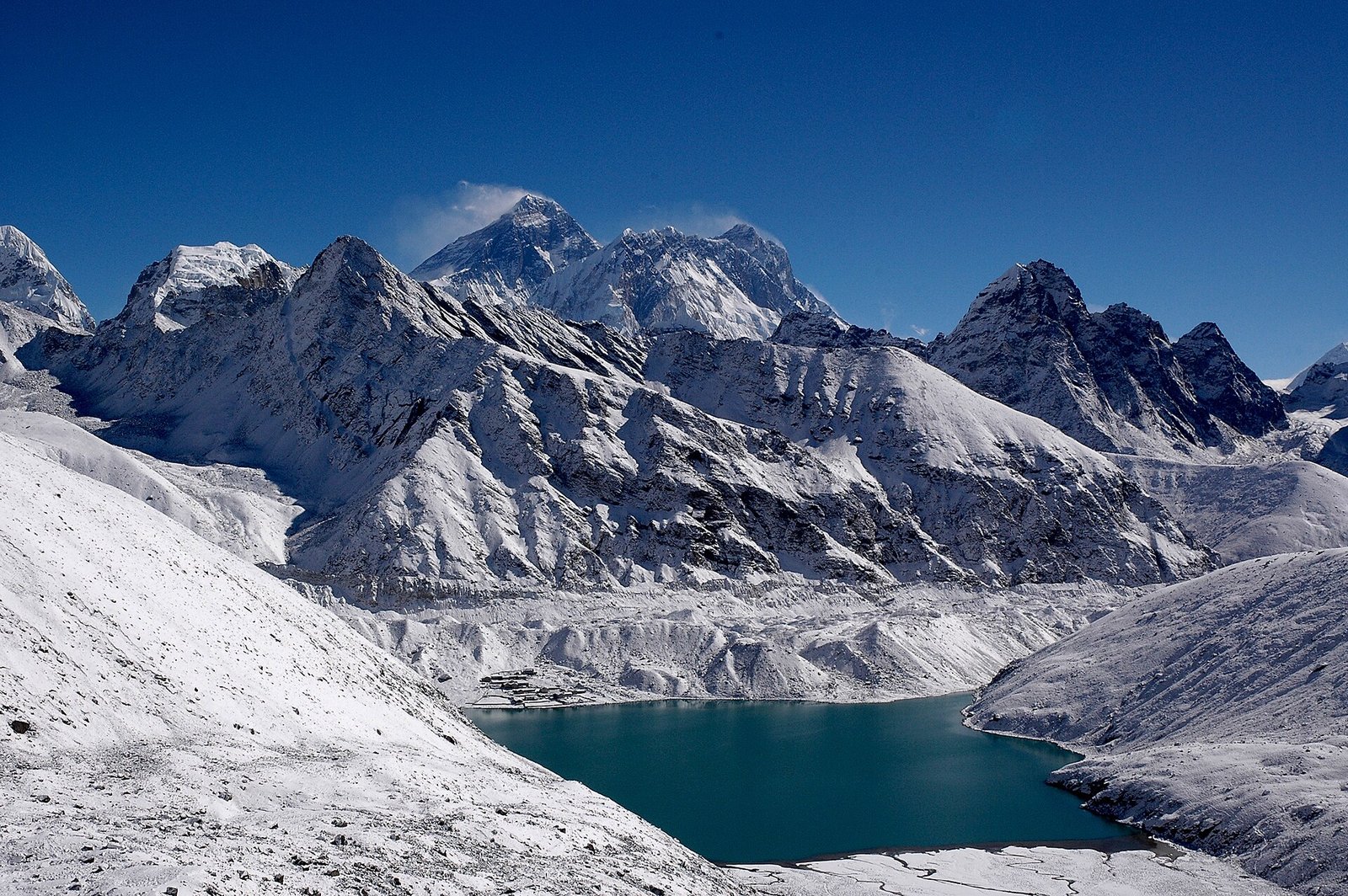
From Thagnak, the trail crosses the Ngozumpa Glacier, the longest glacier in Nepal, to Gokyo (about 4,790 m), beside the turquoise Gokyo lakes. Climbing Gokyo Ri (about 5,357 m) gives one of the best views in the Himalaya, taking in Everest, Lhotse, Makalu and Cho Oyu. See our Gokyo Lakes guide.
Renjo La
The last pass, the Renjo La (about 5,360 m), climbs from Gokyo past the lakes on a steep, stepped trail. Its summit views back across Gokyo and towards Everest are superb. From the pass, the trail descends into the quiet Bhote Koshi valley to Lungden and Thame, then returns to Namche and Lukla.
Sample itinerary
A typical 20-day anticlockwise Three Passes trek:
- Arrive in Kathmandu.
- Fly to Lukla and trek to Phakding.
- Trek to Namche Bazaar.
- Acclimatisation day in Namche.
- Trek to Tengboche.
- Trek to Dingboche.
- Acclimatisation day; climb Nangkartshang Peak.
- Trek to Chhukung.
- Cross the Kongma La to Lobuche.
- Trek to Gorak Shep and Everest Base Camp.
- Climb Kala Patthar, trek to Dzongla.
- Cross the Cho La to Thagnak.
- Cross the Ngozumpa Glacier to Gokyo.
- Climb Gokyo Ri; rest day.
- Cross the Renjo La to Lungden.
- Trek to Thame or Namche.
- Trek to Lukla.
- Fly to Kathmandu.
- Spare day for weather.
- Depart.
Difficulty
The Three Passes trek is strenuous. You should be fit enough for several consecutive days of six to nine hours' walking, with long climbs and descents at high altitude. The passes involve steep, loose scree and boulder fields, and the Cho La includes a glacier crossing. No technical climbing skills are needed, but experience on rough, steep mountain trails and at altitude is valuable.
Season
The best seasons are spring (April to May) and autumn (October to November). Snow can close the passes in winter, and the Cho La can be icy at any time. During the monsoon (June to September), cloud and rain hide the views, and flights to Lukla are often delayed.
Permits
You need the Sagarmatha National Park entry permit (NPR 3,000) and the Khumbu Pasang Lhamu Rural Municipality entry card (NPR 3,000; NPR 2,000 for SAARC and Chinese nationals). A guide is not legally required in the Khumbu, but it is strongly recommended because the passes are remote and route-finding can be difficult in bad weather.
Choosing an operator
- Check the itinerary. Look for acclimatisation days and at least one spare day.
- Ask about the guide's experience on all three passes, including in snow.
- Ask about the crossing plan for the Cho La, including microspikes or crampons.
- Ask about evacuation and insurance.
- Read recent reviews and ask for references.
Clockwise or anticlockwise?
Most guided groups go anticlockwise, crossing the Kongma La, then the Cho La, then the Renjo La. Doing it this way, trekkers gain height gradually on the busy Everest Base Camp trail, cross the hardest pass when they are already well acclimatised, and descend the Cho La on the Gokyo side, where the route is usually easier to follow. Going clockwise, starting with the Renjo La from Thame, takes trekkers high very quickly from Namche, which increases the risk of altitude sickness. A few itineraries skip the Kongma La and cross only two passes, which shortens the trip but misses one of its wildest days.
Altitude and safety
Altitude is the main risk on this trek. You will spend more than a week above 4,500 m, sleep at around 5,000 m at Gorak Shep, and cross three passes above 5,300 m. Acclimatise slowly, drink plenty of water, avoid alcohol high up, and tell your guide about headaches, nausea, breathlessness at rest or confusion straight away. The cure for serious altitude sickness is descent, and helicopter evacuations are common in the Khumbu, so make sure your insurance covers trekking to at least 5,600 m and helicopter rescue.
On the passes, the main hazards are falls on steep scree, loose boulders and icy sections, rockfall on the Kongma La and Renjo La descents, and getting lost in cloud or snow. Leave early so you cross before the afternoon weather arrives, and do not attempt the Cho La in fresh snow without a guide who knows the route.
Lodges, food and costs
Teahouses (lodges) line almost the entire route, except between Chhukung and Lobuche and on the passes themselves. Rooms are simple, with twin beds, and dining rooms heated by a stove in the evenings. Food is plentiful, with dal bhat, noodles, potatoes and pasta on most menus. Prices rise with altitude, and extras such as hot showers, wifi and charging cost more higher up.
The total cost depends on whether you hire a guide and porter, book a full package with an operator, and include flights, permits and gear. Himalaya Hub Adventure does not list a recent price on ExpedReview, so ask for a written quote and check what is included.
Gear
Bring broken-in trekking boots with good ankle support, trekking poles, microspikes for the Cho La, a warm down jacket, waterproof shell layers, gloves, a warm hat, sunglasses, sun cream and a sleeping bag rated to about −15 °C. Lodges provide blankets, but they can be thin high up. A small first-aid kit, water purification and a headlamp are essential.
Adding a climb
Fit trekkers often add a trekking peak to the Three Passes route. Island Peak, from Chhukung, and Lobuche East, from Lobuche, both fit naturally into the itinerary but need climbing permits, extra days and mountaineering skills. See our Island Peak guide and Lobuche East guide.
Culture along the way
The trek passes through Sherpa villages, monasteries and stupas. Tengboche Monastery, on the main trail, is the spiritual centre of the Khumbu, and Thame, on the descent from the Renjo La, has an old monastery and is where Tenzing Norgay grew up. Walk clockwise around mani walls and chortens, ask before photographing people, and dress modestly in villages and monasteries.
Three Passes, Everest Base Camp or Gokyo?
If you have about two weeks and want the most famous views, the standard Everest Base Camp trek is the simpler choice. If you prefer quieter trails and lakes, a Gokyo trek visits the Gokyo lakes and Gokyo Ri in a similar time. The Three Passes trek combines both, plus three high passes and the wild Kongma La crossing, but it needs about a week longer, more fitness and more tolerance for altitude and rough ground. It suits trekkers who have already done a high-altitude trek, or who are very fit and have time for a careful acclimatisation plan.
Getting to Lukla
Most trekkers fly from Kathmandu to Lukla, a short but spectacular flight to one of the world's most famous mountain airstrips. In the busy seasons, many flights leave from Ramechhap (Manthali), several hours' drive from Kathmandu, to ease congestion at Kathmandu airport. Flights are often delayed or cancelled by cloud, so build at least one spare day into your plans at each end of the trek.
Frequently asked questions
How hard is the Three Passes trek?
It is one of the most demanding treks in Nepal, with three passes above 5,300 m, long days and steep, rough terrain. You need good fitness and some experience at altitude.
How long is the Three Passes trek?
Usually 18 to 21 days from Kathmandu, depending on acclimatisation and spare days.
Which is the hardest pass?
The Kongma La is the highest and longest, while the Cho La is the most technical because of its glacier and steep descent.
Do I need a guide for the Three Passes trek?
A guide is not legally required in the Khumbu, but is strongly recommended because the passes are remote and conditions can change quickly.
Which operators have verified reviews for the Three Passes?
As of 23 October 2026, Himalaya Hub Adventure has 1 verified review (5.0★, October 2026).
Can operators pay to rank higher on ExpedReview?
No. Operators cannot pay to appear, rank higher or have reviews removed.
When is the best time to do the Three Passes trek?
Spring (April–May) and autumn (October–November) give the most stable weather. Snow can close the passes in winter.
Do I need crampons for the Cho La?
Microspikes or light crampons are often useful for the glacier near the top of the Cho La, especially early or late in the season. Your guide will advise on current conditions.
Can I add a climb to the Three Passes trek?
Yes. Island Peak and Lobuche East fit naturally into the route, but they need climbing permits, extra days and mountaineering skills.