Gokyo Lakes Trek: Guide, Itinerary and Verified Reviews
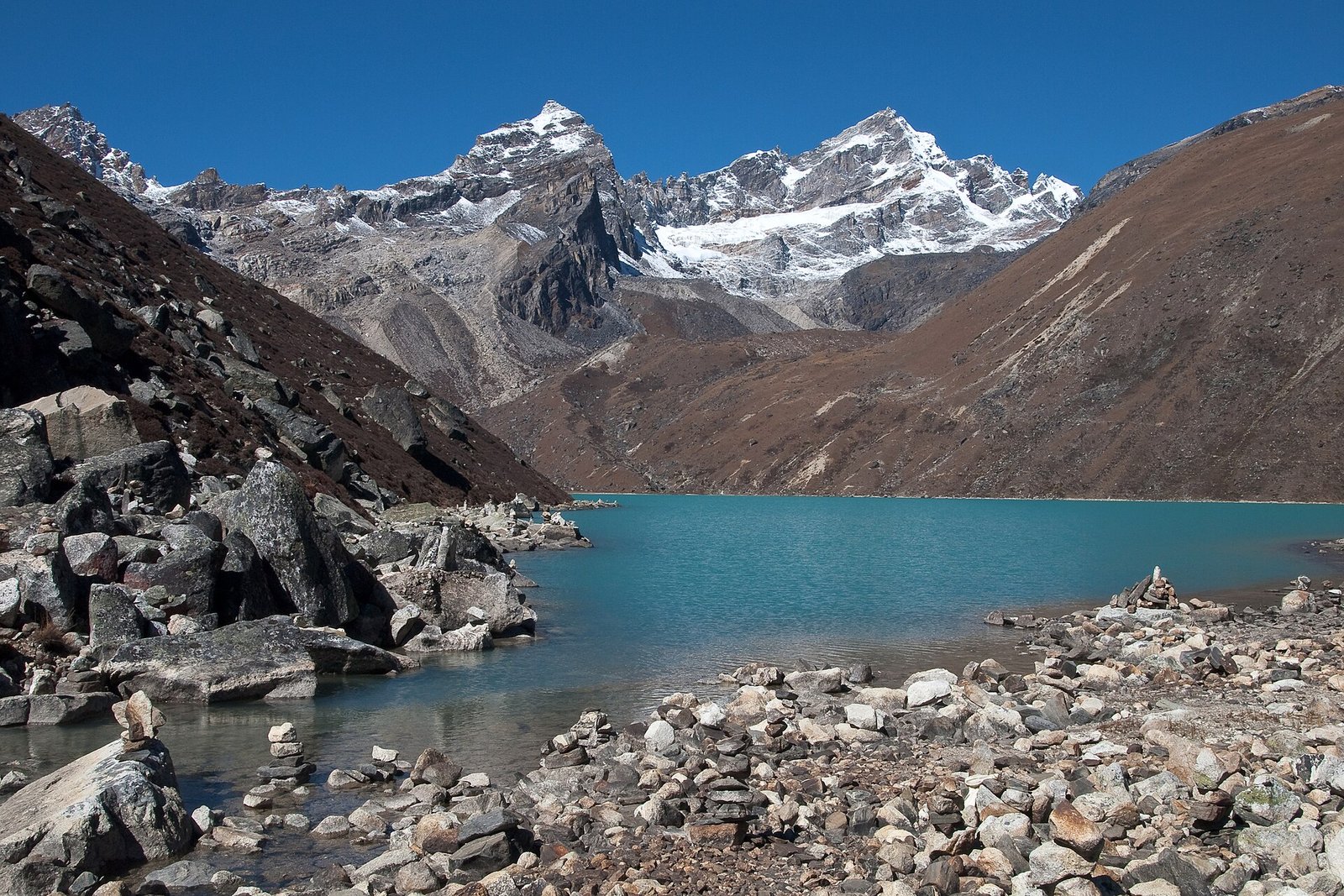
The Gokyo Lakes trek is the quieter alternative to Everest Base Camp: about 11 to 13 days from Lukla up the Dudh Koshi valley to a chain of turquoise glacial lakes at around 4,700 m to 5,000 m, beside the Ngozumpa Glacier. The highlight is Gokyo Ri (5,357 m), whose summit gives one of the finest views in the Himalaya, taking in Everest, Lhotse, Makalu and Cho Oyu. On ExpedReview, as of 23 October 2026, one operator has one verified client review filed under the Gokyo Lakes trek: Himalayan Frozen Adventure (1.0★, October 2022), a strongly negative review. Below are the review, the route, permits, costs and how to choose a guide.
Gokyo Lakes trek: key facts | | | |---|---| | Start and finish | Lukla (2,860 m) | | Gokyo village | About 4,750 m | | Highest point | Gokyo Ri, 5,357 m | | Typical length | 11–13 days from Lukla and back | | Difficulty | Strenuous; high altitude, no technical ground on the standard route | | Best months | October–November and March–May | | Permits | Sagarmatha National Park (NPR 3,000) and Khumbu municipality trek card (NPR 3,000) | | Operators reviewed on ExpedReview | 1, with 1 verified review (as of 23 Oct 2026) |
Gokyo Lakes trek operators with verified reviews
ExpedReview ranks operators by their verified client reviews for each place: the star rating, adjusted so one or two reviews, or only old ones, count for less than many recent ones. Every review is checked by hand before it is published, critical reviews stay up, and operators cannot pay to appear or rank higher. Data as of 23 October 2026.
| Rank | Operator | Based in | Rating here | Reviews | Latest review |
|---|---|---|---|---|---|
| 1 | Himalayan Frozen Adventure Pvt. Ltd | Not listed (unclaimed profile) | 1.0★ | 1 | October 2022 |
What the review says. The client booked a tour with this company in October 2022 and describes it as a terrible experience. They say they had to arrange almost everything themselves during the trip, including car hire, a helicopter and hotel bookings, without support from the company. The review names the trip as an Everest Base Camp tour, so it may cover a different itinerary from the Gokyo trek, but it is a clear warning about support on the ground. One review is a single experience; still, it is the kind of report you should ask any operator to answer.
Bold Himalaya and Everest Trekking Routes also list this trek on ExpedReview but have no verified reviews for it yet.
What makes Gokyo special
Most trekkers in the Khumbu head up the main valley to Everest Base Camp. The Gokyo valley lies to the west, alongside the Ngozumpa Glacier, which flows south from Cho Oyu and is often described as the longest glacier in Nepal. On its west side, held in by the glacier's lateral moraine, lies a chain of lakes. The Gokyo Lakes system, of which the largest is Dudh Pokhari beside Gokyo village, is protected as a Ramsar wetland of international importance, and the lakes are sacred to both Hindus and Buddhists.
The views are the reason to go. From Gokyo Ri, a steep hill above the village, you see four of the world's 8,000 m peaks, Everest, Lhotse, Makalu and Cho Oyu, as well as the huge, rubble-covered glacier below. Many trekkers think the panorama is better than from Kala Patthar on the base camp trek. And because fewer people come this way, the lodges and trails are calmer. Between Namche and Dole the route also climbs over the Mong La ridge, with a close view of Ama Dablam, and then follows the quiet upper Dudh Koshi through rhododendron and juniper to the yak pastures of Machhermo.
Typical itinerary
| Day | Route | Sleeping height |
|---|---|---|
| 1 | Fly to Lukla, walk to Phakding | 2,610 m |
| 2 | Phakding to Namche Bazaar | 3,440 m |
| 3 | Acclimatisation day in Namche | 3,440 m |
| 4 | Namche to Dole (via Mong La) | About 4,040 m |
| 5 | Dole to Machhermo | About 4,470 m |
| 6 | Acclimatisation day in Machhermo | About 4,470 m |
| 7 | Machhermo to Gokyo, past the first and second lakes | About 4,750 m |
| 8 | Gokyo Ri at dawn; optional walk to the fourth and fifth lakes | About 4,750 m |
| 9 | Gokyo to Dole or Phortse Thanga | About 3,700–4,040 m |
| 10 | Down to Namche Bazaar | 3,440 m |
| 11 | Namche to Lukla | 2,860 m |
| 12 | Fly to Kathmandu or Ramechhap | — |
Add at least one spare day for Lukla flights, which are often delayed by weather.
The fifth lake. If you have an extra day, the walk north from Gokyo to the fourth and fifth lakes, towards Cho Oyu base camp, is spectacular and very quiet. The view of Cho Oyu's south face and the Ngozumpa icefall from the Scoundrel's Viewpoint near the fifth lake is one of the best in the valley.
Variations
Gokyo and Everest Base Camp via Cho La. Many trekkers combine Gokyo with the base camp trek by crossing the Cho La pass (about 5,420 m) between Gokyo and Dzongla. The crossing involves a short glacier section that can be icy, so microspikes or crampons and a guide are sensible. This route usually takes 15 to 17 days.
The Three Passes trek. The most demanding option crosses the Kongma La, Cho La and Renjo La, visiting both Gokyo and Everest Base Camp. It takes about 18 to 21 days. See our Three Passes guide.
Renjo La. Crossing west from Gokyo over the Renjo La (about 5,360 m) to Thame makes a loop back to Namche through the Bhote Koshi valley. The view back over the Gokyo lakes to Everest from the pass is outstanding.
Altitude and fitness
Gokyo sits at about 4,750 m, and Gokyo Ri is 5,357 m, so altitude is the main challenge. The route gains height quickly between Namche and Machhermo, which is why a good itinerary has rest days in both Namche and Machhermo. Above 3,000 m, standard medical advice is to raise your sleeping height by no more than about 500 m a day, with a rest day every 1,000 m. Learn the symptoms of acute mountain sickness, and go down if they get worse. Machhermo has a Himalayan Rescue Association aid post in the main seasons that gives altitude talks and treatment.
You do not need climbing skills for the standard route. You do need to be fit enough to walk five to seven hours a day at altitude for nearly two weeks. Train with long hill walks carrying a daypack, and add stair or hill sessions for the steep climb up Gokyo Ri.
Permits and fees
The same two permits as for the rest of the Khumbu:
- Sagarmatha National Park entry: NPR 3,000 for foreign visitors.
- Khumbu Pasang Lhamu Rural Municipality trek card: NPR 3,000 for foreigners, or NPR 2,000 for SAARC and Chinese nationals.
Your operator normally arranges both. Fees change, so check the current rates.
When to go
| Season | Months | Conditions |
|---|---|---|
| Autumn | October–November | Clear skies, cold nights, best views, busiest period |
| Winter | December–February | Very cold, lakes freeze, quiet; Cho La can be snowbound |
| Spring | March–May | Milder, some haze and afternoon cloud, rhododendrons lower down |
| Monsoon | June–September | Cloud and rain, poor views, frequent flight delays |
What it costs
ExpedReview does not hold a current price for this trek from the reviewed operator. A typical package includes Lukla flights, a licensed guide, porters, tea-house rooms and meals, permits and a hotel in Kathmandu. Prices are usually similar to or a little below Everest Base Camp trips of the same length. Leave room in your budget for tips, snacks, hot showers, charging and Wi-Fi, which get more expensive the higher you go, and for travel insurance that covers helicopter rescue to 5,500 m.
How to choose an operator
Given the single negative review here, ask questions that show how an operator supports you on the trail:
- Who is my guide, and what is their licence and experience? Ask how many times they have led the Gokyo route.
- What happens when Lukla flights are cancelled? Ask who rebooks, who pays and whether a helicopter option is included or extra.
- Who arranges rescue? Ask for the operator's emergency process and a 24-hour contact in Kathmandu.
- What is included? Get a written list of meals, rooms, permits and transfers.
- How are porters treated? Ask about load limits, insurance and equipment.
- Can I speak to recent clients? A good operator will put you in touch.
Then read the operator's reviews on ExpedReview across all its trips, paying attention to how recent they are and how the company deals with problems.
Climbing Gokyo Ri
Gokyo Ri rises about 600 m above Gokyo village, and most people climb it in the dark to reach the top for sunrise or soon after. The trail crosses the outlet stream at the north end of the lake, then zigzags steeply up the grassy and later rocky slope. Allow two to three hours up and about an hour down, and start with a headtorch, because the lower slope is steep and the path is loose in places. The summit is marked by prayer flags and cairns. On a clear morning Everest appears to the east above the Ngozumpa Glacier, with Lhotse and Makalu to its right and Cho Oyu filling the view to the north.
Take it slowly. This is the highest point of the trek, and it comes only a day or two after arriving at Gokyo. If you have a headache or feel unwell, wait a day or skip it. Bring a down jacket, warm gloves and a thermos: dawn temperatures on the summit are well below freezing even in autumn.
Gokyo or Everest Base Camp?
Choose Gokyo if you want a quieter trail, lakes, a glacier valley and the best viewpoint in the Khumbu, and you are happy not to stand at base camp itself. Choose Everest Base Camp if reaching the base of Everest, Khumbu Icefall views and Kala Patthar are what you are after, and you do not mind more people. If you have two and a half weeks and are fit, the Cho La crossing lets you do both. See our Everest Base Camp trek guide for the main valley.
For a shorter taste of the region, the Everest View trek turns round near Namche Bazaar and stays below 4,000 m.
Life in the lodges
Every night is spent in a tea house. Lower down, at Namche, lodges have hot showers, bakeries and Wi-Fi. Higher up, at Machhermo and Gokyo, rooms are simple and unheated, with shared toilets, and evenings are spent round a yak-dung stove in the dining room. Gokyo has a handful of lodges, some with rooms looking straight over the lake. Food is mostly dal bhat, noodles, soups, potatoes and eggs; dal bhat is the safest and most filling choice. Drink boiled or treated water rather than buying plastic bottles, which are hard to dispose of in the mountains.
Gear
You need the same kit as for the base camp trek:
- Broken-in walking boots, trekking socks and camp shoes
- Down jacket, fleece, waterproof shell and warm base layers
- Warm hat, sun hat, gloves, sunglasses and high-factor sun cream
- A sleeping bag rated to about −15 °C for the high lodges
- Walking poles, headtorch, water bottles and purification
- Microspikes if you plan to cross the Cho La or Renjo La
A porter can carry your main bag, usually up to about 10 to 15 kg; carry a daypack with water, snacks and warm layers.
Frequently asked questions
How long is the Gokyo Lakes trek?
Usually 11 to 13 days from Lukla and back, plus spare days for flights. Combining it with Everest Base Camp via the Cho La takes 15 to 17 days.
How high is Gokyo Ri?
Gokyo Ri is 5,357 m. Gokyo village sits at about 4,750 m.
Is the Gokyo trek harder than Everest Base Camp?
It is similar in difficulty and reaches a similar height. It is quieter, and the climb up Gokyo Ri is steep. Adding the Cho La pass makes it harder.
Can you see Everest from Gokyo?
Yes. From Gokyo Ri you see Everest, Lhotse, Makalu and Cho Oyu, and from the Renjo La there is another fine view of Everest over the lakes.
What permits do I need for the Gokyo trek?
A Sagarmatha National Park permit (NPR 3,000) and the Khumbu Pasang Lhamu Rural Municipality trek card (NPR 3,000, or NPR 2,000 for SAARC and Chinese nationals).
Which operators have verified reviews for the Gokyo trek?
As of 23 October 2026, Himalayan Frozen Adventure has one verified review (1.0★, October 2022). Bold Himalaya and Everest Trekking Routes list the trek but have no verified reviews for it yet.
Can operators pay to rank higher or remove bad reviews on ExpedReview?
No. Operators cannot pay to appear, rank higher or have reviews removed, and critical reviews stay up.
Do I need a guide for the Gokyo trek?
A guide is strongly recommended, particularly if you plan to cross the Cho La or Renjo La, where route-finding and icy ground can be difficult. A licensed guide also helps with altitude decisions and emergencies.
Can I combine Gokyo with Everest Base Camp?
Yes. Crossing the Cho La pass (about 5,420 m) links Gokyo with the main base camp trail. Allow 15 to 17 days in total and travel with a guide.
When do the Gokyo lakes freeze?
The lakes usually freeze over in the coldest months, roughly December to February, and thaw in spring.