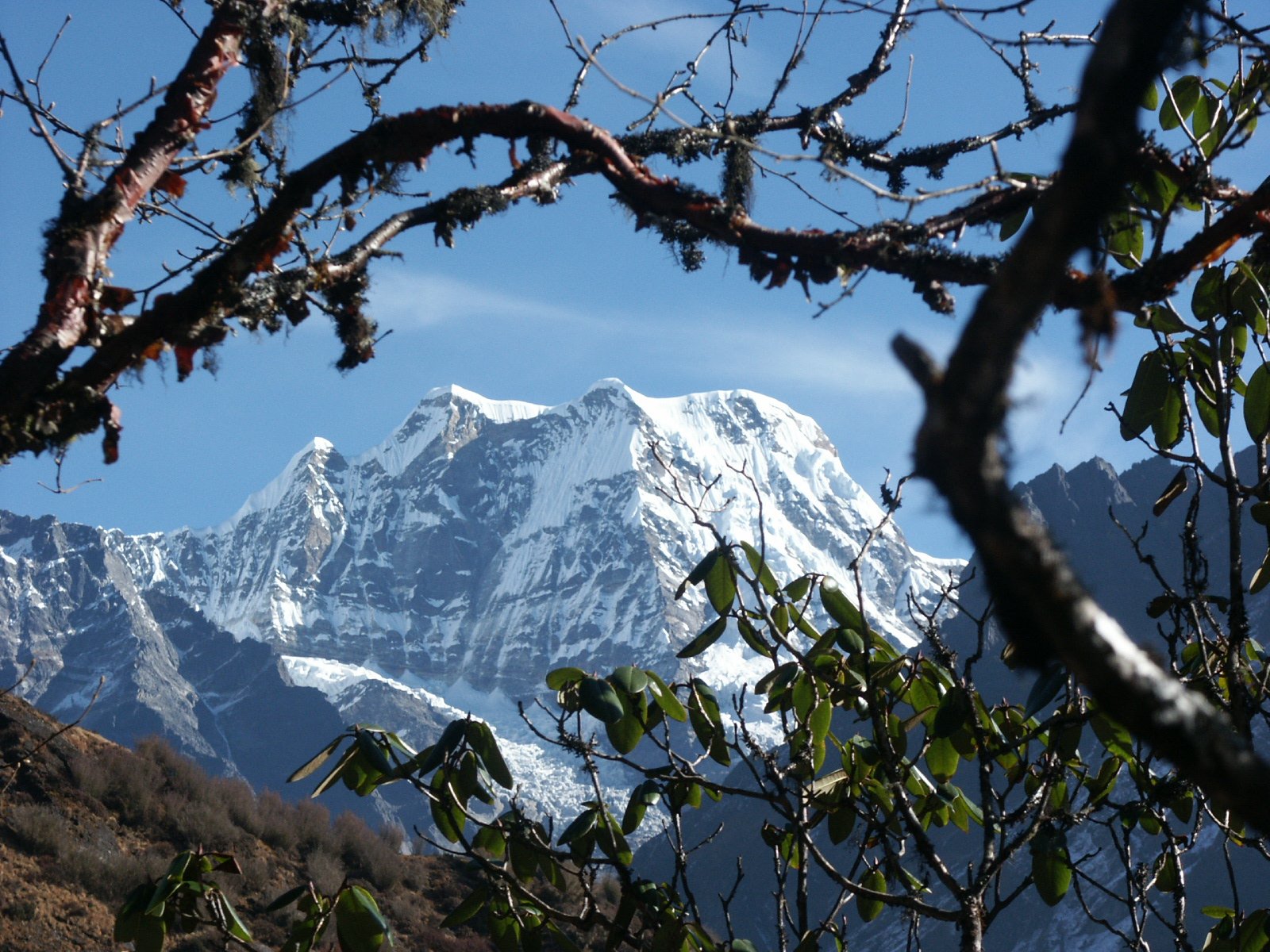
Mera Peak Climbing Guide: Route, Itinerary, Cost and Verified Guide Reviews (6,476 m)
Mera Peak, at about 6,476 m, is usually described as Nepal's highest trekking peak. It rises above the remote Hinku valley south of Everest, and its summit views take in five of the world's 8,000 m peaks: Everest, Lhotse, Makalu, Cho Oyu and Kangchenjunga. The climb is mostly a long, non-technical glacier ascent, with a short, steep summit cone on fixed rope, so its main challenge is altitude. Most trips take 16 to 20 days from Kathmandu. On ExpedReview, as of 23 October 2026, 5 operators have 12 verified client reviews for Mera Peak. Ranked first is 360 Expeditions, based in the UK (4.9★ from 8 reviews, latest April 2021), then Alpine Ramble (5.0★, March 2026), Exped Tribe (5.0★, October 2025), Everest Alpine Trekking (5.0★, September 2025) and Adventure Consultants (4.8★, November 2024). Below are the reviews, the route, a sample itinerary, costs and how to choose an operator.
Mera Peak: key facts | | | |---|---| | Height | About 6,476 m (21,247 ft); some lists give 6,470 m | | Location | Hinku valley, Makalu Barun National Park, south of Everest | | First ascent | 20 May 1953, Jimmy Roberts and Sen Tenzing | | Summits | Mera Central (highest), Mera North and Mera South | | Difficulty | Alpine F/PD; non-technical glacier with a short, steep summit cone | | Seasons | Spring (April–May) and autumn (October–November) | | Typical trip length | 16–20 days from Kathmandu | | Operators reviewed on ExpedReview | 5, with 12 verified reviews (as of 23 Oct 2026) |
Mera Peak operators with verified reviews
ExpedReview ranks operators by their verified client reviews for each place: the star rating, adjusted so one or two reviews, or only old ones, count for less than many recent ones. Every review is checked by hand before it is published, and operators cannot pay to appear or rank higher. Data as of 23 October 2026.
| Rank | Operator | Based in | Rating here | Reviews | Latest review |
|---|---|---|---|---|---|
| 1 | 360 Expeditions | United Kingdom | 4.9★ | 8 | April 2021 |
| 2 | Alpine Ramble | Nepal | 5.0★ | 1 | March 2026 |
| 3 | Exped Tribe | Switzerland | 5.0★ | 1 | October 2025 |
| 4 | Everest Alpine Trekking (unclaimed profile) | – | 5.0★ | 1 | September 2025 |
| 5 | Adventure Consultants | New Zealand | 4.8★ | 1 | November 2024 |
None of these operators lists a recent price for Mera Peak on ExpedReview. Also listed for Mera Peak, with no reviews here yet: Summitclimb, Adventure Magic Treks And Expedition, Bold Himalaya and Everest Trekking Routes.
What clients say
360 Expeditions. All eight reviews date from March and April 2021, describing earlier trips. Clients praise the care and safety, the strong Sherpa team and the quick answers to questions before booking. One describes a less direct approach through the Hinku valley that gave good natural acclimatisation; another says "it will be hard, the weather may be against you", but that they felt completely looked after. One reviewer combined Mera with Everest Base Camp and Stok Kangri in India. These reviews are more than five years old, so ask about current leaders and itineraries.
Alpine Ramble. A March 2026 client calls the trip "an outstanding 10 day experience culminating in summiting Mera Peak", praising guide Laxman for putting safety first.
Exped Tribe. An October 2025 reviewer says the Sherpas and guides "went the extra mile" and that the team summited in perfect weather.
Everest Alpine Trekking. A September 2025 reviewer climbed in April–May 2025 with guide Pema Dorjee Sherpa, describing him as knowledgeable and observant. The operator has not claimed its ExpedReview profile.
Adventure Consultants. A November 2024 reviewer calls the organisation "flawless", praises guide Nawang and sirdar Chhuldim, and notes that lodges and food in the Hinku valley are more rustic than in the Khumbu.
The route
Approach from Lukla
Most trips fly to Lukla (2,860 m) and head east, rather than north to Everest. There are two main approaches:
- Via the Zatrwa La (about 4,600 m): the direct route, crossing a high pass in two or three days to reach the Hinku valley at Kothe. It is quick but gains height fast, so it needs careful acclimatisation days.
- Via the lower Hinku valley: a longer route through forest and villages such as Pangkongma and Ramailo Danda, joining the main trail near Kothe. It takes several extra days but gives much better natural acclimatisation, as one 360 Expeditions reviewer noted.
From Kothe, the trail follows the Hinku Khola up to Thangnak and then Khare (about 5,045 m), the last settlement below the mountain, where teams rest and practise rope skills.
The climb
From Khare, the route climbs to the Mera La (about 5,415 m), a broad pass at the edge of the Mera Glacier, and on to high camp at about 5,800 m, set on a rocky outcrop with spectacular views. On summit day, climbers leave high camp around 2 am, roped together on the glacier. The slopes are wide and mostly gentle, but the altitude makes progress slow. Near the top, the route reaches a short, steep snow and ice cone, where a fixed rope is used, ending on the summit of Mera Central. The round trip from high camp takes 8 to 10 hours, and most teams descend to Khare the same day.
Difficulty and skills
Mera is not technical by alpine standards, but it is not a walk. You should be comfortable walking on a glacier with crampons, roped to others, and able to climb a short fixed rope with an ascender. The biggest challenge is the altitude: the summit is higher than most people have ever been, and summit day is long and cold. Many first-time climbers find Mera physically harder than Island Peak because of the extra height, even though Island Peak is steeper.
Sample itinerary
A typical 18-day Mera Peak trip via the Zatrwa La:
- Arrive in Kathmandu.
- Fly to Lukla and trek to Paiya or Chutanga.
- Acclimatisation day.
- Cross the Zatrwa La to Thuli Kharka.
- Trek to Kothe.
- Trek to Thangnak.
- Acclimatisation day at Thangnak.
- Trek to Khare.
- Rest and skills training at Khare.
- Climb to the Mera La or high camp.
- Move to high camp.
- Summit day, descend to Khare.
- Spare day for weather. 14–16. Trek back to Lukla.
- Fly to Kathmandu.
- Depart.
Season
Spring (April to May) and autumn (October to November) are the best seasons. Autumn usually brings the clearest skies but colder nights; spring is a little warmer and the rhododendrons in the lower valley are in flower. Winter is very cold, with possible snow on the Zatrwa La; the monsoon brings rain, leeches and cloud.
Permits
You will need a climbing permit for Mera Peak, which your operator arranges, plus a Makalu Barun National Park entry permit and the Khumbu Pasang Lhamu Rural Municipality entry card (NPR 3,000). Since 1 April 2023, foreign trekkers in protected areas outside the Khumbu must travel with a licensed guide. Fees change by season and year, so ask your operator for current figures.
Cost
Mera Peak is one of the cheaper 6,000 m climbs in Nepal, but prices vary widely depending on lodges, guide ratios, Western leadership, group size and whether flights, permits and equipment are included. None of the operators above currently lists a Mera price on ExpedReview, so ask each for a full written quote and compare inclusions line by line.
Choosing an operator
- Check the acclimatisation plan. Avoid itineraries that cross the Zatrwa La on the second day and summit within ten days.
- Ask about guide ratios on the glacier and on summit day.
- Ask about oxygen and rescue. Many good operators carry emergency oxygen and a hyperbaric bag, and have a clear helicopter rescue plan.
- Ask who leads. Look for experienced Sherpa guides and, if you want, a Western leader.
- Look for recent reviews. Several Mera reviews here are from 2021, so ask for more recent references.
History
Mera Peak was first climbed on 20 May 1953 by Colonel Jimmy Roberts and Sen Tenzing, during the same season as the first ascent of Everest. Roberts later founded Mountain Travel Nepal, one of the country's first trekking companies, and helped create the trekking industry that now brings thousands of visitors to Nepal each year. Mera was later added to Nepal's list of trekking peaks, and its relatively gentle glacier route has made it one of the most popular first Himalayan summits.
Altitude and safety
At about 6,476 m, Mera's summit has roughly half the oxygen available at sea level. Acute mountain sickness is common, and high-altitude pulmonary and cerebral oedema can be fatal if ignored. The direct route over the Zatrwa La is particularly risky because it gains height quickly, and helicopter rescues from the Hinku valley are not unusual. Choose a gradual itinerary, report headaches, breathlessness or confusion early, and descend if symptoms worsen.
Other hazards include crevasses on the Mera Glacier, which is why teams rope up; cold and frostbite on the early-morning summit push; whiteouts on the broad glacier, where navigation is difficult; and avalanches after heavy snow. Lodges in the upper Hinku valley are more basic than in the Khumbu, and medical help is further away, so a good operator's first-aid training, oxygen and evacuation plans matter.
Lodges and camping
Lodges now line the route as far as Khare, so most trips use teahouses until the climb, then camp at high camp. Lodges in the Hinku valley are simpler than in the Khumbu, with shared rooms, basic toilets and limited food. Some operators set up their own camps for more comfort and control over hygiene. Ask what accommodation is included and whether you will have a single room in Kathmandu.
Gear
You will need insulated mountaineering boots suitable for 6,000 m, crampons, an ice axe, a harness, an ascender, a helmet, a down jacket, insulated trousers, waterproof shell layers, warm mitts, glacier glasses and a sleeping bag rated to about −20 °C. Most operators provide ropes, tents and group equipment. Gear can be hired in Kathmandu, Lukla or Khare.
Combining Mera with other climbs
Strong teams sometimes combine Mera with Island Peak by crossing the Amphu Lapcha pass (about 5,800 m), a serious glacier crossing with steep, fixed-rope sections, from the upper Hinku valley into the Khumbu. One 360 Expeditions reviewer of Island Peak describes climbing Mera, Island Peak and Lobuche East and crossing the Amphu Lapcha in 18 days. For the other peaks, see our Island Peak guide and Lobuche East guide.
How to choose a Mera Peak trip
Beyond the operator, compare trips on these points:
- Total days and acclimatisation days. Longer trips with an approach through the lower Hinku valley are safer and have better summit rates.
- Group size. Smaller groups move more flexibly and are easier to keep together on the glacier.
- Spare days. At least one spare day for bad weather or slow acclimatisation makes a big difference.
- What happens if you turn back. Find out whether a guide will descend with you, and how the rest of the group continues.
- Equipment checks. A good operator checks your boots and clothing before you leave Kathmandu.
Frequently asked questions
Is Mera Peak a good first Himalayan climb?
Yes. Its non-technical glacier route makes it one of the best first 6,000 m peaks, provided you are fit and acclimatise carefully.
Is Mera Peak harder than Island Peak?
Mera is higher and its summit day is longer, so altitude makes it physically tough; Island Peak is lower but steeper and more technical near the top.
How long does it take to climb Mera Peak?
Most trips take 16 to 20 days from Kathmandu, including the trek in and out.
What can you see from the summit of Mera Peak?
On a clear day, five 8,000 m peaks: Everest, Lhotse, Makalu, Cho Oyu and Kangchenjunga.
Which operators have verified reviews for Mera Peak?
As of 23 October 2026, 360 Expeditions, Alpine Ramble, Exped Tribe, Everest Alpine Trekking and Adventure Consultants.
Can operators pay to rank higher on ExpedReview?
No. Operators cannot pay to appear, rank higher or have reviews removed.
Do I need climbing experience for Mera Peak?
No technical climbing experience is required, but you must be fit, comfortable at altitude and able to walk in crampons roped to others. Most operators teach the skills at Khare.
Which route to Mera Peak is best?
The direct route over the Zatrwa La is quicker, while the longer approach through the lower Hinku valley gives better acclimatisation. If you have the time, the longer route is safer.
What is the Amphu Lapcha?
A high, glaciated pass of about 5,800 m linking the upper Hinku valley and the Khumbu, sometimes used to combine Mera with Island Peak. It needs fixed ropes and mountaineering skills.
When was Mera Peak first climbed?
On 20 May 1953, by Jimmy Roberts and Sen Tenzing.