2021 Everest Climber Profiles: Jacob Gardner, From RAF Injury to the Summit of Everest
By Blake Penson · June 17, 2021
Category: climber-profiles
4 min read
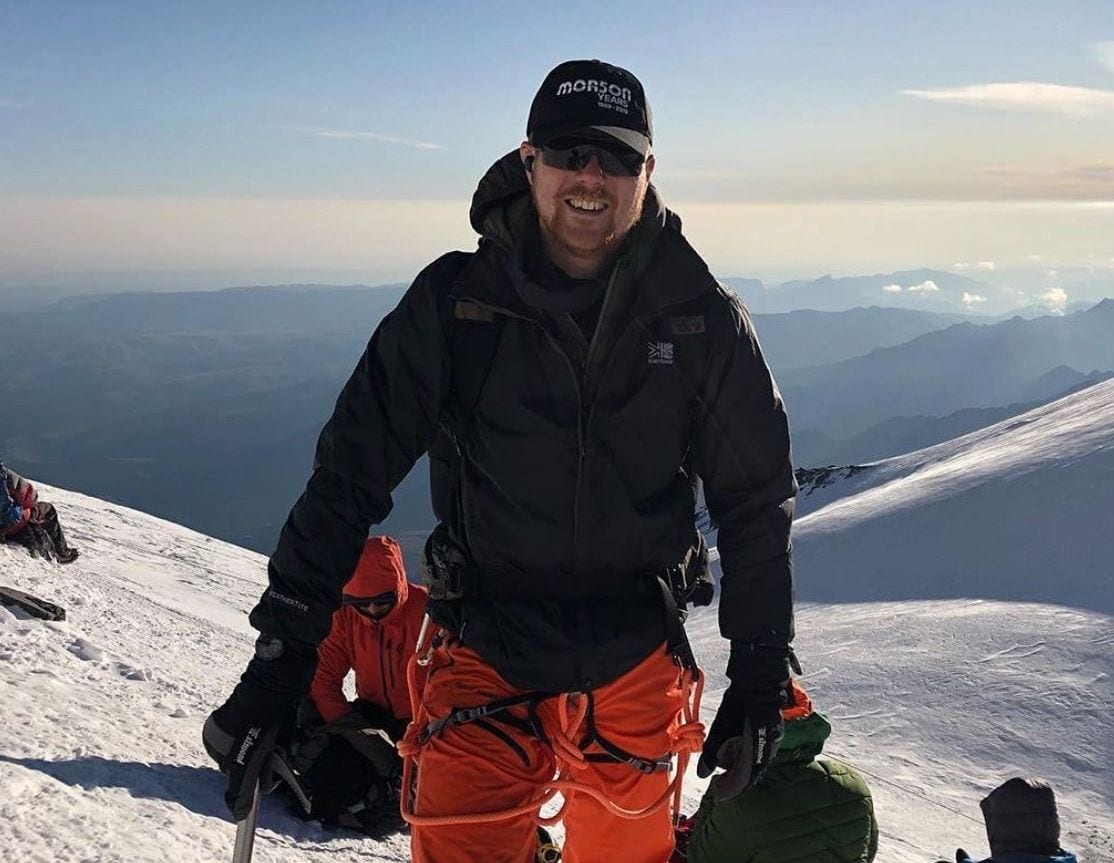
Jacob Gardner is a British climber from Southampton who reached the summit of Mount Everest on 24 May 2021, four years ahead of the 2025 goal he set while recovering from a severe injury suffered on active duty with the Royal Air Force in Afghanistan in 2013. After 18 months of physiotherapy and rehabilitation, he took up climbing seriously in 2015, starting with Mount Taranaki in New Zealand, then training in the Alps and climbing Aconcagua and, in 2019, Elbrus. He also completed a 260 km ultramarathon in the Jordan desert. During the 2020 lockdown he trained six days a week, including three-hour treadmill sessions at maximum gradient with a full pack and ankle weights. He summited in bad weather but with only about 14 other climbers, the day after a reported 354 people reached the top. This profile is part of our Everest 2021 Climber Profile Series.
| Home | Southampton, UK |
| Background | Royal Air Force; injured on operations in Afghanistan, 2013 |
| Started climbing seriously | 2015, after rehabilitation |
| First mountain | Mount Taranaki, New Zealand (2,518 m) |
| Training peaks | Gran Paradiso and the Graian Alps (from 2016) |
| Seven Summits before Everest | Aconcagua; Elbrus (2019) |
| Endurance | 260 km Jordan desert ultramarathon |
| Everest | Summit 24 May 2021, South Col route |
| Original goal | Everest by 2025 |
| Next | Working towards a mountain leader qualification |
From injury to Everest
Gardner had dreamed about Everest long before he became a climber.
"I had read so many books and watched documentaries [about Everest]," he told ExpedReview. "It's the highest mountain in the world with so much history. Before I got into climbing, I considered it the impossible goal or dream."
"But if you work hard enough towards a goal and aspiration, then it will eventually all come together," he added.
In 2013, while on operations in Afghanistan with the Royal Air Force, he was severely injured. Rehabilitation took 18 months of what he called "painstaking physiotherapy and rehabilitation." During that time, he set himself a goal: climbing Everest by 2025.
"I have been into climbing for around five or six years," Gardner said in 2021. "I got involved with climbing after getting injured whilst on operations in Afghanistan, 2013. During the rehabilitation, I set myself the goal of climbing Everest. But it wasn't until I got involved with the Adaptive Grand Slam that I really got into climbing properly."
Mountains and outdoor challenges have become an important part of recovery for many injured service personnel and veterans, offering physical goals, teamwork and time away from everyday pressures. Gardner's story is one example of how a long-term goal can carry someone through rehabilitation.
Mount Taranaki: a favourite first peak
The first mountain Gardner climbed after discovering his new passion was Mount Taranaki on New Zealand's North Island, a 2,518 m volcano. Despite its relatively modest height, he said it remains his favourite, partly because of fond memories of staying on a family farm that summer.
Taranaki is a striking, near-symmetrical cone that rises alone above the surrounding farmland. Its summit climb is a long day on scree, rock and, in winter, snow and ice, and its weather changes fast because it stands exposed to the Tasman Sea. It has a reputation as one of New Zealand's more dangerous mountains for the unprepared, which makes it a good place to learn respect for mountain weather.
Building skills in the Alps
Gardner knew that Everest would take years of gradual progress. In 2016, he began training in the Alps, including ascents of Gran Paradiso (4,061 m) and other peaks in the Graian Alps, all in preparation for his first big objective, Aconcagua.
Gran Paradiso, the highest mountain entirely in Italy, is a popular first 4,000 m peak. Its normal route involves glacier travel on crampons and a short, exposed rocky summit section, making it an excellent introduction to alpine climbing. See Mont Blanc guide for another classic step up.
Aconcagua and Elbrus
After his Alpine training, Gardner climbed Aconcagua (6,961 m) in Argentina, the highest of the Seven Summits outside Asia and the second-highest of the seven. Aconcagua is a serious test of endurance and altitude tolerance: two to three weeks on the mountain, heavy load carries, severe cold and wind, and a long summit day close to 7,000 m. See our Aconcagua guide and Aconcagua gear list.
He then climbed Elbrus (5,642 m) in Russia, the highest mountain in Europe, in 2019. Elbrus is a glaciated volcano whose normal routes are not technical, but it is cold, high and notorious for sudden whiteouts.
Alongside the mountains, he trained for and completed a 260 km (160 mile) ultramarathon in the Jordan desert, a very different but equally demanding test of endurance and mental resilience.
After these challenges, he felt ready for Everest and set 2021 as his year.
Training through lockdown
Gardner's plan to climb in 2021 had been made before the Covid-19 pandemic. When the world locked down, he used the time to train.
At home in Southampton, he trained six days a week. Sessions included three hours or more walking on a treadmill at maximum gradient with a full pack and ankle weights. As the expedition approached, he even put on his 8,000 m gear and practised crossing "crevasses" in his back garden, rehearsing the ladder crossings of the Khumbu Icefall.
His approach shows several principles that work for Everest training:
- Consistency. Six days a week over months builds the endurance needed for a two-month expedition.
- Specificity. Long, steep walks with a heavy pack mimic carrying loads on the mountain.
- Rehearsal. Practising in the boots, crampons and clothing you will wear on summit day makes them feel familiar when it matters.
- Mental training. Long, repetitive sessions build the patience needed for slow progress at altitude.
See training for mountaineering and how to choose mountaineering boots.
The 2021 expedition
On 5 April 2021, Gardner flew from Heathrow. Two days later he was in Kathmandu, and by 9 April he had landed in Lukla and started the trek to Base Camp, arriving about a week later.
The 2021 season was one of the strangest on record. Nepal had cancelled the 2020 season because of the pandemic, and China kept the Tibetan side closed. In 2021, Nepal reopened Everest and issued a record 408 permits to foreign climbers, according to Reuters. A second wave of Covid-19 swept Nepal in April and May, and the virus reached Base Camp; several climbers were evacuated, and an expedition leader told the Guardian that at least 100 people at Base Camp had been infected, although Nepali officials played down reports of an outbreak. Cyclones in May also brought heavy snow and strong winds, limiting summit windows.
After more than a month of acclimatisation rotations through the Khumbu Icefall and up to the higher camps, Gardner made his summit push.
Summit day: 24 May 2021
Gardner reached the summit on 24 May, in bad weather but with few people around. The previous day had been crowded, with a reported 354 people on top, so he appreciated sharing the summit with only about 14 other climbers.
Choosing a summit day is one of the key decisions of an Everest expedition. Good weather windows attract crowds, and crowds bring queues at bottlenecks, which can mean hours of standing still in the death zone, using oxygen and getting cold. Some teams deliberately avoid the busiest days and accept slightly worse weather in return for a quieter route, as long as winds stay within safe limits. See best time to climb Everest and the death zone.
He achieved his goal four years ahead of schedule.
The descent
Reaching the summit is only halfway. Most Everest accidents happen on the way down, when climbers are exhausted, oxygen is running low and concentration fades. After his summit, Gardner descended the same route, back past the South Summit and the Balcony to the South Col, and then over the following days down the Lhotse Face, through the Western Cwm and the Khumbu Icefall for a final time to Base Camp.
After Everest
Back home in the UK, Gardner planned to continue working towards his mountain leader qualification and to keep climbing.
"I enjoy climbing because it physically and mentally tests you, the views are just incredible, it's rewarding, and you are always learning," he said. "It's also great to be away from everything and reset. It heals the soul."
Acclimatisation on the South Col route
Gardner's month of acclimatisation followed the pattern most South Col expeditions use. After arriving at Base Camp (about 5,300 m), climbers practise on ladders and fixed ropes, then make a first rotation through the Khumbu Icefall to Camp 1 (about 6,000 m) and Camp 2 (about 6,400 m) in the Western Cwm, sleeping there before returning to Base Camp. A second rotation usually goes higher, to Camp 3 on the Lhotse Face (about 7,100 m), or at least touches it. Some climbers also acclimatise on nearby trekking peaks such as Lobuche East to reduce the number of trips through the Icefall.
After the rotations, climbers rest at Base Camp, sometimes descending to villages such as Pheriche or Dingboche to recover in thicker air, while their teams watch the forecasts. When a window of lower winds appears, the summit push takes about five days: Base Camp to Camp 2, a rest day, Camp 3, the South Col (about 7,900 m) and then the overnight climb to the summit and back.
Everest kit, tested in the garden
Gardner's back-garden practice in his 8,000 m gear was not just for fun. On summit day, climbers wear a down suit, triple-layer boots, crampons, mitts, a harness with a jumar and safety carabiners, and an oxygen mask, often in the dark and at temperatures well below freezing. Simple tasks such as clipping into a fixed rope, changing a carabiner at an anchor or crossing a ladder in crampons become much harder in thick mitts with a mask restricting your view of your feet. Practising them at home, until they are automatic, is time well spent.
Adaptive mountaineering
Gardner said it was getting involved with the Adaptive Grand Slam that turned his interest in mountains into serious climbing. Adaptive mountaineering, in which climbers with injuries or disabilities adapt their training, equipment and techniques to climb, has grown in recent decades, and several Everest climbers have reached the summit after life-changing injuries. Such projects often combine climbing goals with fundraising and awareness, and offer peer support from others who have been through similar experiences. For Gardner, they provided a path from rehabilitation to the world's highest mountain.
What is next on the Seven Summits?
With Aconcagua, Elbrus and Everest done, Gardner had climbed three of the Seven Summits. The others are Kilimanjaro in Africa, Denali in North America, Vinson in Antarctica and either Kosciuszko in Australia or Carstensz Pyramid in Oceania, depending on which list is used. Denali and Vinson are serious cold-weather expeditions without porters, while Carstensz Pyramid is a technical rock climb in Indonesian New Guinea. See our Denali guide, Carstensz Pyramid page and Kilimanjaro guide.
Lessons from Jacob Gardner's climb
- Set a long-term goal. A target of Everest by 2025 gave his rehabilitation and training a clear purpose.
- Progress step by step. Taranaki, the Alps, Aconcagua and Elbrus each built skills and experience.
- Train hard and specifically. Long, heavy, steep sessions six days a week prepared him for the demands of Everest.
- Pick your summit day wisely. Avoiding the crowds can make summit day safer and more enjoyable.
- Choose an experienced operator. See how to choose an Everest guide and Everest cost.
See also our Seven Summits guide and what to climb before Everest.
Frequently asked questions
Who is Jacob Gardner?
A British climber and former RAF serviceman, injured in Afghanistan in 2013, who reached the summit of Everest on 24 May 2021.
When did Jacob Gardner climb Everest?
On 24 May 2021, via the South Col route from Nepal.
What did Jacob Gardner climb before Everest?
Mount Taranaki, Gran Paradiso and other Alpine peaks, Aconcagua and Elbrus.
How did Jacob Gardner train for Everest?
Six days a week, including three-hour treadmill sessions at maximum gradient with a full pack and ankle weights, and practising crevasse crossings in his garden.
How many people summited Everest on 23 May 2021?
A reported 354, the day before Gardner's summit with about 14 others.
Tags: everest-2021, jacob-gardner, seven-summits, royal-air-force, climber-profile