2021 Everest Climber Profiles: Christine Vogondy, From Mont Blanc to Everest in the Covid Season
By Blake Penson · April 21, 2021
Category: climber-profiles
2 min read
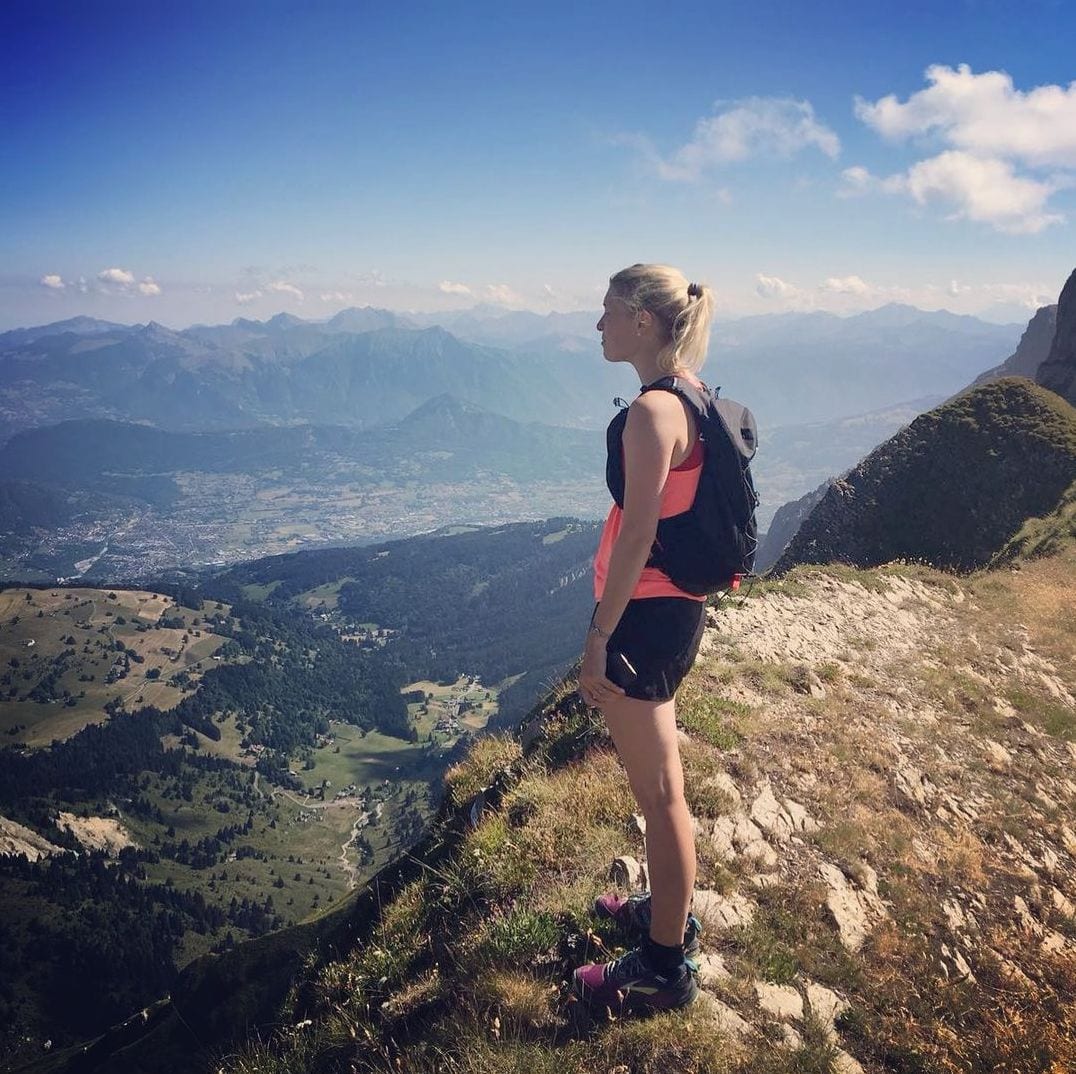
Christine Vogondy is a climber who grew up in the mountains of Switzerland and headed to Mount Everest in spring 2021 as part of a project to climb the Seven Summits. She began climbing seriously about five years earlier, after her first ascent of Mont Blanc, and had already climbed Kilimanjaro and Aconcagua. Everest was her first expedition above 8,000 m. She flew to Kathmandu on 8 April 2021, trekked about ten days from Lukla to Base Camp and began acclimatising during one of the most unusual seasons in Everest's history: Nepal reopened after the Covid-19 shutdown of 2020 and issued a record 408 Everest permits, even as a second wave of the virus spread through the country and reached Base Camp. This profile is part of our Everest 2021 Climber Profile Series, in which we spoke with mountaineers who chose to climb during that season about why they became climbers and what took them to the top of the world.
Christine Vogondy: profile at a glance | | | |---|---| | Home | Grew up in the mountains of Switzerland | | Started climbing seriously | About 2016, after her first ascent of Mont Blanc | | Goal | The Seven Summits | | Summits before Everest | Mont Blanc, Kilimanjaro, Aconcagua | | Everest season | Spring 2021, South Col route from Nepal | | Left for Kathmandu | 8 April 2021 | | Approach | About 10-day trek from Lukla to Base Camp | | First time above 8,000 m | Yes | | Motto | "I try to practise the most impossible." |
Who is Christine Vogondy?
Christine grew up in the Swiss mountains and has always loved climbing, but she started to take it seriously about five years before her Everest expedition, after making her first ascent of Mont Blanc. That climb set her on a bigger path: she decided to try the Seven Summits, the highest mountain on each continent. Before Everest, she had already climbed Kilimanjaro in Africa and Aconcagua in South America.
Everest was her next target, and her first time above 8,000 m. She trained intensely for it, including ice climbing in Chamonix, and made it her mission to reach the top of the world.
"I try to practise the most impossible," she told ExpedReview.
Her path to Everest
Christine's route to Everest follows a progression that many Seven Summits climbers use: start with a classic alpine peak, then build altitude experience on higher, non-technical mountains before attempting the highest.
| Step | Mountain | Height | What it teaches |
|---|---|---|---|
| 1 | Mont Blanc (Alps) | about 4,806 m | Glacier travel, crampons and ice axe, alpine starts, rockfall and weather judgement |
| 2 | Kilimanjaro (Tanzania) | 5,895 m | Acclimatisation over several days and a long summit night |
| 3 | Aconcagua (Argentina) | 6,961 m | Expedition life, load carrying, cold, wind and altitude near 7,000 m |
| 4 | Everest (Nepal/Tibet) | 8,849 m | Fixed ropes, supplemental oxygen, the death zone and a two-month expedition |
Mont Blanc
Mont Blanc, the highest mountain in western Europe, is where many European climbers learn the basics: crampons, ice axe, roped glacier travel and early starts. Its normal routes include crevassed glaciers and, on the Goûter route, the rockfall-prone Grand Couloir, so it teaches judgement as well as technique. See Mont Blanc guide.
Kilimanjaro
Kilimanjaro is the highest mountain in Africa and a non-technical trek, but its summit is close to 6,000 m. It introduces climbers to acclimatisation over several days and to a cold, long summit night. See our Kilimanjaro guide.
Aconcagua
Aconcagua, the highest mountain outside Asia, is a much bigger step. Climbers spend two to three weeks on the mountain, carry loads between camps, cope with intense cold and the strong "viento blanco" winds, and climb to nearly 7,000 m without supplemental oxygen on most expeditions. It is one of the best tests of whether a climber is ready for an 8,000 m peak. See our Aconcagua guide.
Everest
Everest takes everything to another level: about two months away, the Khumbu Icefall, fixed ropes on the Lhotse Face, supplemental oxygen and a summit push through the death zone above 8,000 m. See what to climb before Everest.
Training to "practise the most impossible"
Christine's training included ice climbing in Chamonix, the French alpine town at the foot of Mont Blanc. Ice and mixed climbing build confidence on steep terrain with crampons and tools, which helps in the Khumbu Icefall and on the Lhotse Face, even though Everest's normal route is not technically hard by alpine standards. Climbers preparing for Everest also usually build endurance with long days carrying a pack, strength training and, where possible, time at altitude. See training for mountaineering.
Everest in spring 2021: an unusual season
The 2021 season was unlike any other. In 2020, Nepal had cancelled the spring season because of the Covid-19 pandemic, and China kept the north side closed to foreign climbers. In 2021, Nepal reopened Everest and issued a record 408 permits to foreign climbers, according to Reuters, partly because tourism workers had lost a year of income.
The government introduced measures to reduce the spread of the virus, including testing on arrival, masks and distancing at Base Camp. But Nepal was hit by a severe second wave in April and May, and the virus reached Base Camp. Climbers were evacuated by helicopter with suspected Covid, and in May an expedition leader told the Guardian that at least 100 people at Base Camp had been infected, while Nepali officials played down reports of an outbreak. Some teams cancelled their expeditions. Weather added to the difficulty: two cyclones in the Bay of Bengal and Arabian Sea brought heavy snow and high winds in May, narrowing the summit windows.
Climbers who went that year had to accept extra risks: the possibility of infection at altitude, where breathing problems are more dangerous; the chance of their expedition being cut short; and the strain on Nepal's health services. Their reasons varied: a long-planned goal, a quieter mountain than usual or, for some, support for the Nepali workers who depend on the climbing season.
The trek and acclimatisation
After a final equipment check, Christine flew to Kathmandu on 8 April. Like most South Col climbers, she flew to Lukla and made the roughly 10-day trek to Everest Base Camp, through Sherpa villages including Namche Bazaar, climbing gradually to about 5,300 m. The trek is part of the acclimatisation: sleeping a little higher every day or two helps the body adapt to thinner air.
At Base Camp, the acclimatisation process continues with rotations up the mountain, through the Khumbu Icefall to Camps 1 and 2, and often to Camp 3 on the Lhotse Face, before returning to Base Camp to rest. Only after these rotations, and when the weather forecast shows a window of lower winds, do teams start their summit push. See our Everest Base Camp trek guide and best time to climb Everest.
What it means to go above 8,000 m for the first time
Above about 8,000 m, there is about a third of the oxygen available at sea level, and the body cannot acclimatise: it slowly deteriorates. Most Everest climbers use supplemental oxygen to reduce the risk of altitude illness, frostbite and exhaustion. A first trip above 8,000 m is a big unknown, because no amount of training at lower altitude shows exactly how your body will respond. That is why experienced guides stress turnaround times and careful oxygen management, and why many operators recommend an earlier 8,000 m peak such as Cho Oyu or Manaslu before Everest. See the death zone.
The South Col route, camp by camp
Christine's expedition followed the standard South Col route from Nepal, the route used by most Everest climbers. It is worth understanding what each section involves.
Base Camp (about 5,300 m). A tented town on the Khumbu Glacier, home for about six weeks. Teams rest, eat, train on ladders and fixed ropes, and wait for weather.
The Khumbu Icefall. A chaotic, moving section of glacier between Base Camp and Camp 1, crossed using ladders and fixed ropes set by the Icefall Doctors, a team of Sherpas who maintain the route. It is one of the most dangerous parts of the climb, because seracs and ice towers can collapse at any time, so climbers usually cross it in the early morning before the sun warms the ice.
Camp 1 (about 6,000 m) and Camp 2 (about 6,400 m). These sit in the Western Cwm, a glacier valley that can be extremely hot in the sun and bitterly cold at night. Camp 2, at the foot of the Lhotse Face, is the advanced base for the climb.
The Lhotse Face and Camp 3 (about 7,100 m). A steep wall of blue ice climbed on fixed ropes with crampons and a jumar. Camp 3 is perched on ledges cut into the face, and many climbers start using supplemental oxygen here or above.
Camp 4, the South Col (about 7,900 m). The high camp, on a windswept saddle between Everest and Lhotse. Climbers rest for a few hours and leave for the summit around late evening.
Summit day. The route climbs to the Balcony (about 8,400 m), along the Southeast Ridge to the South Summit, past the Hillary Step area and along the summit ridge to the top at 8,849 m. A round trip from the South Col usually takes 12 to 18 hours.
Equipment for a first Everest expedition
For a first-time 8,000 m climber, the equipment list is a big step up from Aconcagua. The essentials include an 8,000 m down suit, triple-layer high-altitude boots, a down sleeping bag rated to about −30 °C or colder, expedition mitts, a harness, crampons, an ice axe, a jumar and safety system, and an oxygen mask and regulator, usually supplied by the operator. Many climbers test their high-altitude boots, crampons and down gear on a winter climb in the Alps before the trip, so that nothing is new on the mountain. See how to choose mountaineering boots.
Why climbers chose to go in 2021
When we spoke to climbers for this series, a common theme was that the 2021 season offered something unusual. With the north side closed and many international climbers staying home because of travel restrictions, some expected fewer crowds, although Nepal's record permit count meant this did not always prove true on the busiest summit days. For others, the timing was simply the result of years of planning: they had trained, saved and taken time off work, and did not want to wait another year. And many said that, after a year without income for Nepal's climbing workers, they wanted to support the Sherpas, porters, cooks and lodge owners who rely on the season.
The cost of a first Everest expedition
An Everest expedition is a major financial commitment as well as a physical one. On top of the expedition price, which depends on the operator and the level of service, climbers budget for the Nepal climbing permit, flights, insurance that covers high-altitude rescue, equipment, training trips and tips for Sherpas and staff. Nepal's permit fee for foreign climbers in the spring season was US$11,000 in 2021 and rose to US$15,000 from September 2025. See our Everest cost guide and Everest permit fee for current figures.
Following her progress
At the time of our interview, Christine was acclimatising at Base Camp and planning to reach the top of the world in the following weeks. She shared her progress on Instagram. We have not independently confirmed the outcome of her 2021 summit attempt, so we do not report one here.
Lessons for aspiring Seven Summiters
Christine's story highlights some useful principles for anyone planning the Seven Summits:
- Start with a solid alpine base. Learning glacier travel and crampon technique on a mountain such as Mont Blanc pays off on every later peak.
- Build altitude in steps. Kilimanjaro and Aconcagua are natural steps before 8,000 m.
- Train for the specific demands. Ice climbing, long days and strength work all matter.
- Be flexible. Seasons can change at short notice, as 2021 showed.
- Choose your operator carefully. Safety records, Sherpa support and oxygen policies differ widely. See how to choose an Everest guide and Everest cost.
See also our Seven Summits guide.
Frequently asked questions
Who is Christine Vogondy?
A climber who grew up in the mountains of Switzerland and went to Everest in spring 2021 as part of a Seven Summits project.
What had Christine Vogondy climbed before Everest?
Mont Blanc, Kilimanjaro and Aconcagua.
How many Everest permits did Nepal issue in 2021?
A record 408 permits for foreign climbers, according to Reuters.
Was there Covid at Everest Base Camp in 2021?
Yes. Climbers were evacuated with suspected Covid, and an expedition leader said at least 100 people were infected, though Nepali officials played down reports of an outbreak.
How long is the trek to Everest Base Camp?
About 8 to 10 days from Lukla on the standard route, including acclimatisation days.
Tags: everest-2021, christine-vogondy, seven-summits, switzerland, climber-profile