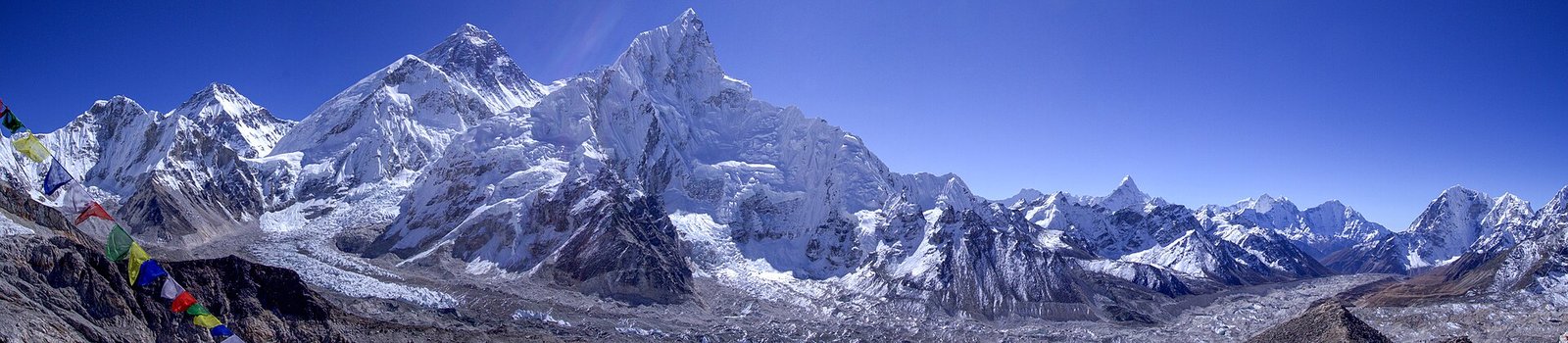
When Is the Best Time to Climb Everest? Spring Window, Autumn, Winter and the Season Timeline
Spring, specifically the second half of May, is by far the best time to climb Everest. Alan Arnette's analysis of Himalayan Database records found that 97.5% of Everest summits were made in spring and 81.5% between 15 and 27 May. That is when the jet stream usually lifts off the summit for a few days before the monsoon arrives, giving lower winds. A standard spring expedition runs from late March or early April to late May, about six to nine weeks, with acclimatisation rotations through April. Autumn is possible but summits are rare because of deeper snow and stronger winds, and winter and summer are for experts only. On ExpedReview, as of 23 October 2026, 10 operators have 56 verified client reviews for Everest via the South Col, led by Climbing The Seven Summits (5.0★ from 14 reviews). Below are the operator rankings, a season timeline and how each season compares.
| Best season | Spring (April–May) |
| Peak summit window | About 15–27 May (81.5% of summits, Arnette from HDB) |
| Share of summits in spring | 97.5% (Arnette, from HDB) |
| Standard expedition length | About 6–9 weeks |
| Autumn | September–November; summits uncommon |
| Winter and summer | Extreme cold or monsoon; expert-only |
| Operators with ER reviews (South Col) | 10, with 56 verified reviews (as of 23 Oct 2026) |
Everest South Col operators with verified reviews
ExpedReview ranks operators by their verified client reviews for each place: the star rating, adjusted so one or two reviews, or only old ones, count for less than many recent ones. Every review is checked by hand before it is published, critical reviews stay up, and operators cannot pay to appear or rank higher. Prices are the operators' own guide-listed "from" prices, not quotes. Data as of 23 October 2026: 10 operators with 56 verified reviews for Everest via the South Col.
| Rank | Operator | Based in | Rating here | Reviews | Latest review | Guide-listed price |
|---|---|---|---|---|---|---|
| 1 | Climbing The Seven Summits | United States | 5.0★ | 14 | June 2026 | From US$54,995 |
| 2 | Furtenbach Adventures | Austria | 4.9★ | 16 | July 2026 | From US$88,501 (package) |
| 3 | Dream Himalaya Adventures | Nepal | 5.0★ | 5 | June 2026 | From US$41,000 (package) |
| 4 | Adventure Consultants | New Zealand | 5.0★ | 3 | September 2026 | From US$83,000 |
| 5 | Summitclimb | United States | 4.7★ | 6 | October 2023 | From US$42,450, up to US$56,450 |
| 6 | Pioneer Adventure | Nepal | 4.7★ | 2 | October 2021 | No recent price listed |
| 7 | 360 Expeditions | United Kingdom | 5.0★ | 1 | February 2021 | No recent price listed |
| 8 | Seven Summit Treks | Nepal | 4.8★ | 1 | June 2022 | No recent price listed |
| 9 | Tim Mosedale | United Kingdom | 3.8★ | 4 | July 2020 | No recent price listed |
| 10 | Elite Exped | Nepal | 3.6★ | 2 | May 2024 | No recent price listed |
What clients say
Recent South Col reviews from 2026 are strongly positive. A Climbing The Seven Summits client (June 2026) says the company "exceeded my expectations in every aspect of the climb", praising the food, an "absolutely exceptional" Sherpa team and knowledgeable Western guides. Several Furtenbach Adventures clients (July 2026) praise a comfortable base camp that "helps preserve your energy for climbing", a large Sherpa team that gives "more flexibility in timing", and organisation, leadership and safety "at the highest standards"; one gave four stars rather than five. An Adventure Consultants client (September 2026) had "complete confidence" in guide Rob and the team, and praised base camp manager Kim. A Dream Himalaya Adventures client (June 2026) climbed Ama Dablam, Lhotse and Everest with the company. Older reviews for Tim Mosedale (2020) and Elite Exped (2024) are more mixed, so read them in full on each operator's profile.
Why spring is the season
Two big weather systems control Everest. For most of the year, the subtropical jet stream blows across the summit at well over 100 km/h, making a summit attempt impossible or extremely dangerous. In summer, the South Asian monsoon brings heavy snow and cloud from June to September. In late spring, as the monsoon builds over the Bay of Bengal, the jet stream usually moves north and lifts off the summit for a few days, sometimes a week or more. That gap, usually in the second half of May, is the summit window. A smaller, less reliable window sometimes opens after the monsoon in autumn.
In spring, temperatures are also milder than in winter, the Khumbu Icefall is usually in more stable condition after the winter, and commercial teams fix ropes all the way to the summit. All of this makes spring the season for nearly every commercial expedition.
A spring expedition, week by week
Every operator's programme is different, but a standard South Col expedition follows a similar pattern:
Late March to early April: arrival and trek. Climbers arrive in Kathmandu, fly to Lukla and trek for about 8 to 12 days up the Khumbu valley to Everest Base Camp (about 5,364 m), acclimatising on the way. Some teams climb Lobuche East or another trekking peak during the approach.
Mid-April: base camp and first rotation. Teams settle into base camp, hold a puja ceremony for a safe climb and practise on the lower Khumbu Icefall. The Icefall Doctors, a specialist Sherpa team, fix the route through the icefall early in the season. Teams then make their first rotation, climbing through the icefall to Camp 1 (about 6,000 m) and Camp 2 (about 6,400 m) in the Western Cwm.
Late April to early May: second rotation. Teams climb back to Camp 2 and up the Lhotse Face to touch or sleep at Camp 3 (about 7,100 to 7,200 m), then descend to base camp, or sometimes lower in the valley, to rest and recover in thicker air.
Early to mid May: rope fixing and waiting. A rope-fixing team led by experienced Sherpas fixes ropes to the South Col and eventually to the summit, usually in early to mid May. Teams rest and watch weather forecasts closely.
Mid to late May: summit push. When a window appears, teams climb to Camp 2, Camp 3 and the South Col (about 7,900 m), then leave for the summit at night. The push takes about five to seven days from base camp and back.
Late May to early June: descent and departure. Teams clear the mountain, trek or fly out and return to Kathmandu. By early June, the icefall becomes too dangerous and the monsoon arrives.
Pre-acclimatised expeditions, which use hypoxic tents at home, skip most of the rotations and arrive later, often spending only three to five weeks in Nepal.
Choosing your summit day
Within the spring window, the choice of summit day matters. In some seasons, the window is only a few days long, and hundreds of climbers try to summit on the same days, causing queues on the summit ridge and the Hillary Step area. The famous photograph of a queue near the summit on 22 May 2019 showed what crowding can mean. Alan Arnette's 2026 season summary notes that in 2019 only three days had summit winds under 35 mph (56 km/h), shared by more than 600 climbers. Good operators use professional forecasts, keep flexible plans and are willing to choose a less crowded day, even if the forecast is slightly less perfect. Ask how your operator chooses its summit day and how it manages crowding.
Autumn (September to November)
A smaller autumn season follows the monsoon. There are far fewer teams, so the mountain is quiet, and the Nepal government's royalty is lower than in spring. But snow is usually deeper after the monsoon, avalanche risk is higher, fewer ropes are fixed and the jet stream returns quickly in late autumn. According to the same analysis of Himalayan Database records, only about 2% of Everest summits have been made in autumn. Autumn suits experienced teams seeking solitude and willing to accept lower chances.
Winter (December to February)
Winter brings extreme cold and the full force of the jet stream, with very few days calm enough to climb. Winter ascents of Everest are rare and reserved for elite climbers. The first winter ascent was made on 17 February 1980 by Krzysztof Wielicki and Leszek Cichy of Poland.
Summer (June to August)
The monsoon brings heavy snow, avalanches and poor visibility, and the Khumbu Icefall becomes very unstable. Almost nobody attempts Everest in summer.
What this means for planning
- Book for spring. Nearly every commercial South Col expedition runs from late March or April to late May.
- Plan for about two months away, or choose a pre-acclimatised programme if time is short.
- Build flexibility. Summit dates depend on the weather, so do not book tight return flights.
- Train for the long wait. Patience at base camp is part of the climb.
- Ask about forecasting. A good operator uses professional forecasts and is willing to wait.
Weather forecasting
Modern Everest expeditions rely heavily on professional weather forecasts, usually from specialist mountain forecasters, which predict summit winds, temperatures and snowfall several days ahead. Leaders compare several forecasts and look for days when summit winds drop below about 20 to 30 km/h. Because the push from base camp to the summit takes several days, teams must commit before they know exactly what the summit day will bring. Experienced leaders also watch what other teams are doing, as crowding can be as important as the weather.
The North side season
Everest's Northeast Ridge in Tibet follows the same spring pattern, with most summits in the second half of May. Teams base themselves at the Chinese base camp and advanced base camp and use similar rotations. Chinese permits and access rules can change at short notice, and the North side has had several closed seasons in recent years. See our comparison of the South Col and Northeast Ridge.
When to book and start training
Most operators fill their spring Everest teams many months in advance, so book about a year ahead if possible, and earlier for premium or small-team expeditions. Plan your training backwards from your departure date. Many climbers train for a year or more, building up to long days carrying heavy loads and adding a high-altitude climb, such as a 6,000 or 7,000 m peak, in the year before Everest. If you are using a pre-acclimatised programme, your hypoxic tent schedule usually starts several weeks before departure. See our guide on what to climb before Everest.
Life at base camp in spring
In April and May, Everest Base Camp becomes a busy tent village on the Khumbu Glacier, with hundreds of climbers, Sherpas, cooks and staff. Mornings are often clear and cold, with afternoon cloud and occasional snow. Nights fall well below freezing. Most operators provide dining tents, heated communal tents, internet and individual sleeping tents. Between rotations, climbers rest, eat, train on the lower glacier and sometimes walk down to villages such as Pheriche or Dingboche to recover in thicker air.
Season length and your body
A long spring expedition is physically and mentally draining. Weight loss is common, as appetite falls at altitude, and coughs and stomach bugs spread easily in busy camps. Most climbers lose fitness and muscle during two months on the mountain, so arriving at the summit window healthy matters as much as arriving fit. Eat well, wash your hands, rest between rotations and avoid crowded tents when people are ill. Good operators also plan rest at lower altitude before the summit push.
Climate change and the season
Glaciers in the Khumbu are thinning, and some research suggests warmer conditions are making the Khumbu Icefall and lower slopes less stable. Seasons can also start or finish a little differently from year to year. Ask your operator how conditions have changed in recent seasons.
Frequently asked questions
What month is best for climbing Everest?
May. According to Alan Arnette's analysis of Himalayan Database records, 81.5% of summits fell between 15 and 27 May.
Can you climb Everest in autumn?
Yes, but summits are uncommon. Only about 2% of Everest summits have been made in autumn, according to the same analysis.
How long does an Everest expedition take?
Standard spring expeditions take about six to nine weeks. Pre-acclimatised trips are shorter.
Why do climbers summit Everest at night?
Leaving the South Col at night lets climbers reach the summit in the morning and descend before afternoon winds and weather, with time in hand to return safely.
Which operators have verified reviews for Everest via the South Col?
As of 23 October 2026, 10 operators, led by Climbing The Seven Summits (5.0★ from 14 reviews).
When is the Everest summit window?
Usually in the second half of May, when the jet stream lifts off the summit for a few days before the monsoon arrives.
What is the best time to trek to Everest Base Camp?
Spring and autumn are the main trekking seasons. Spring lets you see the climbing season at base camp.
When was Everest first climbed in winter?
On 17 February 1980, by Krzysztof Wielicki and Leszek Cichy of Poland.
Is Everest crowded in May?
Yes, on the best summit days. Ask your operator how it chooses summit days to avoid queues.
Can operators pay to rank higher on ExpedReview?
No. Operators cannot pay to appear, rank higher or have reviews removed.
Related articles
- How to Choose an Everest Operator: A Checklist That Uses Evidence (US$37,900 to US$88,501)
A practical way to shortlist Everest operators using verified reviews, written support commitments and a few hard questions.
- Best operators
- How Much Does It Cost to Climb Mount Everest in 2027? (US$41,000 to US$224,000)
What guided Everest expeditions are listed for on ExpedReview, what the Nepal royalty adds, and why two quotes can sit US$50,000 apart.
- Best Everest Expedition Operators by Style: Premium, Tiered, Fast, Nepal-Based and Budget (US$41,000 to US$88,501,)
Which Everest operators verified climbers actually rate highest, split by expedition style, with permit fees, fatality data and the support questions that…
- Everest Permit and Fees: How the Nepal Royalty Works, What Else You Pay and What Your Quote Should Include (US$41,000 to US$88,501)
Nepal's Everest royalty for foreign climbers by season and route, effective 1 September 2025, and what it does and does not cover.
- Everest Success Rate: What Percentage of Climbers Reach the Summit?
Everest summit rates from the Himalayan Database, how they differ by route and season, and what changes your own odds.
- How Many People Have Died on Everest? Deaths, Death Rate and Causes
Recorded Everest deaths, the deaths-per-summit ratio, and whether the mountain is getting safer, from the Himalayan Database and peer-reviewed research.
- Western-Guided vs Nepal-Based Everest Operators: What You Actually Get (US$41,000 to US$88,501)
The support differences that drive Everest prices, guide and Sherpa ratios, oxygen and team size, and how verified clients rate both models.
- What to Climb Before Everest: A Step-by-Step Progression (US$14,300 to US$29,919)
A progression of peaks that builds the altitude, cold and rope skills Everest operators expect, with risk and cost data for each step.
- How to Climb Everest Responsibly: Waste Rules, Poo Bags, Sherpa Welfare, Crowding and New Nepal Rules (2026)
How to climb Mount Everest responsibly in 2026: Nepal's waste deposit and poo-bag rules, the new US$15,000 royalty, guide and tracking rules, crowding, Sherpa welfare and how to choose an ethical Everest operator.
- Can a Beginner Climb Mount Everest? Experience Needed, Training Plan and Step-by-Step Progression (2026)
Can you climb Everest with no experience?
- Everest Poop Problem: Poo Bag Rules, How Climbers Go to the Toilet and the Waste Clean-Up (2026)
How climbers go to the toilet on Everest, why human waste became a crisis, the mandatory poo bag rule since 2024, the 2026 waste-return rules and clean-up figures, and how other peaks such as Aconcagua, Denali and Rainier manage waste.
- 2023 Everest Season: Deaths, Permits and Why It Was the Deadliest Year
How many people died on Everest in 2023?