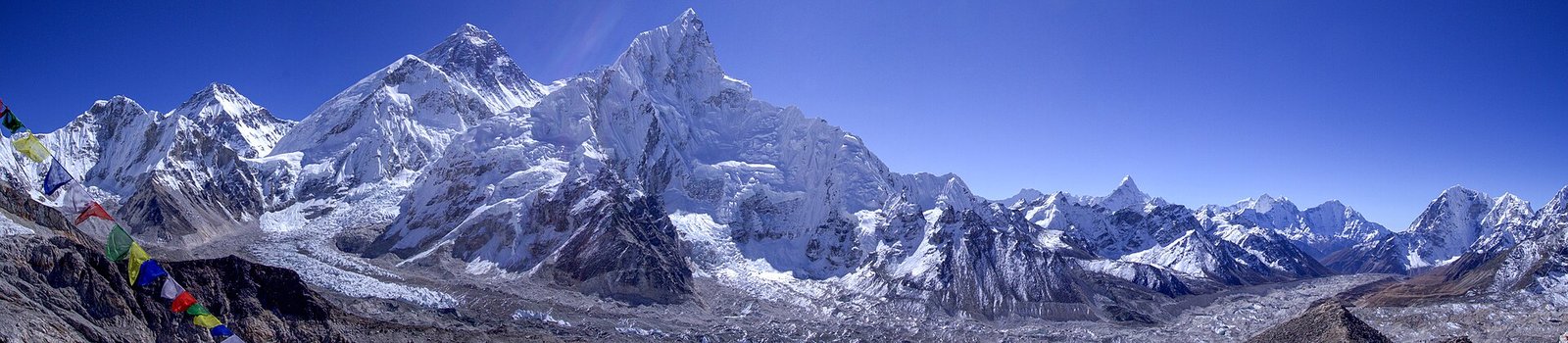
Everest Success Rate: What Percentage of Climbers Reach the Summit?
The Himalayan Database, the standard record of Nepal Himalayan expeditions, lists 13,550 summits of Everest against 26,316 expedition members, a ratio of 51.5%. That headline figure counts every summit, including repeat ascents by Sherpas and guides, so it overstates the odds for a first-time client. An older Himalayan Database analysis of spring seasons from 1980 to 2002 found that about one in three climbers succeeded on the South Col route and one in four on the North Col route (Huey and Salisbury, American Alpine Journal, 2003). Success rates for well-supported commercial teams are higher today, but no public dataset splits modern results by client and operator. Nearly all summits happen in spring: Alan Arnette's analysis of Himalayan Database records found 97.5% of Everest summits in spring and 81.5% between 15 and 27 May. ExpedReview does not publish operator success rates because we cannot audit them. On ExpedReview, as of 23 October 2026, 10 operators have 56 verified client reviews for the South Col.
| Summits recorded | 13,550 (Himalayan Database) |
| Expedition members recorded | 26,316 (Himalayan Database) |
| Summits per member | 51.5% (Himalayan Database) |
| Spring 1980–2002, South Col climbers | About 1 in 3 (Huey and Salisbury, 2003) |
| Spring 1980–2002, North Col climbers | About 1 in 4 (Huey and Salisbury, 2003) |
| Share of summits in spring | 97.5% (Arnette, from Himalayan Database) |
| Summits between 15 and 27 May | 81.5% (Arnette, from Himalayan Database) |
| Elevation | 8,849 m (Himalayan Database) |
Everest South Col operators with verified reviews
ExpedReview ranks operators by their verified client reviews for each place: the star rating, adjusted so one or two reviews, or only old ones, count for less than many recent ones. Every review is checked by hand before it is published, critical reviews stay up, and operators cannot pay to appear or rank higher. Prices are the operators' own guide-listed "from" prices, not quotes. Data as of 23 October 2026: 10 operators with 56 verified reviews for Everest via the South Col.
| Rank | Operator | Based in | Rating here | Reviews | Latest review | Guide-listed price |
|---|---|---|---|---|---|---|
| 1 | Climbing The Seven Summits | United States | 5.0★ | 14 | June 2026 | From US$54,995 |
| 2 | Furtenbach Adventures | Austria | 4.9★ | 16 | July 2026 | From US$88,501 (package) |
| 3 | Dream Himalaya Adventures | Nepal | 5.0★ | 5 | June 2026 | From US$41,000 (package) |
| 4 | Adventure Consultants | New Zealand | 5.0★ | 3 | September 2026 | From US$83,000 |
| 5 | Summitclimb | United States | 4.7★ | 6 | October 2023 | From US$42,450, up to US$56,450 |
| 6 | Pioneer Adventure | Nepal | 4.7★ | 2 | October 2021 | No recent price listed |
| 7 | 360 Expeditions | United Kingdom | 5.0★ | 1 | February 2021 | No recent price listed |
| 8 | Seven Summit Treks | Nepal | 4.8★ | 1 | June 2022 | No recent price listed |
| 9 | Tim Mosedale | United Kingdom | 3.8★ | 4 | July 2020 | No recent price listed |
| 10 | Elite Exped | Nepal | 3.6★ | 2 | May 2024 | No recent price listed |
What clients say
Recent South Col reviews from 2026 are strongly positive. A Climbing The Seven Summits client (June 2026) says the company "exceeded my expectations in every aspect of the climb", praising the food, an "absolutely exceptional" Sherpa team and knowledgeable Western guides. Several Furtenbach Adventures clients (July 2026) praise a comfortable base camp that "helps preserve your energy for climbing", a large Sherpa team that gives "more flexibility in timing", and organisation, leadership and safety "at the highest standards"; one gave four stars rather than five. An Adventure Consultants client (September 2026) had "complete confidence" in guide Rob and the team, and praised base camp manager Kim. A Dream Himalaya Adventures client (June 2026) climbed Ama Dablam, Lhotse and Everest with the company. Older reviews for Tim Mosedale (2020) and Elite Exped (2024) are more mixed, so read them in full on each operator's profile.
What the headline figure means
The Himalayan Database, founded by Elizabeth Hawley, records expeditions to Nepal's Himalayan peaks, including the Nepal and Tibet sides of border peaks such as Everest. Its summits-per-member figure for Everest, 51.5%, divides all recorded summits by all recorded expedition members.
That figure is useful for comparing mountains, but it is not your personal chance of success. It counts summits, not people, so a Sherpa who has reached the summit many times counts many times. Members include people who never tried for the summit and people on expeditions that were cancelled. It mixes very different eras, routes and styles, from the 1950s to today.
Success by route
The best published route comparison is Huey and Salisbury's study, "Success and death on Mount Everest", in the American Alpine Journal in 2003. Looking at spring seasons from 1980 to 2002, and separating climbers from high-altitude workers, they found that about one in three climbers succeeded on the South Col route and one in four on the North Col route. The South Col's higher success has been linked to its lower high camp and better support. See our South Col vs Northeast Ridge comparison.
Success rates have risen since then, with better weather forecasts, more fixed ropes, more Sherpa support and more supplementary oxygen. But newer route-split data for clients has not been publicly summarised.
Success by season
Almost all Everest summits happen in spring. Alan Arnette's analysis of Himalayan Database dates found that 97.5% of Everest summits were made in spring and 81.5% fell between 15 and 27 May. That is when the jet stream usually lifts off the summit before the monsoon. In some years the window is very short: in 2019, only three days had summit winds under 35 mph (56 km/h), according to Arnette. Autumn and winter summits are rare. See our guide to the best time to climb Everest.
How Everest compares with other 8,000 m peaks
| Peak | Summits per member |
|---|---|
| Everest | 51.5% |
| Manaslu | 45.7% |
| Cho Oyu | 44.0% |
| Lhotse | 42.1% |
| Makalu | 30.6% |
| Annapurna I | 27.1% |
| Dhaulagiri I | 23.5% |
Source: Himalayan Database, 8000m Peak Comparison report.
Everest's ratio is the highest of these, partly because so many commercial expeditions, with heavy Sherpa and oxygen support, climb it. The same caveats apply to every peak: repeat summits by Sherpas raise the figure.
Why climbers turn back
Climbers fail to summit Everest for many reasons. The most common are:
- Weather. High winds, storms or a short summit window.
- Altitude illness. Acute mountain sickness, high-altitude pulmonary or cerebral oedema, or simply not acclimatising well.
- Illness and injury. Coughs, chest infections, stomach bugs and injuries are common in busy camps.
- Exhaustion. After weeks on the mountain, many climbers lack the energy for summit day.
- Turnaround times. Good teams set a time by which climbers must turn back, whether or not they have summited.
- Crowding. Long queues on summit day can force climbers to turn back.
- Cold injury. Frostbite or the threat of it.
- Season closures. Disasters, such as the 2014 icefall avalanche and 2015 earthquake, ended entire seasons on the South side.
What improves your chances
You can improve your chances by:
- Building high-altitude experience. Climb peaks above 6,000 and 7,000 m first, and ideally another 8,000 m peak. See what to climb before Everest.
- Training properly. Build endurance, strength and the ability to carry loads for long days.
- Choosing your operator carefully. Look at Sherpa support, oxygen, guide experience and how the operator picks summit days.
- Planning for oxygen. Ask how many bottles you will have and at what flow rates.
- Staying healthy. Wash your hands, eat well and rest between rotations.
- Being patient. Wait for a good weather window, and accept your leader's decision to turn back.
Do operators publish success rates?
Some operators publish success rates, but these figures are self-reported and defined in different ways, for example per team, per client or per attempt, and may not include cancelled seasons. ExpedReview does not publish operator success rates because we cannot audit them. If an operator quotes a success rate, ask how it is calculated, over how many seasons, and whether it includes clients who left early.
How success has changed over time
Everest's success rate has risen sharply since the early decades of climbing. In the 1950s to 1970s, most expeditions were large national teams, and only a few climbers on each reached the summit. From the 1990s, commercial expeditions began to guide paying clients, and the number of summits grew quickly. Since the 2000s, improvements in weather forecasting, the routine fixing of ropes from base camp to the summit, more Sherpa support per client and greater use of supplementary oxygen have all made success more likely for well-supported teams.
The same changes have been linked to lower death rates. Dodge and colleagues, writing in The Journal of Physiology in 2026, found that mortality among climbers above base camp fell from 1.4% for 1921–2006 to 0.7% for 2007–2024. See our guide to deaths on Everest.
Oxygen and success
Nearly all commercial clients use supplementary oxygen above about 7,000 m, and it is one of the biggest factors in success. Oxygen lets climbers move faster, stay warmer and think more clearly. Ask your operator how many bottles you will have, what flow rates you can use on summit day and what backup supplies exist at the high camps. A few climbers try Everest without supplementary oxygen. Reinhold Messner and Peter Habeler made the first such ascent in 1978. Success rates without oxygen are far lower, and the risks are much higher.
Sherpa support and success
Climbing Sherpas fix ropes, set up high camps, carry oxygen and gear, and climb alongside clients on summit day. Most commercial teams have at least one climbing Sherpa per client on summit day, and premium teams often have more. Strong Sherpa support makes it easier to change bottles, recover from problems and turn back safely. Ask how many Sherpas your operator provides and how experienced they are.
Age, sex and experience
Huey and colleagues analysed Himalayan Database records for Everest in a 2007 paper in PLoS ONE. They found that older climbers had a lower chance of reaching the summit and a higher risk of dying on descent, while success and death rates for women and men were broadly similar. Experience matters too: climbers with previous high-altitude experience generally cope better with Everest's long season and altitude. Yuichiro Miura of Japan summited in 2013 at the age of 80.
What counts as success?
On Everest, success means reaching the summit and returning safely. Most deaths happen on the descent, when climbers are tired, cold and low on oxygen. Good operators set clear turnaround times and enforce them, even close to the summit. A climb that ends at the South Summit or the Balcony because the team turned back in time is a sensible decision, not a failure.
How to read an operator's track record
When comparing operators, look beyond the headline success rate. Ask:
- How many clients each season reached the summit, and how many tried?
- How many seasons are included, and do they include seasons cancelled by disasters?
- How many clients left early because of illness or injury?
- How many clients and staff have died or been seriously injured on their expeditions?
- How do they choose summit days, and how do they avoid crowds?
Then read verified reviews for each operator, especially critical ones. On ExpedReview, reviews are checked by hand before they are published, and critical reviews stay up.
The length of the expedition
A standard guided South Col expedition lasts about eight weeks, from arrival in Kathmandu to return. That gives time to trek in, acclimatise, wait for a summit window and recover. Shorter programmes, which use home hypoxic tents to pre-acclimatise, try to cut time on the mountain and the chance of illness, but they leave less room to wait out bad weather. Neither approach guarantees success. Ask your operator how much spare time its schedule allows for weather.
Success on other Everest routes
The South Col and Northeast Ridge account for nearly all Everest summits. Other routes, such as the West Ridge, the Southwest Face and the Kangshung Face, are climbed only rarely, by experienced teams. Their success rates are much lower, and they are not offered by commercial operators.
Frequently asked questions
What is the success rate on Everest?
The Himalayan Database lists 13,550 summits against 26,316 members, a ratio of 51.5%. The rate for clients is lower, because Sherpas' repeat summits are included.
Is the South Col or North Ridge more successful?
For spring seasons from 1980 to 2002, about one in three South Col climbers and one in four North Col climbers summited (Huey and Salisbury, 2003).
When do most people summit Everest?
In May. 81.5% of summits fell between 15 and 27 May in Alan Arnette's analysis of Himalayan Database records.
Can a beginner summit Everest?
Not safely. Operators expect previous high-altitude experience, usually including peaks above 6,000 and 7,000 m, as well as crampon and fixed-rope skills.
Does oxygen improve the success rate?
Yes. Nearly all commercial clients use supplementary oxygen, and success without it is far lower.
Do most deaths happen on the way up or down?
Most happen on the descent, which is why turnaround times matter.
Does ExpedReview publish operator success rates?
No. We cannot audit them, so we publish verified reviews instead.
Can operators pay to rank higher on ExpedReview?
No. Operators cannot pay to appear, rank higher or have reviews removed.
Related articles
- How to Choose an Everest Operator: A Checklist That Uses Evidence (US$37,900 to US$88,501)
A practical way to shortlist Everest operators using verified reviews, written support commitments and a few hard questions.
- Best operators
- How Much Does It Cost to Climb Mount Everest in 2027? (US$41,000 to US$224,000)
What guided Everest expeditions are listed for on ExpedReview, what the Nepal royalty adds, and why two quotes can sit US$50,000 apart.
- Best Everest Expedition Operators by Style: Premium, Tiered, Fast, Nepal-Based and Budget (US$41,000 to US$88,501,)
Which Everest operators verified climbers actually rate highest, split by expedition style, with permit fees, fatality data and the support questions that…
- When Is the Best Time to Climb Everest? Spring Window, Autumn, Winter and the Season Timeline
Why almost every Everest summit happens in a short May window, what autumn and winter offer, and when ExpedReview reviewers actually climbed.
- Everest Permit and Fees: How the Nepal Royalty Works, What Else You Pay and What Your Quote Should Include (US$41,000 to US$88,501)
Nepal's Everest royalty for foreign climbers by season and route, effective 1 September 2025, and what it does and does not cover.
- How Many People Have Died on Everest? Deaths, Death Rate and Causes
Recorded Everest deaths, the deaths-per-summit ratio, and whether the mountain is getting safer, from the Himalayan Database and peer-reviewed research.
- Western-Guided vs Nepal-Based Everest Operators: What You Actually Get (US$41,000 to US$88,501)
The support differences that drive Everest prices, guide and Sherpa ratios, oxygen and team size, and how verified clients rate both models.
- What to Climb Before Everest: A Step-by-Step Progression (US$14,300 to US$29,919)
A progression of peaks that builds the altitude, cold and rope skills Everest operators expect, with risk and cost data for each step.
- How to Climb Everest Responsibly: Waste Rules, Poo Bags, Sherpa Welfare, Crowding and New Nepal Rules (2026)
How to climb Mount Everest responsibly in 2026: Nepal's waste deposit and poo-bag rules, the new US$15,000 royalty, guide and tracking rules, crowding, Sherpa welfare and how to choose an ethical Everest operator.
- Can a Beginner Climb Mount Everest? Experience Needed, Training Plan and Step-by-Step Progression (2026)
Can you climb Everest with no experience?
- Everest Poop Problem: Poo Bag Rules, How Climbers Go to the Toilet and the Waste Clean-Up (2026)
How climbers go to the toilet on Everest, why human waste became a crisis, the mandatory poo bag rule since 2024, the 2026 waste-return rules and clean-up figures, and how other peaks such as Aconcagua, Denali and Rainier manage waste.
- 2023 Everest Season: Deaths, Permits and Why It Was the Deadliest Year
How many people died on Everest in 2023?