The Death Zone: Altitude, Mountains & What It Does to Your Body (2027 Guide)
By Blake Penson · July 13, 2022
Category: health-and-safety
6 min read
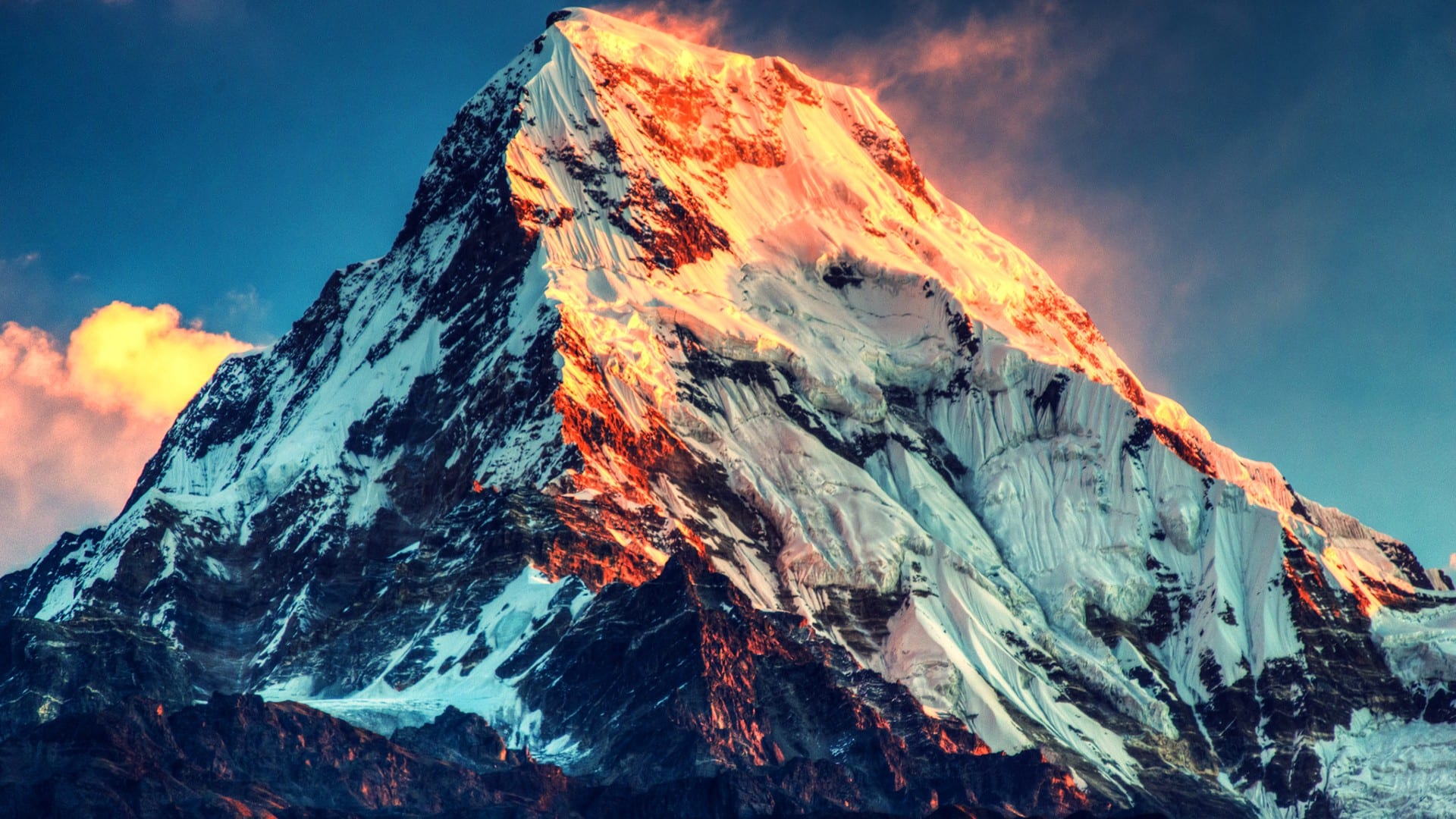
The death zone is the altitude above roughly 8,000 metres (26,247 feet) where the air holds so little usable oxygen that the human body can no longer acclimatise and slowly begins to die. At that height the air pressure is only about a third of sea level, so each breath delivers about a third of the oxygen. Blood oxygen falls to levels that would put a patient in intensive care. Brain, heart, lungs, gut and muscles all start to fail together. Only 14 mountains on Earth reach the death zone, all in the Himalaya and Karakoram of Asia. Mount Everest (8,849 m) is the highest. Climbers survive there by keeping their stay short, usually 12 to 48 hours. Most use supplemental oxygen, and every one of them depends on weeks of acclimatisation done lower down.
This guide covers what the death zone is, where it starts on Everest and the other 8,000-metre peaks, and what the numbers say about oxygen and risk. It then follows the body system by system, explains how climbers manage the danger, and ends with answers to the questions people search for most.
Quick facts: the death zone - Starting altitude: about 8,000 m / 26,000–26,250 ft. It is a convention, not a sharp line. - Air pressure at 8,000 m: about 36% of sea level (roughly 267 mmHg vs 760 mmHg). - Air pressure on the summit of Everest: about 33% of sea level (about 253 mmHg, measured in 1981). - Mountains that reach it: 14, all in Nepal, China (Tibet), Pakistan and India border regions. - Typical time spent in it: 12–48 hours on a normal summit push. - Everest deaths, all time: 339 recorded to the end of 2025 (Himalayan Database).
What is the death zone?
"Death zone" is the name mountaineers use for altitudes above about 8,000 metres. Above that height there is not enough oxygen pressure for a person to function normally for long. More importantly, the body cannot adapt to it. Lower down, acclimatisation works: over days and weeks the body breathes harder, makes more red blood cells and changes its blood chemistry so it can cope with thinner air. Above roughly 8,000 m the balance tips. The body uses up its reserves faster than it can adapt, so every hour spent there leaves a climber weaker than the hour before.
The idea goes back to the Swiss physician Edouard Wyss-Dunant. He led the 1952 Swiss Everest expedition, the attempt in which Raymond Lambert and Tenzing Norgay reached about 8,595 m on the South-East Ridge. Afterwards he wrote of a zone mortelle (lethal zone) above roughly 7,500–8,000 m. The phrase became "death zone" in English-language climbing writing. Modern physiology broadly backs him up. Most researchers place the threshold of "no sustainable acclimatisation" somewhere between 7,500 m and 8,000 m. The 8,000 m figure stuck because it is a round number and because it neatly separates the 14 "eight-thousanders" from everything else.
Is the death zone an exact altitude?
No. The 8,000 m line is a useful convention. It is not a physical boundary where conditions suddenly change. Three things move the line in practice:
- Latitude and season. Air pressure at a given height is higher near the equator and in summer. Everest sits at about 28°N, and its summit pressure in May is noticeably higher than the "standard atmosphere" models predict. That is part of why it can be climbed at all without bottled oxygen.
- Weather. A passing low-pressure system can make the summit feel tens to hundreds of metres higher than it is.
- The individual. Genetics, acclimatisation history, hydration, sleep and illness all change how a particular climber copes at a particular altitude.
That is why some guidebooks say the death zone begins at 7,500 m and others say 8,000 m or 26,000 ft. The underlying idea is the same: a height where survival is measured in hours and days, not weeks.
Death zone altitude in metres and feet
People search for the death zone altitude in different units, so here it is in one place:
| Measure | Value |
|---|---|
| Death zone threshold (convention) | 8,000 m / 26,247 ft |
| Rounded figure in many US sources | 26,000 ft (7,925 m) |
| Lower bound in some medical writing | ~7,500 m / 24,600 ft |
| Highest point in the death zone | Everest summit, 8,848.86 m / 29,031.7 ft (2020 China–Nepal survey) |
| Vertical span of the death zone on Everest | ~849 m / ~2,785 ft |
Which mountains have a death zone?
Exactly 14 mountains rise above 8,000 metres. They are the only places on Earth where a person can stand in the death zone on foot. All of them are in the Himalaya and Karakoram ranges of Asia. The table below lists them with their official heights and how far each summit reaches into the zone.
| Rank | Mountain | Height (m) | Height (ft) | Country | Metres above 8,000 m |
|---|---|---|---|---|---|
| 1 | Everest | 8,849 | 29,032 | Nepal / China | 849 |
| 2 | K2 | 8,611 | 28,251 | Pakistan / China | 611 |
| 3 | Kangchenjunga | 8,586 | 28,169 | Nepal / India | 586 |
| 4 | Lhotse | 8,516 | 27,940 | Nepal / China | 516 |
| 5 | Makalu | 8,485 | 27,838 | Nepal / China | 485 |
| 6 | Cho Oyu | 8,188 | 26,864 | Nepal / China | 188 |
| 7 | Dhaulagiri I | 8,167 | 26,795 | Nepal | 167 |
| 8 | Manaslu | 8,163 | 26,781 | Nepal | 163 |
| 9 | Nanga Parbat | 8,126 | 26,660 | Pakistan | 126 |
| 10 | Annapurna I | 8,091 | 26,545 | Nepal | 91 |
| 11 | Gasherbrum I | 8,080 | 26,509 | Pakistan / China | 80 |
| 12 | Broad Peak | 8,051 | 26,414 | Pakistan / China | 51 |
| 13 | Gasherbrum II | 8,035 | 26,362 | Pakistan / China | 35 |
| 14 | Shishapangma | 8,027 | 26,335 | China (Tibet) | 27 |
On some of these peaks, such as Shishapangma, Gasherbrum II and Broad Peak, climbers only pass through the lowest band of the death zone on summit day. On Everest, K2, Kangchenjunga, Lhotse and Makalu they spend many hours well above 8,000 m, and most of the serious death-zone physiology research comes from those mountains. You can compare the routes, operators and costs for several of them on ExpedReview's Everest region page, Karakoram region page, Manaslu region page and our breakdown of climbing all 14 eight-thousanders.
Are there death zones outside the Himalaya?
Not in the strict sense. The highest mountain outside Asia is Aconcagua in Argentina at 6,961 m, nearly 1,000 m below the threshold. Peaks such as Denali (6,190 m) and Kilimanjaro (5,895 m) still produce serious altitude illness. Denali's high latitude also makes it "feel" higher than its height. But neither reaches the death zone.
Where is the death zone on Mount Everest?
On Everest's standard Nepal route, the South Col route, climbers reach the death zone around Camp 4 on the South Col. The camp is usually put at 7,900–8,000 m (about 26,000 ft). On the Tibetan North Ridge the threshold is crossed between Camp 2 (about 7,700–7,800 m) and Camp 3, the highest camp on any standard 8,000 m route at roughly 8,300 m.
| Point on Everest (South Col route) | Approx. altitude | Death zone? |
|---|---|---|
| Everest Base Camp | 5,364 m (17,598 ft) | No |
| Camp 2 (Western Cwm) | 6,400 m (21,000 ft) | No |
| Camp 3 (Lhotse Face) | 7,100–7,300 m (23,300–24,000 ft) | No |
| Camp 4 (South Col) | 7,900–8,000 m (25,900–26,250 ft) | Threshold |
| The Balcony | ~8,400 m (27,560 ft) | Yes |
| South Summit | 8,749 m (28,704 ft) | Yes |
| Hillary Step | ~8,790 m (28,839 ft) | Yes |
| Summit | 8,849 m (29,032 ft) | Yes |
A normal summit push on the south side goes like this. Climbers arrive at Camp 4 in the early afternoon and try to rest, eat and drink. They leave between about 8 pm and midnight, summit the next morning, and descend to Camp 4 or lower the same day. That adds up to about 24–36 hours in the death zone. Bad weather, crowding at bottlenecks, or a failed first attempt can stretch that toward 48 hours or more, and the risk climbs steeply as the hours add up. Our guide to how long it takes to climb Mount Everest covers the full 6–9 week timeline, and how much it costs to climb Mount Everest explains how oxygen, Sherpa support and route choice affect the price.
How much oxygen is there in the death zone?
The share of oxygen in the air does not change with altitude. It is about 20.9% at sea level, on the summit of Everest, and everywhere in between. What changes is air pressure. Less pressure means fewer gas molecules in each breath, so less oxygen is pushed into the lungs and across into the blood.
| Location | Altitude | Barometric pressure (approx.) | % of sea-level pressure | "Effective oxygen" vs sea level |
|---|---|---|---|---|
| Sea level | 0 m | 760 mmHg | 100% | ~20.9% |
| Denver | 1,609 m | 630 mmHg | 83% | ~17.4% |
| Everest Base Camp | 5,364 m | 400 mmHg | 53% | ~11% |
| Camp 2, Everest | 6,400 m | 350 mmHg | 46% | ~9.6% |
| South Col / death zone threshold | 8,000 m | 267 mmHg | 35% | ~7.4% |
| Everest summit | 8,849 m | 253 mmHg (measured, 1981) | 33% | ~6.9% |
"Effective oxygen" is a common way of expressing how the air would feel compared with sea level. It is not the real percentage of oxygen in the air. Pressure figures are typical values. The summit value comes from the 1981 American Medical Research Expedition to Everest, and actual pressure varies with weather and season.
The key number for the body is the inspired oxygen pressure, the pressure of oxygen in the air once it is warmed and humidified in the airways. It is about 149 mmHg at sea level and only about 43 mmHg on the summit of Everest. By the time that oxygen reaches the blood there is almost nothing left in reserve.
Blood oxygen levels on Everest
The most direct evidence comes from the 2007 Caudwell Xtreme Everest study, published in the New England Journal of Medicine in 2009. Researchers took arterial blood from four climbers breathing ambient air at about 8,400 m on the descent from the summit. The average arterial oxygen pressure was 24.6 mmHg, against a normal sea-level value of about 90–100 mmHg. Average arterial oxygen saturation was estimated at about 54%. A hospital patient with a saturation below about 90% is usually given oxygen, and below 80% is considered severely hypoxaemic. The climbers were alert, walking and functioning, but with almost no physiological margin.
| Measurement | Healthy adult at sea level | Climbers at ~8,400 m (Grocott et al., 2009) |
|---|---|---|
| Arterial O₂ pressure (PaO₂) | 90–100 mmHg | 24.6 mmHg (mean) |
| Arterial CO₂ pressure (PaCO₂) | 35–45 mmHg | 13.3 mmHg (mean) |
| Arterial O₂ saturation (SaO₂) | 95–100% | ~54% (calculated mean) |
| Arterial O₂ content | normal | maintained at or above sea-level values up to 7,100 m thanks to higher haemoglobin; 26% lower at 8,400 m than at 7,100 m |
That very low carbon dioxide value shows the climbers' main defence: breathing extremely hard. Heavy breathing blows off CO₂ and squeezes as much oxygen as possible into the lungs, at a large cost in energy and water.
What happens to your body in the death zone?
The short answer: everything slows down, swells, thickens or freezes. The longer answer is easiest to follow one system at a time.
Lungs and breathing
At extreme altitude the lungs work like a bellows running flat out. Climbers often breathe 50–60 times a minute or more on steep ground, and take several breaths per step even on easy terrain. They also breathe this way at rest. Two problems follow:
- Water loss. Every breath of cold, dry air takes moisture out of the body. A climber can lose several litres of water a day through breathing and effort, which drives dehydration and thick blood.
- High-altitude pulmonary oedema (HAPE). Low oxygen makes the blood vessels in the lungs constrict unevenly. Pressure rises and fluid leaks into the air sacs. HAPE starts with breathlessness at rest, a dry cough and falling performance, then moves on to a wet cough, frothy or pink sputum, gurgling breath and blue lips. In the death zone it can kill within hours. The only reliable treatment is descent, supported by oxygen and medicines such as nifedipine.
The persistent dry, hacking cough known as the "Khumbu cough" is common lower down and becomes miserable in the death zone. Some climbers have cracked ribs from coughing.
Brain and mind
The brain uses about 20% of the body's oxygen and handles shortage worse than any other organ. Above 8,000 m nearly everyone shows measurable drops in judgement, memory, reaction time and coordination. Climbers describe:
- slowed thinking and trouble with simple tasks such as clipping a carabiner, changing an oxygen bottle or doing up a zip;
- poor decisions, especially about turnaround times, a pattern often called "summit fever";
- hallucinations, the feeling of a "third man" or an invisible companion, and changes in mood;
- vision problems, including high-altitude retinal haemorrhages, which are common above 7,000 m and usually harmless, though sometimes not.
The most dangerous brain condition is high-altitude cerebral oedema (HACE): swelling of the brain caused by fluid leaking from stressed blood vessels. Its warning signs are ataxia (staggering, unable to walk heel-to-toe in a straight line), confusion, drowsiness and a severe headache that painkillers do not touch. Without immediate descent, oxygen and dexamethasone, HACE moves to coma and death, sometimes within 12–24 hours.
Brain imaging studies of climbers who returned from extreme altitude without bottled oxygen have found small lasting changes in some of them. That is one reason many physicians advise against climbing the highest peaks without oxygen.
Heart and blood
The heart beats faster to push more blood, and therefore more oxygen, around the body. Over weeks of acclimatisation the body makes more red blood cells, so haemoglobin and haematocrit rise. That helps carry oxygen but makes the blood thicker. Add dehydration and the cold, and the risk of blood clots, stroke and pulmonary embolism goes up. Deaths at extreme altitude are sometimes put down to "exhaustion" or "cardiac arrest" when the real chain of events started with thickened blood and a failing heart under extreme strain.
Muscles and weight loss
At extreme altitude the body breaks down its own tissue faster than it can rebuild it. Appetite collapses, digestion becomes inefficient, and the body burns 6,000 kcal or more on a summit day while taking in a fraction of that. Expedition climbers often come home 5–10 kg lighter, and a large share of that loss is muscle. In the death zone even small movements cost huge effort. Many climbers report taking ten or more breaths for every step near the summit of Everest.
Digestion, kidneys and sleep
- Digestion. Blood is diverted away from the gut, so nausea, vomiting and diarrhoea are common, and many climbers simply cannot eat.
- Kidneys. Hypoxia and heavy breathing change the body's acid–base balance. The kidneys respond by excreting bicarbonate, which helps over weeks of acclimatisation but cannot keep up at extreme altitude.
- Sleep. "Periodic breathing" (Cheyne–Stokes respiration) is almost universal above 6,000 m. Breathing speeds up, slows, and can stop for 10–20 seconds before restarting with a gasp. Sleep in the death zone is fragmented and barely restorative, which is why climbers try to spend as few nights there as possible.
Cold, wind and frostbite
Low oxygen also weakens the body's defences against cold. Blood is pulled away from the hands and feet to protect the core, so fingers and toes freeze faster. Summit-day temperatures on Everest in May typically fall between -25°C and -35°C (-13°F to -31°F), and wind chill can drive the felt temperature far lower. Frostbite and hypothermia are among the most common lasting injuries from the death zone. Hypothermia also slows thinking, which makes the effects of hypoxia worse.
Eyes and skin
UV radiation is much stronger at high altitude, and snow reflects most of it back up. Without proper glacier glasses or goggles, snow blindness (photokeratitis) can set in within hours. Wind and sun cause severe sunburn and cracked lips. Corneal problems are a known risk for climbers who have had laser eye surgery.
The death zone timeline: what happens hour by hour
Every climber is different, but a typical summit push for an acclimatised climber on supplemental oxygen goes roughly like this:
| Time in the death zone | What typically happens |
|---|---|
| 0–6 hours (arriving at the high camp) | Breathless at rest, headache, little appetite. Climbers try to drink 1–2 litres and sleep on low-flow oxygen. |
| 6–12 hours (summit push begins) | Slow, rhythmic climbing in the dark. Fingers and toes are at risk. Clumsy hands make tasks with gloves and gear hard. |
| 12–18 hours (summit and turnaround) | Peak exhaustion. Judgement is at its worst just as the hardest decisions arrive, so a strict turnaround time is vital. |
| 18–30 hours (descent) | Most accidents and deaths on Everest happen on the way down. Climbers are exhausted, dehydrated and may be running short of oxygen. |
| 30–48+ hours (delays, weather, rescue) | Risk rises steeply. HACE, HAPE, frostbite and hypothermia are more likely, and rescuing someone this high is extremely difficult. |
Why is the death zone so dangerous?
Hypoxia sits underneath every danger in the death zone, but people die there for several overlapping reasons:
- Physiological collapse. HACE, HAPE, exhaustion and cardiac events.
- Falls. Clumsiness, fatigue and poor judgement make slips more likely on exposed ground, especially on the way down.
- Weather. Jet-stream winds can top 100 km/h on the upper slopes of Everest and K2, and a storm can trap climbers for a day or more.
- Running out of oxygen or time. A delay at a crowded section such as the Hillary Step, or at K2's Bottleneck, can use up a climber's oxygen supply and margin.
- Rescue limits. Helicopters can work only in limited ways at these heights. Long-line rescues are rare and depend on the weather, and carrying an incapacitated person down from 8,500 m takes many strong climbers and a great deal of luck.
Death zone statistics on Everest
| Statistic | Figure | Source / year |
|---|---|---|
| Total Everest summits, all routes | 13,737 | Himalayan Database via Alan Arnette, to Dec 2025 |
| Total Everest deaths, all routes | 339 | Himalayan Database via Alan Arnette, to Dec 2025 |
| Deaths on the Nepal side / Tibet side | 229 / 110 | Himalayan Database via Alan Arnette, to Dec 2025 |
| Deaths in the 2023 season | 18 (modern record) | Nepal and press reports |
| Summits in spring 2026 | 1,008 (record) | Nepal Department of Tourism, May 2026 |
| Deaths in spring 2026 | 5 | Nepal Department of Tourism / press, May–June 2026 |
| Bodies thought to remain on Everest | 200+ (estimate) | Widely reported; not officially tallied |
A large 2008 study in the BMJ (Firth et al.) looked at deaths on Everest from 1921 to 2006. It found a death rate of 1.3% among mountaineers above base camp, and of 94 people who died after climbing above 8,000 m, 56% died descending from the summit. Most deaths among climbing members happened high on the mountain, many during the descent after a summit, and often came with signs of severe altitude illness such as confusion and loss of coordination. Deaths among Sherpas and other hired climbers more often happened lower down, especially in the Khumbu Icefall, from objective hazards such as avalanches and falling ice.
How long can you survive in the death zone?
There is no fixed time limit, but the practical answers are:
- With supplemental oxygen: most climbers plan to spend no more than about 24–48 hours above 8,000 m, and many spend less.
- Without supplemental oxygen: strong, highly acclimatised climbers usually try to keep it to under about 24 hours, often moving up and down in a single long push.
- Extreme cases: some climbers have survived several nights above 8,000 m during storms and rescues. They are exceptions, and survivors often suffer severe frostbite or lasting injuries.
The longer you stay, the worse it gets. The body cannot rest properly or recover in the death zone, so time itself is a hazard.
How do climbers survive the death zone?
1. Acclimatisation before the summit push
Climbers spend weeks below the death zone first. On Everest a standard plan includes several "rotations": climbing to Camp 1, Camp 2 and Camp 3, then dropping back to base camp to recover. The goal is to have slept at about 7,000–7,300 m before making the summit push. Some operators now offer "flash" or shorter expeditions that use hypoxic tents at home before departure. These cut time on the mountain, but they do not remove the core physiological limits. Read more in our companion guide on how the body copes above 8,000 metres.
2. Supplemental oxygen
Bottled oxygen is by far the most effective tool. Most commercial climbers use oxygen from Camp 3 or Camp 4 upward, breathing roughly 2–4 litres per minute while climbing and less while sleeping. That raises the oxygen pressure in the lungs and makes the climber's body behave as though it were much lower. On summit day the effect is often described as feeling like 6,500–7,500 m, though the exact figure depends on flow rate, mask fit and breathing rate.
Even with oxygen, climbers are still in the death zone. Equipment failure, a frozen regulator or a bottle running out can quickly put a climber in danger. That is why the number of bottles, the quality of the oxygen system, and the support of Sherpas or other guides carrying spare bottles are among the key differences between operators and price levels. Our Everest cost guide breaks these differences down.
3. Speed, turnaround times and weather windows
Climbers rely on forecasts to pick a summit window: a day or more with jet-stream winds below about 30–40 km/h at summit height. Strict turnaround times, often between 11 am and 1 pm on Everest's south side, cap how long anyone spends high on the mountain. Crowding can wreck a turnaround plan, so many teams now pick less busy days or use the north side when it is open.
4. Medicines and medical planning
Expedition doctors and guides carry drugs for altitude emergencies:
| Medicine | Main use at altitude | Notes |
|---|---|---|
| Acetazolamide (Diamox) | Prevents and treats acute mountain sickness | Speeds acclimatisation; tingling and frequent urination are common side effects |
| Dexamethasone | Treats HACE; sometimes used for prevention | Powerful steroid that masks symptoms without fixing the cause; descent is still essential |
| Nifedipine | Treats and prevents HAPE | Lowers blood pressure in the lungs |
| Supplemental oxygen | Treats HAPE, HACE and severe hypoxia | First-line treatment alongside descent |
| Portable hyperbaric bag (Gamow bag) | Simulates descent of 1,500–2,000 m | Buys time when descent is impossible |
5. The right team and the right operator
In the death zone, your margin depends heavily on the people around you: the Sherpas and guides who fix ropes, carry spare oxygen, spot early HACE or HAPE and make the turnaround call. Guide-to-client ratio, oxygen allocation, weather forecasting and rescue planning differ widely between companies. ExpedReview's verified reviews and our guide to choosing an Everest operator are designed to help you compare them.
Top-rated operators for death-zone peaks on ExpedReview
The companies below have the highest average ratings from verified ExpedReview client reviews for these death-zone routes (minimum two reviews; data as of 22 October 2026). Ratings come only from ExpedReview reviews.
| Route | Operator | ER average rating | Verified reviews |
|---|---|---|---|
| Everest – South Col (Nepal) | Climbing The Seven Summits | 5.0 / 5 | 14 |
| Everest – South Col (Nepal) | Dream Himalaya Adventures | 5.0 / 5 | 5 |
| Everest – South Col (Nepal) | Adventure Consultants | 5.0 / 5 | 3 |
| Everest – North Ridge (Tibet) | Furtenbach Adventures | 4.8 / 5 | 12 |
| Manaslu (Nepal) | Furtenbach Adventures | 5.0 / 5 | 8 |
See the full rankings on the Everest South Col page, the Everest North Ridge page and the Manaslu page.
Death zone myths and facts
| Myth | Fact |
|---|---|
| "There is less oxygen in the air at altitude." | The percentage is the same (about 20.9%). The pressure is lower, so each breath carries fewer molecules. |
| "The death zone starts exactly at 8,000 m." | 8,000 m is a convention. Physiologically the line is blurry, roughly 7,500–8,000 m. |
| "Fit people don't get altitude sickness." | Fitness does not protect against HAPE or HACE. Acclimatisation and genetics matter more. |
| "With bottled oxygen you're not really in the death zone." | Oxygen helps a great deal, but climbers are still severely hypoxic, cold and exposed. |
| "You die instantly in the death zone." | Decline is gradual. The danger is the steady build-up over hours and days. |
Frequently asked questions
What is the death zone?
The death zone is the altitude above about 8,000 metres (26,247 feet) where air pressure, and with it the oxygen available in each breath, is too low for the body to acclimatise. The body slowly deteriorates the longer it stays there. Only the 14 mountains above 8,000 m reach it.
What altitude is the death zone?
The death zone is generally defined as starting at 8,000 m, or 26,247 ft. Many US sources round this to 26,000 ft. Some medical writers put the line closer to 7,500 m because the exact threshold varies with the person, the weather and latitude.
What height is the death zone in feet?
About 26,000–26,250 feet. The exact conversion of 8,000 metres is 26,247 feet.
How many mountains have a death zone?
Fourteen. Everest, K2, Kangchenjunga, Lhotse, Makalu, Cho Oyu, Dhaulagiri I, Manaslu, Nanga Parbat, Annapurna I, Gasherbrum I, Broad Peak, Gasherbrum II and Shishapangma are the only peaks above 8,000 m. All are in the Himalaya or Karakoram.
Where is the death zone on Mount Everest?
On the standard South Col route it starts at about Camp 4 on the South Col (roughly 7,900–8,000 m) and runs to the summit at 8,849 m. On the North Ridge it starts between Camp 2 and Camp 3.
What is the death zone of Mount Everest like?
It is very cold, often -25°C to -35°C on summit day, windy and steep, with only about a third of sea-level air pressure. Climbers move a few steps at a time, struggle to eat or sleep, and depend on bottled oxygen, fixed ropes and their support team.
Why is the death zone so dangerous?
Low oxygen weakens the brain, heart, lungs and muscles all at once and leads to HACE, HAPE, exhaustion, frostbite and poor decisions. Add steep terrain, jet-stream winds, crowding and very limited rescue options, and small problems can quickly become fatal.
What happens to your body in the death zone?
Blood oxygen saturation can fall to about 50–60%. The heart races, breathing becomes rapid and deep, and the blood thickens. The brain slows and the body breaks down muscle. Fluid can leak into the lungs (HAPE) or brain (HACE), and fingers and toes are at high risk of frostbite.
How long can you survive in the death zone?
Most climbers aim to spend no more than 24–48 hours above 8,000 m, even with supplemental oxygen. Without oxygen, strong climbers usually try to limit it to less than a day. Survival beyond that is possible but increasingly risky.
Can you breathe in the death zone without oxygen?
Yes, but only after careful acclimatisation, and not for long. Reinhold Messner and Peter Habeler first climbed Everest without supplemental oxygen in 1978. Only a few percent of Everest summits are made without bottled oxygen, and the death rate for those climbers is higher.
What is the oxygen level in the death zone?
Air at 8,000 m is still about 20.9% oxygen, but the pressure is only about 35% of sea level. That makes it roughly equivalent to breathing 7% oxygen at sea level. On Everest's summit the equivalent is about 6.9%.
What is death zone in mountaineering?
In mountaineering, the death zone means altitudes above about 8,000 m where climbers cannot acclimatise and should spend as little time as possible. Expedition plans, oxygen use and turnaround times are built around limiting time in this zone.
How many people have died in the death zone on Everest?
The Himalayan Database records 339 deaths on Everest on all routes through December 2025, though not all happened above 8,000 m. Studies show that most deaths of climbing members occur high on the mountain, often during the descent.
Why are there dead bodies in the death zone?
Recovering a body from above 8,000 m is extremely dangerous, slow and expensive. It needs several strong climbers and favourable weather. Many bodies remain where climbers fell or stopped, though clean-up campaigns in Nepal recover a number each year.
Is K2's death zone worse than Everest's?
K2 is lower (8,611 m) but steeper and more technical. Its high camps are exposed, and climbers have to cross the Bottleneck, a narrow couloir beneath a serac, at about 8,200 m. Historically its fatality rate per summit has been much higher than Everest's.
What does the death zone feel like?
Climbers describe breathing hard just to sit still, feeling like they are moving in slow motion, struggling to think, and finding simple tasks exhausting. Many also report hallucinations, intense cold and deep fatigue on the descent.
Do you need a guide to climb in the death zone?
Nepal and China require foreign climbers on 8,000 m peaks to be part of a registered expedition. Nepal also requires a licensed guide for each climber. Virtually all commercial climbers on Everest climb with Sherpa or Western guides and a supply of bottled oxygen.
How much does it cost to climb into the death zone on Everest?
Prices vary widely: published 2026–27 prices for a full-service Western-led South Col climb are around US$80,000 (Alpine Ascents lists US$80,000 for 2026; Madison Mountaineering lists US$79,500 for 2027), and Seven Summit Treks' 2026 VIP package is US$180,000; standard Nepali-operator packages cost less. All include the US$15,000 spring Nepal permit. See our full Everest cost breakdown.
Sources and data notes
Data gathered by ExpedReview from official sources and peer-reviewed research, written in our own words. Key sources:
- Grocott MPW et al., "Arterial blood gases and oxygen content in climbers on Mount Everest", New England Journal of Medicine (2009). nejm.org
- West JB et al., barometric pressure measurements, American Medical Research Expedition to Everest (1981), Journal of Applied Physiology (1983).
- Firth PG et al., "Mortality on Mount Everest, 1921–2006", BMJ (2008). bmj.com
- Himalayan Database summit and death data through December 2025, via Alan Arnette, "Everest by the Numbers: 2026 Edition".
- Nepal Department of Tourism 2026 season figures, as reported by The Kathmandu Post.
- Wilderness Medical Society clinical practice guidelines for acute altitude illness (2024 update).
This article is general information, not medical advice. If you plan to climb at extreme altitude, consult a physician experienced in high-altitude medicine.
Related articles
- How to Choose an Everest Operator: A Checklist That Uses Evidence (US$37,900 to US$88,501)
A practical way to shortlist Everest operators using verified reviews, written support commitments and a few hard questions.
- Best operators
- How Much Does It Cost to Climb Mount Everest in 2027? US$41,000–224,000 (US$41,000 to US$224,000)
A guided Everest expedition costs about US$41,000 to US$224,000 per person in 2027.
- Best Everest Expedition Operators by Style: Premium, Tiered, Fast, Nepal-Based and Budget (US$41,000 to US$88,501,)
Which Everest operators verified climbers actually rate highest, split by expedition style, with permit fees, fatality data and the support questions that…
- When Is the Best Time to Climb Everest? Spring Window, Autumn, Winter and the Season Timeline
Why almost every Everest summit happens in a short May window, what autumn and winter offer, and when ExpedReview reviewers actually climbed.
- Everest Permit and Fees: How the Nepal Royalty Works, What Else You Pay and What Your Quote Should Include (US$41,000 to US$88,501)
Nepal's Everest royalty for foreign climbers by season and route, effective 1 September 2025, and what it does and does not cover.
- Everest Success Rate: What Percentage of Climbers Reach the Summit?
Everest summit rates from the Himalayan Database, how they differ by route and season, and what changes your own odds.
- Everest Deaths: 344 Recorded, 1.31% Death Rate and Causes
The Himalayan Database records 344 deaths on Everest from 26,316 members (1.31%).
- Western-Guided vs Nepal-Based Everest Operators: What You Actually Get (US$41,000 to US$88,501)
The support differences that drive Everest prices, guide and Sherpa ratios, oxygen and team size, and how verified clients rate both models.
- What to Climb Before Everest: A Step-by-Step Progression (US$14,300 to US$29,919)
A progression of peaks that builds the altitude, cold and rope skills Everest operators expect, with risk and cost data for each step.
- How to Climb Everest Responsibly: Waste Rules, Poo Bags, Sherpa Welfare, Crowding and New Nepal Rules (2026)
How to climb Mount Everest responsibly in 2026: Nepal's waste deposit and poo-bag rules, the new US$15,000 royalty, guide and tracking rules, crowding, Sherpa welfare and how to choose an ethical Everest operator.
- Can a Beginner Climb Mount Everest? Experience Needed, Training Plan and Step-by-Step Progression (2026)
Can you climb Everest with no experience?
- Everest Poop Problem: Poo Bag Rules, How Climbers Go to the Toilet and the Waste Clean-Up (2026)
How climbers go to the toilet on Everest, why human waste became a crisis, the mandatory poo bag rule since 2024, the 2026 waste-return rules and clean-up figures, and how other peaks such as Aconcagua, Denali and Rainier manage waste.
- 2023 Everest Season: Deaths, Permits and Why It Was the Deadliest Year
How many people died on Everest in 2023?
Tags: death-zone, altitude-sickness, hape, hace, acclimatization