Best Mountaineering Boots for 4000m, 6000m, 7000m and 8000m (2026 Guide)
By Blake Penson · February 28, 2024
Category: equipment
7 min read
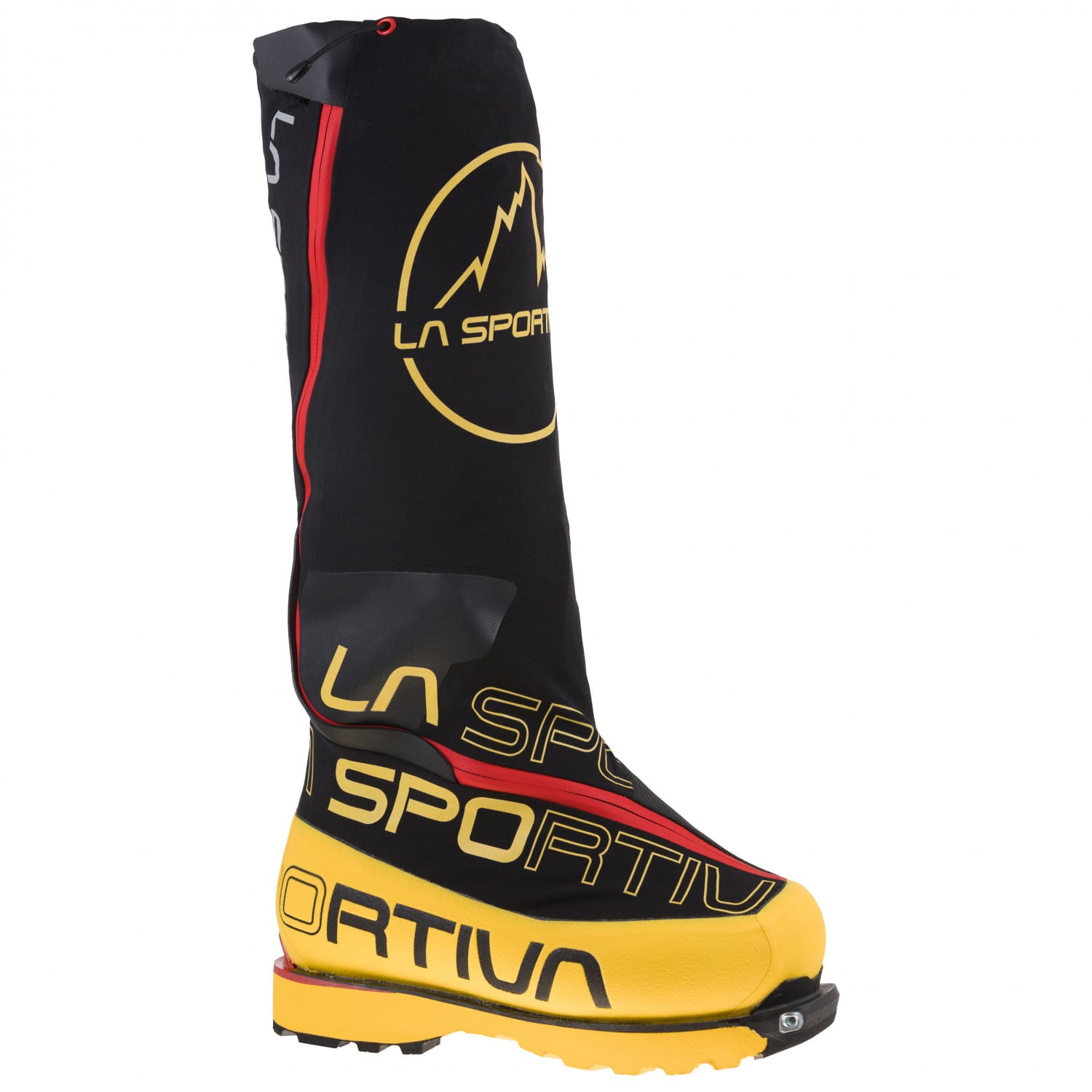
For 4,000 m Alpine peaks such as Mont Blanc, an insulated single boot with a Gore-Tex lining and full crampon compatibility, such as the La Sportiva Nepal Cube GTX or Scarpa Mont Blanc Pro GTX, is the standard choice. For 6,000 m peaks such as Aconcagua, Island Peak or Ama Dablam, most climbers use a double boot with a removable liner, such as the Scarpa Phantom 6000 HD or La Sportiva G2 Evo. For 7,000 m and 8,000 m peaks, including Everest, you need a dedicated 8,000 m boot with an integrated gaiter, such as the Scarpa Phantom 8000 Thermic HD or La Sportiva Olympus Mons Cube S. Fit matters more than brand: the warmest boot is useless if it pinches circulation or gives you blisters. Always check the boot list from your expedition operator, because they know the conditions on your route.
| Altitude | Example peaks | Boot type | Example models |
|---|---|---|---|
| Up to ~4,800 m | Mont Blanc, Matterhorn, Gran Paradiso | Insulated single boot (B3) | La Sportiva Nepal Cube GTX, Scarpa Mont Blanc Pro GTX |
| ~5,000–6,500 m | Kilimanjaro (trekking boots usually enough), Elbrus, Island Peak, Ama Dablam, Aconcagua | Double boot or warm single boot, depending on season and route | Scarpa Phantom 6000 HD, La Sportiva G2 Evo |
| ~6,500–7,500 m | Lenin Peak, Muztagh Ata, Denali (cold) | Warm double boot or 8,000 m boot | La Sportiva G2 Evo, Scarpa Phantom 8000 |
| 8,000 m+ | Everest, Cho Oyu, Manaslu, K2 | 8,000 m boot with integrated gaiter | Scarpa Phantom 8000 Thermic HD, La Sportiva Olympus Mons Cube S, Millet Everest Summit GTX |
Models are examples of widely used boots in each category, not endorsements. Specifications are from manufacturer websites, checked October 2026. ExpedReview does not earn money from these links.
The three main types of mountaineering boot
Single boots
A single boot is one piece, usually with a leather or synthetic upper and an insulated waterproof lining. Single boots are lighter and more precise for climbing technical ground, but they are harder to dry overnight and less warm. They are ideal for summer Alpine routes, Scottish winter climbing and lower Himalayan trekking peaks in warm conditions.
Double boots
A double boot has a rigid outer shell and a removable insulated inner boot. You can take the inner boot into your sleeping bag at night so it stays warm and dry, which matters on multi-day climbs. Double boots are warmer but heavier and bulkier.
8,000 m boots
These are double boots with an integrated over-gaiter, often with several layers of insulation and reflective linings. They are designed for the extreme cold of high-altitude summit days, when temperatures can be far below freezing and wind chill is severe. They are heavy and too warm for lower altitudes.
Crampon compatibility ratings
| Rating | Boot | Crampon |
|---|---|---|
| B0 | Flexible walking boot | Not suitable for crampons |
| B1 | Stiffened walking boot | C1 strap crampons |
| B2 | Stiff mountaineering boot with heel welt | C1 or C2 (semi-automatic) |
| B3 | Fully rigid mountaineering boot with toe and heel welts | C1, C2 or C3 (automatic, step-in) |
Almost all boots in this guide are B3, compatible with automatic crampons. Always check your crampon fits your boot before you leave home.
Best mountaineering boots for 4,000 m to 6,000 m
Between 4,000 and 6,000 m you face cold mornings, glacier travel and sometimes steep ice. On most Alpine 4,000ers in summer, a warm single boot is the right choice.
| Model | Type | Manufacturer weight | Notes |
|---|---|---|---|
| La Sportiva Nepal Cube GTX | Insulated single boot | 950 g per half pair | Gore-Tex Insulated Comfort lining; Carbon Tech honeycomb insole; Vibram Matterhorn sole |
| Scarpa Mont Blanc Pro GTX | Insulated single boot | 1,800 g per pair (size 42) | 3 mm Perwanger leather; Gore-Tex Insulated Comfort; B3 |
La Sportiva Nepal Cube GTX: A classic technical mountaineering boot for winter mountaineering, ice and mixed climbing. It is precise enough for steep ice and warm enough for most Alpine summits. La Sportiva lists it at 950 g per half pair.
Scarpa Mont Blanc Pro GTX: A durable leather boot with an insulated Gore-Tex lining, popular for winter climbing and high Alpine routes. Scarpa lists it at 1,800 g per pair in size 42.
Both suit routes on Mont Blanc, Monte Rosa and Gran Paradiso. In cold conditions or on higher peaks such as Elbrus, many climbers move up to a double boot.
What about Kilimanjaro? Kilimanjaro (5,895 m) is a non-technical trek. Most climbers use warm, waterproof trekking boots rather than mountaineering boots. See the Kilimanjaro page.
Best mountaineering boots for 6,000 m to 7,000 m
At 6,000 m and above, summit days often start at night in severe cold. A double boot lets you dry and warm the liners and gives a bigger safety margin against frostbite.
| Model | Type | Manufacturer weight | Price (manufacturer, USD) |
|---|---|---|---|
| Scarpa Phantom 6000 HD | Double boot with gaiter | 1,050 g per half pair (size 42) | $1,299 (Scarpa US, October 2026) |
| La Sportiva G2 Evo | Double boot with dual BOA closure | 1,050 g per boot (La Sportiva USA) | Check retailer |
Scarpa Phantom 6000 HD: Scarpa describes it as a lighter version of the Phantom 8000 designed for peaks up to 6,000 m. It has a waterproof shell with a mid-calf gaiter and PrimaLoft-insulated inner boot, and it works with automatic and semi-automatic crampons.
La Sportiva G2 Evo: A double boot with a dual BOA closure, a thermo-reflective aluminium lining and a carbon honeycomb insole. La Sportiva designs it for high-altitude mountaineering and prolonged exposure to very cold temperatures. The BOA system is easy to use with gloves.
These boots are commonly used on Aconcagua, Island Peak, Mera Peak, Ama Dablam and Chimborazo. On a very cold mountain like Denali, many operators require an 8,000 m-type boot or a double boot with overboots, despite the lower altitude, because it lies far north.
Best mountaineering boots for 7,000 m, 8,000 m and above
On 8,000 m peaks, summit day may last more than 12 hours in extreme cold and wind. Frostbite is a real risk, and boots are among the most important pieces of gear.
| Model | Type | Manufacturer weight | Price (manufacturer, USD) |
|---|---|---|---|
| Scarpa Phantom 8000 Thermic HD | 8,000 m boot with integrated heating | 1,450 g per half pair (size 42, with liner); heating system 160 g | $1,799 (Scarpa US, October 2026) |
| La Sportiva Olympus Mons Cube S | 8,000 m boot with integrated gaiter | Check manufacturer | Check retailer |
| Millet Everest Summit GTX | 8,000 m boot with integrated gaiter | Check manufacturer | Check retailer |
Scarpa Phantom 8000 Thermic HD: Scarpa describes it as the first mountaineering boot with an integrated thermal system. It comes with heated insoles, a power switch with three operating modes and two power banks. The heating system weighs 160 g.
La Sportiva Olympus Mons Cube S: La Sportiva's flagship high-altitude boot, with a dual BOA closure, a Corner Zip zipper and removable inner boots. It has been a mainstay on 8,000 m expeditions for many years.
Millet Everest Summit GTX: Millet's 8,000 m boot with a Gore-Tex membrane and integrated gaiter, designed for expeditions on the highest peaks.
You will need one of these for Everest, Lhotse, Manaslu, K2 and other 8,000 m peaks. Most 8,000 m expedition operators list an 8,000 m boot as compulsory gear. Some climbers also use these boots on very cold 7,000 m peaks.
Socks, gaiters, overboots and heated systems
Boots are only one part of keeping your feet warm.
- Socks: Most climbers use one thick merino or synthetic sock, sometimes with a thin liner sock. Too many layers compress the foot and reduce warmth. Bring dry pairs for summit day.
- Vapour barrier liners: Some climbers use thin vapour barrier socks on very cold expeditions to keep insulation dry. They take getting used to.
- Gaiters: With single boots, gaiters keep snow out on glaciers and deep snow. 8,000 m boots have them built in.
- Overboots: Insulated overboots can add warmth to a double boot on very cold peaks.
- Heated insoles and socks: Battery-heated systems are increasingly common on 8,000 m peaks. Carry spare batteries and keep them warm.
The warmest setup is a boot that fits well, dry socks and good circulation. Eat and drink enough, keep your core warm, and move your toes regularly on cold belays.
How to choose the right mountaineering boot
- Start with the operator's gear list. Your guide or operator knows the route, season and temperatures.
- Match warmth to altitude and season. Winter and high-latitude peaks need warmer boots than their altitude suggests.
- Prioritise fit. Your heel should not lift, your toes should not touch the front on descents, and there should be room for a thick sock without compressing your foot.
- Size up for high altitude. Feet swell at altitude, and tight boots restrict circulation, increasing frostbite risk. Many climbers size up by half a size for double boots.
- Try boots on in the afternoon, when your feet are larger, wearing the socks you will use.
- Check crampon compatibility. Make sure your crampons fit your boots.
- Break them in. Wear new boots on training hikes before your expedition.
- Consider renting. For a single 8,000 m expedition, rental boots in Kathmandu or from your operator can save money. Check the condition and fit carefully.
Caring for your boots
- Dry boots slowly, away from direct heat, which can damage leather and glue.
- Remove liners each night on expeditions and keep them in your sleeping bag.
- Clean off mud and grit, and reproof leather and fabrics regularly.
- Check soles, welts, zips and BOA cables before every trip.
- Store boots in a cool, dry place.
Common mistakes
- Buying boots that are too small. Tight boots are cold boots.
- Using 8,000 m boots on Alpine routes. They are too warm, heavy and clumsy for technical ground at lower altitudes.
- Going too light on a cold peak. Cold feet can end a summit attempt or cause frostbite.
- Not testing with crampons. Find out at home, not on the glacier.
For more gear advice, see ExpedReview's complete Denali equipment list, how to choose the best mountaineering boots and what are crampons.
How to fit a mountaineering boot
A good fit matters more than any brand. Try boots on in the afternoon, when your feet are slightly larger, and wear the socks you will use on the mountain. Steps to check:
- Length: with the boot unlaced, slide your foot forward until your toes touch the front. You should be able to fit about a finger behind your heel.
- Heel hold: lace the boot firmly and walk up a slope or ramp. Your heel should lift very little.
- Toe room: walk down a slope. Your toes should not hit the front of the boot.
- Width: your foot should not feel squeezed at the widest point, and there should be no pressure points.
- Time: wear the boots in the shop for as long as you can, and then at home before using them outdoors.
For high-altitude boots, allow a little extra room for thicker socks and swelling at altitude, but not so much that your foot moves around.
Lacing techniques
Lacing can solve many fit problems. A heel-lock (or surgeon's knot) at the ankle holds the heel in place while letting you adjust tension above and below. Looser lacing over the forefoot can relieve pressure on the toes, and slightly looser upper lacing helps on long ascents, while firmer lacing gives support on descents and technical ground.
Resoling and lifespan
Many mountaineering boots can be resoled by specialist repairers once the soles wear down, which extends their life and is better for the environment than buying new. Check whether your boots can be resoled before the tread wears through, as damage to the rand or midsole can make repair impossible.
Frequently asked questions
What boots do I need for 6,000 m?
Most climbers use a double boot with a removable liner, such as the Scarpa Phantom 6000 HD or La Sportiva G2 Evo. In warm conditions some use a warm single boot. Check your operator's gear list.
What are the best mountaineering boots for 4,000 m?
An insulated single boot rated B3, such as the La Sportiva Nepal Cube GTX or Scarpa Mont Blanc Pro GTX, is the standard choice for Alpine 4,000 m peaks.
What boots do you need for Everest?
An 8,000 m boot with an integrated gaiter, such as the Scarpa Phantom 8000 Thermic HD, La Sportiva Olympus Mons Cube S or Millet Everest Summit GTX.
How much do 8,000 m boots weigh?
Scarpa lists the Phantom 8000 Thermic HD at 1,450 g per boot (size 42, with liner), so close to 3 kg per pair.
Can I use La Sportiva Nepal boots on Aconcagua?
They are warm single boots designed for Alpine climbing. Most Aconcagua operators recommend double boots for the summit day because of the cold and wind.
Should mountaineering boots be a size bigger?
Many climbers size up by about half a size for high-altitude boots because feet swell at altitude, but follow the manufacturer's sizing advice and try boots on.
What is a B3 boot?
A fully rigid mountaineering boot with toe and heel welts, compatible with automatic (step-in) crampons.
How high is 4,000 m in feet?
About 13,123 feet. 6,000 m is about 19,685 feet, and 8,000 m is about 26,247 feet.
Do I need mountaineering boots for Kilimanjaro?
No. Kilimanjaro is a trek, and most climbers wear warm, waterproof hiking boots.
How should mountaineering boots fit?
Firm at the heel, with room to wiggle your toes and no toe bang on descents. Try them with your climbing socks, and allow a little extra room for high-altitude boots.
Can mountaineering boots be resoled?
Many can, by specialist repairers. Resole before the sole wears through to the midsole.
How do I stop my heel lifting in mountaineering boots?
Use a heel-lock lacing technique at the ankle and check that the boot is the right size and volume for your foot.
Tags: mountaineering-boots, footwear, gear-review, high-altitude, la-sportiva, scarpa