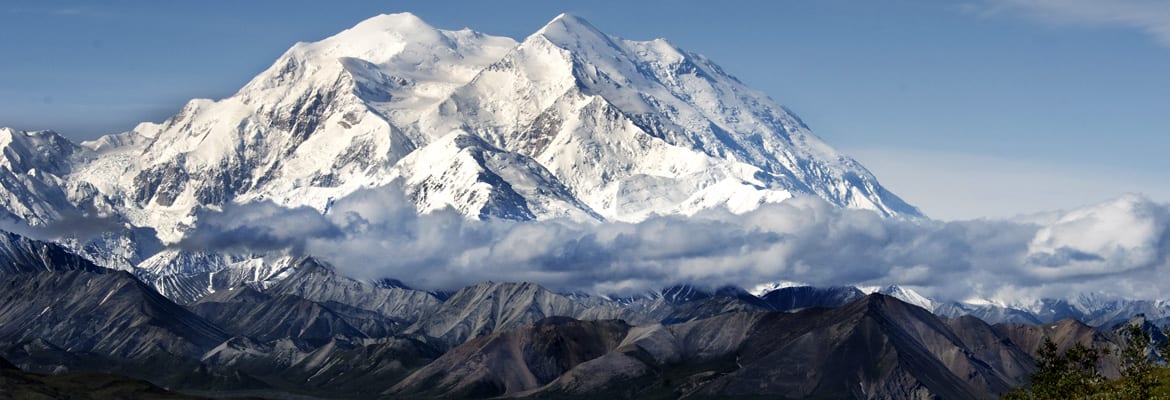
Denali Gear List: The Complete Packing List for the West Buttress (2027)
To climb Denali (6,190 m / 20,310 ft) by the West Buttress, you need full expedition gear for extreme cold: double or 8,000 m-style insulated boots, a sleeping bag rated to around -40°C/F, a down parka and down pants or suit, a full layering system, expedition mitts, glacier travel and crevasse rescue kit (harness, crampons, ice axe, ascenders, pulleys and prusiks), and a sled and pack to haul loads of 50 kg or more between camps. Most expeditions take around three weeks, and teams are self-supporting: there are no porters, so everything you bring you must carry or drag up the mountain. Climbers must register with the National Park Service at least 60 days before their climb and pay a mountaineering special use fee of US$450 for 2026 (US$475 for 2027). Guided climbers usually get a detailed list from their guide company, which may supply group gear such as tents, stoves and ropes. Compare Denali operators by verified climber reviews on ExpedReview's Denali page.
Denali essentials at a glance | Category | Key items | |---|---| | Boots | Double or 8,000 m-style insulated boots, with overboots if needed | | Sleep | Sleeping bag rated about -40°, two sleeping pads | | Insulation | Down parka, down pants or suit, synthetic mid-layers | | Hands | Liner gloves, insulated gloves, expedition mitts | | Technical | Harness, crampons, ice axe, ascenders, carabiners, prusiks, pulleys | | Hauling | Sled, sled harness, 100–120 L expedition pack | | Camp | Expedition tent, stove, fuel, Clean Mountain Can for waste | | Fees (NPS) | US$450 (2026), US$475 (2027), plus US$15 park entrance |
Note: the National Park Service now refers to the peak as Mount McKinley in official materials. Most climbers still call it Denali.
Why Denali gear is different
Denali is famous for its cold. It sits at about 63° north, much farther from the equator than the Himalaya, so the air pressure is lower at a given height and the mountain feels higher than its altitude suggests. Temperatures high on the mountain can fall far below -30°C, and windchill can be extreme. Storms can pin teams in camp for days.
Denali is also a self-supported expedition. Most teams fly from Talkeetna to the Kahiltna Glacier, then move loads up the mountain by sled and backpack, often doing "double carries": carrying a load up, caching it, and returning to sleep lower. That means your gear needs to be warm, light and robust, and you need to be able to manage it yourself.
Boots
Boots are the most important piece of gear on Denali. Frostbite of the toes is one of the most common injuries on the mountain.
- Double boots or 8,000 m-style boots with an integrated gaiter are the most common choice. Many climbers use the same boots they would use on an 8,000 m peak.
- Lighter 6,000 m double boots with overboots are another option for some climbers.
- Bring vapour barrier liners or spare liners and socks, and keep liners in your sleeping bag at night.
- Make sure your boots fit with your expedition socks and are well broken in.
See ExpedReview's guide to the best mountaineering boots for different altitudes.
Clothing and layering
A good layering system lets you adjust to everything from intense sun on the lower glacier to bitter cold at High Camp.
Base layers - Two sets of lightweight or midweight synthetic or merino tops and bottoms. - A sun hoody for the lower glacier, where reflected sun can be intense.
Mid-layers - A fleece or light synthetic jacket. - A warm synthetic jacket for moving in the cold. - Softshell pants or insulated climbing pants.
Shell layers - A waterproof, breathable hardshell jacket with a hood that fits over a helmet. - Hardshell pants with full side zips.
Insulation - An expedition-weight down parka with a big hood, for camp and summit day. - Down or synthetic insulated pants, or a full down suit for colder climbers.
Head and face - Warm hat and a thin beanie. - Buff or neck gaiter and a face mask for wind. - Sun hat or cap.
Hands - Thin liner gloves. - Mid-weight softshell or work gloves for the lower glacier. - Insulated climbing gloves. - Expedition down or synthetic mitts, with a spare pair.
Feet - Several pairs of warm mountaineering socks and liner socks. - Insulated booties for camp.
Sleeping system
- Sleeping bag rated to around -40°C/F, ideally down with a waterproof shell.
- Two sleeping pads: a closed-cell foam pad and an inflatable pad, used together for insulation from the snow.
- Compression sack and a waterproof stuff sack.
- Pee bottle (and a pee funnel for women), clearly marked, so you do not need to leave the tent at night.
Technical climbing equipment
The West Buttress is not technically difficult by alpine standards, but it is a glacier climb with steep fixed lines on the headwall and an exposed ridge above it.
- Harness that fits over your full layering system.
- Crampons compatible with your boots, with anti-balling plates.
- Ice axe, a general mountaineering axe.
- Ascender (jumar) for the fixed lines on the headwall.
- Locking and non-locking carabiners.
- Prusik cords and slings for crevasse rescue.
- Pulley for crevasse rescue systems.
- Helmet.
- Avalanche probe and, depending on the team, a shovel and transceiver.
Ropes, pickets and snow anchors are usually group gear.
Hauling and packs
- Expedition pack of around 100–120 litres.
- Small summit pack or a stripped-down version of your main pack.
- Sled for hauling loads on the glacier, with a haul system and harness. Many guided teams supply sleds.
- Trekking poles with snow baskets.
- Snowshoes or skis for the lower glacier, depending on conditions and team plans.
Camp and cooking gear
Usually group gear, but check what you need to bring:
- Four-season expedition tents that can handle strong winds and heavy snow.
- Snow saw and shovels for building walls around tents.
- Liquid-fuel stoves and fuel bottles. Melting snow for water uses a lot of fuel.
- Pots, lighters and a pot lid.
- Personal mug, bowl and spoon.
- Two or three insulated water bottles and bottle parkas.
- A thermos.
Waste: the Clean Mountain Can
Denali has strict waste rules. The National Park Service issues Clean Mountain Cans (CMCs) for human waste, and climbers must carry out their trash. The aim is to keep the mountain clean for future climbers and for the glacier and its water. Rangers explain the current rules when climbers check in at Talkeetna.
Personal items
- Glacier glasses with side protection, and ski goggles.
- High-SPF sunscreen and lip balm.
- Headlamp with spare batteries (nights are short in May and June, but still useful).
- Personal first aid kit and medications.
- Toiletries, wet wipes and hand sanitiser.
- Knife or multi-tool.
- Camera, power bank and solar charger, kept warm.
- Earplugs.
- Snacks you will actually want to eat in the cold.
How your gear is used on the West Buttress
Understanding the route helps you understand the gear list.
Kahiltna Glacier. After flying in from Talkeetna, teams start on the lower Kahiltna Glacier. Here the main problems are crevasses, soft snow and surprising heat on sunny days, when the glacier acts like a reflector oven. You will wear a sun hoody, light gloves and glacier glasses while hauling a heavy sled, often on snowshoes or skis. Travel is roped because of hidden crevasses, so harnesses and crevasse rescue gear are on from day one.
Motorcycle Hill and Windy Corner. Steeper slopes lead toward the camp at about 14,200 ft (the "14 Camp"), a large basin where teams usually spend several days acclimatising. Windy Corner, as the name suggests, can be very cold and exposed, so your shell layers, warm gloves and face protection become important.
The headwall and the ridge. Above 14 Camp, fixed lines climb a steep headwall to the crest of the West Buttress. This is where your ascender, crampons and harness get serious use, and where cold hands become a real risk if you are fiddling with clips in thin gloves. The exposed ridge then leads to High Camp at about 17,200 ft.
Summit day. From High Camp, climbers traverse to Denali Pass, then continue past the Football Field to the summit ridge. Summit day is long and very cold, and it is when your best insulation, expedition mitts, boots and down parka matter most.
Common Denali gear mistakes
- Boots that are too tight. Tight boots restrict circulation and increase frostbite risk. Fit them with your expedition socks.
- Too few gloves. Bring several pairs, and keep a spare pair of mitts where you can reach them.
- Bringing too much. Every kilogram must be hauled. Leave out heavy luxuries and duplicate clothing.
- Untested systems. Sled harnesses, ascenders and new crampons should be tried before the expedition, not on the glacier.
- Ignoring sun protection. Sunburn and snow blindness are common on the lower glacier. Cover up and use glasses with side shields.
- Letting water freeze. Use insulated bottle covers, store bottles upside down and keep one inside your jacket.
Food on Denali
Food is often group gear on guided climbs, but think about what you like to eat in the cold. High-calorie, easy-to-eat snacks, such as nuts, chocolate, cheese and bars, help you keep fuelled while moving. Appetite drops at altitude, so bring food you genuinely enjoy. Hot drinks matter for morale and hydration.
How to pack for Denali
Organising gear is half the work of a Denali expedition:
- Pack by camp. Group items you will need at each camp so you can cache gear efficiently.
- Use stuff sacks. Colour-coded sacks for food, clothing and sleeping gear make life easier in a cramped tent.
- Keep critical items warm. Batteries, water and boot liners go in your sleeping bag at night.
- Weigh everything. Every extra kilogram must be hauled up the mountain. Leave out luxuries you will not use.
- Know your system. Practise with your gear before the expedition, especially your sled harness, crampons and ascender.
Fees, permits and registration
| Item | Detail |
|---|---|
| Registration | At least 60 days before the start date |
| Mountaineering special use fee | US$450 (2026); US$475 (2027); reduced fee for climbers aged 24 or younger |
| Park entrance fee | US$15 (unless covered by a pass) |
| Guided climbs | Only authorized guide concessions may guide on the mountain |
Climbers with authorized guides should check with their guide company about payment and registration.
Training for Denali
Denali demands strength as well as endurance, because you carry heavy packs while pulling a sled. Train with a weighted pack on long hill days, and consider dragging a tyre to simulate sled-hauling. Practise crevasse rescue and fixed-line skills before you go. See training for mountaineering adventures and what to climb before Everest.
Choosing a guided Denali expedition
Most Denali climbers join guided teams. Ask:
- Is the company an authorized concessioner for Denali?
- What group gear is supplied?
- What is the guide-to-client ratio?
- How many days are planned, and how many spare days for weather?
- What experience is required?
ExpedReview has verified reviews for Denali operators, including AAI (American Alpine Institute), rated 5.0 from 3 reviews as of 22 October 2026. See the full list on the Denali page.
Frequently asked questions
What gear do you need to climb Denali?
Full expedition gear for extreme cold, including double boots, a -40° sleeping bag, a down parka and pants, expedition mitts, glacier travel and crevasse rescue gear, and a sled and large pack.
What sleeping bag do you need for Denali?
Most climbers use a down bag rated to about -40°C/F.
What boots are best for Denali?
Insulated double boots or 8,000 m-style boots with integrated gaiters are the most common choice.
How much does your pack weigh on Denali?
Climbers often carry or haul loads of 50 kg or more between their pack and sled, especially low on the mountain.
Do you need a sled for Denali?
Yes, most teams use sleds to haul gear on the glacier, especially on the West Buttress.
How much is the Denali climbing permit?
The NPS mountaineering special use fee is US$450 for 2026 and US$475 for 2027, plus a US$15 park entrance fee.
How long does it take to climb Denali?
Most West Buttress expeditions take around three weeks, including weather days.
Can you rent gear for Denali?
Some guide companies and outfitters in Anchorage and Talkeetna rent gear such as sleds, snowshoes and some clothing. Check availability early.
What is a Clean Mountain Can?
A container issued by the National Park Service for carrying human waste off the mountain.
How cold does it get on Denali?
Very cold. High on the mountain, temperatures can fall far below -30°C, and windchill can make it feel much colder. Storms can hit at any time in the climbing season.
Is Denali harder than Everest?
It is lower and less technical in some ways, but colder, self-supported and physically demanding because climbers haul their own loads. Many climbers use Denali as preparation for 8,000 m peaks.
When is the Denali climbing season?
Most climbs take place from about May to early July, when conditions are most stable.