The 14 8,000 m Peaks: List, Heights, First Ascents, Records and the Subsidiary Summits
By Blake Penson · August 20, 2023
Category: seven-summits
7 min read
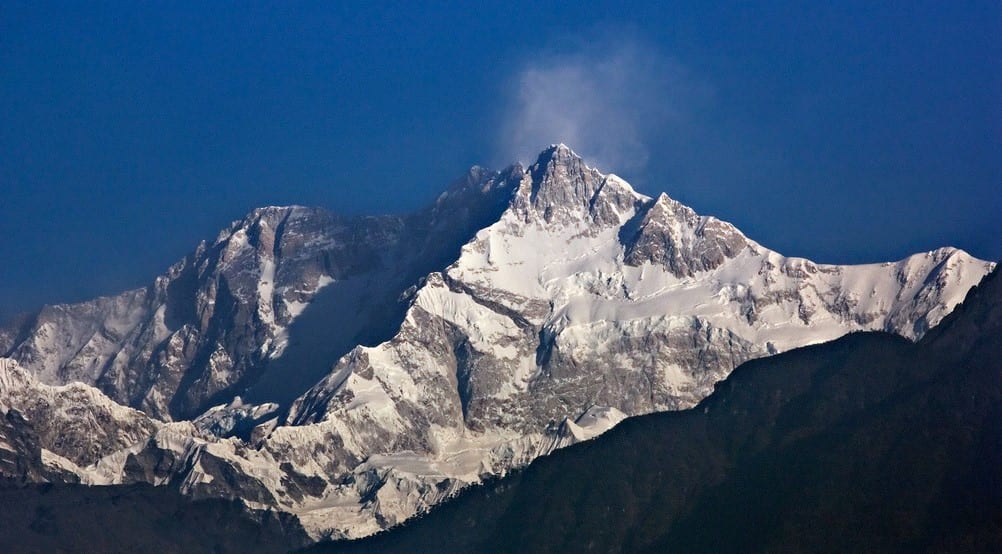
There are 14 mountains higher than 8,000 m, all in the Himalaya and Karakoram of Nepal, Pakistan, China (Tibet) and India: Everest, K2, Kangchenjunga, Lhotse, Makalu, Cho Oyu, Dhaulagiri I, Manaslu, Nanga Parbat, Annapurna I, Gasherbrum I, Broad Peak, Gasherbrum II and Shishapangma. Reinhold Messner was the first person to climb all 14, finishing in 1986, without supplementary oxygen; Jerzy Kukuczka was second, in 1987. Since then the challenge has become faster and more popular, with Nirmal Purja climbing all 14 in about six months in 2019 and Kristin Harila and Tenjen (Lama) Sherpa doing it in 92 days in 2023. Beyond the main summits, several of these mountains have subsidiary tops above 8,000 m, such as Lhotse Shar, Yalung Kang and Broad Peak Central, which offer a quieter, harder challenge for experienced climbers. Many of the 14 are now climbed commercially with fixed ropes, Sherpa support and supplementary oxygen, and ExpedReview ranks operators for several of them by verified climber reviews.
| Rank | Mountain | Height | Range / country | First ascent |
|---|---|---|---|---|
| 1 | Everest | 8,849 m | Himalaya, Nepal/China | 1953 |
| 2 | K2 | 8,611 m | Karakoram, Pakistan/China | 1954 |
| 3 | Kangchenjunga | 8,586 m | Himalaya, Nepal/India | 1955 |
| 4 | Lhotse | 8,516 m | Himalaya, Nepal/China | 1956 |
| 5 | Makalu | 8,485 m | Himalaya, Nepal/China | 1955 |
| 6 | Cho Oyu | 8,188 m | Himalaya, Nepal/China | 1954 |
| 7 | Dhaulagiri I | 8,167 m | Himalaya, Nepal | 1960 |
| 8 | Manaslu | 8,163 m | Himalaya, Nepal | 1956 |
| 9 | Nanga Parbat | 8,126 m | Himalaya, Pakistan | 1953 |
| 10 | Annapurna I | 8,091 m | Himalaya, Nepal | 1950 |
| 11 | Gasherbrum I | 8,080 m | Karakoram, Pakistan/China | 1958 |
| 12 | Broad Peak | 8,051 m | Karakoram, Pakistan/China | 1957 |
| 13 | Gasherbrum II | 8,035 m | Karakoram, Pakistan/China | 1956 |
| 14 | Shishapangma | 8,027 m | Himalaya, China (Tibet) | 1964 |
What makes the 8,000 m peaks special?
Above about 8,000 m, climbers enter what is often called the death zone, where the air holds roughly a third of the oxygen available at sea level and the human body cannot acclimatise fully. Every hour spent there wears the body down. The 14 eight-thousanders are the only mountains on Earth that reach this altitude, which is why climbing them has become one of the defining challenges of mountaineering. See death zone effects on the body and how the body copes above 8,000 m.
A short history
The race to climb the 8,000 m peaks began after the Second World War. Maurice Herzog and Louis Lachenal of France reached the summit of Annapurna I on 3 June 1950, the first ascent of an eight-thousander, though both suffered severe frostbite on the descent. Everest followed in 1953 with Tenzing Norgay and Edmund Hillary, and just weeks later Hermann Buhl reached the summit of Nanga Parbat alone. By 1964, when a Chinese team climbed Shishapangma, all 14 had been climbed.
The next era was about style. In 1978, Reinhold Messner and Peter Habeler climbed Everest without supplementary oxygen, proving it was possible. Messner went on to become the first person to climb all 14 eight-thousanders, completing the list on Lhotse in 1986, all without supplementary oxygen. Polish climber Jerzy Kukuczka finished his 14 the following year, with new routes and winter ascents among them.
Winter climbing was the last great frontier. Polish climbers made the first winter ascent of an eight-thousander on Everest in 1980, and over the following decades all the others were climbed in winter except K2. On 16 January 2021, a team of ten Nepali climbers reached the summit of K2 together, completing the first winter ascents of all 14. See summary of K2 winter 2021.
Climbing all 14: the records
Climbing all 14 eight-thousanders was once a lifetime's work. It has become faster as fixed ropes, helicopter logistics and large Sherpa teams have grown.
- Reinhold Messner (Italy): first to climb all 14, completed in 1986, all without supplementary oxygen.
- Jerzy Kukuczka (Poland): second, completed in 1987.
- Nirmal Purja (Nepal/UK): climbed all 14 in about six months and six days in 2019, using supplementary oxygen and helicopters between peaks.
- Kristin Harila (Norway) and Tenjen (Lama) Sherpa (Nepal): climbed all 14 in 92 days in 2023, finishing on K2 in July. Tenjen Sherpa died in an avalanche on Shishapangma later that year. See Kristin Harila's record.
Many Nepali climbers have climbed all 14, often while guiding clients, and Sherpa climbers hold many of the records on individual mountains.
Notable firsts by women
Japanese climber Junko Tabei became the first woman to climb Everest, in 1975. Wanda Rutkiewicz of Poland was the first woman to climb K2, in 1986, and set out to climb all 14 before she disappeared on Kangchenjunga in 1992. Edurne Pasaban of Spain completed all 14 in 2010 and is generally recognised as the first woman to do so, after a disputed claim by South Korean climber Oh Eun-sun the same year. Gerlinde Kaltenbrunner of Austria became the first woman to climb all 14 without supplementary oxygen, finishing on K2 in 2011.
The true summit debate
Several eight-thousanders have summit areas where it is easy to stop short of the highest point. On Manaslu, many climbers once stopped at a foresummit below the true summit; on Shishapangma, many stopped at the Central summit, which is lower than the main summit; on Annapurna, Dhaulagiri and Cho Oyu, the highest point is on broad or corniced ridges. Research by German chronicler Eberhard Jurgalski and his team, published from 2021, examined photos and records and concluded that many climbers listed as having climbed all 14 had not reached the true summit of every peak. Today, more climbers and operators go to the true summit and document it carefully, which has made true-summit ascents a mark of credibility.
The hardest and deadliest
Every eight-thousander is dangerous, but some have much worse records:
- Annapurna I has historically had one of the highest death rates of any 8,000 m peak, because of avalanches on its south and north faces.
- K2 is steeper and more technical than Everest, with a notorious Bottleneck below a hanging serac. See the Khumbu Icefall versus the K2 Bottleneck.
- Nanga Parbat, once called the "killer mountain", has a long history of deadly expeditions.
- Kangchenjunga is remote and long, with avalanche-prone slopes.
By contrast, Cho Oyu and Manaslu are considered among the more accessible eight-thousanders and are popular preparation peaks for Everest. Note that Cho Oyu's popular route is in Tibet, and access through China has been limited in recent years. See Manaslu and what to climb before Everest.
The subsidiary 8,000 m summits
Several of the 14 have additional tops above 8,000 m that are not counted as separate mountains because they are not independent enough. Climbing them is a harder, more obscure challenge, and some have very few ascents. Examples include:
- Kangchenjunga: Yalung Kang (Kangchenjunga West, 8,505 m), Kangchenjunga South (8,476 m) and Kangchenjunga Central (8,473 m).
- Lhotse: Lhotse Shar (8,383 m) and Lhotse Middle (about 8,410 m). Lhotse Middle was the last named 8,000 m point to be climbed, in 2001.
- Broad Peak: Broad Peak Central (8,011 m), the summit where many climbers stop or turn around before the main summit.
- Shishapangma: the Central summit (about 8,008 m), which many climbers have reached instead of the main summit.
These tops are usually reached by long ridge traverses or harder routes and lack the fixed ropes found on popular routes. They are only for very experienced, self-sufficient climbers. Lists of subsidiary summits vary depending on the criteria used for prominence, so check sources such as the Himalayan Database and specialist chroniclers.
How climbers approach the 14 today
Most climbers who set out to climb many 8,000 m peaks start with Manaslu, Cho Oyu or Everest with an experienced operator. They then move to harder peaks such as Lhotse, Makalu, Dhaulagiri and the Karakoram giants. Commercial expeditions now run on most of the 14, but some, such as Annapurna, Kangchenjunga and K2, remain serious undertakings even with fixed ropes and oxygen.
Oxygen or no oxygen?
Most commercial clients use supplementary oxygen on the 8,000 m peaks. Climbing without oxygen is much harder and riskier, but it is regarded as the purer style. Climbers' records usually note whether they used oxygen.
Costs and logistics
Expeditions to the 8,000 m peaks are expensive. Nepal charges royalties for each peak, Pakistan has its own fees for the Karakoram, and China controls access to the peaks in Tibet. Operators' prices depend on service levels, oxygen, Sherpa support and logistics. See our comparison of high-altitude expedition costs.
When are the 8,000 m peaks climbed?
The seasons depend on the range:
- Nepal Himalaya (Everest, Lhotse, Makalu, Kangchenjunga, Dhaulagiri, Annapurna): mainly spring, from April to late May, before the monsoon. Some peaks, especially Manaslu and Dhaulagiri, are also climbed in autumn, in September and October.
- Karakoram (K2, Broad Peak, Gasherbrum I and II, Nanga Parbat): summer, from June to August, when the monsoon has less influence on the range.
- Tibet (Cho Oyu, Shishapangma and the north side of Everest): spring and autumn, but access depends on permits from the Chinese authorities, which have restricted or closed access for foreigners at times in recent years.
Winter expeditions take place from December to February and are far harder, with extreme cold and jet-stream winds.
Preparing for your first eight-thousander
Very few climbers go straight to an 8,000 m peak. A typical progression includes:
- Alpine climbing to learn crampon, ice axe, rope and glacier skills.
- Peaks of 6,000 m to 7,000 m, such as Aconcagua, Island Peak, Ama Dablam or a 7,000 m peak, to gain altitude experience.
- An accessible eight-thousander, usually Manaslu or Cho Oyu, with an experienced operator.
- Harder peaks or Everest, once you know how your body copes above 8,000 m.
Along the way, you learn to use supplementary oxygen, live in high camps, move on fixed ropes with an ascender, and recognise altitude illness. Training should focus on endurance with a heavy pack. See how to train for mountaineering, what is acute mountain sickness and Mount Everest for beginners.
The people behind the climbs
Most ascents of the 8,000 m peaks rely on local climbing professionals. In Nepal, Sherpa and other Nepali climbers fix ropes, carry loads, set up camps and guide clients. In Pakistan, high-altitude porters, many from the Hunza, Shimshal and Baltistan regions, play the same role in the Karakoram. Many of the fastest and most remarkable ascents of recent years, including the winter ascent of K2, were made by Nepali climbers. When choosing an operator, ask how local staff are paid, insured and equipped. See climbing Everest responsibly.
Choosing an operator for an 8,000 m peak
Experience, safety record, Sherpa and guide ratios, oxygen supply and how the company treats its local staff matter more than price. ExpedReview ranks operators by verified reviews for several 8,000 m peaks, including Everest, Lhotse, Manaslu, K2, Broad Peak, Gasherbrum I, Dhaulagiri I and Annapurna I.
Frequently asked questions
What are the 14 8,000 m peaks?
Everest, K2, Kangchenjunga, Lhotse, Makalu, Cho Oyu, Dhaulagiri I, Manaslu, Nanga Parbat, Annapurna I, Gasherbrum I, Broad Peak, Gasherbrum II and Shishapangma.
Who climbed all 14 8,000 m peaks first?
Reinhold Messner, who completed them in 1986, all without supplementary oxygen.
What is the fastest time to climb all 14 8,000 m peaks?
Kristin Harila and Tenjen (Lama) Sherpa climbed all 14 in 92 days in 2023.
Which 8,000 m peak is the deadliest?
Annapurna I has historically had one of the highest death rates. K2 and Nanga Parbat also have very high fatality rates.
Which is the easiest 8,000 m peak?
Cho Oyu and Manaslu are generally considered the most accessible, though no 8,000 m peak is easy.
Where are the 8,000 m peaks?
All 14 are in the Himalaya and Karakoram, in Nepal, Pakistan, China (Tibet) and, for Kangchenjunga, on the border with India.
What is the lowest 8,000 m peak?
Shishapangma, at 8,027 m, in Tibet.
What are the subsidiary 8,000 m summits?
Tops above 8,000 m that are not counted as separate mountains, such as Yalung Kang, Lhotse Shar, Lhotse Middle and Broad Peak Central.
Were all 14 climbed in winter?
Yes. K2 was the last, climbed in winter by a team of ten Nepali climbers on 16 January 2021.
Can you climb an 8,000 m peak without oxygen?
Yes, and many strong climbers do, but it is much harder and riskier. Most commercial clients use supplementary oxygen.
What should I climb before my first 8,000 m peak?
Most climbers first gain experience on alpine peaks and mountains of 6,000 m to 7,000 m, then choose Manaslu or Cho Oyu as their first eight-thousander.
Tags: 8000ers, reinhold-messner, kim-chang-ho, second-summits, himalaya