Baruntse Expedition Guides: Verified Reviews and Climbing Guide
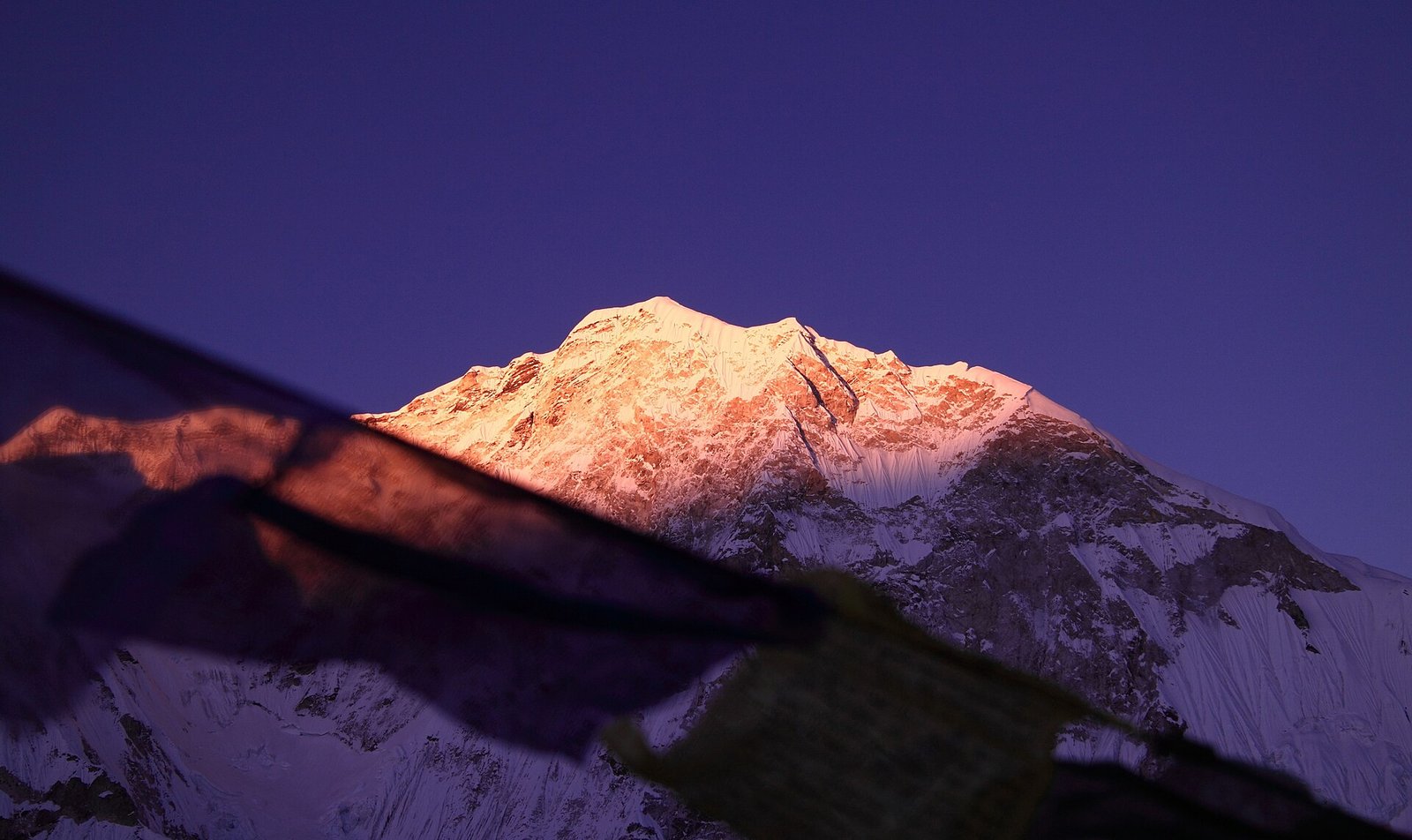
Baruntse (7,129 m, 23,389 ft; some sources give 7,162 m) is a remote, glaciated 7,000-metre peak between Everest, Lhotse and Makalu in eastern Nepal, and one of the most popular first 7,000-metre summits. The standard route is the south-east ridge, a climb of steep snow and ice with fixed ropes, from a base camp in the upper Hongu valley, usually reached after acclimatising on or near Mera Peak. Expeditions usually last about four weeks, in spring or autumn. On ExpedReview, as of 23 October 2026, 1 operator has 1 verified client review for Baruntse: Summitclimb (5.0★, November 2023), which lists a package from US$10,450 (updated July 2026). Below are the ranking and review, then a guide to the expedition.
Baruntse: key facts | | | |---|---| | Height | 7,129 m (23,389 ft); some sources 7,162 m | | Location | Upper Hongu and Barun valleys, Khumbu and Makalu-Barun region, Nepal | | First ascent | 30 May 1954, Colin Todd and Geoff Harrow (New Zealand expedition led by Edmund Hillary) | | Standard route | South-east ridge | | Approach | Lukla, then over the Mera La or via the Amphu Labtsa | | Typical expedition | About 4 weeks | | Seasons | Spring (April–May) and autumn (October–November) | | Operators reviewed on ExpedReview | 1, with 1 verified review (as of 23 Oct 2026) |
Baruntse guides ranked by verified reviews
Rankings use each operator's verified ExpedReview client reviews for Baruntse: the star rating, adjusted so that one or two reviews, or only old ones, count for less than many recent ones. Every review is checked by hand before it is published, and operators cannot pay for a better position. Data as of 23 October 2026.
| Rank | Operator | Based in | Rating here | Reviews | Latest review | From price |
|---|---|---|---|---|---|---|
| 1 | Summitclimb | United States | 5.0★ | 1 | November 2023 | US$10,450 (updated July 2026) |
With only one review, this is a thin basis for comparison, so read operators' reviews on other Himalayan peaks too.
What clients say
The single review, from November 2023, "would thoroughly recommend SummitClimb for Himalayan expeditions". The reviewer described the company as very professional with excellent attention to detail, and said it was happy to personalise the itinerary. They said the expedition leader, Dan, and his staff made everyone feel part of the team, and that the team handled a medical emergency calmly and effectively. They would not hesitate to join another trip.
The mountain
Baruntse stands at the junction of several of the most remote valleys in the Everest region: the Hongu valley to the west, the Barun valley to the east, and the Imja valley to the north, across the Amphu Labtsa pass. It has four ridges and a broad, heavily glaciated profile, with views from the summit of Everest, Lhotse, Makalu and Kangchenjunga. The area is part of Sagarmatha and Makalu-Barun national parks, with no villages in the upper Hongu, so expeditions are fully self-supported once they leave the trekking lodges.
History
The first ascent was made on 30 May 1954 by Colin Todd and Geoff Harrow, members of a New Zealand Alpine Club expedition to the Barun valley led by Sir Edmund Hillary, a year after his ascent of Everest. The expedition explored and climbed several peaks in the area, and Hillary himself was injured during a crevasse rescue and later fell ill. For decades afterwards, Baruntse saw few ascents, but since the 1990s it has become a regular commercial objective, valued as a quieter alternative to busier 7,000-metre peaks.
The route
Approach
Most expeditions fly from Kathmandu to Lukla, then trek for about a week through forests and over passes to the Hinku valley and Khare, the base for Mera Peak. From there, they cross the Mera La pass, at about 5,400 m, into the upper Hongu valley, and many climb Mera Peak (6,476 m) along the way as acclimatisation. Base camp is in the upper Hongu, at about 5,300–5,400 m, near the lakes below Baruntse's south side. A few teams approach from the Khumbu over the Amphu Labtsa, a steep, glaciated pass at about 5,800 m, which is more technical and is sometimes used as an exit route instead.
South-east ridge
From base camp, the route climbs moraine and glacier to Camp 1 at about 6,000 m, near the West Col or on the glacier below the south-east ridge, and then to a high camp at about 6,400–6,500 m on the ridge. Some teams use only one camp above base camp. The summit day follows the south-east ridge, climbing steep snow and ice slopes, with sections up to about 50°, and an exposed, corniced crest to the summit. Most operators fix rope on the steeper sections, so climbers ascend with a jumar and descend by rappel or arm-wrapping. The summit day is long, often 10 to 14 hours or more from high camp and back.
Difficulty and experience
Baruntse is a serious step up from 6,000-metre trekking peaks. The technical difficulty is moderate, with steep snow and ice on fixed ropes rather than hard climbing, but the altitude, remoteness, cold and long summit day make it demanding. Operators usually ask for previous experience on a 6,000-metre peak, such as Island Peak, Mera Peak or Lobuche, and competence with crampons, an ice axe, a jumar and rappelling on fixed lines. Many climbers use Baruntse as preparation for an 8,000-metre peak, since it is high enough to show how the body copes with altitude. Unlike some 8,000-metre expeditions, most Baruntse climbers do not use supplementary oxygen, though some operators carry it for emergencies or offer it as an option. See our Mera Peak and Island Peak pages for preparatory climbs, and what to climb first for the wider progression.
A typical expedition
Most Baruntse expeditions last about 25 to 30 days from Kathmandu. A typical itinerary includes a day or two in Kathmandu for permits and briefings, a flight to Lukla, about a week of trekking through the Hinku valley to Khare, a day of skills training, an ascent of Mera Peak or a high camp on its slopes for acclimatisation, a crossing of the Mera La to base camp, about two weeks on the mountain with rotations to the higher camps and a summit window, and a return trek to Lukla, often by the same route. Extra days are built in for weather, and the return flight from Lukla is often delayed by weather. Some operators offer shorter itineraries by helicopter, which reduces the time on the approach but also the time for acclimatisation.
When to go
Baruntse is climbed in spring, from about April to May, and in autumn, from about October to early November. Autumn usually brings more stable, clear weather after the monsoon, but colder temperatures and shorter days, while spring is warmer but may have more afternoon cloud and snow. Strong winds on the ridge are the most common reason for summit attempts to fail in either season. Winter is extremely cold and the passes are often closed by snow, and the monsoon, from June to September, brings heavy rain and poor conditions.
Permits and logistics
Climbers need a Nepal climbing permit for Baruntse, issued through a registered Nepali agency, as well as national park and local area permits. Since 2025, Nepal has revised its climbing royalties and rules, including requirements for guides, insurance and waste management, so check the current fees and rules with your operator. Expeditions are supported by Nepali guides, cooks and porters, and the remote base camp means everything must be carried in, usually by porters over the Mera La, and waste carried out. Rescue from the upper Hongu is by helicopter, weather permitting, so good insurance covering helicopter evacuation up to 7,000 m or higher is essential.
Cost
Summitclimb lists Baruntse from US$10,450 (updated July 2026). Other operators' prices vary widely, depending on group size, the ratio of Nepali guides to clients, whether oxygen is included, the use of helicopters, and the standard of base camp. When comparing prices, check what is included: permits, flights to Lukla, hotels in Kathmandu, the approach trek, the Mera Peak climb, fixed ropes, base camp services, oxygen and personal Sherpa support, and insurance. See our Everest cost guide for a broader view of Himalayan expedition costs.
Gear
Climbers need gear for 7,000 m in cold conditions: double mountaineering boots or high-altitude boots, crampons, an ice axe, a harness, a jumar, a belay or rappel device, carabiners and slings, a helmet, a down suit or down jacket and trousers, warm gloves and mittens, a warm sleeping bag rated to about -30°C, and good sunglasses and goggles. Operators usually provide tents, ropes, cooking equipment and group gear. Ask your operator for the full kit list, and test your gear on earlier climbs.
Safety
The main risks on Baruntse are altitude illness, cold injury, avalanche and cornice collapse on the ridge, crevasses on the glacier, and the remoteness of the area, which makes rescue slower and more weather-dependent than on busier peaks. Acclimatisation is the most important safeguard, so an itinerary that climbs Mera Peak or spends nights at similar heights before base camp gives you a better chance of a safe and successful climb. Good operators carry oxygen, a satellite phone and a medical kit for emergencies, and have clear turnaround times on summit day. The single review on this page notes that the Summitclimb team dealt calmly with a medical emergency, which is the kind of situation you should ask any operator about. Ask how they would evacuate a sick climber from base camp or the high camps, and what medical training their leaders and guides have.
Combining Baruntse with other peaks
Because of its location, Baruntse fits naturally into longer trips. The most common combination is with Mera Peak, which gives acclimatisation and a second summit on the way in. Some teams exit over the Amphu Labtsa to the Khumbu and climb Island Peak, or trek out past Everest Base Camp, making a loop through some of the wildest country in the region. Others continue east into the Barun valley towards Makalu. These options add days and complexity, and the Amphu Labtsa in particular needs good conditions, fixed ropes and experienced staff, so ask your operator whether the crossing is optional and what happens if it is unsafe. For climbers with limited time, the standard out-and-back route via the Mera La is simplest.
Training
Prepare for several months before the expedition. Build endurance with long days of hiking or climbing with a heavy pack, 15 to 20 kg, and plenty of ascent, ideally on hills or mountains. Add strength training for the legs and core, and cardiovascular training such as running, cycling or stair climbing. Practise fixed-rope techniques, including jumaring, changing over at anchors, and rappelling, in mountain boots and gloves. Previous high-altitude experience is the best preparation of all, since it shows how your body adapts. Arrive in Nepal healthy and rested, since illness on the approach is a common reason for climbers to fall behind the acclimatisation schedule.
How to choose an operator
Ask each operator about the experience of the expedition leader and the Nepali guides on Baruntse, their success and safety record, the guide-to-client ratio on summit day, the acclimatisation plan, whether oxygen is available, how they handle emergencies and evacuations, and what is included in the price. Ask about group size, the standard of base camp, the food, and the support for climbers who are slower or decide to turn back. Check that they work through a registered Nepali agency and offer fair pay and conditions for their staff. Read reviews of the operator on other Himalayan peaks, and our how-to-choose guide.
Frequently asked questions
How hard is Baruntse?
It is a moderate technical climb, with steep snow and ice on fixed ropes, but the altitude, remoteness and long summit day make it demanding. Most operators expect experience on a 6,000-metre peak.
How long does a Baruntse expedition take?
About 25 to 30 days from Kathmandu, including the trek in and acclimatisation on Mera Peak.
Is Baruntse a good preparation for an 8,000-metre peak?
Yes. Many climbers use it to gain experience at 7,000 m before attempting peaks such as Manaslu, Cho Oyu or Everest.
When is the best time to climb Baruntse?
In spring, from about April to May, or in autumn, from about October to early November.
Which operator is ranked first for Baruntse on ExpedReview?
As of 23 October 2026, Summitclimb is the only ranked operator, with 5.0★ from 1 verified review, from November 2023.