Basic Mountaineering Skills: 12 Skills to Learn Before Your First Climb
By Blake Penson · August 30, 2024
Category: training-and-skills
5 min read
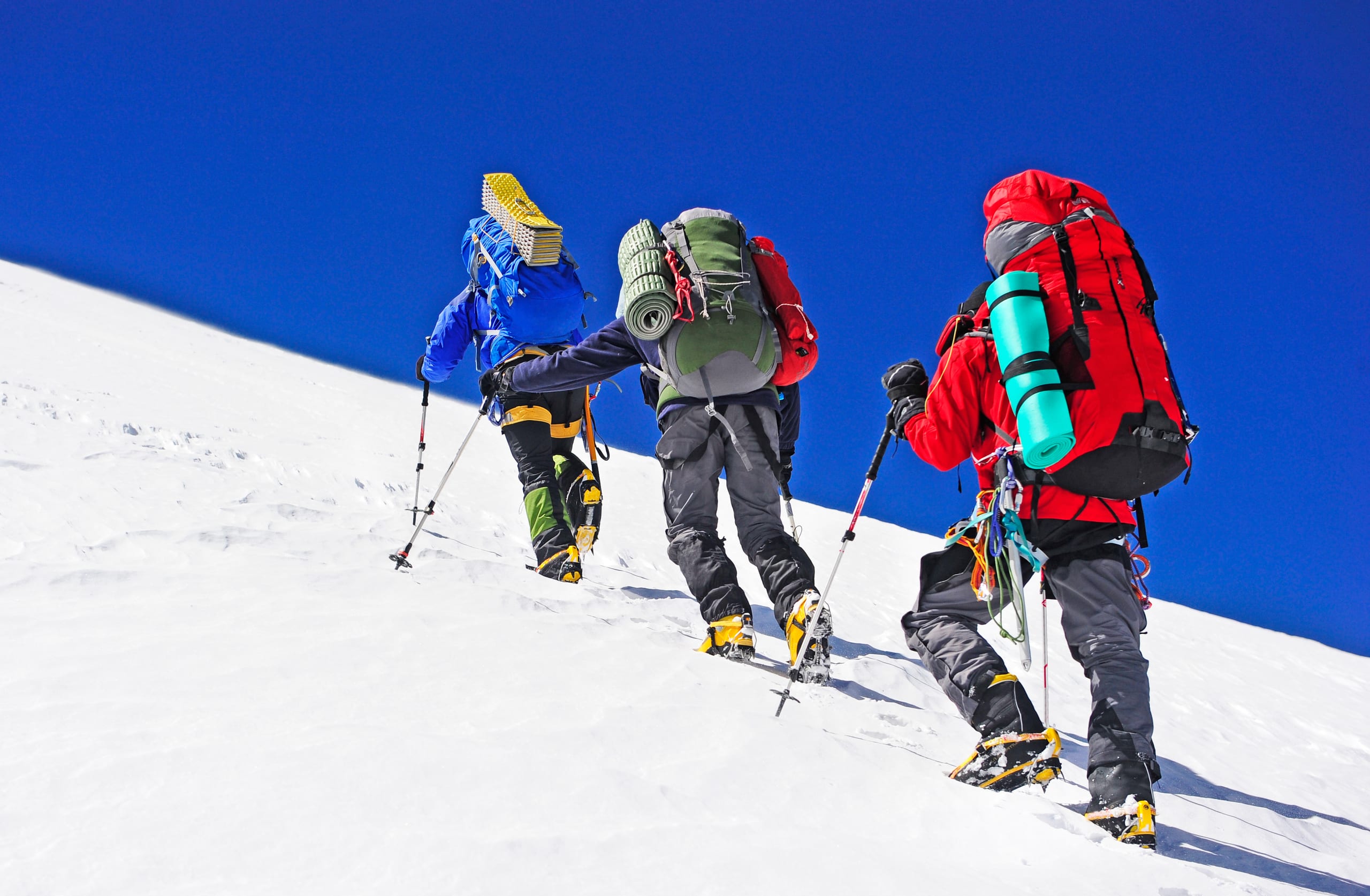
The basic mountaineering skills to learn before your first climb are: walking efficiently in crampons; using an ice axe, including self-arrest; tying in and the key knots (figure-eight, clove hitch, prusik); travelling on a rope team; glacier travel and crevasse rescue; using ascenders and fixed lines; navigation with map, compass and GPS; reading weather and avalanche conditions; layering and managing cold; mountain first aid; recognising altitude sickness; and pacing and energy management. Most people learn these on a guided mountaineering course of five to seven days in the Alps, the Cascades, Ecuador or New Zealand, then practise on easier peaks before tackling bigger objectives. Fitness matters as much as technique, so train for several months before any serious climb. Ask yourself honestly whether you can do each skill on the list below without help. If not, that is what to work on next. ExpedReview's rankings help you compare guide companies that run skills courses, by verified climber reviews.
| Skill | Why it matters | How to learn |
|---|---|---|
| Crampon technique | Safe movement on snow and ice | Course, practice on easy slopes |
| Ice axe and self-arrest | Stop a slip before it becomes a fall | Course, practice on safe slopes |
| Knots and tying in | Connect safely to the rope | Practice at home, course |
| Rope team travel | Move together safely on glaciers | Course, guided climbs |
| Crevasse rescue | Get a partner out of a crevasse | Course, regular practice |
| Fixed ropes and ascenders | Used on big peaks | Course, expedition training |
| Navigation | Find your way in poor visibility | Course, practice in hills |
| Weather and avalanches | Avoid the biggest hazards | Avalanche course, reading forecasts |
| First aid | Respond to injuries far from help | Wilderness first aid course |
| Altitude awareness | Spot and respond to altitude illness | Reading, experience |
Why skills matter
Mountains are unforgiving. A slip on hard snow, a hidden crevasse or a sudden storm can quickly turn a good day into a serious accident. Guides can manage much of the risk for you, but every member of a rope team needs basic skills to keep themselves and others safe. If you want to climb independently one day, you will need all these skills and more.
Skills also make climbing more enjoyable. When you move confidently in crampons, manage your layers and pace yourself, you have more energy to enjoy the experience.
1. Walking in crampons
Crampons are metal spikes that attach to your boots for grip on snow and ice. Good crampon technique means:
- Walking with your feet slightly wider apart to avoid catching your trousers or gaiters.
- Placing your feet flat on moderate slopes (French technique) so all the points bite.
- Using front-pointing on steeper slopes.
- Keeping a steady rhythm and avoiding dragging your feet.
Practise on easy, safe slopes before using crampons on exposed terrain. Make sure your crampons fit your boots properly. See what are crampons.
2. Using an ice axe and self-arrest
An ice axe is used for balance, for cutting steps and, crucially, for self-arrest: stopping yourself if you slip on a snow slope. Learn to:
- Hold and carry the axe correctly.
- Use it as a walking aid on slopes.
- Self-arrest from different positions, including head-first and on your back.
Practise self-arrest on a safe slope with a clear, flat run-out, under the supervision of an instructor.
3. Knots and tying in
You should be able to tie, check and untie these knots quickly, even with gloves on:
- Figure-eight follow-through: for tying into the rope.
- Clove hitch: for attaching to anchors.
- Prusik: a friction hitch used for ascending a rope and in crevasse rescue.
- Munter hitch: for belaying and lowering without a device.
- Overhand on a bight: a quick loop for many uses.
Practise at home until you can tie them without thinking.
4. Travelling on a rope team
On glaciers and some ridges, climbers rope together. You need to know how to:
- Space yourself correctly along the rope.
- Keep the rope tight but not tense between team members.
- Manage coils on ridges.
- Communicate clearly with your team.
5. Glacier travel and crevasse rescue
Glaciers hide crevasses under snow. If one team member falls in, others must hold the fall and set up a rescue. Learn:
- How to arrest a partner's fall.
- How to build snow anchors with pickets, ice axes or buried objects.
- How to set up a pulley system, such as a Z-pulley, to haul someone out.
- How to ascend a rope with prusiks if you fall into a crevasse yourself.
Read ExpedReview's guide to the basics of glacier travel.
6. Fixed ropes and ascenders
On many big peaks, including Everest, Ama Dablam, Manaslu and Denali's West Buttress headwall, climbers use fixed ropes. You need to be able to:
- Clip into the rope with a safety lanyard.
- Use an ascender (jumar) to climb the rope.
- Pass anchors safely, always staying clipped in.
- Abseil (rappel) down the rope with a descender.
7. Navigation
Even on guided trips, you should be able to read a map and use a compass and GPS. In poor visibility, navigation skills can prevent you from walking off a cliff or onto a cornice. Practise on hill walks in all conditions.
8. Weather and avalanche awareness
Learn to read mountain weather forecasts, including wind speed, temperature and freezing level. In winter and on snowy slopes, take an avalanche awareness course to learn how to assess snowpack, terrain and conditions. See avalanches.
9. Layering and managing cold
Managing your clothing is a key skill. Learn to:
- Add or remove layers before you get too hot or too cold.
- Keep hands and feet warm and dry.
- Eat and drink regularly to stay warm.
- Recognise early signs of frostbite and hypothermia.
10. Mountain first aid
A wilderness first aid course teaches you how to deal with injuries and illness far from help, including fractures, bleeding, hypothermia and altitude illness.
11. Altitude awareness
At altitude, you need to recognise the symptoms of acute mountain sickness, high-altitude cerebral oedema (HACE) and high-altitude pulmonary oedema (HAPE). Read what is acute mountain sickness and how the body copes above 8,000 m.
12. Pacing and energy management
Mountaineering is about endurance. Learn to move at a steady pace you can keep for hours, take short regular breaks, and eat and drink before you feel hungry or thirsty.
Skills beyond technique
Technical skills are only part of what makes a good mountaineer. These "soft" skills are just as important:
Decision-making
The most important skill in the mountains is knowing when to turn back. Good mountaineers set turnaround times before they start, watch for changing weather and conditions, and are willing to abandon a climb even close to the summit. Summit fever, the urge to keep going no matter what, has caused many accidents. Practise making conservative decisions on easier climbs so it becomes a habit.
Self-care
On multi-day climbs, you must look after yourself: eating enough when your appetite drops, drinking enough when water is hard to make, protecting your skin and eyes from the sun, keeping feet dry and warm, and sleeping when you can. Small problems, such as a blister or a cold hand, can become serious if ignored.
Teamwork and communication
Climbing is a team activity. Speak up if you feel unwell, scared or unsure. Agree on signals and calls for rope work. Watch out for your teammates and offer help. On guided trips, follow your guide's instructions and ask questions when you do not understand.
Camp craft
On expeditions, you will spend much more time in camp than climbing. Learn to set up a tent in wind, build snow walls, melt snow for water, cook on a stove in a tent vestibule safely, organise your gear and keep things dry. Good camp craft saves energy and keeps you healthy.
Gear knowledge
Know your equipment: how to fit and adjust your crampons, how your stove works, how to repair a broken pole, and how to dress for different conditions. Practise with new gear before a big trip. See the best mountaineering boots for different altitudes.
Fitness: the skill behind every other skill
Fitness is the foundation of safe mountaineering. A fit climber moves faster, has more energy for decisions and safety tasks, and has a bigger margin if something goes wrong. Before a mountaineering course or climb, build:
- Aerobic endurance, with long hikes, running, cycling or swimming.
- Uphill strength, with hill walking, stair climbing and step-ups carrying a pack.
- Core and leg strength, with squats, lunges and core exercises.
- Mobility, to reduce injury risk on rough ground.
Train for at least three to six months before a first alpine climb, and longer for high-altitude expeditions. See training for mountaineering adventures.
Common mistakes new mountaineers make
- Skipping the basics and going straight to a big peak.
- Relying entirely on the guide without learning skills themselves.
- Not practising knots and rope skills between trips.
- Overpacking, which makes every step harder.
- Ignoring early symptoms of cold injury or altitude sickness.
- Pushing on in bad weather because of time pressure.
How to learn mountaineering skills
- Take a course. A five- to seven-day introductory mountaineering course with certified guides is the best start. Popular places include the Alps, the Cascades, Ecuador and New Zealand.
- Join a club. Alpine clubs run courses, meets and trips.
- Climb with experienced partners. Learn from people who have been climbing for years.
- Practise regularly. Skills fade without use.
- Progress gradually. Start with easy peaks and build up.
What a beginner mountaineering course covers
A typical five- to seven-day introductory course follows a progression:
- Day 1: Gear and basics. Fitting boots, crampons and harness; checking equipment; basic knots; walking on snow.
- Day 2: Snow skills. Crampon technique on different slopes, cutting steps, using the ice axe for balance, and self-arrest practice.
- Day 3: Rope skills. Tying in, moving together on a rope, belaying, building simple anchors.
- Day 4: Glacier travel. Moving as a rope team on a glacier, spotting crevasses, and practising crevasse rescue with pulley systems.
- Day 5: Hut night and first climb. Overnight in a mountain hut, an early start and an easy summit to put everything into practice.
- Days 6–7: Bigger objective or review. A more demanding climb, or extra skills practice, depending on weather and progress.
Choose a course with small groups and certified instructors. Ask about the student-to-guide ratio, what gear is provided and what peaks may be climbed. Many courses are run by companies that also guide bigger peaks, so you can continue with the same team. See who are IFMGA guides.
Keeping your skills fresh
Skills fade quickly if you do not use them. Between trips:
- Practise knots at home while watching TV.
- Set up a crevasse rescue system in a park or garden using a tree as an anchor.
- Go winter hill walking to practise crampon and ice axe skills.
- Take a refresher day with a guide before a big climb.
- Read accident reports to learn from others' mistakes.
A progression for new mountaineers
- Hill walking and scrambling.
- Winter hill walking with crampons and an ice axe.
- A basic mountaineering course.
- Easy alpine peaks, such as Gran Paradiso.
- Higher or more demanding peaks, such as Mont Blanc or Elbrus.
- High-altitude expeditions, such as Aconcagua.
See levels of technical mountaineering and a beginner's guide to mountaineering.
Frequently asked questions
What are the basic mountaineering skills?
Crampon technique, ice axe use and self-arrest, knots, rope team travel, glacier travel and crevasse rescue, navigation, weather awareness, layering, first aid and altitude awareness.
How do I learn mountaineering skills?
Take a guided introductory mountaineering course, join an alpine club and practise regularly on easy peaks.
Am I ready for mountaineering?
If you are fit, comfortable on steep hiking terrain and willing to learn, you are ready for a beginner course.
How long does it take to learn mountaineering?
A basic course takes about a week, but building real competence takes several seasons of climbing.
What is self-arrest?
A technique for stopping a slide on snow or ice by digging the pick of your ice axe into the slope.
Do I need climbing experience to start mountaineering?
No, but rock climbing and scrambling experience helps.
What fitness do I need for mountaineering?
Good aerobic endurance and leg strength, so you can walk uphill with a pack for six to ten hours. Train for several months before a climb.
What is the most important mountaineering skill?
Good judgement, especially knowing when to turn back. Technical skills keep you safe on the mountain, but decisions keep you out of trouble.
Where is the best place to learn mountaineering?
Popular places include Chamonix and other centres in the Alps, the Cascades in the US, Ecuador's volcanoes and New Zealand's Southern Alps, all of which have experienced guides and suitable glaciers close to towns.
Do I need to be a rock climber to be a mountaineer?
No, but basic rock climbing and scrambling skills help on ridges and mixed ground and make you more confident on exposed terrain.
Tags: mountaineering-skills, training, navigation, first-aid, mental-resilience