Levels of Technical Mountaineering Explained: Non-Technical to Highly Technical Climbs (2026)
By Blake Penson · August 12, 2023
Category: mountaineering-basics
5 min read
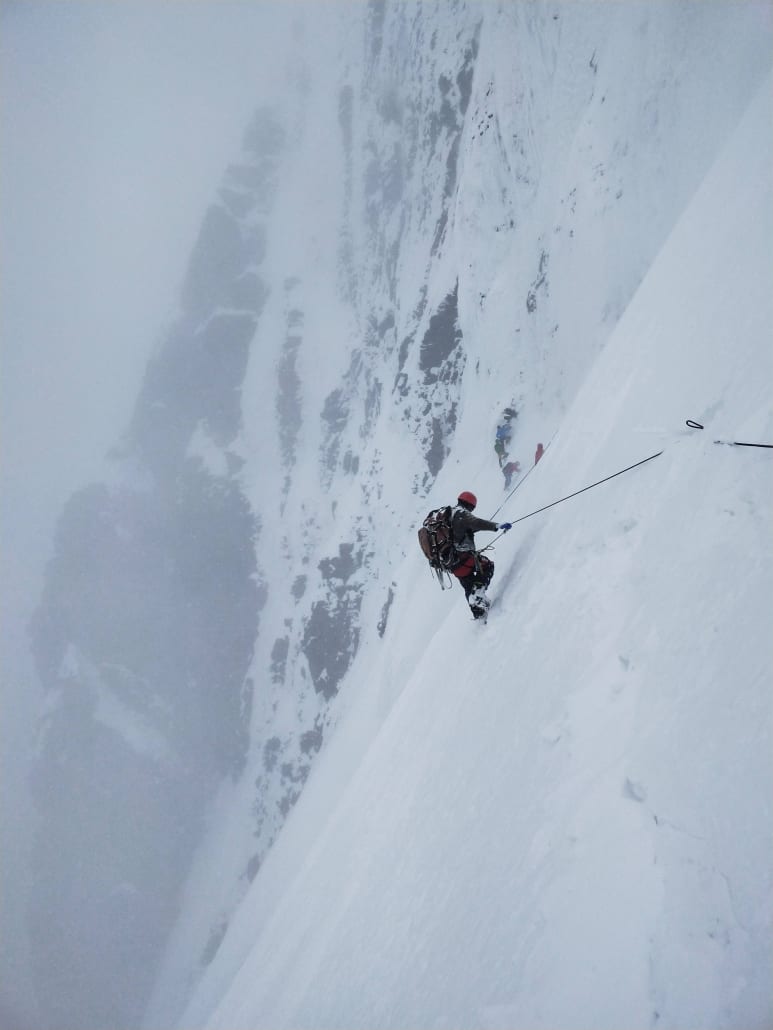
Mountaineering is usually described in levels of technical difficulty, from non-technical walk-ups that need no rope, through glaciated "intro" peaks that need crampons, an ice axe and rope-team skills, to highly technical routes on steep rock, snow and ice that demand lead climbing and self-rescue. A "technical" climb is one where you need specialist equipment and techniques, such as a rope, harness, crampons or protection, to move safely. Kilimanjaro and the Aconcagua Normal Route are non-technical; Mont Blanc, Elbrus and Island Peak are moderately technical; Ama Dablam and the Matterhorn's Hörnli Ridge are technical; and peaks such as K2 sit at the top of the scale. Altitude is a separate challenge: a non-technical peak can still be extremely hard because of thin air.
| Level | What it means | Typical gear | Example peaks |
|---|---|---|---|
| 1. Non-technical (trekking) | Walking on trails or scree; no rope | Boots, poles | Kilimanjaro, Toubkal, Kosciuszko |
| 2. Basic glacier / snow | Crampons, ice axe, roped glacier travel | Crampons, axe, harness, rope | Elbrus, Cotopaxi, Mount Baker |
| 3. Moderately technical | Fixed lines, short steep snow or ice, ascenders | Jumar, harness, crampons | Island Peak, Mera Peak, Mont Blanc (Goûter) |
| 4. Technical | Sustained steep rock, snow and ice; multi-pitch | Full rack or fixed ropes, technical tools | Ama Dablam, Matterhorn, Alpamayo |
| 5. Highly technical / extreme | Steep mixed ground at high altitude; serious objective hazard | Expert skills, full alpine kit | K2, Annapurna I, big alpine north faces |
What does "technical" mean in mountaineering?
A climb becomes technical when the terrain is steep, slippery or exposed enough that walking is no longer safe and you need equipment and specific techniques to protect against a fall. In practice, the dividing line is usually the first time you put on crampons, tie into a rope or clip into a fixed line.
There is no single global standard for these "levels". Operators, guidebooks and national federations all use slightly different wording. What is consistent is the progression of skills: walking, then snow and glacier travel, then fixed-line climbing, then genuine lead climbing on rock and ice, then sustained hard climbing at altitude. The five-level framework in this guide reflects that progression, and it is how most commercial operators describe their trips.
It also helps to separate three things that people often mix up:
- Technical difficulty: how hard the moves are and what gear you need.
- Altitude: how thin the air is, which affects every climber regardless of skill.
- Commitment and objective hazard: how remote the route is, how long you are exposed, and how much rockfall, serac fall or avalanche risk there is.
A peak can be low on one scale and high on another. Aconcagua's Normal Route is non-technical, but at 6,961 m it is a serious altitude climb. A short alpine rock route might be technically hard but low and quick to escape.
Level 1: Non-technical mountains (trekking peaks and walk-ups)
Non-technical peaks can be climbed on foot, usually on trails, scree or rocky paths. You might use your hands for balance on short steps, but you will not need a rope, harness or crampons in normal conditions.
Skills needed: good fitness, multi-day hiking experience, the ability to look after yourself in cold and wind, and an understanding of altitude sickness on higher peaks.
Examples: Kilimanjaro (5,895 m) by its standard routes, Toubkal (4,167 m) in summer, Mount Kosciuszko (2,228 m), and many trekking summits such as Kala Patthar above Everest Base Camp.
The trap at this level is altitude. Kilimanjaro is "just" a walk, yet a large share of climbers suffer acute mountain sickness, because many itineraries gain height faster than the body can adapt. Choosing a longer route and a good operator matters more than any technical skill.
ExpedReview's Kilimanjaro operator rankings list companies by verified climber reviews.
Level 2: Basic snow and glacier climbs
At level 2, you leave the trail and move on snow and glaciers. You will walk in crampons, carry an ice axe, and travel roped to your team to protect against hidden crevasses. Slopes are usually moderate, often up to about 30 to 40 degrees.
Skills needed: cramponing on varied snow, ice-axe self-arrest, roped glacier travel, basic knots, and an understanding of crevasse rescue. Most people learn these on a guided snow skills course or as part of an introductory expedition.
Examples: Mount Elbrus (5,642 m) by the south route, Cotopaxi (5,897 m) and Cayambe in Ecuador, Mount Baker and the Disappointment Cleaver on Rainier in the Cascades, and many Alpine 4,000 m peaks graded F or PD.
This is where most climbers make the jump from trekking to mountaineering. The terrain is not steep, but a fall on a glacier or a slide on hard snow can be serious, so solid basics are essential. See ExpedReview's pages for Elbrus, Cotopaxi and Mount Baker.
Level 3: Moderately technical climbs
Level 3 adds short sections of steep snow or ice, usually protected by fixed lines that your guides install. You clip in with a harness and climb using a mechanical ascender (jumar), then descend by abseiling (rappelling) on the same ropes. Exposure is greater, and summit days are longer.
Skills needed: confident cramponing on steeper ground, using an ascender and changing over at anchors, abseiling with a belay device or figure-of-eight, and moving efficiently while clipped to a line. Fitness and acclimatisation are still the biggest factors.
Examples: Island Peak (Imja Tse, 6,165 m), Lobuche East and Mera Peak in Nepal, Mont Blanc by the Goûter route, and many of the classic routes on Denali's West Buttress, which includes a fixed-line headwall.
Many people use level 3 peaks as preparation for 8,000 m climbing, because the techniques on fixed lines are the same ones used on Everest's South Col route. ExpedReview has rankings for Island Peak, Lobuche and Mera Peak.
Level 4: Technical climbs
At level 4, the climbing itself becomes the main challenge. Routes involve sustained steep rock, snow and ice, often over many pitches, with real exposure. On commercial expeditions, the hardest sections may still be fixed, but you need to move well on vertical ground. On independent climbs, you lead and place protection yourself.
Skills needed: rock climbing to a moderate standard in boots, ice climbing on steep water ice or alpine ice, multi-pitch rope work, building anchors, efficient abseiling and good judgement about weather and conditions.
Examples: Ama Dablam (6,812 m) by the Southwest Ridge, the Matterhorn's Hörnli Ridge, Alpamayo in Peru, and many AD to D alpine routes.
Ama Dablam is a good example of how this level feels. Its route includes steep rock steps, exposed ridges and ice, and its upper camp sits in a cramped, exposed position. See ExpedReview's guide to choosing an Ama Dablam operator and the Ama Dablam rankings.
Level 5: Highly technical and extreme climbs
Level 5 combines hard technical climbing with extreme altitude, remoteness and objective danger. Routes may include steep mixed rock and ice above 7,000 m, long periods of exposure to serac fall or avalanches, and very little chance of rescue.
Skills needed: years of experience on technical terrain, high-altitude experience, the ability to assess snow and serac hazard, and the mental strength to make decisions in severe conditions.
Examples: K2 (8,611 m), Annapurna I (8,091 m), and the great alpine north faces such as the Eiger.
Even on commercial K2 expeditions, the climbing on routes such as the Abruzzi Spur, with House's Chimney, the Black Pyramid and the Bottleneck, demands far more than most 8,000 m peaks. ExpedReview's K2 page and Karakoram region page cover operators who run these climbs.
The grading systems climbers actually use
The five levels above are a simple guide. Climbers, guidebooks and operators also use formal grades. The most common are below.
Alpine grades (IFAS): F to ED
The International French Adjectival System grades the overall seriousness of an alpine route. It considers length, steepness, commitment and objective danger.
| Grade | French | Meaning |
|---|---|---|
| F | Facile | Easy: simple glacier routes, easy scrambles |
| PD | Peu difficile | Slightly difficult: some steeper snow or scrambling |
| AD | Assez difficile | Fairly difficult: sustained steep snow or ice, rock pitches |
| D | Difficile | Difficult: serious, sustained technical climbing |
| TD | Très difficile | Very difficult: long, hard, committing routes |
| ED | Extrêmement difficile | Extremely difficult: open-ended at the top (ED1, ED2 and beyond) |
Grades are often refined with a plus or minus sign, such as PD+ or AD-. Mont Blanc's Goûter route is usually graded PD-, while the Matterhorn's Hörnli Ridge is usually graded AD.
Rock climbing grades
For rock sections, the main systems are the Yosemite Decimal System (YDS) in North America, which uses class 1 to 5 and then 5.0 to 5.15 for technical rock, the French sport grade (such as 4a or 6b) in Europe, and the UIAA grade (such as III or IV) in the Alps and elsewhere.
In YDS terms, class 1 is walking, class 2 is simple scrambling, class 3 is scrambling where a rope may be used, class 4 is exposed climbing where a fall could be fatal and a rope is normally used, and class 5 is technical rock climbing.
Ice climbing grades
Water ice is often graded WI1 to WI7, and alpine ice AI1 to AI6. WI2 or WI3 is a common standard for technical alpine routes such as those on Ama Dablam, while steep, vertical ice starts around WI4 and WI5.
Commitment and seriousness grades
Some systems add a Roman numeral (I to VII) for how long and committing a route is, from a short half-day climb to a multi-day wall. Others, such as the Alaskan grade, combine length, remoteness and weather.
How altitude changes the picture
Every level becomes harder with altitude. Above about 3,000 m, many people feel the effects of reduced oxygen. Above about 5,500 m, your body cannot fully acclimatise for long periods, and above 8,000 m, the so-called death zone, it deteriorates steadily.
That is why a level 2 climb at 6,000 m can feel harder than a level 4 climb at 3,000 m. Factor altitude into your choice of objective, and choose itineraries with enough time to acclimatise. ExpedReview's article on what happens to your body in the death zone explains the physiology.
How to move up the levels
- Start with non-technical peaks to build fitness and learn how your body reacts to altitude.
- Take a snow and glacier skills course covering crampons, ice-axe arrest, rope travel and crevasse rescue.
- Climb a level 2 glaciated peak, such as Elbrus, Cotopaxi or an Alpine 4,000 m peak, ideally with a guide.
- Learn fixed-line techniques on a level 3 peak like Island Peak, Lobuche East or Mera Peak.
- Build rock and ice skills at home: indoor climbing, multi-pitch rock and water ice.
- Do several seasons of alpine climbing before attempting level 4 routes such as Ama Dablam.
- Gain high-altitude experience on 6,000 m and 7,000 m peaks before considering level 5 climbs or 8,000 m expeditions.
There is no fixed timeline. Some people progress in a couple of years, others take a decade. The safest climbers are those who move up one step at a time and stay honest about their experience.
What to look for in a guide or operator at each level
- Levels 1 and 2: licensed local guides, sensible acclimatisation schedules, good safety equipment and clear emergency plans.
- Level 3: guides who are experienced in fixing and maintaining ropes, enough staff for the group size, and a skills check or training day before the summit push.
- Level 4 and 5: qualified, experienced lead guides, such as IFMGA/UIAGM mountain guides or highly experienced expedition Sherpas, low client-to-guide ratios and a clear policy on turnaround times.
Read verified client reviews before booking. ExpedReview's operator pages show average ratings from verified climbers for each mountain, and the Everest region page lists peaks from trekking to technical in one place.
Common mistakes when judging a climb's difficulty
- Confusing "non-technical" with "easy". Non-technical routes can still be long, cold and high.
- Relying only on the grade. Conditions change grades: ice can become rock, snow can become bare ice, and late-season routes can be much harder.
- Ignoring descent. Many accidents happen on the way down, when climbers are tired.
- Skipping skills practice. Learning to use an ascender or abseil on the mountain wastes energy and time.
- Underestimating objective hazards. Serac fall and rockfall do not care how good a climber you are.
Frequently asked questions
What is technical mountaineering?
Technical mountaineering is climbing that needs specialist equipment and techniques, such as ropes, harnesses, crampons, ice axes and protection, because the terrain is too steep or exposed to walk safely.
What is the difference between technical and non-technical climbing?
Non-technical climbing can be done on foot without ropes or crampons in normal conditions. Technical climbing needs equipment and skills to move safely on steep snow, ice or rock.
How many levels of mountaineering are there?
There is no single official count. Many operators use about five practical levels, from non-technical trekking peaks to highly technical high-altitude routes. Formal grading systems such as the alpine F to ED scale have six main grades.
Is Kilimanjaro a technical climb?
No. Kilimanjaro's standard routes are non-technical. The main challenge is altitude, since the summit is at 5,895 m.
Is Everest a technical climb?
Everest's South Col route is moderately technical. Most of the route uses fixed lines, with ladders in the Khumbu Icefall and short steep steps high on the mountain. The extreme altitude is the biggest challenge.
Is Mont Blanc technical?
Mont Blanc's normal routes are graded about PD and need crampons, an ice axe and rope skills. They also have real objective hazards, such as rockfall in the Grand Couloir on the Goûter route.
What is the hardest level of mountaineering?
The hardest level combines steep, sustained technical climbing with extreme altitude and serious objective danger, such as routes on K2 or the big alpine north faces.
What does F, PD, AD mean in climbing?
They are alpine grades from the French system: F (easy), PD (slightly difficult) and AD (fairly difficult). Higher grades are D, TD and ED.
What is a class 4 climb?
In the Yosemite Decimal System, class 4 is steep, exposed scrambling where a fall could be fatal, so a rope is normally used.
Do I need technical skills to climb a 6,000 m peak?
It depends on the peak. Some 6,000 m peaks are non-technical, while many in the Himalaya, such as Island Peak, need fixed-line and glacier skills.
Tags: climbing-grades, technical-difficulty, kilimanjaro, denali, everest