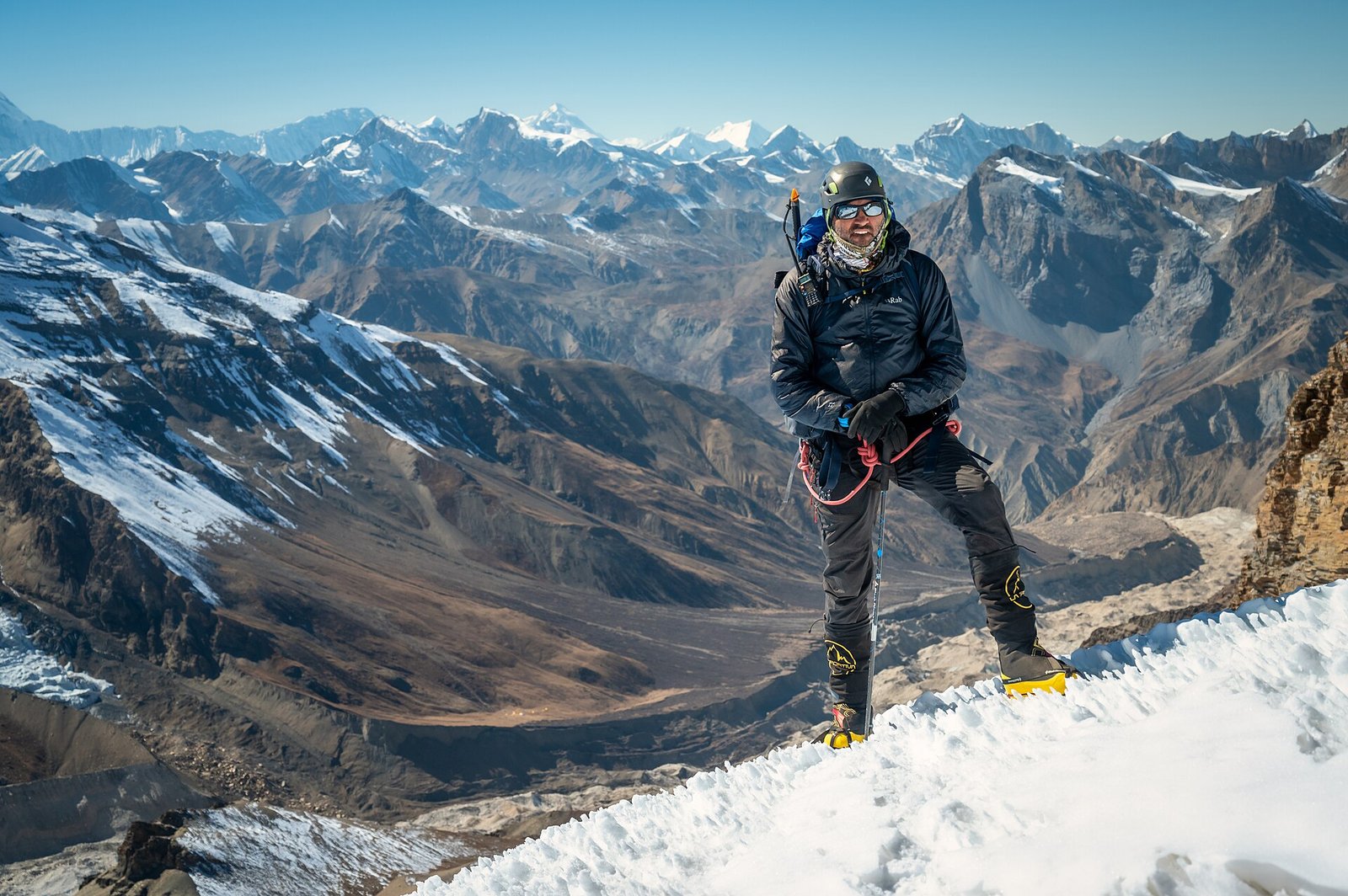
Himlung Himal Guides: Verified Reviews, Route, Season, Permits and Cost of a 7,000 m Expedition
Himlung Himal is a 7,000 m peak on the Nepal–Tibet border, north of the Annapurna range, in the remote Nar-Phu valley of Manang district. Its height is usually given as 7,126 m (23,379 ft), though some sources, including our own page data, list about 7,140 m. It is one of the most popular first 7,000 m peaks in Nepal because its normal route is a mostly non-technical glacier climb with some fixed rope, reached by a beautiful trek through the Tibetan villages of Nar-Phu. Expeditions take about four weeks, mostly in the autumn season from September to October, with a smaller spring season. Climbers need a Himlung climbing permit, the Nar-Phu restricted area permit and an Annapurna Conservation Area permit. On ExpedReview, as of 23 October 2026, one operator has a verified client review for Himlung Himal: Dream Himalaya Adventures (5.0★ from 1 review, January 2025), which also lists a package from US$6,200 (updated January 2026). Below is the ranking, then everything you need to plan a Himlung expedition.
Himlung Himal: key facts | | | |---|---| | Height | About 7,126 m (23,379 ft); some sources give about 7,140 m | | Location | Nar-Phu valley, Manang district, Nepal, on the Tibet border | | Region | North of the Annapurna range, near the Manaslu Circuit | | Opened to climbing | 1992 | | Approach | Road to Koto, then trek via Meta and Phu | | Base camp | About 4,900 m | | Main season | Autumn (September to October); smaller spring season | | Typical expedition | About 4 weeks | | Permits | Climbing permit, Nar-Phu restricted area permit, ACAP permit | | Operators reviewed on ExpedReview | 1, with 1 verified review (as of 23 Oct 2026) |
Himlung guides ranked by verified reviews
ExpedReview rankings use verified client reviews, checked by hand before they are published; operators cannot pay for a better position. Data as of 23 October 2026.
| Rank | Operator | Based in | Rating here | Reviews | Latest review | From price |
|---|---|---|---|---|---|---|
| 1 | Dream Himalaya Adventures | Nepal | 5.0★ | 1 | January 2025 | US$6,200 (January 2026) |
High Himalayan Climbing and Expeditions and Namas Adventure also run Himlung trips but have no reviews for it yet. The price is a guide-listed starting price, not a quote.
What clients say
The only review so far comes from a ski expedition to Himlung with Dream Himalaya Adventures. The reviewer said that despite challenging weather the agency organised the climb to base camp excellently and made base camp comfortable, and praised its help before and after the trip. With one review, treat this as a starting point and ask every operator for recent references and their record on the mountain.
Why climb Himlung?
Himlung fills an important gap between the 6,000 m trekking peaks and the 8,000 m giants. Its normal route has no very steep or sustained technical climbing, but it takes you above 7,000 m, where the thin air, cold and wind give you a real taste of what an 8,000 m expedition will feel like. Climbers use it to learn how their body behaves at extreme altitude, how to live in high camps, and how to move on fixed ropes and crevassed glaciers with a heavy pack. Many go on to Manaslu or Cho Oyu after Himlung, and some use it as a stepping stone towards Everest. Our guide to what to climb before Everest explains how it fits in a progression.
The setting is another reason to go. Nar and Phu were closed to foreigners until 2002 and still see few visitors. The approach passes through deep gorges, ancient Tibetan Buddhist villages, monasteries and herding settlements, and from the upper mountain the views stretch across Tibet and to the Annapurna and Manaslu ranges.
The approach through Nar-Phu
Most expeditions drive from Kathmandu to Besisahar and on up the Marsyangdi valley, along the route of the Annapurna Circuit, to Koto, at about 2,600 m, near Chame. From Koto the trail turns north into the Nar-Phu valley, following a narrow gorge with waterfalls and pine forest to the seasonal settlement of Meta, then on to Kyang and Phu, at about 4,080 m. Phu is one of the most remarkable villages in Nepal, a cluster of stone houses on a ridge with an old monastery, Tashi Lhakhang, and most teams spend time there to acclimatise. The approach takes about five to six days and makes a good gradual ascent. Some teams return over the Kang La pass to Ngawal and Manang, or add a visit to Nar village on the way out.
The normal route
Base camp sits at about 4,900 m on grassy moraine above Phu, often reached in a day from the village. From base camp the route climbs moraine and glacier to Camp 1, at about 5,400 to 5,500 m. Above Camp 1 the route crosses a glacier with crevasses and a steeper section of snow and ice, usually fixed with rope, to Camp 2, at about 6,000 to 6,100 m. Many teams place a Camp 3 at about 6,300 to 6,400 m to shorten the summit day. The summit push follows long snow slopes and a broad ridge to the top. The climbing is not technically difficult, but it is long, cold and often windy, and the crevasses on the glacier and the effects of altitude are the main hazards. Summit day can take 10 to 12 hours from the high camp and back.
Most teams climb without supplementary oxygen on Himlung, although some operators carry it for emergencies or offer it as an option. Ask your operator what it provides.
Season
The main season for Himlung is autumn, with teams arriving in late September or early October and summiting in October, when the monsoon has passed and the weather is more stable. Spring expeditions, from April to May, are also possible but less common. The Nar-Phu valley is in the rain shadow of the Annapurna range, so it is drier than much of Nepal, but winter snow and cold make climbing difficult from December to February.
Permits
Climbers need a Nepal climbing permit for Himlung, issued through a registered agency, plus the Nar-Phu restricted area permit and the Annapurna Conservation Area permit. The restricted area permit costs more per week in the autumn months of September to November than the rest of the year, is only issued through registered agencies, and requires a licensed guide; since March 2026 it can be issued to solo travellers as well as groups. Your operator will arrange all permits. Permit fees change, so check the current figures with your operator.
Cost
Costs depend on the operator's model, the guide and Sherpa ratio, whether oxygen is included, transport and group size. On ExpedReview at the time of writing, Dream Himalaya Adventures lists a package from US$6,200 (updated January 2026). Western-led operators typically charge more. Ask what is included: permits, transport, food at base camp and high camps, Sherpa support, tents, fixed ropes, oxygen, insurance for staff, and what happens if you need an evacuation.
Skills and preparation
Himlung is a good first 7,000 m peak, but it is not a first mountain. Most operators expect previous experience of at least one 6,000 m peak, such as Island Peak, Mera Peak or Lobuche, and comfort with crampons, an ice axe, a harness, an ascender on fixed ropes and abseiling. You should also be able to walk on a crevassed glacier as part of a rope team. Fitness matters: plan on six months to a year of structured training, with long days carrying a pack, uphill work and cardio training. Our article on training for mountaineering explains how to build it, and our piece on acute mountain sickness covers the warning signs of altitude illness.
A brief history
Himlung sits in a corner of Nepal that was closed to outsiders for most of the 20th century. The Nepalese government opened the peak to climbing in 1992, and the first ascent was made the same year by a Japanese expedition. For the next decade it saw very few climbers, because the Nar-Phu valley remained a restricted area closed to foreign trekkers until 2002. Once the valley opened, commercial operators began running regular expeditions, and over the following years Himlung became one of the most climbed 7,000 m peaks in Nepal, along with Baruntse and Putha Hiunchuli. Road building up the Marsyangdi valley since then has made the approach shorter, though the trek from Koto to Phu remains largely unchanged.
Risks to understand
The main risks on Himlung are altitude illness, crevasses, cold injuries and avalanches. Because the route is not technically hard, some climbers underestimate it, but above 6,000 m every task takes much longer, and a mistake with a crampon strap or a rope clip can have serious consequences. High-altitude pulmonary and cerebral oedema can develop quickly, so climbers and guides must watch for warning signs and descend early. The glacier between Camp 1 and Camp 2 has hidden crevasses, and teams should always travel roped on it. After heavy snowfall, slopes on the upper mountain can be prone to avalanche, so operators need to be willing to wait. Helicopter rescue is possible from base camp and sometimes from the lower camps, depending on weather, so make sure your insurance covers it to at least 7,000 m.
Kit
Himlung needs full high-altitude kit: double or insulated mountaineering boots rated for 7,000 m, crampons, an ice axe, a harness, an ascender and belay device, a down suit or heavy down jacket and trousers, expedition mittens, a sleeping bag rated to about -30°C, and good eye protection. Our guide to choosing mountaineering boots will help with footwear, which is the single most important item.
A typical expedition timeline
A Himlung expedition usually follows a pattern like this. Two or three days in Kathmandu for briefings and permits, two days of driving to Koto, five or six days of trekking to Phu and base camp, with rest and acclimatisation days, then about two weeks on the mountain for rotations and the summit push, with spare days for weather. Most trips finish with the walk or a helicopter back to the road, and the full expedition takes about four weeks from Kathmandu to Kathmandu.
On the mountain, teams typically make one rotation to Camp 1 and sometimes Camp 2 before returning to base camp to rest, then go up for the summit push when the forecast allows. Some operators use a single rotation and rely on the long trek for acclimatisation; others use two.
Culture and responsible climbing
The people of Nar and Phu are Tibetan Buddhists who herd yaks and grow barley and potatoes. Their villages are fragile and their resources limited. Respect monasteries and prayer walls, ask before taking photographs, buy local produce when you can, and make sure your operator carries out all expedition rubbish, pays and insures its staff fairly and gives porters sensible loads.
Himlung compared with other first 7,000 m peaks
Climbers often compare Himlung with other first 7,000 m peaks. Baruntse, in the Everest region, is more technical and more remote. Putha Hiunchuli, or Dhaulagiri VII, is similar in difficulty but more remote, with a long approach through Dolpo. Peaks such as Lenin Peak and Muztagh Ata in Central Asia are also popular first 7,000 m climbs, with easier access but colder conditions; see our Lenin Peak and Muztagh Ata pages. Himlung's combination of a manageable route, a beautiful approach and relatively easy access from Kathmandu is why it has become so popular.
How to choose a Himlung operator
Ask each operator about its experience on Himlung, the guide and Sherpa ratio, how it fixes ropes and manages the glacier, whether oxygen is available, how many spare days are built in, and how it handles a client with altitude sickness. Read the reviews above and ask for recent references. For other trips in the area, see our Annapurna region page.
Frequently asked questions
How high is Himlung Himal?
Himlung Himal is usually given as 7,126 m (23,379 ft), though some sources list about 7,140 m.
Is Himlung a good first 7,000 m peak?
Yes. It is one of the most popular first 7,000 m peaks because its normal route is mostly non-technical, but it needs previous 6,000 m experience and basic mountaineering skills.
When is the best time to climb Himlung?
The main season is autumn, with summits usually in October. Spring expeditions are less common.
How long does a Himlung expedition take?
About four weeks from Kathmandu and back, including the approach through Nar-Phu and time for acclimatisation.
Do you need oxygen on Himlung?
Most climbers climb Himlung without supplementary oxygen, though some operators carry it for emergencies or offer it as an option.
Which operator is ranked for Himlung on ExpedReview?
As of 23 October 2026, Dream Himalaya Adventures is the only operator with a verified Himlung review, rated 5.0★ from January 2025.
Related articles
- How to choose a guide
- Best operators
- Annapurna and Mustang Trekking and Climbing Guides: Verified Reviews
Treks and climbs in Nepal's Annapurna and Mustang region: operators ranked by verified ExpedReview client reviews, plus a guide to the Annapurna Circuit, Annapurna Base Camp, Poon Hill, Mardi Himal, Upper Mustang, Annapurna I and nearby peaks, with permits, guide rules, seasons and how to choose.