Mountaineering Backpack Essentials and 5 of the Best Brands on the Market 2024
By Blake Penson · August 20, 2026
Category: equipment
10 min read
.jpg)
As technology moves so fast, we have updated this article to include the best of 2023 and 2024 mountaineering backpacks.
Bringing all the essential gear on a climbing or mountaineering expedition is critical to successfully making it to the summit of any rock formation, wall or peak.
While expeditions to 3,000 and 8,000-metre peaks may require different clothing and technical equipment, climbers headed to any elevation will need a proper mountaineering or climbing backpack to store everything.
Keep reading: How to Choose the Best Mountaineering Boots for Your Next Expedition
Picking the right one is important. From finding the appropriate size and style to all the straps and accessories, mountaineers must take many factors into consideration when purchasing a backpack.
While every expedition is different, the rule of thumb in terms of sizing tends to be less than 30 litres for single-day expeditions, 60 to 80 litres for multi-day expeditions and more than 100 litres for an expedition lasting a month or more, along with a smaller day pack.
Depending on the type of expedition and needs of the climber expect to spend anywhere between $100 (USD) and $400.
A quick history of mountaineering backpacks
Humans have been carrying loads on their backs for thousands of years. However, the invention of the backpack is fairly modern.
From the 1870s to the 1920s various versions of metal or wooden frames that loop around the shoulders and feature places to attach gear and hold items came and went.
In 1924, the first mass-produced external frame packs were manufactured. They featured a canvas bag attached to a wooden frame and remained popular through the 1930s.
As the years passed, these types of packs became more sophisticated. Zippers were added to the bags in 1938. In 1950, frames that distributed weight higher up on the back were also built.
However, the real revolution came with the invention of the internal frame backpack in 1967, a design that is emulated by almost all modern backpacks. From there, waist belts were added and the packs became more sophisticated, morphing into their most modern conception.
External and internal frame backpacks
Until the mid-20th century, most mountaineers used external frame packs to carry their gear. These were usually made with aluminum or another type of lightweight metal allow. The frames were reinforced with synthetic polymer or plastic and equipped with straps and netting to protect the user’s back from the frame.
This type of construction allowed for air to flow between the pack and back while also distributing the weight of the pack across the user’s back. The main downside of this type of construction was the lack of ability for the pack to move with the climber when in precarious situations, such as on steep rock or ice pitches.
Keep reading: What Are Crampons? Facts & Information About a Mountaineering Essential
In 1967, Greg Lowe, the founder of a backpack manufacturer, invented the internal frame. This type of backpack included a frame composed of strips of either aluminum, titanium or plastic, sometimes with additional metal stays to reinforce the frame. The frame was then surrounded by a large fabric section to cushion the back and separate it from the internal compartments.
Straps on the outside allowed the user to redistribute the weight across the waist and pack, and hold the pack in place.
One of the many benefits of this type of construction is to keep the pack closer to the wearer’s back and minimise the movement of the load while skiing or scrambling over uneven surfaces. However, this tight fit reduces ventilation.
Internal frame backpacks are almost exclusively used nowadays and usually comprise one large storage compartment and lash points, including webbing loops and straps, for storage of large items, such as sleeping bags.
Fitting a mountaineering backpack
Outdoor gear experts agree that it is critical to have a backpack that has the same range of motions as the user during a climb. This helps the user to maintain their balance on steep and precarious surfaces, such as an icefall or loose scree.
Therefore, fitting a backpack is one of the most important parts of buying one. It is important that the backpack is correct torso length as this will determine how closely it fits the user.
Keep reading: A Beginner's Guide to Mountaineering
To determine the appropriate torso length of a backpack measure from the C7 vertebrae – that bony protrusion on the back of the neck – to the iliac crest, which is at the top of the hips.
However, backpacks fit everyone differently so even if you find one with the correct measurements, be sure to try it with some added weight inside before making a final decision.
Finding the right accessories and features for a mountaineering backpack
Along with finding a mountaineering backpack with the right fit, you also want to make the most precise adjustments possible depending on what you are carrying.
Keep an eye out for anatomically shaped shoulder straps, which copy the shape of the body and are often reinforced with padding to prevent potentially painful friction on the shoulders.
Adjustable chest straps also help stabilize the shoulder straps and prevent the backpack from slipping off the shoulders. The back belt is located closer to the hips and helps take some of the strain off the shoulders by redistributing some of the weight to the hips.
Keep reading: Nutrition Tips For Mountaineering and Trekking Expeditions
However, it is important to make sure the chest and hip straps are adjustable to accommodate harnesses and ropes when rock climbing.
Away from the fit and weight load management, there are plenty of other features you should keep an eye out for in a mountaineering pack. Among these is an integrated rain cover to keep the pack – and everything inside of it – dry.
Managing storage space in a backpack is also key to bringing everything necessary for an expedition without overpacking.
Look for mountaineering backpacks with external clips and straps that provide easy access to crampons, ice axes and water during a climb. External pockets for items that will be used during the climb are also helpful.
However, on very technical climbs, avoid packs with too many straps as these tend to get in the way and could become a safety impediment.
For trekking, look for packs with plenty of external pockets for organising trekking poles, water bottles, snacks and a rain cover.
Top 5 mountaineering backpack brands on the market
Black Diamond – Blitz, Speed and Mission
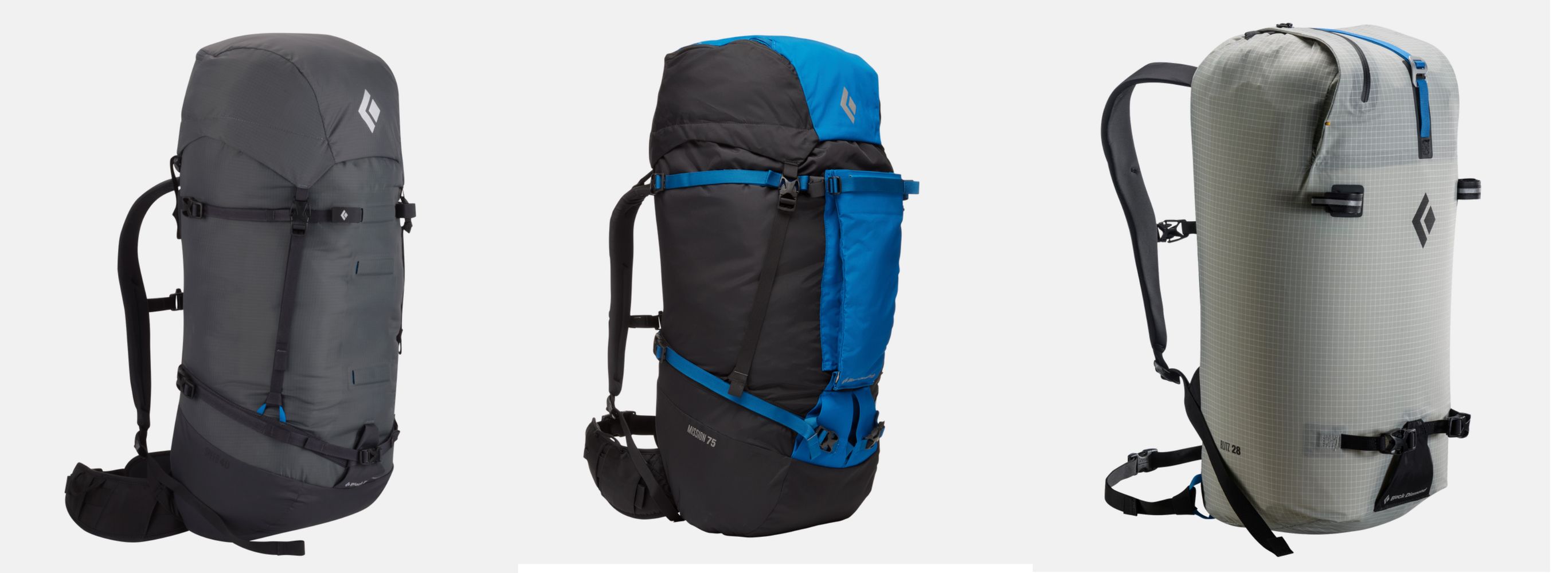
Black Diamond has three popular and highly-rated types of mountaineering packs: the Blitz 28, Speed 40 and Mission 75.
At just 28-litres, the Blitz 28 is a lightweight pack with no side straps that work for short, steep ascents and rock climbing. The pack is easy to organise with a narrow waist belt and no padding. However, the lightweight material means the pack is not very durable and would not serve for longer mountaineering expeditions or ski touring.
On the other hand, the Mission 75 is large and comfortable with a removable waist belt and compartment for crampons on the front. The pack is well-suited for mountaineering expeditions lasting up to three weeks with a simplistic design and plenty of exterior pouches for gear. The waist belt can also be removed when using a harness.
In the middle is the 45-litre Speed 40, which is highly versatile and also pretty comfortable for carrying heavier loads due to the removable foam inserts for the frame and three plastic stays. It boasts simple but complete features capable of handling any necessary mountaineering tools, but they are not as easy to access as on the Misson 75.
Approximate Price: $100 to $260
Gregory – Alpinisto and Baltoro
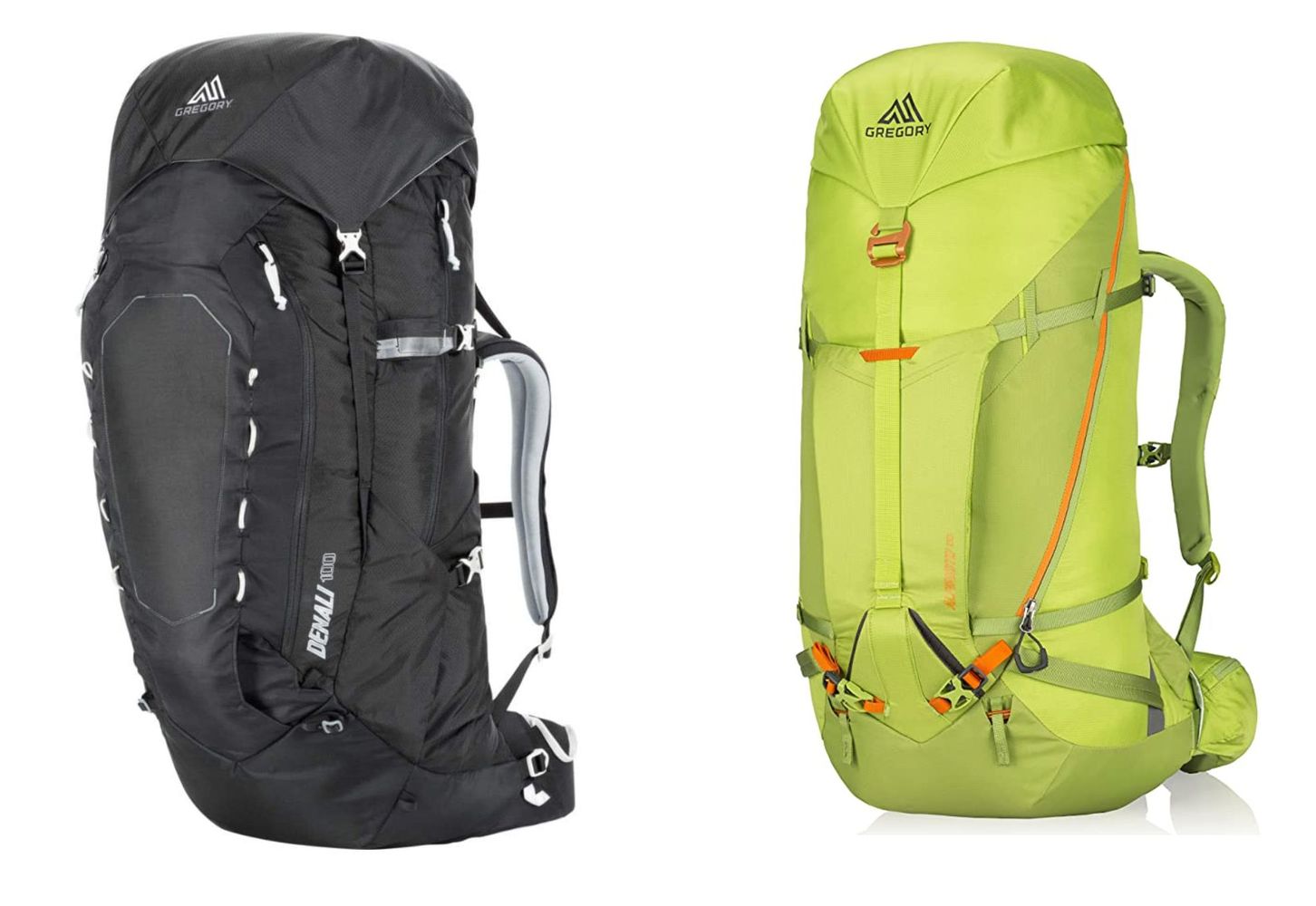
Boasting the 50 Alpinisto and Baltoro 75, these two distinct packs from Gregory cover everything from fast alpine ascents to heavy expedition carries.
The 50-litre 50 Alpinisto is comfortable, lightweight and versatile, while also capable of carrying all the gear you need. Removable features, including straps, mean that you can reduce the weight of the pack up to 35 percent. The exterior of the pack features a crampon pouch, ice axe attachments and a removable bivy pad.
The 75-litre Baltoro 75 is Gregory's heavy-load hauler, built for long trips where you're carrying food, fuel and cold-weather layers for weeks at a time, such as the West Buttress of North America’s highest peak. A perimeter alloy-steel frame with a fiberglass anti-barreling cross-stay keeps loads of up to 55 lb (25 kg) stable, while the FreeFloat A3 suspension's rotating hipbelt and auto-rotating shoulder straps move with you on uneven ground. Nine external pockets, front U-zip access to the main compartment and attachment loops with upper shock locks for an ice axe or trekking poles keep everything organised. On big glaciated expeditions like Denali, where climbers typically haul part of the load on a sled, the Baltoro's volume is plenty for the on-back share.
Approximate Price: $350 to $400
Hyperlite – Prism
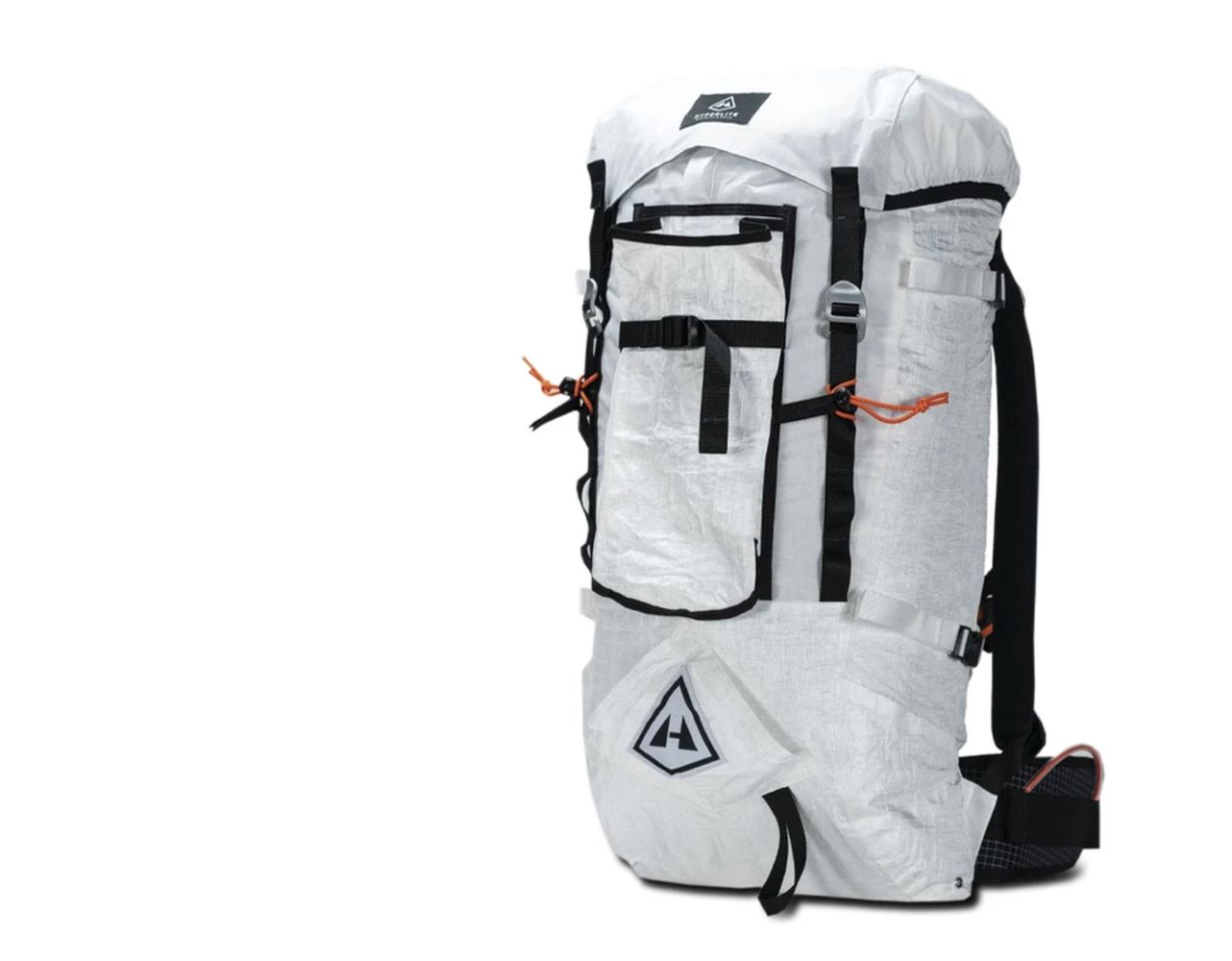
The 40-litre Hyperlite Prism pack is one of the best on the market for cold and technical climbs. The single-stay frame boasts sewn-in foam which kelps make the pack one of the most comfortable large packs out there.
However, this makes it less than ideal for any warm-weather mountaineering as the back panel is non-breathable.
The pack is also extremely durable with a crampon pouch, simple side straps and other exterior pockets.
Approximate Price: $425
Lowe – Manaslu
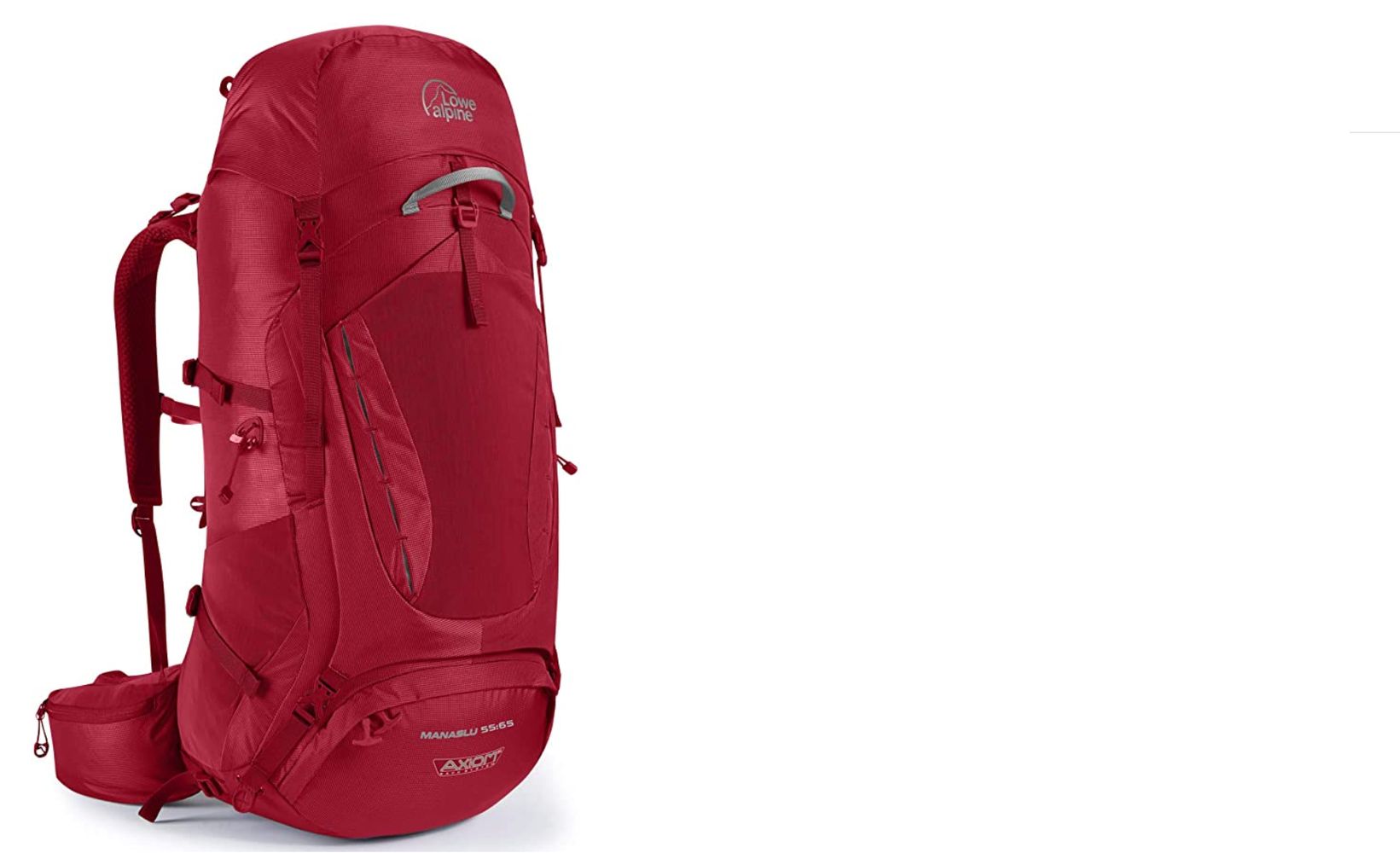
Manufactured by the Lowe brothers (the same ones who invented the internal frame), the Manaslu pack is one of the best on the market in terms of organisation. The pack features numerous pockets all along the top, bottom and front, making it easy to access and organise all of your gear.
The pack also features extra padding in the straps, shoulders and hips for added comfort, while the integrated rain cover keeps water from seeping in through the zippers.
Approximate Price: $260 to $280
Lowe Alpine packs aren't always easy to find in the US – check current stock at CampSaver.
Osprey – Atmos AG LT and Stratos
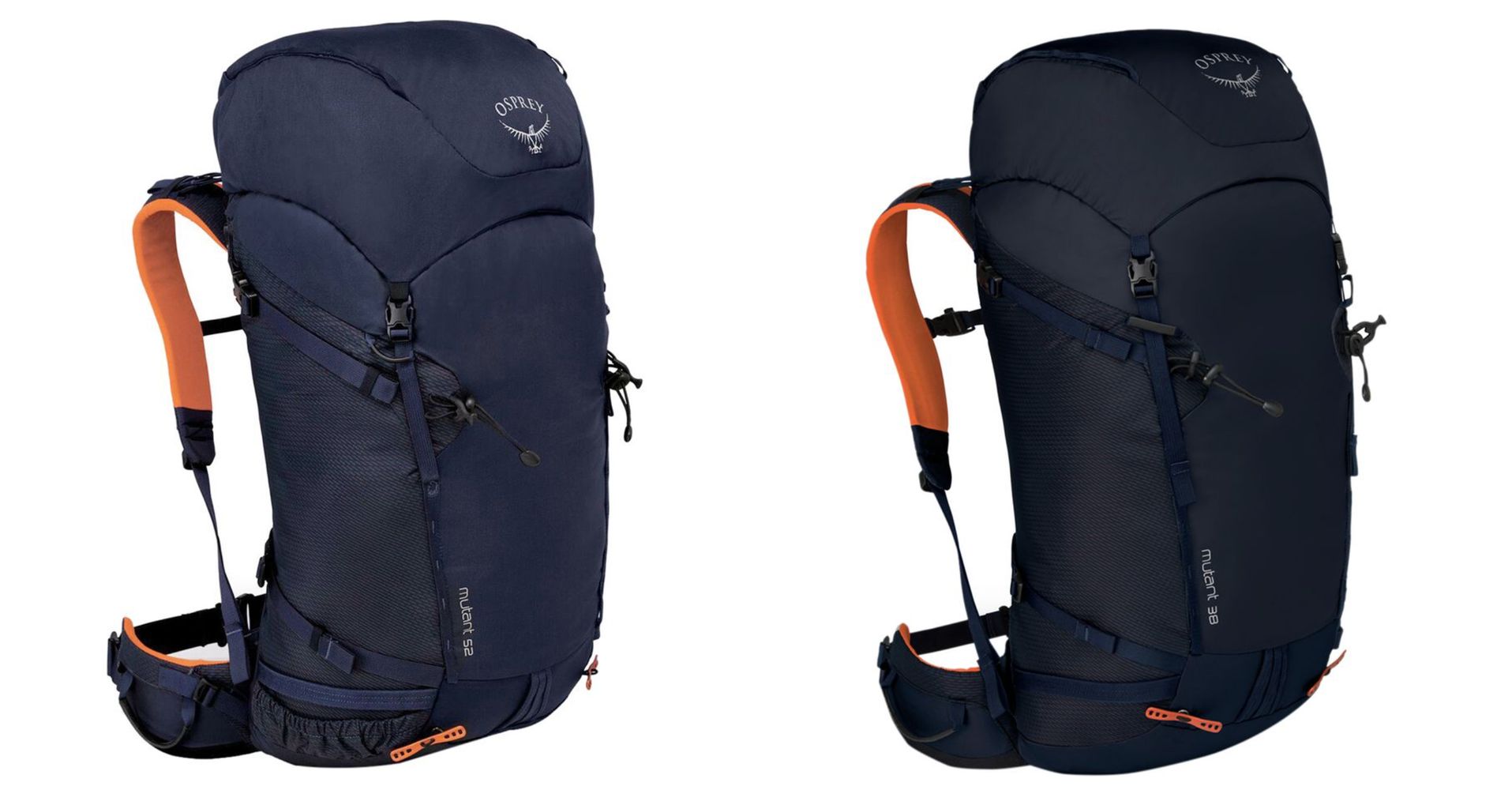
Osprey's Mutant alpine line has largely disappeared from retailers. Two packs that are buyable today cover the same jobs: the mid-size Atmos AG LT 50 for multi-day approaches, and the Stratos 44 for shorter alpine days and overnights.
The 50-litre Atmos AG LT 50 is a light multi-day pack with Osprey's Anti-Gravity LT suspension, so 30–50 lb loads stay stable on long approaches without the bulk of a full expedition hauler. Dual ice axe loops, Stow-on-the-Go pole attachment, a floating lid and an included raincover make it the practical replacement when you need Mutant 52–class volume.
The 44-litre Stratos 44 is a ventilated pack for big day climbs and quick overnights. An AirSpeed suspended mesh backpanel keeps airflow high on steep approaches, and the ExtraCurve harness plus hipbelt carry 20–40 lb loads cleanly. Dual tool loops, side compression, a raincover and enough volume for layers, food and a light bivy kit fill the old Mutant 38 role when true alpine 38s are sold out.
Approximate Price: $250 to $300
Conclusion
Packing all the necessary gear for an expedition is an essential step in the success of any mountaineering or climbing experience. Bringing the right backpack will help you comfortably carry and organise everything you need to get to the top of the next mountain.
Tags: backpacks, gear, sizing, internal-frame