Manaslu Guides: Verified Reviews for the Manaslu Expedition and Circuit Trek
By Blake Penson, Founder of ExpedReview · Everest summiter · Seven Summits climber · 20-year mountaineer · Industry expert
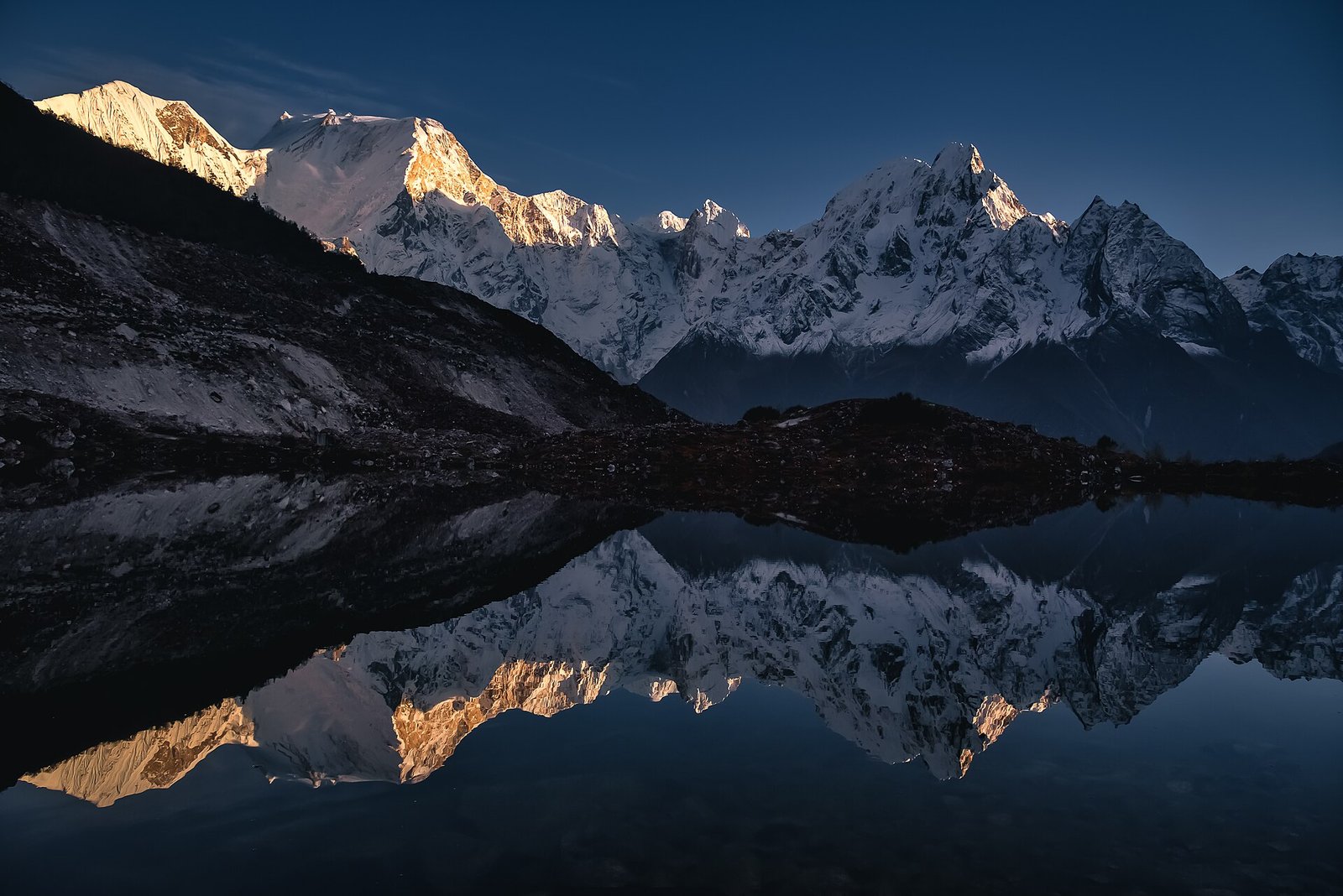
Manaslu, at 8,163 m (26,781 ft), is the eighth highest mountain in the world. It rises in the Mansiri Himal of the Gorkha district in central Nepal, and its name comes from the Sanskrit word for "spirit" or "soul". The region offers two very different trips: the Manaslu expedition, a six- to seven-week climb that is now the most popular 8,000 m peak of the autumn season, and the Manaslu Circuit, a 12 to 16 day teahouse trek around the mountain over the 5,106 m Larkya La. On ExpedReview, as of 23 October 2026, 15 operators have 36 verified client reviews across these two places. Ranked first is Furtenbach Adventures (5.0★ from 8 reviews, latest November 2021), followed by Ace the Himalaya (5.0★ from 4 reviews, latest September 2026) and Dream Himalaya Adventures (5.0★ from 4 reviews, latest October 2026). Below are the full rankings, then a guide to both the climb and the trek.
Manaslu: key facts | | | |---|---| | Height | 8,163 m (26,781 ft) | | Location | Gorkha district, central Nepal | | Rank | Eighth highest mountain in the world | | First ascent | 9 May 1956, Toshio Imanishi and Gyalzen Norbu, Japanese expedition | | Normal route | North-east face from Samagaon | | Main season | Autumn; summits usually late September to early October | | Expedition length | About 6 to 7 weeks; shorter with pre-acclimatisation | | Manaslu Circuit trek | 12 to 16 days, high point Larkya La 5,106 m | | Operators reviewed on ExpedReview | 15, with 36 verified reviews (as of 23 Oct 2026) |
Manaslu guides ranked by verified reviews
Rankings use each operator's verified ExpedReview client reviews in the Manaslu region: the star rating, adjusted so that one or two reviews, or only old ones, count for less than many recent ones. Every review is checked by hand before it is published, and operators cannot pay for a better position. Data as of 23 October 2026.
| Rank | Operator | Based in | Rating here | Reviews | Latest review | Reviewed for |
|---|---|---|---|---|---|---|
| 1 | Furtenbach Adventures | Austria | 5.0★ | 8 | Nov 2021 | Manaslu (8) |
| 2 | Ace the Himalaya | Nepal | 5.0★ | 4 | Sep 2026 | Circuit (4) |
| 3 | Dream Himalaya Adventures | Nepal | 5.0★ | 4 | Oct 2026 | Manaslu (2), Circuit (2) |
| 4 | The Mountain Company | United Kingdom | 4.7★ | 6 | Jul 2021 | Circuit (6) |
| 5 | Royal Holidays Adventure and Travel Company | Nepal | 5.0★ | 2 | Jun 2026 | Circuit (2) |
| 6 | Elite Exped | Nepal | 5.0★ | 2 | Jun 2020 | Manaslu (2) |
| 7 | Pioneer Adventure | Nepal | 5.0★ | 2 | Oct 2021 | Manaslu (2) |
| 8 | Himalaya Hub Adventure | Nepal | 5.0★ | 1 | Oct 2026 | Circuit (1) |
| 9 | Alpine Club Of Himalaya | Nepal | 5.0★ | 1 | Aug 2026 | Circuit (1) |
| 10 | Yam adventure and treks | Nepal | 5.0★ | 1 | Jul 2026 | Circuit (1) |
| 11 | Nepal Mother House Treks & Expedition | Nepal | 5.0★ | 1 | Mar 2026 | Circuit (1) |
| 12 | 360 Expeditions | United Kingdom | 5.0★ | 1 | Mar 2021 | Manaslu (1) |
| 13 | Climbing The Seven Summits | United States | 5.0★ | 1 | Sep 2022 | Manaslu (1) |
| 14 | Kobler & Partner | Switzerland | 4.8★ | 1 | Dec 2019 | Manaslu (1) |
| 15 | Summitclimb | United States | 4.8★ | 1 | Oct 2023 | Manaslu (1) |
If you are planning the expedition, focus on the operators reviewed for Manaslu itself; if you are planning the trek, see the Manaslu Circuit trek rankings. The Manaslu expedition page has the climb-only ranking.
What clients say
Every one of the 36 reviews in the region is rated 4★ or higher. Sherpas and porters come up in 20 of them, food in 15 and safety in 14, all in positive reviews. Furtenbach Adventures leads on the strength of eight expedition reviews, but the latest is from 2021, so its position reflects older climbs. Dream Himalaya Adventures has the most recent expedition review, from October 2026, and recent trekking reviews dominate the rest of the list. 14 of the 36 reviews were published in the last 24 months.
Why climb Manaslu?
For many climbers Manaslu is the first 8,000 m peak. The normal route has no very steep or technical sections, ropes are fixed from Camp 1 to the summit by the operators' Sherpa teams each season, and the mountain is reached by a trek or helicopter flight rather than a long expedition approach. The autumn season also fits neatly before winter and well apart from the spring Everest season, so it is often used as preparation for Everest. Our comparison of Manaslu and Cho Oyu as a first 8,000er looks at the choice in more detail.
Being popular does not make it easy or safe. Manaslu is a big, avalanche-prone mountain. In September 2012 an avalanche struck Camp 3 and killed eleven climbers, and on 26 September 2022 an avalanche below Camp 4 killed the Nepali climbing assistant Anup Rai and injured about a dozen others, on the same day that the American ski mountaineer Hilaree Nelson died in a small avalanche while skiing from the summit. Any climber needs to take that history seriously.
The normal route
The normal route climbs the north-east face from Samagaon, at about 3,530 m. Base camp sits at about 4,800 m on moraine above the village. Camp 1, at about 5,700 m, is reached through a crevassed glacier; the section to Camp 2, at about 6,400 m, includes the steepest ground on the route, short ice walls and seracs, and is the most exposed to avalanche. Camp 3, at about 6,800 m, and Camp 4, at about 7,400 m, sit on broad slopes, and the summit push follows snow slopes and a final ridge.
The true summit
For decades most climbers stopped at a foresummit a short distance below the true high point, because the final ridge is narrow, corniced and exposed. Research into summit photos showed that most ascents had not reached the real top, and in 2021 teams fixed rope to the true summit and began going all the way. The issue is now well known, and reputable operators plan to take clients to the true summit when conditions allow. Ask any operator directly. Our article on finding the true summits of the 8,000ers explains the background.
Season and itinerary
Manaslu is climbed mainly in autumn. Teams arrive in Kathmandu in late August or early September, reach base camp by early or mid September, rotate through the camps to acclimatise, and make summit pushes in late September or early October, when the monsoon has passed and winds at altitude are still light. A spring season exists but is much less popular.
A traditional expedition takes six to seven weeks from home. Some operators now sell shorter trips of three to four weeks for climbers who pre-acclimatise at home in hypoxic tents and use more supplementary oxygen. These can work, but they leave less time to adapt and less margin for bad weather. Most climbers use supplementary oxygen from Camp 3 or Camp 4.
A brief history
Manaslu was first reconnoitred by Japanese teams in the early 1950s, and it became something of a national mountain for Japan. The first ascent came on 9 May 1956, when Toshio Imanishi and the Sherpa Gyalzen Norbu reached the summit with a Japanese expedition led by Yuko Maki. Earlier attempts had been complicated by local opposition in Samagaon, where villagers blamed an earlier expedition for an avalanche that destroyed a monastery. In the following decades the mountain saw hard new routes on its steep south and west faces, but the north-east face remained the main way up, and from the 2000s commercial expeditions made Manaslu one of the busiest 8,000 m peaks. The 2021 discovery that most climbers had stopped short of the true summit changed how the mountain is climbed today.
Approach: trek or helicopter
There are two ways to reach base camp. The traditional approach is a trek of about a week up the Budhi Gandaki valley, following the first half of the Manaslu Circuit to Samagaon. It is a superb walk, it helps acclimatisation, and it puts money into the villages along the way, but it adds time and can be hit by late-monsoon landslides. Many operators now fly clients by helicopter from Kathmandu to Samagaon, which saves a week but gives the body less time to adjust, so the first days at base camp need to be taken gently. Ask which approach your operator uses and how it affects the itinerary.
A typical expedition rotation
After reaching base camp and holding a puja ceremony, teams usually make one or two acclimatisation rotations. A first rotation might go to Camp 1 and back, then Camp 1 and Camp 2 with a night at each, and a second rotation might touch Camp 3 before returning to base camp to rest. Climbers who pre-acclimatised at home may do a single rotation. The summit push then takes about four to five days up and one to two days down, timed to a forecast window of low wind. Good operators keep spare days in hand so that they are not forced to go in marginal weather.
Permits and cost factors
Climbers need a Nepal climbing permit for Manaslu, issued through a registered agency by the Department of Tourism, plus the Manaslu restricted area and conservation area permits. Royalty fees for foreign climbers on peaks other than Everest are lower in autumn than in spring and were revised from September 2025, so check current figures with your operator. Beyond the permit, the main cost drivers are the operator's model (Western-led or locally run), the Sherpa-to-client ratio, the amount of oxygen provided, the helicopter transfers and the length of the trip. Ask for a full breakdown of what is included.
Requirements and preparation
Manaslu is not a first expedition. Most good operators expect previous experience on at least a 6,000 m peak, and ideally a 7,000 m peak, with crampons, an ice axe, fixed-rope technique with an ascender and abseiling. Peaks such as Island Peak, Mera Peak, Aconcagua or Himlung Himal are common stepping stones. Fitness matters as much as skills: plan a year or more of structured training. Our article on training for mountaineering explains how to build it, and our piece on the effects of the death zone on the body explains what happens above 8,000 m.
The Manaslu Circuit trek
The Manaslu Circuit is a 12 to 16 day trek around the mountain, starting in the Budhi Gandaki valley, passing the Tibetan Buddhist villages of Nubri around Samagaon and Samdo, crossing the Larkya La at 5,106 m and finishing in the Marsyangdi valley, where it joins the Annapurna Circuit. It is a restricted area, so you need a licensed guide, and a permit through a registered agency; since March 2026 solo trekkers can obtain one. The best seasons are October to November and March to May. Teahouses are available throughout, and the Tsum Valley side trip adds about a week. Read our full Manaslu Circuit trek guide for the route, permits and costs.
Life in the Nubri valley
Manaslu climbers and trekkers alike pass through Samagaon, the largest village of the upper Budhi Gandaki. The people of Nubri are Tibetan Buddhists, and many families earn a living from yaks, potatoes and barley as well as tourism. The village has monasteries and a school, and in the expedition season it is busy with porters, Sherpas and climbers. Helicopter flights now carry many expedition members directly to Samagaon or base camp, which has changed the local economy. Be respectful of local customs and religious sites, and favour operators that hire and pay local staff fairly.
Risks to understand
The main objective dangers on Manaslu are avalanches, especially between Camp 1 and Camp 3, serac fall, crevasses and storms. Altitude illness, frostbite and exhaustion are the main human factors. The mountain's popularity can also bring crowding on fixed ropes on the best summit days. A good operator manages these risks with conservative weather calls, enough Sherpa support and oxygen, a firm turnaround time, and a plan for rescue, including helicopter evacuation from the lower camps. Learn the symptoms of acute mountain sickness and make sure your insurance covers high-altitude rescue.
How to choose a Manaslu operator
Start with the ranking above and look at the reviews for the specific trip you want. For the expedition, ask about the Sherpa-to-client ratio, the oxygen allowance and flow rates, whether the plan is to reach the true summit, the experience of the lead guide, the itinerary and spare days, and the operator's record over recent seasons. For the trek, ask about permits, group size, acclimatisation days and staff insurance. Compare the answers in writing. For a wider view of Himalayan operators, see our guide to choosing an Everest operator, much of which applies to Manaslu too.
Frequently asked questions
How high is Manaslu?
Manaslu is 8,163 m (26,781 ft) high, the eighth highest mountain in the world.
When is the best time to climb Manaslu?
Autumn. Most summits are made in late September and early October, after the monsoon and before the winter winds.
Is Manaslu a good first 8,000 m peak?
It is one of the most popular first 8,000 m peaks because the normal route is not very technical and is fully fixed with ropes, but it is avalanche-prone and needs previous high-altitude experience.
What is the Manaslu true summit issue?
For many years most climbers stopped at a foresummit below the real high point. Since 2021 teams have regularly fixed ropes to the true summit, and climbers should check that their operator plans to go there.
How long is the Manaslu Circuit trek?
Most itineraries take 12 to 16 days from Kathmandu and back. The highest point is the Larkya La at 5,106 m.
Which operator is ranked first for Manaslu on ExpedReview?
As of 23 October 2026, Furtenbach Adventures is ranked first in the region, with 5.0★ from 8 verified reviews, the latest from November 2021.