K2 Guides: Verified Reviews, Route, Season, Cost and Experience Needed
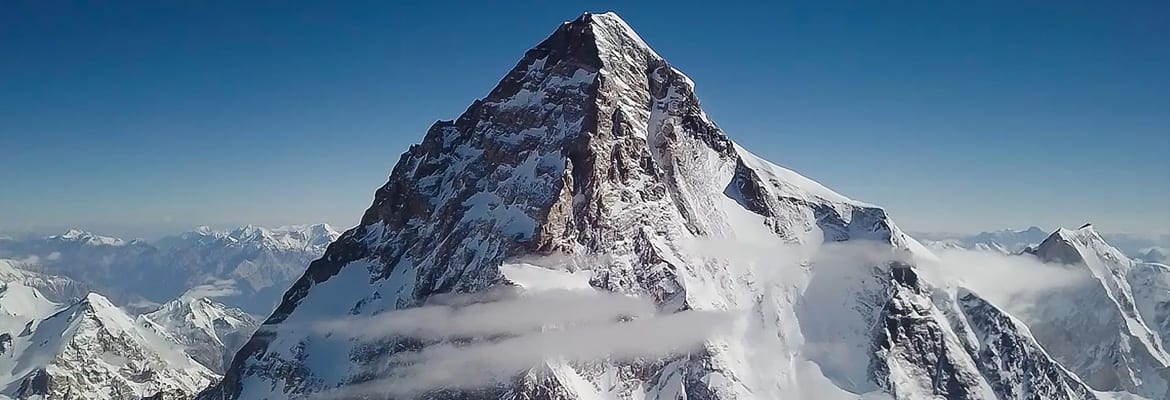
K2, at 8,611 m on the border of Pakistan and China, is the second highest mountain in the world and widely considered the hardest and most dangerous of the commercially guided 8,000 m peaks. Most expeditions climb from Pakistan in July and early August by the Abruzzi Spur or the Cesen route, after a week's trek up the Baltoro Glacier to base camp at about 5,000 m. The route is steep and sustained, with fixed ropes on rock and ice, and summit day passes under the hanging seracs of the Bottleneck at about 8,200 m. Operators normally expect clients to have climbed at least one other 8,000 m peak. On ExpedReview, as of 23 October 2026, 3 operators have 3 verified client reviews for K2: Furtenbach Adventures (5.0★ from 1 review, August 2022; from US$76,282, updated June 2026), Summitclimb (4.8★ from 1 review, November 2023; from US$40,450, updated July 2026) and Imagine Nepal (3.8★ from 1 review, August 2024). Below are the rankings, then everything you need to know about a K2 expedition.
K2: key facts | | | |---|---| | Elevation | 8,611 m (28,251 ft), second highest in the world | | Location | Karakoram, Gilgit-Baltistan (Pakistan) and Xinjiang (China) | | First ascent | 31 July 1954, Lino Lacedelli and Achille Compagnoni (Italian expedition) | | First winter ascent | 16 January 2021, a team of ten Nepali climbers | | Usual routes | Abruzzi Spur (south-east ridge), Cesen route (south-south-east spur) | | Approach | Islamabad, Skardu, jeep to Askole, about 7 to 8 days' trek to base camp | | Season | Late June to mid-August | | Operators reviewed on ExpedReview | 3, with 3 verified reviews (as of 23 Oct 2026) |
K2 guides ranked by verified reviews
Rankings use each operator's verified ExpedReview client reviews for K2: the star rating, adjusted so that one or two reviews, or only old ones, count for less than many recent ones. Every review is checked by hand before it is published, and operators cannot pay for a better position. Prices are the operators' own starting prices, not quotes. Data as of 23 October 2026.
| Rank | Operator | Based in | Rating here | Reviews | Latest review | From price |
|---|---|---|---|---|---|---|
| 1 | Furtenbach Adventures | Austria | 5.0★ | 1 | August 2022 | US$76,282 (updated Jun 2026) |
| 2 | Summitclimb | United States | 4.8★ | 1 | November 2023 | US$40,450 (updated Jul 2026) |
| 3 | Imagine Nepal | Nepal | 3.8★ | 1 | August 2024 | No recent price listed |
Each operator has only one review, so the ranking is an early signal, not a verdict. On a mountain as serious as K2, talk to past clients and ask the questions at the end of this guide.
What clients say
The Furtenbach Adventures reviewer, from 2022, praised the organisation by the company and its local partner, the logistics, base camp and the Sherpa team, and reported that everyone on their team summited. The Summitclimb reviewer had been on three K2 expeditions, in 2009, 2016 and 2018, with different providers, and called their final, successful 2018 trip with Summitclimb and its leader Dan Mazur the best by far; the review was submitted in 2023. The Imagine Nepal reviewer, from 2024, said Mingma G provided great logistics to base camp and showed good leadership during rope-fixing, including stopping a small group from entering the Bottleneck while the ropes were being fixed, but said the food became a challenge and rated food and team spirit lower.
Why K2 is different
K2 is about 240 m lower than Everest but is far steeper and more technical. There is no easy route: the normal routes climb sustained rock and ice ridges, with fixed lines most of the way, and the camps are small and exposed. Weather in the Karakoram is less predictable than in Nepal, and storms can last for days. Historically, K2 has had one of the highest fatality rates of the 8,000 m peaks, and although commercial expeditions, fixed ropes, bottled oxygen and large Sherpa teams have led to many more summits since the 2010s, it remains a far more serious undertaking than Everest. Our comparison of the Khumbu Icefall and K2's Bottleneck looks at the two most notorious sections of the world's highest mountains.
The approach: the Baltoro Glacier
Expeditions fly from Islamabad to Skardu, or drive the Karakoram Highway if flights are cancelled, then drive by jeep to Askole, the last village. From there, the trek to base camp takes about seven to eight days, following the Braldu valley and the Baltoro Glacier past the Trango Towers, Paiju and Urdukas to Concordia, where the Baltoro meets the Godwin-Austen Glacier and K2 comes into view. Base camp is a few hours further on, at about 5,000 m. Porters carry the expedition's loads. Our K2 Base Camp trek page covers the trek in detail.
The Abruzzi Spur
The Abruzzi Spur, on the south-east ridge, is the route of the first ascent and the most popular. From advanced base camp, the route climbs to Camp 1 at about 6,050 m, then through House's Chimney, a steep rock cleft near 6,600 m, to Camp 2 at about 6,700 m. Above Camp 2, the Black Pyramid, a band of steep, mixed rock, leads to Camp 3 at about 7,200 m, and snow slopes to Camp 4 on the Shoulder at about 7,600 to 7,800 m. Summit day climbs from the Shoulder to the Bottleneck, then traverses left beneath the seracs to the summit snowfield.
The Cesen route
The Cesen route, on the south-south-east spur, joins the Abruzzi at the Shoulder. It is less exposed to rockfall in its lower part and has become popular with commercial expeditions in recent years. Some teams use one route for ascent and another for descent, depending on conditions.
The Bottleneck
The Bottleneck is a narrow couloir at about 8,200 m, overhung by a huge serac. Climbers must pass beneath it on the way to the summit and back, and a serac collapse there in 2008 contributed to one of the worst disasters in K2's history, when 11 climbers died. Teams try to move through it quickly, early in the morning, and avoid it in warm conditions. Its danger is why the timing of the rope-fixing and summit push matters so much, as the Imagine Nepal review above suggests.
Summit day
Summit day usually starts from Camp 4 on the Shoulder late at night. Climbers follow fixed lines up snow slopes to the Bottleneck, climb the couloir, then make a long, exposed traverse left beneath the serac to the upper snowfield, which leads to the summit ridge. Depending on conditions and crowds, it can take 10 to 16 hours or more to reach the summit, and the descent through the Bottleneck in the afternoon, when the sun warms the serac and climbers are exhausted, is one of the most dangerous parts of the climb. Strict turnaround times, enough oxygen for a long day and a team that moves efficiently are essential, and most accidents happen on the way down.
Experience and fitness
K2 is not a first 8,000 m peak. Most operators expect clients to have climbed at least one, and often several, other 8,000 m peaks, ideally including a technical one, and to be competent on fixed ropes on steep rock and ice, in crampons and with a jumar, and at abseiling. You must be comfortable on exposed terrain for long periods. Our article on how the body copes above 8,000 m explains the physiology.
Oxygen and Sherpa support
Most commercial K2 expeditions use bottled oxygen above Camp 3 or Camp 4, and many use it from lower down. High-altitude workers from Nepal and Pakistan fix the route, carry loads and climb with clients. Ask your operator how many climbing Sherpas or high-altitude porters there will be per client, how much oxygen is provided, and how it is supplied higher on the mountain.
Season and weather
The climbing season runs from late June to mid-August, with most summits in the second half of July. The weather is unpredictable, and many expeditions have to wait weeks at base camp for a window, while some seasons see few or no summits. Winter climbs are much rarer; the first winter ascent was made on 16 January 2021 by ten Nepali climbers, a story told in our K2 winter 2021 article.
Cost
K2 is one of the most expensive 8,000 m expeditions. On ExpedReview, Furtenbach Adventures lists from US$76,282 (updated June 2026) and Summitclimb from US$40,450 (updated July 2026). Imagine Nepal has no recent price listed. The cost of an expedition depends on the level of service, the number of Sherpas, the amount of oxygen, and whether you share a guide or have one to yourself. Check what is included, especially the Pakistani permit and liaison officer fees, flights to Skardu, porter fees for the trek, oxygen, insurance and summit bonuses.
Getting to Pakistan
Most expeditions fly into Islamabad, where they complete permit formalities and a briefing at the Ministry of Tourism, before flying to Skardu. Flights to Skardu depend on the weather and are often delayed, so plan buffer days. Visas for Pakistan are available online, and a letter from your operator is usually needed. Check your government's travel advice for Gilgit-Baltistan and the Karakoram Highway.
How to choose a K2 operator
Ask about the operator's record on K2: how many seasons it has run, how many clients summited and how many came home safely. Ask about the leader and Sherpa team, the oxygen plan, the turnaround time, how rope-fixing will be coordinated with other teams, and how evacuations from base camp work in Pakistan, where helicopter rescue is run by the military and must usually be guaranteed in advance. Read the reviews above, and our Karakoram page for other operators in the region.
A short history
K2 got its name from the Great Trigonometrical Survey of India: in 1856 Thomas Montgomerie labelled the Karakoram peaks K1, K2 and so on, and K2 kept its survey name. The first serious attempt was in 1902, by an expedition including Oscar Eckenstein and Aleister Crowley. In 1909 the Duke of the Abruzzi led an Italian expedition that reached about 6,250 m on the south-east ridge, now named the Abruzzi Spur after him. American expeditions in 1938, 1939 and 1953 came close; in 1939 Fritz Wiessner reached about 8,380 m, and in 1953 Charles Houston's team was caught by a storm high on the mountain, and Art Gilkey died. On 31 July 1954, an Italian expedition led by Ardito Desio made the first ascent, with Lino Lacedelli and Achille Compagnoni reaching the summit, supported by Walter Bonatti and the Hunza porter Amir Mahdi, who were forced to bivouac without shelter at about 8,100 m. The second ascent did not come until 1977, by a Japanese expedition. For decades K2 had a reputation as the "savage mountain"; it was only after the 2010s that large commercial expeditions began to put dozens of people on the summit in a single season.
K2 from China
The north side of K2, in Xinjiang, is far more remote and rarely climbed. It is reached by a long approach on camels up the Shaksgam valley, and its routes, such as the North Ridge, are long and technical. Only a handful of expeditions attempt it. Our article on climbing K2's north side has more.
Ethics and porters on K2
K2 depends on the work of Pakistani porters and high-altitude workers, as well as Nepali Sherpas. In 2023 the death of Pakistani high-altitude porter Muhammad Hassan in the Bottleneck, while climbers passed by on their way to the summit, drew worldwide attention to the pay, training, equipment and insurance of local workers. Ask your operator how its porters and high-altitude staff are paid, trained, equipped and insured, and what it will do if someone on the mountain needs help, whether they are on your team or not.
Combining K2 with Broad Peak
Broad Peak, at 8,051 m, shares the same base camp area, and some expeditions climb it first as acclimatisation, or as a separate objective in the same season. The Gasherbrums are also nearby. Our Karakoram page lists operators reviewed for Broad Peak and the Gasherbrums.
Frequently asked questions
How hard is K2 compared with Everest?
K2 is lower but much steeper and more technical, with no easy route, more unpredictable weather and the Bottleneck on summit day. It is widely considered much harder and more dangerous than Everest.
What experience do I need to climb K2?
Most operators expect at least one other 8,000 m peak, and strong skills on fixed ropes on rock and ice.
When is the K2 climbing season?
From late June to mid-August, with most summits in the second half of July.
How much does it cost to climb K2?
On ExpedReview, listed starting prices range from US$40,450 (Summitclimb, updated July 2026) to US$76,282 (Furtenbach Adventures, updated June 2026).
Which operator is ranked first for K2 on ExpedReview?
As of 23 October 2026, Furtenbach Adventures is ranked first, with 5.0★ from 1 verified review in August 2022.
Related articles
- How to choose a guide
- Best operators
- Karakoram and Ladakh Guides: Verified Reviews for K2, Broad Peak and the K2 Base Camp Trek
Climbing and trekking in Pakistan's Karakoram and Ladakh: operators ranked by verified ExpedReview client reviews for K2, Broad Peak, Gasherbrum I and the K2 Base Camp trek, the Baltoro approach, season, permits, safety, cost and how to choose an operator.