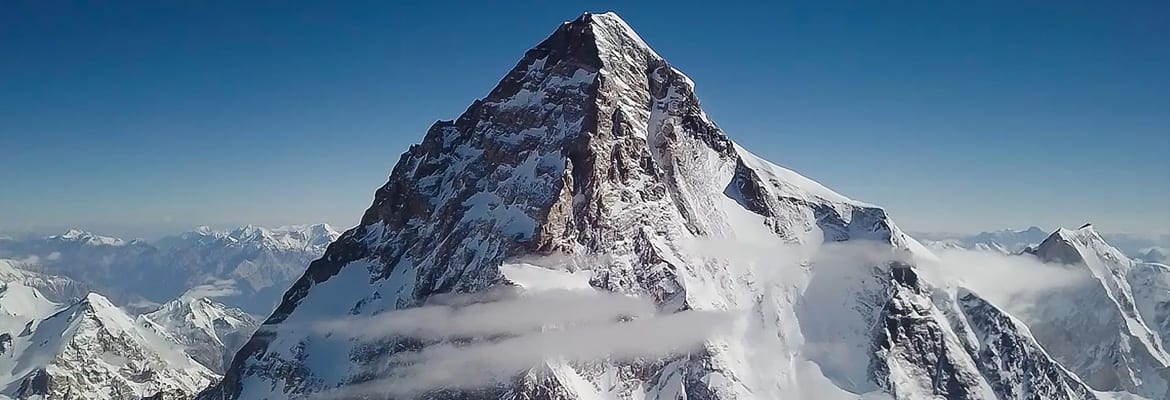
Broad Peak Expedition Guide: Route, Season, Cost and Verified Operator Reviews (8,051 m)
Broad Peak, at 8,051 m, is the twelfth-highest mountain in the world, standing beside K2 above the Godwin-Austen Glacier in Pakistan's Karakoram. Its normal route up the west spur is one of the less technical 8,000 m climbs in the Karakoram, but the summit lies at the end of a long, exposed ridge beyond a fore-summit, and the remote approach up the Baltoro Glacier takes about a week. Expeditions run in summer, usually from late June to early August, and take about six to eight weeks. On ExpedReview, as of 23 October 2026, 2 operators have 7 verified client reviews for Broad Peak: Kobler & Partner, based in Switzerland (4.9★ from 4 reviews, December 2019), and Furtenbach Adventures, based in Austria (5.0★ from 3 reviews, latest January 2020, with a guide-listed package price from US$86,740). Below are the reviews, the route, the season, risks and how to choose an operator.
Broad Peak: key facts | | | |---|---| | Height | 8,051 m (26,414 ft), twelfth-highest in the world | | Location | Baltoro Muztagh, Karakoram, Gilgit-Baltistan, Pakistan (on the China border) | | First ascent | 9 June 1957, Hermann Buhl, Kurt Diemberger, Marcus Schmuck and Fritz Wintersteller (Austria) | | Normal route | West spur, from base camp on the Godwin-Austen Glacier | | Main season | Late June to early August | | Typical expedition length | About 6–8 weeks from Islamabad | | Operators reviewed on ExpedReview | 2, with 7 verified reviews (as of 23 Oct 2026) |
Broad Peak operators with verified reviews
ExpedReview ranks operators by their verified client reviews for each place: the star rating, adjusted so one or two reviews, or only old ones, count for less than many recent ones. Every review is checked by hand before it is published, and operators cannot pay to appear or rank higher. Prices are set by the operators themselves. Data as of 23 October 2026.
| Rank | Operator | Based in | Rating here | Reviews | Latest review | Guide-listed price |
|---|---|---|---|---|---|---|
| 1 | Kobler & Partner | Switzerland | 4.9★ | 4 | December 2019 | No recent price listed |
| 2 | Furtenbach Adventures | Austria | 5.0★ | 3 | January 2020 | From US$86,740 (package price) |
Also listed for Broad Peak, with no reviews here yet: Summitclimb.
What clients say
Kobler & Partner. Four reviews, all from December 2019, describe a professionally led expedition with very experienced guides, Sherpas and Pakistani high-altitude porters (HAPs). One client says K&P "led the route" on Broad Peak and was "the reference in base camp". Several note that the group was large, but say the service stayed personal and they always felt safe. One adds that they were lucky with the weather.
Furtenbach Adventures. One client, who had climbed Everest with Furtenbach, chose the company for Broad Peak and K2, praising personalised preparation advice, flexible logistics, catering for dietary needs and high-quality equipment. Another joined two Broad Peak/K2 expeditions, in 2018 and 2019, and describes IFMGA-guided trips with "no summit-at-all-costs mentality" and safety as the top priority. A third says the expedition was perfectly organised.
All seven reviews are now more than six years old. Ask both operators about their recent Karakoram seasons, guides and results. Furtenbach's listed price is for a package and may include more than Broad Peak alone, such as a K2 combination, so ask exactly what it covers.
The mountain
Broad Peak takes its name from its long summit ridge, more than 1.5 km long, which gives it a broad profile from Concordia. The mountain has three main summits: the main summit (8,051 m), the central summit and the north summit. On the normal route, climbers first reach a col and then the fore-summit, often called the Rocky Summit, at around 8,000 m. The true summit is further along the ridge, over undulating and exposed ground that can take one to two hours or more in each direction. Many climbers in the past turned back at the fore-summit, believing they had reached the top, so ask your operator how it confirms a true summit.
History
Broad Peak was first climbed on 9 June 1957 by a four-man Austrian team: Hermann Buhl, Kurt Diemberger, Marcus Schmuck and Fritz Wintersteller. They climbed without supplementary oxygen or high-altitude porters, in an early example of what later became known as alpine style. It was Buhl's second 8,000 m first ascent, after Nanga Parbat in 1953. Less than three weeks later, Buhl died on nearby Chogolisa when a cornice collapsed. Diemberger went on to become one of the great Himalayan climbers and writers.
The route
Approach
Teams fly from Islamabad to Skardu, or travel by road along the Karakoram Highway. From Skardu, jeeps take them to Askole, the last village. The trek up the Braldu valley and the Baltoro Glacier takes about seven to eight days, via Jhola, Paiju, Urdukas and Goro, to Concordia, the meeting point of the Baltoro and Godwin-Austen glaciers. Broad Peak base camp is a few hours further, at about 4,800 to 4,900 m on the Godwin-Austen Glacier. See our K2 Base Camp trek guide for more on this approach.
Climbing the west spur
The route climbs the west spur in a series of camps. Camp 1 is at about 5,600 to 5,700 m, reached by steep snow and ice slopes with fixed ropes. Camp 2, at about 6,200 m, sits on a narrow spur. Camp 3, at about 7,000 m, is below a broad, crevassed snow slope that leads to the col between the main and central summits at about 7,800 m. From the col, climbers follow the ridge over the fore-summit to the main summit. Most of the route is snow and ice of moderate angle, with some steeper and rocky sections; the main difficulties are altitude, weather, avalanche-prone slopes and the long summit day.
Season and itinerary
Expeditions run from about mid-June to mid-August, with summit pushes usually in July. A typical plan:
- Arrive in Islamabad, permits and briefings (2–3 days).
- Fly or drive to Skardu, then jeep to Askole.
- Trek to base camp (about 7–8 days).
- Acclimatisation rotations to Camps 1, 2 and 3 (about 3–4 weeks).
- Summit push (about 4–6 days).
- Trek out to Askole, drive to Skardu and return to Islamabad.
Some climbers combine Broad Peak with K2, using Broad Peak to acclimatise before attempting K2 from the same area.
Permits
Climbing in the Karakoram requires an expedition permit issued for Gilgit-Baltistan, a trekking permit for the restricted Baltoro area, a liaison officer arrangement and environmental fees. Permits are arranged through a licensed Pakistani agency. Fees and rules change, so ask your operator for current details.
Risks
Broad Peak is one of the less technical Karakoram 8,000ers, but it is still a serious mountain. Main hazards include avalanches on the upper slopes, especially after snowfall; crevasses; storms and high winds; the long, exposed summit ridge, where tired climbers can become lost or caught out by darkness; and altitude illness. The remoteness of the Baltoro means helicopter rescue depends on the weather and military availability. Good operators fix ropes carefully, set conservative turnaround times and have clear plans for rescue.
Choosing an operator
- Ask about summit confirmation. How does the operator distinguish the fore-summit from the true summit?
- Ask about leadership. Are expeditions led by IFMGA guides or experienced Pakistani and Nepali guides?
- Ask about oxygen. Some climb Broad Peak without supplementary oxygen; most commercial clients now use it.
- Ask about ratios and HAPs. How many high-altitude porters and Sherpas are there per client?
- Ask about rescue. What insurance, helicopter bonds and evacuation plans are in place?
- Ask what the price includes. Check whether it is for Broad Peak only or a combined trip.
Life on the Baltoro
The approach is part of the experience. The trail up the Baltoro passes some of the most dramatic rock architecture in the world: the Trango Towers, Uli Biaho, Cathedral Peak and Masherbrum, before reaching Concordia, where K2, Broad Peak, the Gasherbrums and Chogolisa all come into view. Porters from Baltistan carry loads up the glacier, and the camps are simple, on rocky moraine. Heat, dust and glare can be intense on the lower glacier in summer, while nights at Concordia are cold.
At base camp, expeditions set up mess tents, kitchens, communications and sometimes shower tents. Base camp on the Godwin-Austen Glacier is shared with teams heading for K2, so in busy years it becomes a large, international village. Fresh food is limited, and operators rely on supplies carried up at the start of the expedition, so the quality of the cook and kitchen makes a big difference, as the Furtenbach and Kobler & Partner reviewers noted.
Experience and preparation
Most operators expect Broad Peak clients to have climbed at least a 6,000 to 7,000 m peak, and preferably another 8,000 m peak. You should be confident on fixed ropes, on steep snow and ice in crampons, and in descending efficiently when exhausted. Train for six months or more with long days carrying a loaded pack, hill and stair work, and strength training. Mental resilience matters too: Karakoram expeditions involve long periods of bad weather and waiting.
Oxygen and gear
Some climbers attempt Broad Peak without supplementary oxygen, but most commercial clients now use it, usually from Camp 3. Ask your operator how many bottles each client gets and what reserves are kept. Gear is similar to other 8,000 m peaks: a down suit, high-altitude boots, insulated mitts, crampons, an ice axe, a harness, an ascender, a helmet and a sleeping bag rated to about −30 °C or lower. Bring good sun protection for the glacier approach.
Broad Peak and K2
Because the two mountains share base camp areas and approach, many climbers combine them, using Broad Peak to acclimatise or as a back-up objective if K2 is out of condition. A combined trip is longer, much more expensive and more demanding. See our K2 guide and Karakoram guide. Gasherbrum I and II, also reached from Concordia, are other options; see our Gasherbrum I guide.
Travel in Pakistan
Northern Pakistan is welcoming to climbers and trekkers, and the Karakoram Highway and Skardu are well established as mountaineering gateways. Flights between Islamabad and Skardu are often delayed or cancelled by weather, so allow spare days, or travel by road, which takes one to two days. Check your government's travel advice for the regions you will pass through, and make sure your insurance covers high-altitude climbing and helicopter evacuation in Pakistan.
Summit day
Summit day on Broad Peak is long. Teams usually leave Camp 3, or a higher Camp 4 if used, around midnight, climbing the broad slopes to the col in darkness. From the col, a steep, rocky section leads to the ridge and the fore-summit, then the undulating ridge continues to the main summit. Good teams set a firm turnaround time, because the ridge is easy to underestimate and descending in the dark when exhausted is one of the main dangers on the mountain.
Frequently asked questions
How high is Broad Peak?
8,051 m (26,414 ft), the twelfth-highest mountain in the world.
Is Broad Peak a good first 8,000 m peak?
It is one of the less technical Karakoram 8,000ers, but its remoteness and long summit ridge make it more serious than Manaslu or Cho Oyu. Most operators prefer clients with previous high-altitude experience.
What is the Broad Peak fore-summit?
A rocky high point at around 8,000 m on the summit ridge. The true summit lies further along the ridge, and reaching it can take one to two hours or more.
When was Broad Peak first climbed?
On 9 June 1957, by Hermann Buhl, Kurt Diemberger, Marcus Schmuck and Fritz Wintersteller.
Which operators have verified reviews for Broad Peak?
As of 23 October 2026, Kobler & Partner (4.9★ from 4) and Furtenbach Adventures (5.0★ from 3).
Can operators pay to rank higher on ExpedReview?
No. Operators cannot pay to appear, rank higher or have reviews removed.
How long does a Broad Peak expedition take?
About six to eight weeks from Islamabad, including the trek in and out along the Baltoro Glacier.
When is the best time to climb Broad Peak?
From late June to early August, with most summit pushes in July.
Can I climb Broad Peak and K2 on the same trip?
Yes. Some operators offer combined expeditions, using Broad Peak to acclimatise. These trips are longer and much more expensive.
Do climbers use oxygen on Broad Peak?
Most commercial clients now use supplementary oxygen from about Camp 3, although some experienced climbers go without.
Why is it called Broad Peak?
Because of its long, broad summit ridge.
Related articles
- How to choose a guide
- Best operators
- Karakoram and Ladakh Guides: Verified Reviews for K2, Broad Peak and the K2 Base Camp Trek
Climbing and trekking in Pakistan's Karakoram and Ladakh: operators ranked by verified ExpedReview client reviews for K2, Broad Peak, Gasherbrum I and the K2 Base Camp trek, the Baltoro approach, season, permits, safety, cost and how to choose an operator.