Mount Rainier Guides and Climbing Guide: Routes, Season, Permits and Preparation
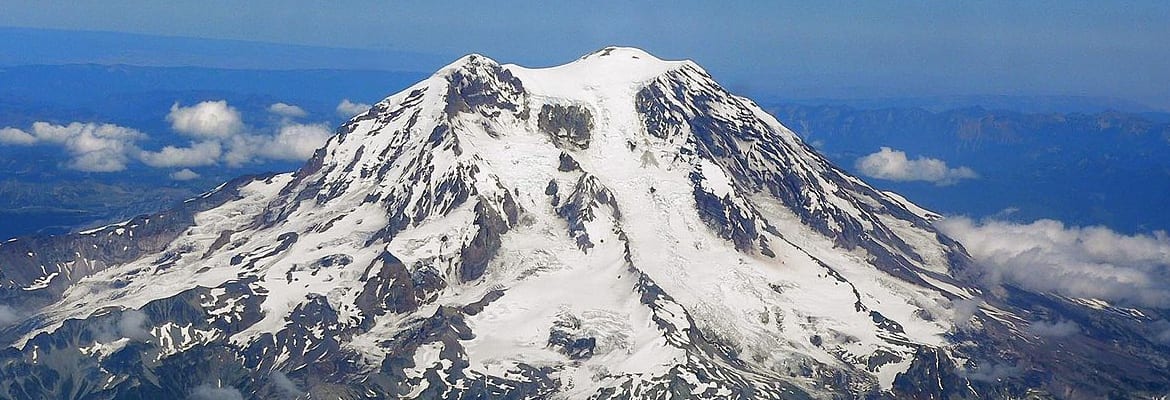
Mount Rainier, at 4,392 m (14,410 ft), is the highest mountain in Washington State and in the Cascade Range, and the most heavily glaciated peak in the contiguous United States. It is an active stratovolcano inside Mount Rainier National Park, about 95 km south-east of Seattle. Most climbers take two to three days on the Disappointment Cleaver route from Paradise via Camp Muir, or the Emmons Glacier route from White River via Camp Schurman. The main season runs from about May to September, and every climber going above 10,000 ft or onto a glacier must pay the park's annual climbing fee and register. Rainier is the classic training climb for Denali and the Himalaya: it teaches glacier travel, crampon and ice axe skills and a long summit day at altitude. Guided climbs in the park can only be run by guide services authorised by the National Park Service. ExpedReview does not yet have enough verified Rainier reviews to rank operators. Below is a full guide to planning a climb.
Mount Rainier: key facts | | | |---|---| | Height | 4,392 m (14,410 ft) | | Location | Mount Rainier National Park, Washington, USA | | Type | Active stratovolcano, heavily glaciated | | First documented ascent | 17 August 1870, Hazard Stevens and Philemon Van Trump | | Main routes | Disappointment Cleaver (from Paradise); Emmons-Winthrop Glacier (from White River) | | High camps | Camp Muir, about 3,073 m (10,080 ft); Camp Schurman, about 2,900 m (9,500 ft) | | Season | About May to September | | Typical guided climb | 2 to 3 days on the mountain, often after a skills day | | Permits | Annual climbing cost recovery fee and climbing registration (NPS) | | Operators ranked on ExpedReview | None yet (as of 23 Oct 2026) |
Rainier guides on ExpedReview
As of 23 October 2026, ExpedReview has only one verified client review for Mount Rainier, for a single operator, and that operator is not listed here. With so little data we do not rank Rainier guides. If you have climbed Rainier with a guide, your review will help other climbers.
In the meantime, remember that only guide services authorised by the National Park Service can lead commercial climbs in the park. The park lists them on its website. Check the list before booking, then use the questions at the end of this page to compare them.
Why climb Rainier?
Rainier is one of the great training mountains of the world. It is high enough to cause altitude problems for many people, glaciated enough to need rope teams, crampons and an ice axe, and close enough to Seattle to reach in a couple of hours. Its summit day, with a climb of about 1,300 m from Camp Muir to the crater rim and back, is a fair test of the fitness and pacing you will need on bigger peaks. Many Denali, Aconcagua and Himalayan guides expect clients to have a Rainier ascent or similar on their record. Our guide to climbing the Seven Summits explains where it fits in a progression.
It is also a spectacular mountain in its own right. The upper slopes are covered by huge glaciers, the summit has two overlapping volcanic craters with steam vents and ice caves, and the lower slopes around Paradise and Sunrise are famous for wildflower meadows in summer. Local Indigenous peoples have known the mountain as Tahoma or Tacoma; the name Rainier was given by George Vancouver after a British admiral.
The routes
Disappointment Cleaver
The Disappointment Cleaver route is the most popular way up Rainier and the route most guided climbs follow. It starts at Paradise, at about 1,650 m, and climbs the Muir Snowfield to Camp Muir, a stone hut and camping area at about 3,073 m. On summit night climbers rope up, cross the Cowlitz Glacier and Cathedral Gap onto the Ingraham Glacier, then climb the rocky spine of the Disappointment Cleaver itself, a steep section of loose rock and snow. Above the Cleaver the route zigzags up the upper Ingraham and Emmons glaciers to the crater rim, and the true summit, Columbia Crest, lies across the crater.
The route changes through the season as crevasses open. Early in the season it follows a direct line on snow; by late summer guides may install ladders or fixed lines and take long detours around crevasses, and in some years late-season conditions force a change of route.
Emmons-Winthrop Glacier
The Emmons Glacier route on the north-east side starts at White River, crosses the Inter Glacier and climbs to Camp Schurman, at about 2,900 m. The Emmons is the largest glacier by area in the contiguous United States, and the route follows a long, steady glacier slope to the summit. It is less crowded than the Disappointment Cleaver and avoids the rockfall of the Cleaver, but it has its own crevasse hazards, and the White River road usually does not open until late May or June.
Other routes
Rainier has many harder routes. The Kautz Glacier route includes a short ice step; Liberty Ridge on the north face is a classic, committing ridge climb listed among the "Fifty Classic Climbs of North America"; and the Ptarmigan Ridge and Mowich Face routes are serious mountaineering objectives. These are for experienced, independent climbers or private guided trips with a high guide ratio.
Season and weather
The main climbing season runs from about May to September, with the most stable weather from late June to August. Early season brings more snow cover over crevasses and cold, sometimes stormy weather; late season brings open crevasses, more rockfall and a harder route. Winter ascents happen but are serious and uncommon. Weather on Rainier can change fast: the mountain makes its own clouds, and storms coming in from the Pacific can bring high winds and whiteout. Lenticular clouds over the summit often warn of strong winds aloft.
Fees, registration and park rules
Climbers who travel above 10,000 ft or onto any glacier need to pay the annual climbing cost recovery fee and register their climb with the park, as well as pay the park entrance fee. Overnight stays in wilderness camps, including Camp Muir and Camp Schurman, need a wilderness permit, and the park uses a reservation system for permits in the busy season. Fees change, so check current figures on the National Park Service website. Human waste must be packed out using the blue bags provided, or used at the toilets at the high camps.
Guided climbs
Most guided Rainier climbs take four to five days in total, including a day of skills training on snow, where you practise walking in crampons, self-arrest with an ice axe and rope-team travel, then two or three days on the mountain. Guide-to-client ratios on summit day are usually one guide to two or three clients. Some services offer longer programmes, such as a five-day expedition skills seminar on the Emmons Glacier that adds crevasse rescue and more training, or private climbs with one guide per client.
A typical guided climb, day by day
The details vary between guide services, but a standard four-day programme on the Disappointment Cleaver looks something like this. On the first day you meet your guides in Ashford, near the park entrance, for a gear check and briefing, and the guides make sure your boots, layers and pack are up to the job. The second day is a training day on the snowfields above Paradise, practising kicking steps, walking in crampons, roped travel and self-arrest with an ice axe until it becomes automatic.
On the third day you climb from Paradise to Camp Muir, a steady ascent of five to seven hours on snow, and settle in for a short evening: dinner, a briefing on the summit plan and a few hours of rest. Summit day begins around midnight or soon after. Rope teams move in the dark by headlamp across the Cowlitz Glacier, through Cathedral Gap and onto the Ingraham Flats, then up the Cleaver, with short breaks at set points where guides check how each client is coping. Most teams reach the crater rim around sunrise or soon after, then descend to Camp Muir, pack up and walk down to Paradise the same day. It is a very long day, and the descent on soft afternoon snow is tiring.
Climbing Rainier independently
Experienced climbers can climb Rainier without a guide, as long as they register and pay the climbing fee. Independent parties need solid glacier travel and crevasse rescue skills, the ability to navigate in whiteout, and the judgement to read changing snow and weather. Climbing rangers are based at Camp Muir and Camp Schurman in summer and can advise on route conditions, but they are not a rescue service on call. Solo climbing above the high camps requires special permission from the park. If you are building towards independent climbing, a guided skills course followed by climbs with more experienced partners is the safest way to get there.
How hard is Rainier?
Rainier is a strenuous climb, harder than many people expect. Summit day often lasts 10 to 14 hours, starting around midnight, with about 1,300 m of ascent from Camp Muir and the full descent back to camp. The day before includes a climb of about 1,400 m from Paradise to Camp Muir with a heavy pack. Above 4,000 m some people suffer headaches and nausea, and the cold, the dark and the steep sections of the Cleaver add to the challenge. The National Park Service records that only about half of all climbers reach the summit in a typical year.
You do not need previous mountaineering experience for a guided climb, but you need excellent fitness. Train for at least three to six months with long hikes carrying 15 to 20 kg, stair and hill work, and cardio training several times a week. Our article on training for a mountaineering adventure has a full plan.
Risks to understand
Rainier is a beautiful mountain but a dangerous one. The main hazards are crevasse falls, icefall and serac collapse, rockfall on the Cleaver and in gullies, storms, hypothermia and altitude illness. The worst accident in the mountain's history came in June 1981, when an icefall on the Ingraham Glacier killed eleven people, ten clients and a guide. Rainier is also considered one of the most dangerous volcanoes in the United States, because of the risk of lahars, volcanic mudflows, reaching the populated valleys below; that risk is about the region, not the climb itself. Learn the warning signs of acute mountain sickness and do not hesitate to turn back.
Kit
For a guided climb you need mountaineering boots compatible with crampons, crampons, an ice axe, a harness and helmet, a warm down jacket, waterproof shell layers, insulated gloves and mittens, glacier glasses, a headlamp and a pack of about 60 to 70 litres. Many guide services rent technical gear. Our guide to choosing mountaineering boots will help with the most important item.
Rainier and the other Cascade volcanoes
Rainier is the biggest of a chain of glaciated volcanoes in the Pacific Northwest. Mount Baker, further north, is a common first glacier climb and skills course venue, and peaks such as Mount Shuksan and Forbidden Peak offer more technical alpine climbing. Our Cascades region page covers them all. After Rainier, many climbers go on to Denali or Aconcagua.
How to choose a Rainier guide
Start by checking that the service is authorised by the National Park Service. Then ask about the guide-to-client ratio on summit day, the qualifications and experience of the lead guide, how the itinerary builds in skills training, the turnaround policy, what gear is included or available to rent, and the cancellation and weather policy. Ask how many of their teams reached the summit last season, and why the others did not. Read our beginner's guide to mountaineering if this is your first glacier climb.
Frequently asked questions
How high is Mount Rainier?
Mount Rainier is 4,392 m (14,410 ft) high, the highest peak in Washington State and the Cascade Range.
How long does it take to climb Mount Rainier?
Most climbers take two to three days on the mountain. Guided climbs usually take four to five days in total, including a day of skills training.
When is the best time to climb Mount Rainier?
The main season runs from about May to September, with the most settled weather from late June to August.
Do I need a permit to climb Mount Rainier?
Yes. Anyone going above 10,000 ft or onto a glacier must pay the annual climbing cost recovery fee and register their climb. Overnight stays need a wilderness permit.
Can a beginner climb Mount Rainier?
Yes, with an authorised guide service and excellent fitness. Guided climbs include training in crampon, ice axe and rope skills.
Does ExpedReview rank Rainier guides?
Not yet. As of 23 October 2026 we have only one verified Rainier review, which is not enough to rank operators.
Related articles
- How to choose a guide
- Best operators
- Cascades Climbing Guides: Verified Reviews for Mount Baker and Mount Shuksan
Climbing in the North Cascades: operators ranked by verified ExpedReview client reviews for Mount Baker and Mount Shuksan, the main peaks and routes, glacier courses, season, permits, skills, cost and how to choose an operator.