Cascades Climbing Guides: Verified Reviews for Mount Baker and Mount Shuksan
By Blake Penson, Founder of ExpedReview · Everest summiter · Seven Summits climber · 20-year mountaineer · Industry expert
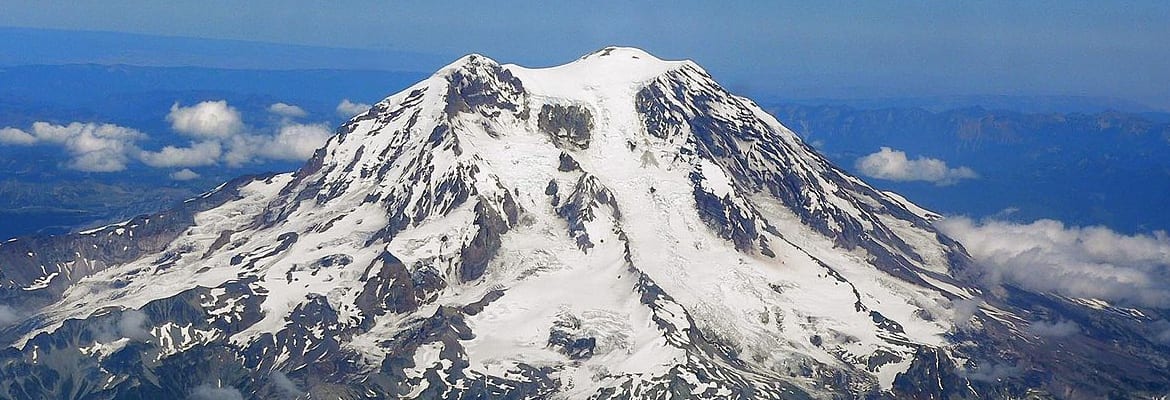
The Cascade Range of Washington and Oregon is the most popular place in the United States to learn glacier mountaineering, and the North Cascades, near the Canadian border, are home to two of its classic guided peaks: Mount Baker (3,286 m), a glaciated volcano that is one of the best first glacier climbs in North America, and Mount Shuksan (2,783 m), a steeper, more alpine peak. Most guided climbs run from late May to August and last two to four days, often combined with a course in glacier travel and crevasse rescue. On ExpedReview, as of 23 October 2026, 4 operators have 25 verified client reviews in the Cascades across 2 places. Ranked first is AAI (American Alpine Institute) (5.0★ from 16 reviews, latest August 2026), followed by Climbing The Seven Summits (5.0★ from 7 reviews, latest August 2026) and Mountain Madness (5.0★ from 1 review, latest July 2026). Below are the rankings, then a guide to climbing in the Cascades.
Cascades: key facts | | | |---|---| | Location | Washington and Oregon, USA (North Cascades near the Canadian border) | | Reviewed peaks | Mount Baker (3,286 m), Mount Shuksan (2,783 m) | | Other classic peaks | Mount Rainier (4,392 m), Forbidden Peak (2,690 m) | | Typical guided climb | 2 to 4 days, often with skills training | | Main season | Late May to August | | Nearest airport | Seattle; Bellingham for Baker and Shuksan | | Operators reviewed on ExpedReview | 4, with 25 verified reviews (as of 23 Oct 2026) |
Cascades guides ranked by verified reviews
Rankings use each operator's verified ExpedReview client reviews in the Cascades: the star rating, adjusted so that one or two reviews, or only old ones, count for less than many recent ones; ties go to the operator with more reviews. Every review is checked by hand before it is published, and operators cannot pay for a better position. Data as of 23 October 2026.
| Rank | Operator | Based in | Rating here | Reviews | Reviewed for | Latest review |
|---|---|---|---|---|---|---|
| 1 | AAI (American Alpine Institute) | United States | 5.0★ | 16 | Mount Baker (14), Mount Shuksan (2) | August 2026 |
| 2 | Climbing The Seven Summits | United States | 5.0★ | 7 | Mount Baker (7) | August 2026 |
| 3 | Mountain Madness | United States | 5.0★ | 1 | Mount Shuksan (1) | July 2026 |
| 4 | Timberline Mountain Guides | – | 5.0★ | 1 | Mount Shuksan (1) | January 2019 |
All four operators have a perfect 5.0★ average here, so the order reflects the number and age of reviews. Timberline Mountain Guides has not claimed its ExpedReview profile, and its only review here is from 2019.
What clients say
The reviews are dominated by the summer of 2026 on Mount Baker, and they read like reviews of a school as much as a climb. Several AAI reviewers took courses rather than a straight summit climb, such as the Alpinism 1 and APL 1 mountaineering courses and an AIARE 1 avalanche course, and they praised guides who were "great teachers", broke the material into an easy progression and made it accessible to a group with varied backgrounds. A couple on a three-day Baker climb described their guides as professional, patient and encouraging, and said they learned everything they needed to feel safe; another described a first day of belaying, rappelling and a little rock climbing before hiking to base camp through the forest. Guides were named and thanked in many reviews. Climbing The Seven Summits reviewers were just as positive: one self-described "desert rat" who had never used crampons, an ice axe or a rope said the kind, patient guides made Baker possible, and another said they would be booking again soon.
The peaks
Mount Baker
Mount Baker, at 3,286 m (10,781 ft), is a glaciated stratovolcano and one of the most heavily glaciated peaks in the lower 48 states. The two main routes are the Easton Glacier on the south side and the Coleman-Deming on the north-west side, both non-technical glacier climbs with crevasses and a steep finish to the summit plateau. Its first recorded ascent was in 1868, by Edmund Coleman, John Tennant, David Ogilvy and Thomas Stratton. Most guided climbs take three days, with a day of training on the glacier, and Baker is the classic place in the US to learn the skills for bigger mountains.
Mount Shuksan
Mount Shuksan, at 2,783 m (9,131 ft), sits east of Baker inside North Cascades National Park, and is one of the most photographed mountains in the United States. Unlike Baker, it is not a volcano, and its summit pyramid needs rock scrambling or easy climbing. The Sulphide Glacier route from the south is the most popular guided route, a glacier climb with a final rock scramble; the Fisher Chimneys route is longer and more technical, with rock, snow and steep ice. Shuksan is a good next step after Baker for climbers who want more alpine terrain.
Other Cascades peaks
Mount Rainier, at 4,392 m (14,411 ft), is the highest peak in the Cascades and the main training climb for Denali and the Himalaya, guided by concessioners under National Park Service rules. Forbidden Peak, in North Cascades National Park, has a classic West Ridge of moderate alpine rock. Further south, Mount Hood in Oregon, Mount Adams and Glacier Peak are also popular guided volcanoes.
Courses and climbs
The Cascades are known for skills courses as much as summits. Many guided trips on Baker are built around training: walking in crampons, using an ice axe, self-arrest, rope teams, crevasse rescue and, on some courses, rock skills and rappelling. Longer courses, of six days or more, teach the skills for independent climbing or for expeditions such as Denali. If you are new to mountaineering, a course with a summit attempt is usually a better choice than a short summit climb, because you will come away with skills you can use elsewhere.
Season and weather
The main season is late May to August, when snow bridges over crevasses are still solid early in the summer and the weather is most settled in July and August. Later in the summer, crevasses open up and routes can become more complicated. The Cascades are close to the Pacific, so storms can bring heavy rain, snow and whiteouts at any time, and the mountains are known for some of the heaviest snowfalls in the world. Guided climbs usually start very early on summit day, to climb on firm snow and descend before the sun softens it.
Permits and rules
Climbing on Mount Baker, in the Mount Baker Wilderness, is managed by the US Forest Service, and Mount Shuksan and Forbidden Peak lie largely in North Cascades National Park, where overnight stays need a backcountry permit. Commercial guiding on public land in the United States requires a permit from the managing agency, and only permitted operators can guide on each mountain. When you climb with a guide, the operator arranges the permits. Climbers are expected to carry out their waste, including human waste, using blue bags or similar systems.
Volcanoes and history
The Cascades are part of the Pacific Ring of Fire, and the big peaks, from Mount Baker in the north to Lassen Peak in California, are volcanoes formed by the subduction of the Juan de Fuca plate under North America. Mount St. Helens' eruption in 1980 is a reminder that they are active; on Mount Baker, steam still vents from Sherman Crater, just south of the summit, and climbers on the Easton route pass close to it. The North Cascades, around Shuksan and Forbidden Peak, are different: older, steeper, non-volcanic mountains carved by glaciers, often called the "American Alps". The first recorded ascent of Mount Shuksan was in 1906, by Asahel Curtis and W. Montelius Price. North Cascades National Park was established in 1968, and today the region has more glaciers than any other part of the lower 48 states, though they are shrinking as the climate warms.
A typical three-day Mount Baker climb
Most guided Baker climbs follow a similar plan. On the first day, the team meets in Bellingham or at the trailhead, checks gear and hikes through old-growth forest and meadows to a camp near the edge of the glacier, usually at about 1,800 to 2,000 m. The second day is spent training on the glacier: walking in crampons, self-arrest with an ice axe, travelling on a rope team and practising crevasse rescue. On the third day, the team leaves camp in the dark, often around 1 to 3 a.m., climbs the glacier to the summit plateau and the top, Grant Peak, then descends to camp and walks out to the trailhead the same day. Longer trips add more training or a weather day, which improves the chance of reaching the summit.
Hazards
The main hazards in the Cascades are crevasses, avalanches, rockfall, sudden storms and whiteouts. Crevasse falls are the reason guided teams travel roped together and practise rescue before the summit day. Avalanches are a risk early in the season and after new snow, and rockfall is a hazard on steeper routes such as the Fisher Chimneys and Forbidden Peak, especially in the afternoon. Because the peaks are close to the ocean, weather can change quickly, and navigation in a whiteout on a big glacier is difficult. Guides watch the forecast and the conditions closely and will turn a team around when it is not safe; good reviews often mention guides who made careful decisions on summit day.
Gear
Guided climbs need mountaineering boots that take crampons, a harness, a helmet, an ice axe, crampons, warm layers, a waterproof shell, gloves, glacier glasses and sun protection, as well as a backpack and sleeping bag for the high camp. Operators usually provide group gear such as tents, ropes, stoves and food on the mountain, and many rent boots, crampons, harnesses and ice axes. Ask for the kit list early, and break in new boots before the trip.
Getting there
Seattle-Tacoma International Airport is the main gateway, and Bellingham, about 90 minutes north of Seattle by road, is the nearest town to Mount Baker and Mount Shuksan. Trailheads are reached by forest roads, and you will usually need a car or to join the operator's transport. Allow time for the drive and for parking, which can fill up on summer weekends.
Skills and fitness
Guided climbs of Baker and Shuksan's Sulphide route are suitable for fit beginners, but you need to be able to carry a heavy pack, about 18 to 25 kg, to a high camp, and climb for 10 to 12 hours on summit day. Train with hiking and stair climbing under a loaded pack. For the Fisher Chimneys or Forbidden Peak, you need previous experience of climbing rock and steep snow.
Cost
Guided climbs in the Cascades cost much less than Himalayan or Andean expeditions, but prices vary with the length of the trip, the ratio of guides to clients and whether it is a private or group climb. Check what is included, such as group gear, meals, permits and equipment rental, and look for the operator's current listed prices on their ExpedReview profile.
Where the Cascades can lead
For many climbers, a course or climb in the Cascades is the first step towards bigger goals. The glacier travel, self-arrest and crevasse rescue skills learned on Mount Baker are the same skills needed on Denali, Aconcagua's Polish Glacier, the volcanoes of Ecuador and Mexico, and the trekking peaks of Nepal. A common progression is Baker or Shuksan, then Mount Rainier, then a bigger expedition such as Denali, which is covered on our Alaska page, or the volcanoes of Ecuador. Several reviewers here said they could not wait to go again or to learn more, and the operators ranked above also run courses and expeditions further afield. If that is your plan, tell your guide: many will give you useful feedback on your skills and fitness and on what to do next.
How to choose an operator
Ask whether the operator holds a permit for the mountain you want to climb, how many days the trip includes, how much time is spent on training, the guide-to-client ratio, and the guides' qualifications, such as AMGA training or certification. Read the reviews above, and choose the course or climb that fits your experience and your plans for bigger mountains.
Frequently asked questions
What is the best first glacier climb in the Cascades?
Mount Baker is the classic first glacier climb, usually guided over three days with skills training.
When is the climbing season in the Cascades?
Late May to August, with July and August usually the most settled months.
Is Mount Shuksan harder than Mount Baker?
Yes. Shuksan is lower, but its summit pyramid needs rock scrambling, and the Fisher Chimneys route is more technical.
Do I need a permit to climb in the North Cascades?
Overnight stays in North Cascades National Park need a backcountry permit, and guided operators arrange the permits for their trips.
Which operator is ranked first in the Cascades on ExpedReview?
As of 23 October 2026, AAI (American Alpine Institute) is ranked first, with 5.0★ from 16 verified reviews, the latest from August 2026.