Mont Blanc Routes Compared: Goûter, Trois Monts, Grands Mulets and Italian Routes (2026)
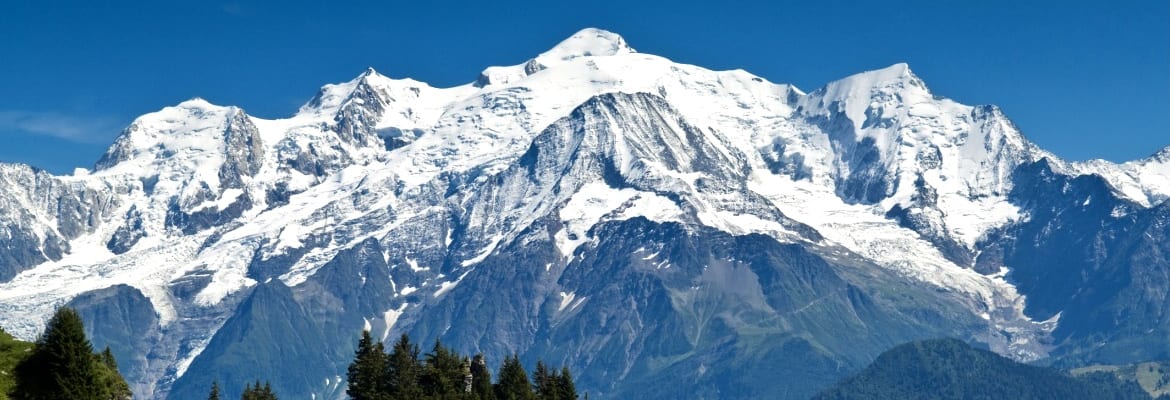
Mont Blanc (Monte Bianco in Italian), the highest mountain in the Alps at 4,807.47 m by the 2025 survey, has four classic routes for guided climbers. The Goûter route (the normal route, grade PD) is the most popular and least technical, but it crosses the rockfall-prone Grand Couloir, and you can only climb it with a reservation at one of the huts on the route. The Trois Monts route (PD+/AD) from the Aiguille du Midi crosses Mont Blanc du Tacul and Mont Maudit and is steeper and more serious, but often less crowded. The Grands Mulets route is now mainly a spring ski-mountaineering route. The Italian route via the Gonella hut is long, quiet and heavily crevassed. Most climbers take two to three days, acclimatise beforehand on lower peaks, and climb with a certified mountain guide. ExpedReview's Mont Blanc rankings list guide companies by verified climber reviews.
Mont Blanc routes at a glance | Route | Start | Hut | Typical grade | Main challenge | |---|---|---|---|---| | Goûter (normal route) | Les Houches or Saint-Gervais (to Nid d'Aigle) | Tête Rousse or Goûter (3,815 m) | PD | Rockfall in the Grand Couloir; exposed Bosses ridge | | Trois Monts | Chamonix (Aiguille du Midi, 3,842 m) | Cosmiques | PD+/AD | Serac and avalanche risk on Tacul; steep Mont Maudit headwall | | Grands Mulets | Chamonix (Plan de l'Aiguille) | Grands Mulets (~3,051 m) | PD (mostly on skis) | Crevasses and serac fall; best in spring | | Italian (Gonella / Aiguilles Grises) | Val Veny, Courmayeur | Gonella (~3,071 m) | PD+/AD | Long, crevassed Miage and Dôme glaciers |
Grades vary between guidebooks and with conditions. Mont Blanc's summit height changes with its snow and ice cap: the official survey gave 4,808.72 m in 2017, 4,805.59 m in 2023 and 4,807.47 m in 2025.
Before you choose a route
Mont Blanc is not a hike. Every route crosses glaciers and requires crampons, an ice axe, a harness, rope skills and good fitness. The Chamonix mountain safety organisation La Chamoniarde stresses that climbing Mont Blanc requires acclimatisation, technical skills, preparation and physical training.
In recent hot summers, glacier retreat and melting permafrost have increased rockfall, especially in the Grand Couloir on the Goûter route. In some recent summers, authorities and guides advised against the route during heatwaves. Always check current conditions, and be ready to change plans.
Most climbers spend several days acclimatising first, for example on the Gran Paradiso (4,061 m) or with nights at altitude around Chamonix. See ExpedReview's Gran Paradiso and Chamonix pages.
The Goûter route (normal route)
The Goûter route is the most popular way to climb Mont Blanc.
| Section | Height gain | Time (La Chamoniarde) |
|---|---|---|
| Day 1: Nid d'Aigle to Goûter hut | +1,428 m | 5 to 6 hours |
| Day 2: Goûter hut to summit | +1,015 m | 10 to 12 hours in total |
| Day 2: Summit to Nid d'Aigle | −2,438 m | (included above) |
Climbers take the Bellevue cable car from Les Houches or the Mont Blanc Tramway from Saint-Gervais to the Nid d'Aigle. A trail and rocky ground lead to the Tête Rousse hut, then you cross the Grand Couloir, a gully notorious for rockfall, and scramble up the rib to the Goûter hut at 3,815 m. On summit day, you set off in the dark over the Dôme du Goûter, past the Vallot emergency shelter and up the exposed Bosses ridge to the summit.
Hut reservations are compulsory
Since 2020, a prefectural decree has created a protected natural habitat area on the normal route. You must have a reservation at the Nid d'Aigle, Tête Rousse or Goûter huts to climb the route. Bivouacking is banned between the Col du Mont Lachat and the summit, and checks are carried out by the gendarmerie (PGHM), the Saint-Gervais municipal brigade and hut staff. Rope teams on the normal route are limited to three people. The Goûter hut has 120 beds, and in 2026 it was open from 30 May to 4 October. Reservations open early and fill fast, so book well ahead or let your guide do it.
Best for: First-time Mont Blanc climbers with good fitness and glacier skills.
Watch out for: Rockfall in the Grand Couloir, which is safest crossed early in the morning, and crowds.
The Trois Monts route
The Trois Monts route crosses three summits: Mont Blanc du Tacul, Mont Maudit and Mont Blanc itself. It is one of the most beautiful mountaineering routes in the Alps.
Climbers take the Aiguille du Midi cable car from Chamonix to 3,842 m, descend the famous snow arête and walk across the Vallée Blanche glacier to the Cosmiques hut. Summit day starts around midnight. The route climbs the north face of Mont Blanc du Tacul, which is exposed to serac fall and avalanches, then traverses below Tacul's summit, crosses the Col du Mont Maudit via a steep headwall that can be icy, and finally climbs to the summit of Mont Blanc via the Col de la Brenva.
The Trois Monts is more technical and serious than the Goûter route, and summit day is long. Many climbers descend via the Goûter route, which requires a hut reservation if staying there.
Best for: Fit climbers with some experience of steeper snow and ice.
Watch out for: Serac fall and avalanches on Mont Blanc du Tacul, especially after fresh snow or in warm conditions.
The Grands Mulets route
The Grands Mulets route is the historic route, close to the line of the first ascent by Jacques Balmat and Michel-Gabriel Paccard on 8 August 1786. It starts from Chamonix with the Plan de l'Aiguille lift, crosses the crevassed Bossons glacier to the Grands Mulets hut (about 3,051 m), then climbs past the Petit and Grand Plateau to join the normal route near the Vallot shelter.
Because the Bossons glacier is heavily crevassed and exposed to serac fall later in the season, this route is now mainly used in spring as a ski-mountaineering route, when snow bridges are stronger.
Best for: Experienced ski mountaineers in spring.
Watch out for: Crevasses and serac fall from the Dôme du Goûter.
The Italian route (Gonella hut / Aiguilles Grises)
From Val Veny near Courmayeur in Italy, this route climbs the Miage glacier to the Gonella hut (about 3,071 m). Summit day crosses the crevassed Dôme glacier to the Aiguilles Grises ridge and joins the normal route at the Col du Dôme, then continues over the Bosses ridge to the summit.
The route is long, quiet and committing, with a big height gain from the valley. Glacier conditions vary greatly, and in dry summers the approach can become difficult.
Best for: Climbers seeking solitude and a classic Italian approach.
Watch out for: Crevasses, route finding and long distances.
How to choose your route
| If you... | Consider |
|---|---|
| Are climbing Mont Blanc for the first time | Goûter route, with a guide |
| Want fewer crowds and more challenge | Trois Monts |
| Are an experienced ski mountaineer | Grands Mulets in spring |
| Want a quieter Italian adventure | Gonella route |
| Want a traverse | Up the Trois Monts, down the Goûter |
Climbing with a guide
Most guides use a 1:1 or 1:2 guide-to-client ratio on Mont Blanc. Many offer programmes of five to six days, including acclimatisation climbs and a skills day before the summit attempt. Guides handle hut reservations, decide on the safest route given conditions and turn back when necessary.
Mont Blanc guide companies with at least two verified reviews on ExpedReview (data as of 22 October 2026):
| Company | ER rating | Reviews |
|---|---|---|
| SummitGuides | 4.6 | 8 |
See the full and current list on the Mont Blanc page. Read our guide to IFMGA guides and why to hire one.
What a typical guided Mont Blanc programme looks like
Guided programmes vary, but a typical five- or six-day plan looks like this:
- Day 1: Meet your guide in Chamonix, check equipment and practise crampon and ice axe skills on a glacier.
- Days 2–3: Acclimatisation climbs and a night at altitude, often in a hut on a 3,000–4,000 m peak, such as the Gran Paradiso or the Aiguille du Tour area.
- Day 4: Approach to the Tête Rousse or Goûter hut, or to the Cosmiques hut for the Trois Monts.
- Day 5: Summit day and descent.
- Day 6: Spare day for weather.
The spare day matters. Storms often delay summit attempts, and guides prefer to wait for a safe window than push in poor weather. If the weather or conditions make Mont Blanc unsafe, many guides offer an alternative 4,000 m peak instead.
Descending from the summit
The descent is where many accidents happen, when climbers are tired and the snow softens in the sun. On the Goûter route, the descent of the Bosses ridge and the rocky rib below the Goûter hut need care, and the Grand Couloir must be crossed again, ideally early in the day. Some climbers descend via the Trois Monts route to the Aiguille du Midi, but this requires reaching the last cable car down. Your guide will choose the descent based on conditions, timing and your energy.
Fitness: how hard is Mont Blanc?
Mont Blanc is physically demanding. Summit day on the Goûter route involves over 1,000 m of ascent from the hut and more than 2,400 m of descent back to the Nid d'Aigle, all at high altitude. Train with long hill days carrying a pack, stair or step training, and cardio over several months. If you can comfortably hike 1,000 to 1,500 m of ascent in a day with a pack, you have a good base.
When to climb Mont Blanc
The main season is from June to September, when the huts on the normal route are open. Early summer often has better snow cover on glaciers, while late summer brings more rockfall. In heatwaves, conditions on the Goûter route can become dangerous. Spring is the season for ski ascents.
Skills and preparation
- Crampon and ice axe technique, including self-arrest.
- Glacier travel and roping up. See the basics of glacier travel.
- Fitness for summit days of 10 to 12 hours or more.
- Acclimatisation above 3,500 m before the climb.
- Appropriate boots: see the best mountaineering boots for 4,000 m.
Changing conditions on Mont Blanc
Mont Blanc is changing as the climate warms. Hotter summers mean more rockfall, especially in the Grand Couloir (also called the Couloir du Goûter) on the normal route, where climbers must cross a gully swept by falling stones. Many accidents on Mont Blanc happen in this crossing, and guides time it for the early morning when the rock is frozen. In very hot spells, local authorities have advised climbers to postpone ascents, and some guides stop running the Goûter route until conditions improve. On the Trois Monts and Grands Mulets routes, crevasses and seracs change from year to year, and some seasons are much more broken than others.
The practical lesson is to stay flexible. Build spare days into your trip, check the latest conditions with the Office de Haute Montagne (OHM) in Chamonix, and be ready to switch routes or dates. A good guide will choose the route based on current conditions rather than the plan you booked.
The height of Mont Blanc
Mont Blanc's summit is a dome of ice and snow on top of rock, so its height changes from year to year. Surveyors measure it every two years, and results have varied by a metre or more between surveys. The usual reference figure is 4,808 m, but recent measurements have been slightly lower.
Frequently asked questions
What is the easiest route up Mont Blanc?
The Goûter route (normal route), graded PD. It is the least technical, but rockfall in the Grand Couloir is a serious hazard.
How high is Mont Blanc?
4,807.47 m according to the 2025 survey. The summit height changes slightly with its snow and ice cap.
Do you need a permit to climb Mont Blanc?
There is no climbing permit, but on the Goûter route you must have a hut reservation at the Nid d'Aigle, Tête Rousse or Goûter hut, and bivouacking is banned.
How long does it take to climb Mont Blanc?
On the Goûter route, usually two days: 5 to 6 hours to the Goûter hut, then 10 to 12 hours to the summit and back down to the Nid d'Aigle. Most guided programmes add acclimatisation days.
Is Monte Bianco the same as Mont Blanc?
Yes. Monte Bianco is the Italian name for Mont Blanc. The mountain lies on the border of France and Italy.
Which Mont Blanc route is the most dangerous?
All routes have risks. The Goûter route has rockfall in the Grand Couloir, and the Trois Monts route has serac and avalanche risk on Mont Blanc du Tacul.
Can you climb Mont Blanc without a guide?
Experienced alpinists do, but most climbers use an IFMGA mountain guide.
Who first climbed Mont Blanc?
Jacques Balmat and Michel-Gabriel Paccard, on 8 August 1786.
When is the best time to climb Mont Blanc?
June to September, when the huts are open. Check conditions, as heatwaves increase rockfall.
What is the Grand Couloir on Mont Blanc?
It is a rockfall-prone gully on the Goûter route, below the Goûter hut, that climbers must cross. It is one of the most dangerous sections of the normal route, so guides cross it early in the day when the rock is frozen.