Do You Need a Guide to Trek in Nepal? The Solo Trekking Ban Explained (2026)
By Blake Penson · March 10, 2023
Category: expedition-news
4 min read
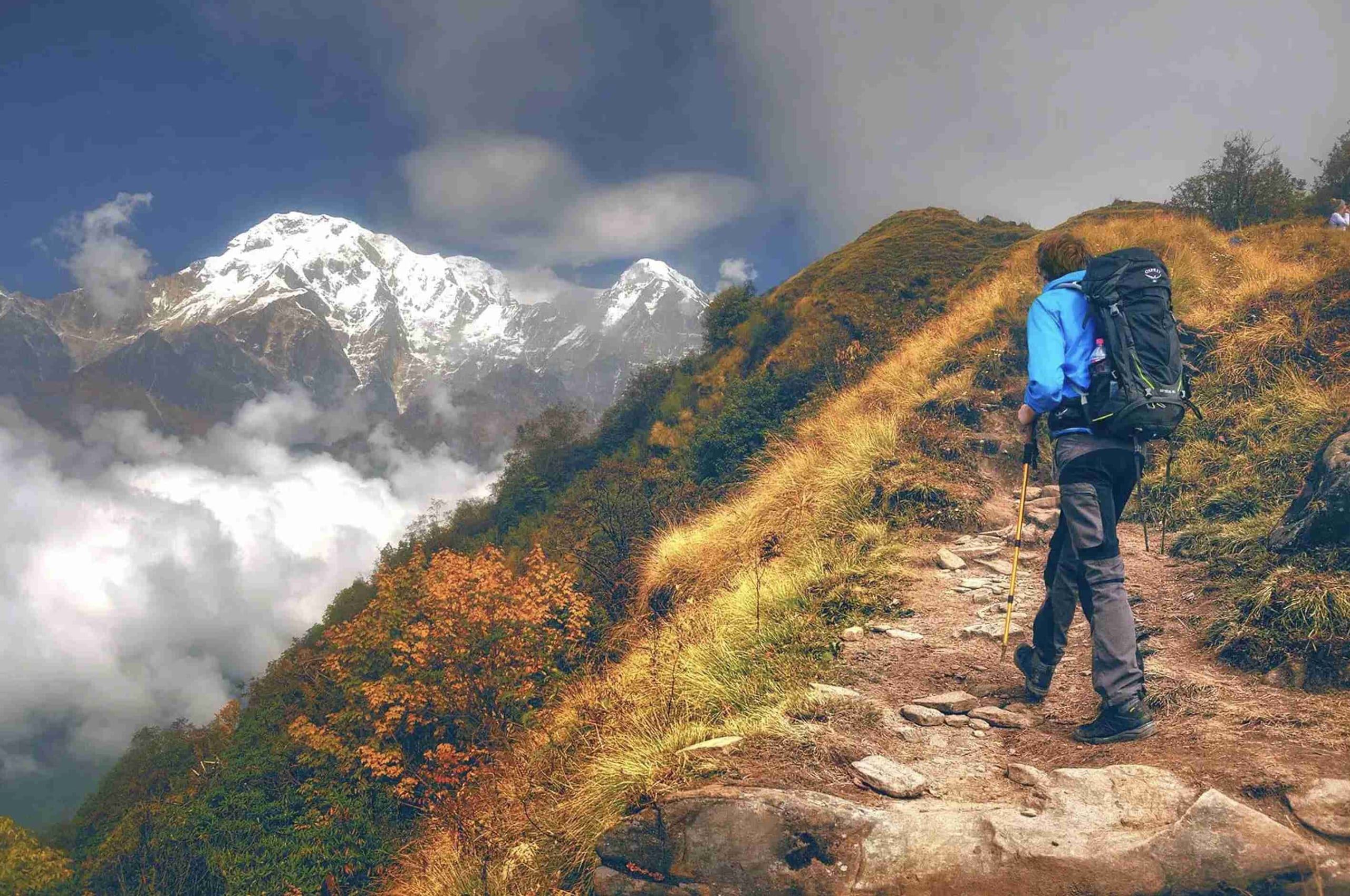
Yes, on most routes. Since 1 April 2023, under the Nepal Tourism Board's (NTB) revised TIMS rules, foreign trekkers in Nepal's main national parks and conservation areas must be accompanied by a licensed trekking guide and carry a TIMS card issued through a government-registered trekking agency. The rule covers dozens of named treks, including the Annapurna Circuit, Annapurna Base Camp and Poon Hill, the Langtang and Manaslu treks and, on the NTB's list, Everest Base Camp. The TIMS card costs NPR 2,000 for most foreigners and NPR 1,000 for SAARC nationals. The big exception in practice is the Everest region: its local government, Khumbu Pasang Lhamu Rural Municipality, has said a guide is not mandatory on its trails and runs its own trek card instead of TIMS, so enforcement there has been inconsistent. Restricted areas such as Upper Mustang, Manaslu and Dolpo have always required a licensed guide and a special permit. Nepali citizens are exempt. Below, we explain what the rule means for your trek, how much a guide costs and how to pick one.
| Item | Detail |
|---|---|
| Rule start date | 1 April 2023 (revised TIMS provision effective 31 March 2023) |
| Who it applies to | Foreign trekkers (Nepali citizens exempt) |
| Where | Named treks in national parks, conservation areas and restricted areas |
| Requirement | Licensed guide and TIMS card arranged through a registered agency |
| TIMS card fee | NPR 2,000 (foreigners); NPR 1,000 (SAARC nationals) |
| Everest region | Local municipality says a guide is not mandatory; uses its own trek card |
| Restricted areas | Special permit and licensed guide required; agency must apply |
| Climbing 8,000 m peaks | Solo climbing banned; guide rules apply to expeditions (from 2025) |
What the rule says
The NTB announced in March 2023 that all trekkers visiting Nepal from 1 April 2023 must hire a licensed trekking guide and obtain a TIMS (Trekkers' Information Management System) card through a government-registered trekking agency. In practice, it ended solo and free independent trekking for foreigners on most of Nepal's popular trails. The NTB's TIMS page lists the routes covered, grouped by region:
- Kanchenjunga, Makalu Barun and Rolwaling: the main base camp and pass treks.
- Everest region: Everest Base Camp, Gokyo, Cho La, Renjo La, the Three Passes, the Everest View trek, Mera Peak and Amphu Labtsa.
- Langtang, Helambu and Gosaikunda: Langtang, Langtang–Gosaikunda, the Tamang Heritage Trail, Ganja La and others.
- Manaslu and Tsum Valley.
- Annapurna: the Annapurna Circuit, Nar Phu, Tilicho/Mesokanto Pass, Poon Hill–ABC, Khopra, Mardi Himal and Sikles–Tara Hill.
- Mustang, Dhaulagiri, Dolpo and Humla: including Upper Mustang, Saribung, Round Dhaulagiri and the Dolpo treks.
The rule also expanded an earlier ban on solo climbing on Nepal's mountains. The TIMS card fee doubled at the same time to NPR 2,000 for most foreign visitors (about US$15). Agencies now buy TIMS cards online for their clients; trekkers cannot buy them independently for routes covered by the rule.
Why Nepal introduced it
According to the NTB, the decision followed discussions with unions and trekking and expedition stakeholders and had three goals:
- to stop solo trekkers getting lost;
- to save time and money on rescues for illness or natural disasters;
- to create jobs for guides and porters and discourage unauthorised trekking operations.
The Trekking Agencies Association of Nepal estimated at the time that the rule would create about 40,000 jobs for Nepalis and said that 10 to 15 trekkers, all solo or independent, go missing each year. "This decision has been made for the tourists' benefit," NTB director Maniraj Lamichhane told the news agency ANI. "While going on solo treks, tourists often get lost and might face insecurities."
Independent trekking had been significant: in 2019, about 300,000 trekkers came to Nepal, and 46,000 of them were independent or solo, according to figures reported at the time.
The Everest region dispute
The Everest region is the main exception in practice. When the rule launched, Khumbu Pasang Lhamu Rural Municipality, the local government for the Everest trekking area, publicly opposed it. Its chief administrative officer told the Kathmandu Post in March 2023: "We have not restricted solo trekkers in the Everest area." The municipality's safety advice said that while it is not mandatory to take a guide in the Everest region, it highly recommends one, especially at high altitude and on high passes.
The Khumbu does not use the TIMS card. Instead, trekkers buy the municipality's own trek card (NPR 3,000 for foreigners, NPR 2,000 for SAARC and Chinese nationals) along with the Sagarmatha National Park entry permit (NPR 3,000). Because the NTB's list still includes Everest Base Camp and other Khumbu treks, the rules on paper and on the ground differ, and reports of enforcement vary. Don't assume you can trek alone; check the latest position before you go, and note that routes beyond the main trails, such as Mera Peak and Amphu Labtsa, are much more remote. See the Everest Base Camp guide and EBC trek cost.
Restricted areas
Some regions have long been "restricted areas" that need a special permit from the Department of Immigration as well as other permits. They include Upper Mustang, Manaslu, Nar Phu, Upper Dolpo, Tsum Valley and parts of the far east and west. For these, the rules have always been stricter: you must apply through a registered agency and travel with a licensed guide. In March 2026, the Department of Immigration began issuing restricted area permits to solo trekkers, which had previously been issued only to groups of two or more, while reminding agencies that guides are mandatory in restricted areas across 13 districts, that agencies must take responsibility for emergency rescue, and that one guide can lead up to seven trekkers. It also said permits could be applied for online, including from abroad. See Upper Mustang and Manaslu.
Climbing rules: 8,000 m peaks and trekking peaks
Climbing is regulated separately by the Department of Tourism. Solo climbing in Nepal has been banned since 2017. Regulations published in 2025 tightened the rules further, banning solo climbing on 8,000 m peaks and requiring guides on expeditions; reports describe a requirement of one guide for every two climbers on the 8,000 m peaks (secondary source). The same changes raised the spring Everest royalty for foreign climbers from US$11,000 to US$15,000 from September 2025. See Everest permit fees and Everest cost.
How the rule affects popular treks
- Annapurna: Poon Hill, ABC, Mardi Himal and the Circuit all require a guide. The Annapurna Conservation Area receives slightly more than half of all trekkers in Nepal, so the rule has had the biggest effect there. See Annapurna Circuit trek page, Annapurna Base Camp and top Annapurna treks.
- Langtang: the Langtang Valley, close to Kathmandu, was popular with independent trekkers and now requires a guide.
- Manaslu: already a restricted area, so a guide was already required. See the Manaslu circuit.
- Everest: see the dispute above.
What does a guide cost?
Prices vary with experience, route and season and whether you hire through a larger agency. For most trekkers, the cheapest legal options are:
- A guide only: you carry your own pack and pay lodges directly.
- A porter-guide: one person who carries some of your gear and guides. Licensed porter-guides are allowed under the rules on many routes.
- A full package: guide, porters, permits, lodges, meals and transport.
Remember that the guide's food, accommodation and insurance must be covered, usually by the agency. Sharing a guide with friends reduces the cost per person. Get several quotes and ask exactly what is included.
How to choose a trekking guide or agency
- Check the licence. Guides should hold a trekking guide licence, and the agency should be registered with the Department of Tourism and, usually, the Trekking Agencies Association of Nepal.
- Ask about experience on your route, especially for high passes.
- Ask about first aid and altitude training and what happens in an emergency, including insurance and rescue.
- Ask how porters are treated: loads, clothing, insurance and pay.
- Read verified reviews from past clients.
- Avoid unusually cheap deals, which often mean cutting corners on staff, safety or accommodation.
See why you should hire an IFMGA guide for technical climbing.
Trekking peaks
Popular "trekking peaks" such as Island Peak, Mera Peak and Lobuche East need a climbing permit issued through the Nepal Mountaineering Association (NMA), arranged by a registered agency, as well as the trekking permits for the region. Fees vary by peak and season. Even where trekking in the area is disputed, climbing these peaks independently is not allowed, and you will need a climbing guide, ropes and glacier gear. See Island Peak, Mera Peak and Lobuche.
Staying safe on Nepal's trails
The guide rule exists partly because of real risks. Most trekkers who get into trouble do so for the same reasons: going too high too fast, losing the trail in cloud or snow on a high pass, being caught by sudden storms, or getting injured far from help. A few simple habits reduce the risk whether you trek with a large group or a single porter-guide:
- Acclimatise properly. Above about 3,000 m, gain no more than about 300 to 500 m of sleeping altitude a day and take rest days. Know the symptoms of altitude sickness and descend if they get worse. See acute mountain sickness.
- Leave an itinerary with your agency, lodge or embassy registration and stick to it.
- Start early on pass days and be ready to turn back in bad weather.
- Carry a way to call for help; mobile coverage is patchy in many valleys.
- Check weather and trail conditions locally, especially after storms or in the monsoon, when landslides are common.
The debate
The rule was controversial. Critics worried that it would put off price-sensitive travellers at a time when tourism was still recovering from the pandemic, and that it would push them to other destinations in the region. Sudeep Kandel, owner of Himalayan Adventure Labs, told The National that the rule would not improve safety if Nepalis were exempt, and that many foreign solo trekkers were highly experienced.
Others welcomed it. Rajan Dahal, owner of Global Adventure Trekking, told The National: "On the one hand, it will enhance the safety of travelers and ensure they have a better understanding of the local culture and customs. On the other hand, it may increase the cost of travel." Supporters also argue that guides help with route-finding in bad weather, recognise altitude sickness, handle emergencies and keep more tourism income in local communities.
In our experience, a good guide does much more than show the way. They help with acclimatisation, lodges, local customs and decisions in bad weather, and they can get help quickly if something goes wrong.
What to do before you go
- Check whether your route requires a guide on the NTB's list.
- Book through a registered agency, which will arrange the guide, TIMS card and other permits.
- Get the right insurance, including helicopter rescue to the altitude you will reach.
- Carry your permits and keep copies, because they are checked at checkpoints.
- For the Everest region, check the latest local rules and consider a guide anyway, especially for high passes.
What happens if you trek without a guide?
On routes covered by the rule, trekkers without a guide and an agency-issued TIMS card can be stopped at checkpoints and turned back or required to hire a guide before continuing. Rules and enforcement change, so confirm the position for your route with a registered agency before you travel.
Frequently asked questions
Can you trek solo in Nepal?
Not on most popular routes. Since 1 April 2023, foreigners on the treks listed by the Nepal Tourism Board must trek with a licensed guide arranged through a registered agency. The Everest region's local government has said a guide is not mandatory there, but enforcement varies.
Do you need a guide for Everest Base Camp?
The NTB lists EBC under the guide rule, but Khumbu Pasang Lhamu Rural Municipality has said a guide is not mandatory on its trails. Check the latest position and consider hiring one anyway.
How much is a TIMS card?
NPR 2,000 for most foreigners and NPR 1,000 for SAARC nationals, issued through a registered agency.
Do I need a guide for Poon Hill or Annapurna Base Camp?
Yes. Both are on the NTB's list.
Do Nepali citizens need a guide?
No. Nepali citizens are exempt.
Is a porter-guide allowed?
Yes. A licensed porter-guide, who both carries some gear and guides, is a common lower-cost option.
Do restricted areas need a guide?
Yes. Restricted areas such as Upper Mustang and Manaslu need a special permit applied for through an agency and a licensed guide.
Tags: nepal, trekking-regulations, tims-card, annapurna, solo-trekking-ban