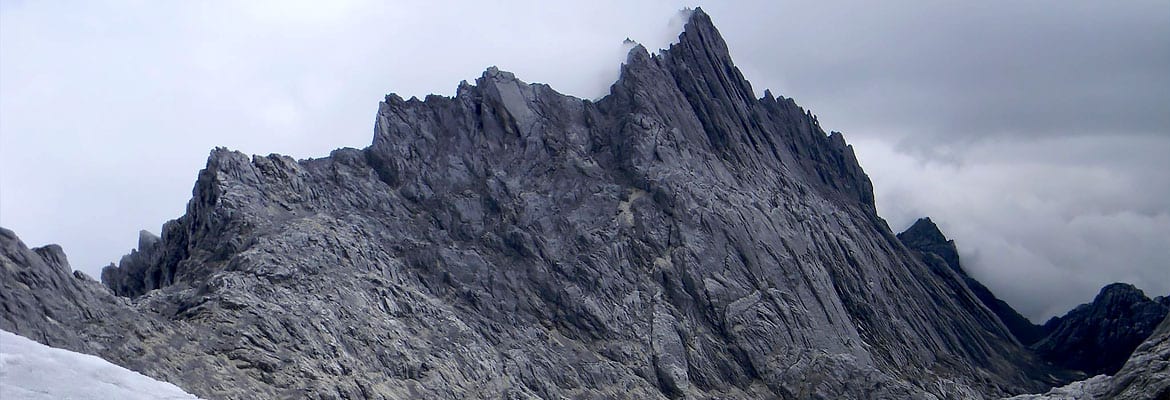
Climbing Carstensz Pyramid (2026–27): Access, Permits, Helicopter Route, Difficulty and the Climb
Carstensz Pyramid (Puncak Jaya, 4,884 m) in Indonesian Papua is the highest mountain in Oceania and the peak most climbers use for the Seven Summits. It is a limestone rock climb rather than a high-altitude trek: from base camp in the Yellow Valley (about 4,300 m), climbers use fixed ropes and ascenders on steep rock, scramble along a jagged summit ridge and cross a Tyrolean traverse, usually in a single long summit day. Today almost every climber reaches base camp by helicopter from Timika, because the overland jungle treks are mostly not being run. Under rules issued by Lorentz National Park in July 2026, every climber must use a licensed trekking organiser and hold a SIMAKSI (conservation-area entry permit), and helicopter companies were asked to carry only climbers with a SIMAKSI. Access depends on permits, security and weather and can change at short notice: reports in October 2026 said the autumn 2026 season had been cancelled because wildfire haze across Papua grounded flights. Climbers should confirm the current situation with their operator before booking. Compare operators on ExpedReview's Carstensz page.
Carstensz Pyramid at a glance | Fact | Detail | |---|---| | Height | 4,884 m | | Other names | Puncak Jaya, Puncak Nemangkawi | | Location | Sudirman Range, Lorentz National Park, Central Papua, Indonesia | | First ascent | 1962, Heinrich Harrer, Philip Temple, Russell Kippax and Albert Huizenga | | Access | Helicopter from Timika to Yellow Valley base camp (overland treks mostly not running) | | Permits | Licensed trekking organiser and SIMAKSI from Lorentz National Park; police travel permit | | Difficulty | Rock climbing on fixed ropes, scrambling, Tyrolean traverse | | Typical trip | About 7–10 days with helicopter access, plus spare days for weather |
Why climb Carstensz Pyramid?
Carstensz Pyramid is unlike any of the other Seven Summits. It rises from the equatorial highlands of New Guinea, surrounded by rainforest, with a summit of grey limestone that is often wrapped in cloud. The climbing is genuinely technical, with steep rock, exposed ridges and a Tyrolean traverse, but the altitude is moderate. For many climbers it is the most adventurous and unusual of the seven, and also the hardest to reach.
The mountain also has a remarkable history. In 1623, Dutch explorer Jan Carstenszoon reported seeing snow on mountains near the equator, a claim that was ridiculed in Europe at the time. The glaciers he saw were real, though they have shrunk dramatically and are expected to disappear entirely in the coming years. The peak was first climbed in 1962 by an expedition led by Austrian mountaineer Heinrich Harrer, author of Seven Years in Tibet, with Philip Temple, Russell Kippax and Albert Huizenga.
Carstensz Pyramid and the Seven Summits
There are two common versions of the Seven Summits. The Bass list uses Mount Kosciuszko (2,228 m), the highest point of mainland Australia, while the Messner list uses Carstensz Pyramid, the highest point of the wider Australian continental plate. Most serious climbers follow the Messner list, and many also walk up Kosciuszko. See climbing the Seven Summits.
Access today: the helicopter route
For years, climbers reached the mountain on long overland treks from villages such as Sugapa or Ilaga, walking for several days through forest and highland communities. Those treks required negotiating passage and payment with local communities and were often disrupted by security problems. As of 2026, the treks are mostly not being run, although Lorentz National Park's climbing procedure still lists several official trekking routes, and some licensed organisers list treks as available or "coming soon".
Almost every climber now flies by helicopter from the Timika area, in the lowlands, to a landing near base camp in the Yellow Valley. The flight takes well under an hour, but it depends entirely on the weather. Cloud and rain often prevent flying, and climbers can wait days in Timika for a window both on the way in and on the way out. Every sensible itinerary includes spare days.
Climbers going straight from near sea level to around 4,300 m by helicopter have no time to acclimatise on the way. Many feel the altitude on arrival, and operators usually plan a rest or acclimatisation day at base camp before the summit attempt. Some climbers pre-acclimatise on other peaks before the trip.
Permits and rules
Carstensz Pyramid lies in Lorentz National Park, a UNESCO World Heritage Site. In July 2026, the park authority issued a circular setting out rules for climbing Puncak Nemangkawi (Carstensz Pyramid). The main requirements:
- Use a licensed trekking organiser. Only operators holding the relevant nature-tourism business licence may run climbs. In July 2026, the park listed three licensed operators. Foreign guiding companies work through these local organisers.
- Hold a SIMAKSI, the permit to enter a conservation area, issued by the park before you enter.
- Carry the right documents, including a police travel permit (surat jalan) and security recommendation, a health certificate and insurance that covers evacuation.
- Follow zero-waste and zero-accident principles, including the park's waste rules.
- Coordinate on security with the Indonesian police.
- Involve local indigenous communities in the running of climbs.
Helicopter operators were asked to carry only climbers who hold a SIMAKSI. Climbing without the proper permits can lead to arrest or deportation. Your operator should arrange all permits and explain the process clearly.
Security and the local situation
Papua has a long history of conflict and political tension, and the security situation affects access to the mountain. The huge Grasberg mine, one of the largest gold and copper mines in the world, lies close to Carstensz, and its area is tightly controlled. Climbers must not stray into mining areas. Check your government's travel advice for Papua before booking, and choose an operator that is open about security risks and contingency plans.
Seasons and the 2026 cancellation
Carstensz can be climbed year-round in theory, as it is near the equator, but it is wet much of the time, and permit windows now shape the calendar. Operators currently plan departures in spring and autumn. In October 2026, reports said the autumn season had been cancelled before any team reached the summit, because wildfire haze across Papua made flights and climbing impossible. Operators said they were planning for 2027.
The climb
From base camp in the Yellow Valley, a typical summit day takes 10 to 14 hours. The route, usually the Normal Route (also known as the Harrer Route), climbs:
- The approach and lower face: from base camp, climbers walk to the foot of the north face and climb a series of steep rock steps on fixed ropes, using ascenders (jumars) and good footwork.
- The summit ridge: a long, jagged limestone ridge with gaps and notches, exposed on both sides.
- The Tyrolean traverse: climbers cross a gap in the ridge by hanging from a rope stretched across it, one of the most famous features of the Seven Summits.
- The summit: a short scramble to the top at 4,884 m.
- The descent: climbers retrace the route, abseiling (rappelling) down the steep sections.
Limestone is rough and grippy when dry but slippery when wet, and afternoon rain, hail and even snow are common. Most teams leave base camp very early to make the most of the better morning weather.
Skills you need
Carstensz requires real rock and rope skills:
- Ascending fixed ropes with a jumar (ascender).
- Abseiling (rappelling) confidently, including changing over between ropes.
- Moving on exposed, steep rock, roughly up to UIAA grade IV or 5.6 YDS in places.
- Clipping in and out of fixed lines at anchors safely.
- Crossing a Tyrolean traverse.
Practise these skills before the trip on a rock climbing course or with a guide. Climbing gyms and local crags are ideal for building confidence. See mountaineering climbing grades and skills to learn before a mountaineering trip.
Gear for Carstensz Pyramid
- Footwear: approach shoes with sticky rubber or light mountaineering boots that climb well on rock; many climbers bring both. Rubber boots are useful at wet camps.
- Technical gear: harness, helmet, ascender, belay/abseil device, slings, locking carabiners and gloves for rope work.
- Clothing: waterproof jacket and trousers, warm layers, a light down jacket and warm gloves for cold, wet summit days.
- Camp gear: a warm sleeping bag (nights near freezing are common), sleeping mat and waterproof bags.
- Other: headlamp, water bottles, sun protection and a personal first-aid kit.
Your operator will provide a detailed list and group gear.
Health and preparation
Fitness for Carstensz is about endurance on a long climbing day and comfort on steep rock rather than carrying heavy loads at altitude. Combine rock climbing practice with hill walking and general fitness. See a doctor about vaccinations and malaria prevention for lowland Papua, and get insurance that covers climbing and helicopter evacuation. Learn the signs of altitude illness, as the helicopter takes you high quickly. See what is acute mountain sickness and how to train for mountaineering.
A typical itinerary
Itineraries vary by operator, but a helicopter-based trip often looks like this:
- Day 1: Arrive in Timika, the gateway town in the Papua lowlands, usually via Jakarta, Bali or Makassar.
- Days 2–3: Preparation in Timika: permit checks, medical check-ups, gear checks and safety briefings.
- Day 4: Helicopter flight to base camp in the Yellow Valley, weather permitting. Rest and acclimatise.
- Day 5: Acclimatisation and skills practice on the fixed ropes near base camp.
- Day 6: Summit day, typically 10 to 14 hours return.
- Day 7: Helicopter back to Timika, weather permitting.
- Spare days: most operators build in several days for weather delays at both ends.
Remember that weather can delay flights for days, so do not book tight onward travel. Many climbers allow at least a week of contingency.
Respecting local people and the land
The mountains around Carstensz are the traditional lands of highland peoples, including the Amungme, for whom the mountain, which they call Nemangkawi, is sacred. The park's 2026 rules encourage operators to involve local indigenous communities in climbs. Choose operators that employ local people and respect local customs, ask before photographing people, and follow the park's zero-waste rules by carrying out all rubbish. The fragile alpine environment and the vanishing glaciers are part of what makes this mountain special, so leave no trace.
Choosing an operator
Because only licensed local organisers can run climbs, foreign companies partner with them. When choosing, ask:
- Which licensed organiser is running the climb on the ground?
- How are permits (SIMAKSI, police travel permit) arranged, and when will you see them?
- What happens if the helicopter cannot fly, or the trip is cancelled because of security or haze? What is the refund policy?
- How many spare days are built into the itinerary?
- What is the guide-to-client ratio on summit day?
- How do they involve and support local communities?
Compare operators by verified reviews on ExpedReview's Carstensz page.
Frequently asked questions
How high is Carstensz Pyramid?
4,884 m (about 16,024 ft).
Is Carstensz Pyramid open for climbing?
Climbing is permitted with a licensed operator and a SIMAKSI permit, but access depends on security, permits and weather. The autumn 2026 season was reported cancelled because of wildfire haze; operators are planning for 2027.
How do you get to Carstensz Pyramid?
Almost all climbers fly by helicopter from Timika to base camp in the Yellow Valley. Overland treks are mostly not running.
How hard is Carstensz Pyramid?
It is the most technical of the Seven Summits: rock climbing on fixed ropes, an exposed ridge and a Tyrolean traverse, with a summit day of 10 to 14 hours.
Who first climbed Carstensz Pyramid?
Heinrich Harrer, Philip Temple, Russell Kippax and Albert Huizenga in 1962.
What permit do you need for Carstensz Pyramid?
A SIMAKSI from Lorentz National Park, arranged through a licensed trekking organiser, plus a police travel permit and other documents.
Is Carstensz Pyramid or Kosciuszko one of the Seven Summits?
Both, depending on the list. The Messner list uses Carstensz Pyramid, and the Bass list uses Kosciuszko.
Does Carstensz Pyramid have glaciers?
It still has small glaciers nearby, but they have shrunk dramatically and are expected to disappear in the coming years.
How long does it take to climb Carstensz Pyramid?
About 7 to 10 days with helicopter access, including preparation in Timika and a single long summit day, plus spare days for weather.
What is the Tyrolean traverse on Carstensz?
A crossing of a gap in the summit ridge, made by hanging from a rope stretched between two anchors. It is one of the best-known features of the climb.
Do I need rock climbing experience for Carstensz?
Yes. You should be comfortable on steep rock, ascending fixed ropes and abseiling before you go.