Toubkal Guides: Verified Reviews, Routes, Best Time and How to Climb North Africa's Highest Peak
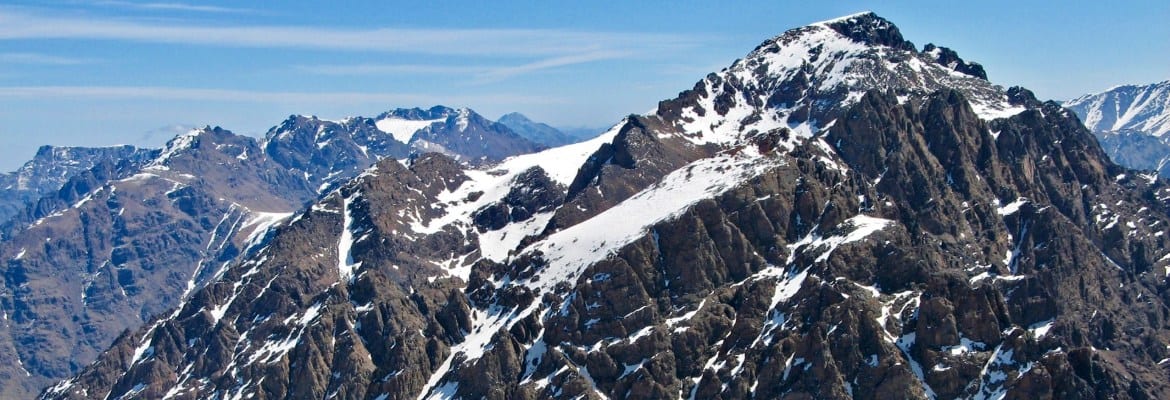
Jebel Toubkal, at 4,167 m (13,671 ft), is the highest mountain in North Africa and the Arab world. It rises in Toubkal National Park in Morocco's High Atlas, about 65 km south of Marrakech. The standard route from the village of Imlil (about 1,740 m) via the Toubkal Refuge (about 3,207 m) is a non-technical trek and scramble that most fit walkers complete in two days, or three for a gentler pace and better acclimatisation. The best seasons are spring (April–May) and autumn (September–October); from about November to March or April the upper mountain is usually snowy and needs an ice axe and crampons. Moroccan authorities have required foreign trekkers to be accompanied by a licensed guide in the Toubkal area since 2019. On ExpedReview, as of 23 October 2026, two operators have three verified client reviews for Toubkal: Active Treks Morocco (5.0★ from 2 reviews) and Altura Expeditions S.L. (5.0★ from 1 review). Below are the rankings, followed by a full guide to the climb.
Toubkal: key facts | | | |---|---| | Height | 4,167 m (13,671 ft) | | Location | Toubkal National Park, High Atlas, Morocco | | Nearest city | Marrakech, about 65 km (1.5–2 hours by road to Imlil) | | Trailhead | Imlil, about 1,740 m | | Refuge | Toubkal Refuge, about 3,207 m | | Standard route | South Cirque from Imlil, non-technical | | Typical duration | 2–3 days | | Best time | April–May and September–October | | Winter | Snow and ice from about November to March/April; crampons and ice axe needed | | First recorded ascent | 12 June 1923, by the Marquis de Segonzac, Vincent Berger and Hubert Dolbeau | | Guide rule | Licensed guide required for foreign trekkers since 2019 |
Toubkal guides ranked by verified reviews
Rankings use each operator's verified ExpedReview client reviews for Toubkal: the star rating, adjusted so that one or two reviews, or only old ones, count for less than many recent ones. Every review is checked by hand before it is published. Data as of 23 October 2026.
| Operator | Based in | Rating here | Reviews | Latest review |
|---|---|---|---|---|
| Active Treks Morocco | Morocco | 5.0★ | 2 | April 2026 |
| Altura Expeditions S.L. | Spain | 5.0★ | 1 | May 2026 |
Both operators score 5.0 for safety, value, food, team spirit and camps in their reviews. Neither listed a recent price at the time of writing.
What clients say
An Altura Expeditions reviewer (May 2026) called the trip "spectacular", said they were well cared for and described the summit views as breathtaking. Active Treks Morocco reviewers (April 2026) praised a three-day trip through Berber villages as excellent value, and one, who found the trek physically challenging but doable, singled out the guide and the family homestays along the way. With only three reviews, treat these as a starting point and ask operators for recent references.
Why climb Toubkal?
Toubkal is one of the most accessible 4,000 m peaks in the world. You can fly into Marrakech, be in the mountains the same afternoon and stand on the summit two days later, with views across the High Atlas to the Sahara on clear days. The trek passes through Amazigh (Berber) villages, walnut groves and terraced fields, and the culture is as memorable as the climb. It is also a useful step for those planning higher trekking peaks such as Kilimanjaro, as it gives a first taste of altitude above 4,000 m. See how to choose a Kilimanjaro route.
The standard route, day by day
Day 1: Imlil to the Toubkal Refuge
From Imlil (about 1,740 m), the trail climbs gently to the village of Aroumd, crosses a wide flood plain and follows the Mizane Valley to the shrine of Sidi Chamharouch at about 2,350 m, where there are small cafés. From there the path zigzags up the side of the valley to the Toubkal Refuge at about 3,207 m. The walk usually takes five to seven hours, with an ascent of about 1,470 m. Mules carry the heavy bags.
Day 2: Summit and descent
Climbers usually leave the refuge before dawn. The route crosses the stream, then climbs steep scree and boulder slopes into the South Cirque to a col at about 3,940 m, before following the ridge to the summit tripod at 4,167 m. The ascent takes about three to four hours. After the summit, most teams descend to the refuge for breakfast and continue down to Imlil, a long day of about 1,970 m ascent and descent combined. A three-day itinerary adds a night at the refuge after the summit or a night in a village on the way up, which is easier on the knees and better for acclimatisation.
A three-day alternative
A three-day itinerary is the most popular choice for first-time trekkers. On day one, walk from Imlil to a village such as Aroumd or to Sidi Chamharouch, or go straight to the refuge and rest. On day two, climb to the summit and return to the refuge for a second night. On day three, walk down to Imlil and transfer back to Marrakech. This keeps every day shorter, gives your body more time to adjust and leaves room for bad weather. Some operators also add an acclimatisation walk to a nearby pass or peak.
Cost
Costs vary by group size, season and what is included. A typical guided trip includes transfers from Marrakech, a licensed guide, a mule for luggage, meals and refuge or guesthouse beds. Private trips cost more per person than group departures, and winter trips with crampons, ice axes and qualified winter guides usually cost more than summer ones. Ask operators what is included, and budget for tips for guides, cooks and muleteers, which are customary in Morocco. Neither operator reviewed on ExpedReview listed a recent price at the time of writing, so check current prices directly.
Other routes and peaks
- North Cirque: a slightly more demanding alternative approach of two to three days.
- Ouanoukrim: many teams add Ras Ouanoukrim, a neighbouring summit above 4,000 m, from the refuge.
- Toubkal Circuit: a five to seven-day loop through remote valleys and passes, often including Lac d'Ifni.
- High Atlas trek: longer treks across the range, see our High Atlas trek guide.
Best time to climb Toubkal
| Season | Conditions |
|---|---|
| Spring (April–May) | Popular; snow may linger high up in April; green valleys |
| Summer (June–August) | Hot in the valleys, usually dry; afternoon storms possible |
| Autumn (September–October) | Stable weather, clear views, pleasant temperatures |
| Winter (November–March) | Snow and ice on the upper mountain; crampons and ice axe needed; very cold nights |
In spring and autumn, temperatures around the base often reach about 20 °C during the day but fall to around freezing near the summit, and colder with wind. The High Atlas is wetter in spring and autumn than in summer, so carry waterproofs.
Winter ascents
A winter ascent of Toubkal is a real mountaineering trip. The upper slopes are usually covered in hard snow and ice, avalanches are possible after heavy snowfall, and temperatures can drop well below −10 °C. You need crampons, an ice axe and the skills to use them, plus warm layers. Many operators run winter trips with qualified mountain guides, and some include a basic skills day near the refuge. If you have never used crampons, pick an operator that teaches them.
How hard is Toubkal?
For a fit hiker in summer or autumn, Toubkal is challenging but achievable. The paths are steep and loose in places, and the summit day is long. Altitude is the main concern: the climb goes from about 1,740 m to 4,167 m in two days, which is fast. Headaches and nausea are common; if they get worse, descend. See acute mountain sickness. A three-day itinerary reduces the risk and makes the trip more enjoyable.
Guide rules
Since 2019, Moroccan authorities have required foreign trekkers in the Toubkal area to be accompanied by a licensed mountain guide. Checks are usually made in Imlil or along the trail. A local licensed guide also supports the communities in the valleys, knows the route in poor visibility and can arrange mules, refuge beds and food.
Where to stay
- Imlil: guesthouses and riads, a good place to start or end a climb.
- Toubkal Refuge and Refuge Les Mouflons: two refuges at about 3,207 m with dormitories and meals; book ahead in busy seasons.
- Village homestays: on longer itineraries, family homes offer a warm welcome and simple, hearty food.
What to bring
For spring to autumn: good walking boots, trekking poles, a warm jacket, waterproofs, a hat and gloves, sun protection, a head torch, water bottles or a filter and a sleeping bag liner for the refuge. In winter, add mountaineering boots, crampons, an ice axe, a helmet and warmer layers. See how to choose mountaineering boots.
Getting there
Fly into Marrakech, then drive about 1.5–2 hours to Imlil via Asni. Most operators include transfers. The Moroccan dirham (MAD) is the currency; bring cash, as ATMs are limited outside Marrakech. Arabic and Amazigh (Tamazight) are the official languages, and French is widely spoken.
The 2023 earthquake
The Al Haouz earthquake of 8 September 2023 hit the High Atlas hard, including villages around Imlil. Much of the area has been rebuilt, and trekking has resumed, but check with your operator about current trail and village conditions. Trekking with local operators and guides helps communities recover.
Training for Toubkal
You do not need mountaineering experience for a summer or autumn ascent, but you do need to be fit enough to walk for six to eight hours on steep, rocky ground, two days running. Start training at least six to eight weeks before your trip. Aim for three or four sessions a week of hiking, running, cycling or stair climbing, and do long hikes on hilly ground at weekends, carrying a daypack of about 6–8 kg. Downhill walking matters too: the descent from the summit to Imlil is long and hard on the knees, so include steep descents and leg strength work, and use trekking poles. For a winter ascent, add a mountain skills course or a few days of winter walking with crampons. See our mountaineering training guide.
Safety on Toubkal
Most problems on Toubkal come from altitude, cold and falls rather than technical difficulty. Keep these points in mind:
- Acclimatise. Ascend slowly, drink plenty and consider a three-day itinerary. If symptoms of altitude sickness get worse, go down.
- Start early. Summit early in the day, before clouds and afternoon storms build, especially in summer.
- Watch the weather. Visibility can drop fast, and the summit slopes are easy to lose in cloud. Your guide knows the safest line.
- Respect winter conditions. After snowfall, avalanche risk can be real on the slopes above the refuge. Follow your guide's decisions.
- Insurance. Make sure your travel insurance covers trekking to 4,200 m and, in winter, the use of crampons and ice axes.
Responsible trekking
Toubkal's popularity puts pressure on the valleys. Carry out all your rubbish, use toilets in villages and refuges where possible, and refill water bottles rather than buying plastic ones. Dress modestly in villages, ask before photographing people, and respect local customs, especially during Ramadan. Hiring local guides, muleteers and cooks, and staying in family homes, keeps income in the communities. See our responsible climbing guide.
Combining Toubkal with the rest of Morocco
Many trekkers combine Toubkal with a few days in Marrakech, a trip over the Tizi n'Tichka pass to the kasbahs of Aït Benhaddou, or a desert trip to the dunes of Merzouga or Zagora. Others make Toubkal part of a longer trek across the High Atlas, staying in Amazigh villages each night. These combinations make Morocco a rewarding destination for a week or two.
Choosing a Toubkal operator
Look for operators who use licensed local guides, give a clear itinerary, include mule support and refuge bookings, and explain their winter equipment and safety plans. Ask about group size and whether three-day itineraries are available. See how to choose a guide for general questions to ask.
Frequently asked questions
How high is Toubkal?
4,167 m (13,671 ft), the highest in North Africa.
How long does it take to climb Toubkal?
Usually two days from Imlil, or three for a more comfortable pace.
Do I need a guide for Toubkal?
Yes. Since 2019, foreign trekkers have been required to hire a licensed guide.
When is the best time to climb Toubkal?
April–May and September–October. In winter you need crampons and an ice axe.
Can beginners climb Toubkal?
Fit beginners can climb it in summer and autumn with a guide. In winter, basic crampon and ice axe skills are needed.
Where do you sleep on Toubkal?
Usually in Imlil and at one of the two refuges at about 3,207 m, which have dormitories and meals.
How do I get to Imlil?
Drive about 1.5–2 hours from Marrakech via Asni. Most operators include the transfer in their trip price.
Is Toubkal technical?
No, not in summer and autumn. In winter, it requires basic mountaineering skills.
Which operator is ranked first for Toubkal on ExpedReview?
Active Treks Morocco, with 5.0★ from 2 verified reviews (latest April 2026), as of 23 October 2026.
Related articles
- How to choose a guide
- Best operators
- Morocco Trekking and Toubkal Guides: Verified Reviews for the High Atlas
Trekking and climbing in Morocco's High Atlas: operators ranked by verified ExpedReview client reviews for Toubkal and High Atlas treks, routes, seasons, guide rules, villages, cost and how to choose an operator.