Morocco Trekking and Toubkal Guides: Verified Reviews for the High Atlas
By Blake Penson, Founder of ExpedReview · Everest summiter · Seven Summits climber · 20-year mountaineer · Industry expert
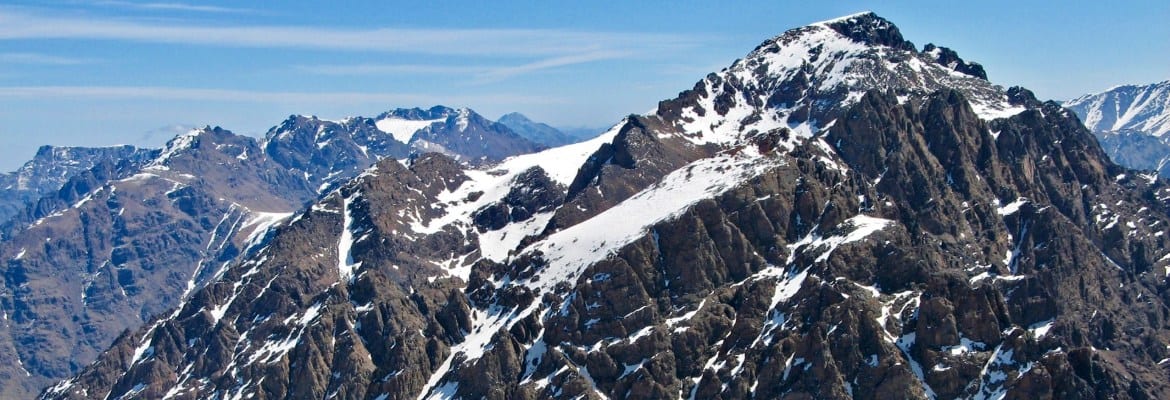
Morocco's High Atlas is the highest mountain range in North Africa, and its best-known goal is Jebel Toubkal (4,167 m), a non-technical summit usually climbed in two or three days from the village of Imlil, about 65 km from Marrakech. Longer treks cross the Berber (Amazigh) valleys around it. The best seasons are spring and autumn; in winter, Toubkal needs crampons and an ice axe. Foreign trekkers in the Toubkal area have had to be accompanied by a licensed guide since 2019. On ExpedReview, as of 23 October 2026, 2 operators have 6 verified client reviews in Morocco across 2 places: Active Treks Morocco is ranked first (5.0★ from 4 reviews, latest April 2026), followed by Altura Expeditions S.L. (5.0★ from 2 reviews, latest July 2026). Below are the rankings, then a guide to trekking and climbing in the High Atlas.
Morocco (High Atlas): key facts | | | |---|---| | Highest peak | Jebel Toubkal, 4,167 m (13,671 ft) | | Gateway | Marrakech | | Trailhead | Imlil, about 1,740 m, 1.5–2 hours by road from Marrakech | | Toubkal standard route | South Cirque via the Toubkal Refuge (about 3,207 m), non-technical | | Typical Toubkal climb | 2–3 days | | Best time | April–May and September–October | | Guide rule | Licensed guide required for foreign trekkers in the Toubkal area since 2019 | | Operators reviewed on ExpedReview | 2, with 6 verified reviews (as of 23 Oct 2026) |
Morocco guides ranked by verified reviews
Rankings use each operator's verified ExpedReview client reviews in Morocco: the star rating, adjusted so that one or two reviews, or only old ones, count for less than many recent ones; ties go to the operator with more reviews. Every review is checked by hand before it is published, and operators cannot pay for a better position. Data as of 23 October 2026.
| Rank | Operator | Based in | Rating here | Reviews | Reviewed for | Latest review |
|---|---|---|---|---|---|---|
| 1 | Active Treks Morocco | Morocco | 5.0★ | 4 | High Atlas trek (2), Toubkal climb (2) | April 2026 |
| 2 | Altura Expeditions S.L. | Spain | 5.0★ | 2 | High Atlas trek (1), Toubkal climb (1) | July 2026 |
Both operators have a perfect 5.0★ average; Active Treks Morocco ranks first because it has more reviews. With six reviews in total, treat the rankings as a starting point, and read the reviews and ask questions before you book.
What clients say
All six reviews are from 2026, and they describe small, personal trips. Active Treks Morocco's reviewers named the organiser, Mohammed, and guides such as Yusuf, and praised a "knowledgeable, patient and professional team"; one reviewer said they had now used Mohammed for three trips, and felt safe and well looked after throughout. Another called the trek very challenging physically but doable, and remembered staying in family homes in the villages. A third described a three-day trip to "magnificent Berber villages" as excellent value for money. Altura Expeditions' reviewers were equally positive: one said they were well taken care of at all times and that the views from the summit of Toubkal were breathtaking, calling Altura "a serious and responsible company", and a solo traveller on a High Atlas trek called it an unforgettable experience they would do again.
The High Atlas
The Atlas Mountains stretch for more than 2,000 km across Morocco, Algeria and Tunisia, and the High Atlas is the highest and most central part, running across Morocco from the Atlantic coast towards the Algerian border. Toubkal National Park, created in 1942, protects the highest area, including Toubkal and a cluster of other peaks over 4,000 m, such as Ouanoukrim. Further east, Jebel M'Goun is the second major summit of the High Atlas, reached on longer, quieter treks. The valleys are home to Amazigh communities who farm terraced fields of barley, walnuts and apples, and many trekking routes link their villages on old mule paths. For most visitors, that mix of high mountains and village life is what makes the High Atlas special.
Climbing Toubkal
The standard route starts in Imlil and climbs through the village of Aroumd and past the shrine of Sidi Chamharouch to the Toubkal Refuge at about 3,207 m, usually in five to six hours. On summit day, climbers leave early and follow the South Cirque, a steep path over scree and boulders, to the summit, then descend to the refuge or to Imlil. The route is not technical in summer and autumn, but the altitude, the scree and the long day make it harder than many people expect. Most trips take two or three days, and a longer trek with a night or two in the villages first helps with acclimatisation. Our Toubkal guide covers the route in more detail.
High Atlas treks
Beyond Toubkal, operators offer treks of three days to two weeks through the High Atlas, such as circuits around the Toubkal massif over high passes, routes through the valleys to Lake Ifni, and longer crossings to the M'Goun area. These treks usually use mules to carry the luggage, with nights in village guesthouses, gîtes or camps, and they can be combined with a Toubkal ascent. See our High Atlas trek page for more.
When to go
Spring (April and May) and autumn (September and October) are the best seasons, with mild temperatures and mostly clear weather. In spring, there can still be snow on Toubkal's summit, and the valleys are green. Summer is hot in Marrakech and the valleys, though pleasant higher up, with occasional afternoon storms. From about November to March or April, Toubkal is a winter climb with snow and ice, requiring crampons, an ice axe and experience in winter conditions, and some operators run winter ascents and ski-touring trips.
Licensed guides and rules
Since 2019, Moroccan authorities have required foreign trekkers in the Toubkal area to be accompanied by a licensed guide, a rule introduced after the murder of two Scandinavian hikers near Imlil in December 2018. Licensed mountain guides in Morocco are trained and registered, and they know the routes, the weather and the communities. A good guide can also arrange mules, beds in the refuges and food, and help you understand local customs. Make sure your operator uses licensed guides.
Culture and responsible travel
The High Atlas is a living, farming landscape, not a wilderness. Dress modestly in the villages, ask before photographing people, and respect local customs, especially during Ramadan, when local people fast during the day. Staying in family guesthouses and hiring local guides and muleteers helps keep tourism income in the valleys. The Al Haouz earthquake of 8 September 2023 hit the High Atlas hard, including villages around Imlil, and many communities are still rebuilding; trekking with local operators is one way to support them. Ask your operator how the trip benefits the villages, for example through fair pay for guides, cooks and muleteers, and whether it supports local projects. Tipping is customary at the end of a trek, so ask your operator for guidance on amounts.
A short history
The High Atlas has been crossed by trade routes and herders for centuries, and passes such as the Tizi n'Test and Tizi n'Tichka still link Marrakech with the south. Mountaineering came late. The first recorded ascent of Toubkal was on 12 June 1923, by the Marquis de Segonzac, Vincent Berger and Hubert Dolbeau, during the French protectorate, and the first refuges were built by French climbers in the following decades. Since Morocco's independence in 1956, trekking has grown into an important part of the mountain economy, and Imlil has changed from a farming village into the main base for Toubkal, with guesthouses, guides and muleteers. Despite that growth, the valleys remain traditional, and the Amazigh language, Tamazight, is widely spoken alongside Arabic and French.
Getting there
Marrakech has an international airport with direct flights from many European cities. From Marrakech, the road to Imlil takes about 1.5 to 2 hours, through Asni; most operators include the transfer. Mules carry luggage from Imlil to the refuge, and the walk starts in the village. If you are arriving the day before a climb, a night in Imlil or a nearby village is a good way to start acclimatising and to see the valley.
Sample itineraries
A two-day Toubkal climb is the shortest option: day one from Imlil to the refuge, and day two to the summit and back down to Imlil, a very long day. A three-day trip adds a night at the refuge after the summit, or a night in the valley before, which makes the climb more comfortable and safer. Longer treks of five to seven days usually circle through the villages and over high passes before climbing Toubkal near the end, when you are better acclimatised and fitter. For the best chance of enjoying the summit, choose at least three days if you can.
Altitude and health
At 4,167 m, Toubkal is high enough to cause acute mountain sickness, especially on a two-day climb from Imlil, which gains more than 2,400 m in two days. Symptoms include headache, nausea, tiredness and poor sleep. Going slowly, drinking plenty of water and spending an extra night at altitude help. If symptoms get worse, the cure is to go down. Drink only treated or bottled water, as stomach problems are a common reason for people not reaching the summit. Make sure your travel insurance covers trekking to over 4,000 m and mountain rescue.
Combining trips
Many visitors combine a High Atlas trek with time in Marrakech, the Sahara or the Anti-Atlas. In winter, when the High Atlas is snowy, operators also run treks in Jebel Saghro, a lower, drier range to the south, and in the Anti-Atlas. Others combine a trek with a night in a desert camp near Merzouga or Zagora, or with the coast at Essaouira. Ask your operator about extensions when you book; local operators are often best placed to arrange them.
A day on the trail
A guided day in the High Atlas has a relaxed rhythm. After breakfast of bread, honey, olive oil and mint tea, the muleteers load the bags while you set off with the guide carrying only a day pack. Walking days are usually five to seven hours, with a long lunch break, often a picnic of salad, bread and fruit prepared by the cook. In the afternoon, you reach the next village guesthouse or camp, where tea is served and dinner is usually a tagine or couscous. On Toubkal itself, the summit day is different: a very early start, a steady climb in the cold, and a long descent. Reviewers often mention the hospitality as much as the mountains.
Safety
The High Atlas is generally a safe place to trek with a licensed guide. The main dangers are the terrain and the weather: twisted ankles on scree, falls on snow and ice in winter and spring, sudden storms, and flash floods in the valleys after heavy rain. Without crampons and an ice axe, the snowy slopes of Toubkal can be deadly. Follow your guide's advice, and do not climb in winter conditions without the right equipment and experience.
Cost
A Toubkal climb or High Atlas trek is one of the most affordable mountain trips in this guide. A typical guided trip includes transfers from Marrakech, a licensed guide, a mule for luggage, meals and beds in refuges or guesthouses. Ask what is included, such as park and refuge fees, tips, and equipment rental for winter trips. Look for current prices on each operator's ExpedReview profile.
Gear
In spring, summer and autumn, you need good hiking boots, warm layers for the cold mornings and the summit, a waterproof jacket, a hat, sunglasses and sun protection, and a sleeping bag for the refuge. In winter, add mountaineering boots, crampons, an ice axe and much warmer clothing.
How to choose an operator
Ask whether the guides are licensed, how many clients each guide takes, how long the trip is and how much time it allows for acclimatisation, where you will sleep, and what is included. Check whether the operator is local, like Active Treks Morocco, or international, like Altura Expeditions, and how the trip supports the communities you will pass through. Read the reviews above.
Frequently asked questions
How long does it take to climb Toubkal?
Most guided climbs take two or three days from Imlil, with a night at the Toubkal Refuge.
Do I need a guide to climb Toubkal?
Yes. Since 2019, foreign trekkers in the Toubkal area have been required to hire a licensed guide.
When is the best time to trek in the High Atlas?
April to May and September to October. From about November to March or April, Toubkal is a winter climb needing crampons and an ice axe.
Is Toubkal technical?
No, not in summer and autumn, but the altitude, scree and long summit day make it challenging.
Which operator is ranked first in Morocco on ExpedReview?
As of 23 October 2026, Active Treks Morocco is ranked first, with 5.0★ from 4 verified reviews, the latest from April 2026.