High Atlas Trek Guides: Verified Reviews, Best Routes, Seasons and Planning
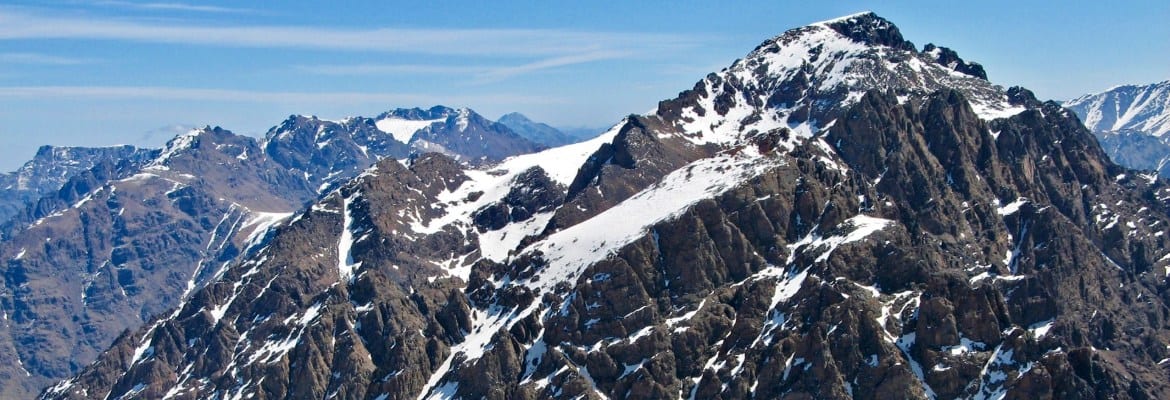
The High Atlas is North Africa's highest mountain range, stretching roughly 700 km across central Morocco and rising to Jebel Toubkal at 4,167 m. Trekking here means walking between Amazigh (Berber) villages, over high passes and through deep valleys, usually with mules carrying the bags and nights in guesthouses, family homes, refuges or camps. The most popular multi-day treks are the Toubkal Circuit (about 5–7 days), the M'Goun traverse in the Central High Atlas (about 5–7 days, often including Ighil M'Goun at about 4,071 m) and shorter village treks around Imlil and the Aït Bouguemez valley. The best seasons are spring (April–May) and autumn (September–October); summer suits the higher routes, and winter brings snow above about 2,500–3,000 m. In the Toubkal area, foreign trekkers have had to use a licensed guide since 2019. On ExpedReview, as of 23 October 2026, two operators have three verified reviews for the High Atlas trek: Active Treks Morocco (5.0★ from 2) and Altura Expeditions S.L. (5.0★ from 1). Below are the rankings and a full planning guide.
High Atlas trekking: key facts | | | |---|---| | Range length | About 700 km across central Morocco | | Highest point | Jebel Toubkal, 4,167 m | | Main trekking areas | Toubkal National Park; Central High Atlas (M'Goun, Aït Bouguemez) | | Popular treks | Toubkal Circuit, M'Goun traverse, Imlil village treks | | Typical length | 3–8 days | | Best seasons | April–May and September–October; June–August for higher routes | | Accommodation | Guesthouses, homestays, refuges and camps | | Gateway city | Marrakech | | Guide rule | Licensed guide required in the Toubkal area since 2019 | | Currency | Moroccan dirham (MAD) |
High Atlas trek guides ranked by verified reviews
Rankings use each operator's verified ExpedReview client reviews for the High Atlas trek: the star rating, adjusted so that one or two reviews, or only old ones, count for less than many recent ones. Every review is checked by hand before it is published. Data as of 23 October 2026.
| Operator | Based in | Rating here | Reviews | Latest review | Safety | Value | Food | Team spirit | Camps |
|---|---|---|---|---|---|---|---|---|---|
| Active Treks Morocco | Morocco | 5.0★ | 2 | April 2026 | 5.0 | 5.0 | 5.0 | 5.0 | 5.0 |
| Altura Expeditions S.L. | Spain | 5.0★ | 1 | July 2026 | 5.0 | 4.0 | 4.0 | 5.0 | 5.0 |
Neither operator listed a recent price at the time of writing.
What clients say
Active Treks Morocco reviewers in April 2026 described an "exceptional" planner and a knowledgeable, patient and professional team, said they felt safe and well looked after, and praised their guide as kind and thoughtful; one had booked with the company three times. An Altura Expeditions reviewer in July 2026 trekked solo and called it "an unforgettable experience". With only three reviews, ask operators for recent references too. For Toubkal itself, see our Toubkal guide.
Why trek in the High Atlas?
The High Atlas offers big mountain scenery a few hours from Marrakech, with a culture that is as much part of the trip as the landscape. Trails link villages of stone and earth houses, terraced fields and walnut groves, and you can spend each night in a different valley. The trekking is generally non-technical, the logistics are simple and costs are modest compared with the Alps or the Himalaya. It is a good first multi-day trek, and a good way to try altitude before bigger trips.
The main treks compared
| Trek | Area | Typical length | Highest point | Character |
|---|---|---|---|---|
| Imlil village treks | Toubkal National Park | 2–4 days | About 2,500–3,000 m passes | Gentle, cultural, homestays |
| Toubkal ascent | Toubkal National Park | 2–3 days | 4,167 m | Short, steep, popular |
| Toubkal Circuit | Toubkal National Park | 5–7 days | 4,167 m if summit included; high passes above 3,500 m | Remote valleys, Lac d'Ifni, summit |
| M'Goun traverse | Central High Atlas | 5–7 days | Ighil M'Goun, about 4,071 m | Quieter, gorges, nomad camps |
| Aït Bouguemez valley | Central High Atlas | 3–5 days | Passes about 2,500–3,000 m | Green valley, villages |
The Toubkal Circuit
The Toubkal Circuit loops around the Toubkal massif, usually from Imlil, crossing several high passes and descending into remote valleys before climbing Toubkal itself near the end, once you are well acclimatised. Highlights include Lac d'Ifni, a lake in a stark, rocky basin, and remote villages that see few visitors. Expect five to seven days of walking, with nights in villages, camps and the Toubkal Refuge. It is a good choice for fit trekkers who want both a summit and a real journey.
The M'Goun traverse
The Central High Atlas around Ighil M'Goun is quieter and greener than the Toubkal area. Treks often start in the Aït Bouguemez valley, known as the "Happy Valley", and cross high plateaus where nomadic herders graze their flocks in summer, before climbing M'Goun's long summit ridge and descending through gorges towards the south. The area is further from Marrakech, about four to five hours by road, so it suits trekkers with more time.
Village treks around Imlil
Shorter village treks around Imlil and the Azzaden valley follow mule paths between villages, often over passes around 2,500–3,000 m. They are ideal for families, first-time trekkers, or as a warm-up before Toubkal. Nights in family homes, with tagine and mint tea, are often the highlight.
A sample Toubkal Circuit itinerary
Itineraries differ, but this pattern gives a sense of what a week on the circuit looks like. On the first day, you drive from Marrakech to Imlil and walk over a gentle pass to a village in a neighbouring valley, with the mules carrying the luggage. On the second and third days, you cross higher passes into remote valleys, staying in villages or camps, and the walking becomes more serious, with long climbs and descents on rocky mule paths. Around the middle of the trek, you reach Lac d'Ifni, where many groups camp by the shore. From the lake, a long climb over a high pass leads to the Toubkal Refuge. After a night there, you climb Toubkal before dawn, return to the refuge and descend to Imlil. Some versions add a rest day or a climb of a second 4,000 m peak near the refuge. Because you reach the refuge late in the trek, you are well acclimatised for the summit, which makes the circuit a better way to climb Toubkal than the rushed two-day ascent.
Food on the trail
Food is one of the joys of trekking in Morocco. Cooks prepare breakfasts of bread, honey, jam, eggs and coffee; lunches of salads, bread, sardines and fruit; and dinners of soup, tagines and couscous, followed by fresh fruit. Mint tea is served everywhere, often with great ceremony. Water from village taps and streams should be filtered or treated. Tell your operator in advance about any dietary needs; vegetarian food is easy to arrange.
Safety
The main risks in the High Atlas are falls on loose ground, heat in summer, cold and snow in winter, sudden storms and flash floods in narrow gorges, and altitude on the higher routes. Follow your guide's advice, carry enough water, start early in summer to avoid the midday heat, and keep an eye on the weather. Mobile phone coverage is patchy in remote valleys, so operators should carry a satellite device or have a clear plan for emergencies. Make sure your travel insurance covers trekking at the altitudes you plan to reach and evacuation from remote areas.
Cost
The High Atlas is one of the most affordable multi-day trekking regions near Europe. Costs depend on group size, the length of the trek, accommodation and whether camping is involved. A typical package includes transfers, a licensed guide, a cook, mules and muleteers, all meals on the trek and accommodation. Private trips and treks in remote areas with full camping cost more. Budget extra for nights in Marrakech, tips for the trekking crew, which are customary, and drinks. Neither operator reviewed here listed a recent price at the time of writing, so ask for current quotes.
Combining a trek with the rest of Morocco
A High Atlas trek fits easily into a wider trip. Many trekkers spend a few days in Marrakech before or after, explore the kasbahs of Aït Benhaddou and the Draa Valley over the Tizi n'Tichka pass, or visit the dunes of Merzouga or Zagora. In May, the Valley of Roses near Kelaat M'Gouna celebrates the rose harvest, a good extension to a M'Goun trek. Those with more time can link the Toubkal area with the Siroua massif to the south for a quieter trek across volcanic uplands.
Best time to trek in the High Atlas
| Season | Conditions |
|---|---|
| Spring (April–May) | Green valleys, blossom, snow possible on high passes in April |
| Summer (June–August) | Hot in the valleys; best for high routes like M'Goun; afternoon storms |
| Autumn (September–October) | Stable weather, clear skies, harvest season |
| Winter (November–March) | Snow above about 2,500–3,000 m; cold nights; lower valley treks still possible |
Spring and autumn are the best all-round seasons for most treks. Summer is hot at lower levels but good for the highest treks. In winter, high routes need crampons and an ice axe, so stick to lower valleys unless you have winter skills and a qualified guide.
Guides, mules and logistics
Most High Atlas treks are run with a local guide, a cook and muleteers with mules carrying the luggage, food and camping gear. You walk with a daypack. In the Toubkal area, a licensed guide has been required for foreign trekkers since 2019, and hiring one is a good idea everywhere for navigation, language and safety. Licensed guides can also arrange homestays, refuges and permits.
Accommodation
- Guesthouses (gîtes) and homestays: simple rooms or dormitories in village homes, with shared meals.
- Refuges: mountain huts in the Toubkal area, with dormitories and meals.
- Camps: on longer or remote treks, operators set up tents and kitchen tents.
How hard is a High Atlas trek?
Most treks involve five to seven hours of walking a day on rocky paths, with climbs and descents of 500–1,000 m. Fit walkers manage well, but the terrain is steep and loose in places. Altitude can be an issue on routes over 3,000 m, so plan gradual ascents. See acute mountain sickness.
Training
Train for six to eight weeks with regular hiking, running or cycling and weekend hikes on hilly terrain with a light pack. Practise downhill walking too, and use trekking poles. See our mountaineering training guide.
What to bring
Walking boots, trekking poles, a daypack, layers for cold mornings and evenings, a warm jacket, waterproofs, a sun hat and sunglasses, sunscreen, a head torch, a water bottle and filter or purification tablets, and a sleeping bag for camps and refuges. In winter, add warmer layers and, for high routes, crampons and an ice axe. See how to choose mountaineering boots.
Culture and responsible trekking
The High Atlas is home to Amazigh communities whose way of life is closely tied to the land. Dress modestly, especially in villages; ask before taking photos of people; and accept tea when offered, as hospitality is important. Carry out your rubbish, use toilets where they exist and avoid single-use plastic. Hiring local guides and muleteers and staying in homestays brings income to the valleys, many of which were hit by the Al Haouz earthquake of September 2023. Check with your operator about current conditions.
Trekking with children or as a beginner
The High Atlas is a good place for a first trek or a family trip. Shorter village treks around Imlil avoid high passes and long days, mules can carry tired younger walkers for a section if needed, and homestays give children a real insight into village life. Choose an itinerary with four to five hours of walking a day, avoid the hottest summer months and ask your operator to plan flexible days. Beginners should build up gradually, and save the Toubkal summit or the M'Goun traverse for when they are confident on long days of steep, rocky ground.
Getting there
Marrakech has direct flights from many European cities, and connections from further afield via Casablanca or European hubs.
Fly to Marrakech. Imlil is about 1.5–2 hours by road, and the Central High Atlas trailheads about four to five hours. Most operators include transfers. Bring cash in dirhams, as ATMs are scarce in the mountains.
Choosing an operator
Look for licensed local guides, clear itineraries with daily distances and heights, good mule support, well-planned accommodation and a clear plan for bad weather and emergencies. Ask about group size, solo options and what is included. See how to choose a guide.
Frequently asked questions
What is the best High Atlas trek?
For a summit and a journey, the Toubkal Circuit. For a quieter, greener trek, the M'Goun traverse. For a short cultural trip, village treks around Imlil.
When is the best time to trek in the High Atlas?
April–May and September–October. Summer suits the higher routes.
Do I need a guide?
In the Toubkal area, a licensed guide is required for foreign trekkers. Elsewhere, a guide is strongly recommended.
How long are High Atlas treks?
From two days to more than a week. Five to seven days is common for the Toubkal Circuit and M'Goun.
Is the High Atlas good for beginners?
Yes. Shorter village treks with modest daily distances are ideal for first-timers and families, with mules carrying luggage.
Can I trek solo?
You can book as a solo traveller with a private guide or join a group trek, as one ExpedReview reviewer did.
Which operator is ranked first on ExpedReview?
Active Treks Morocco, with 5.0★ from 2 verified reviews (latest April 2026), as of 23 October 2026.
Related articles
- How to choose a guide
- Best operators
- Morocco Trekking and Toubkal Guides: Verified Reviews for the High Atlas
Trekking and climbing in Morocco's High Atlas: operators ranked by verified ExpedReview client reviews for Toubkal and High Atlas treks, routes, seasons, guide rules, villages, cost and how to choose an operator.