Rumiñahui Climbing Guide: Routes, Acclimatisation, Season, Difficulty and Verified Reviews
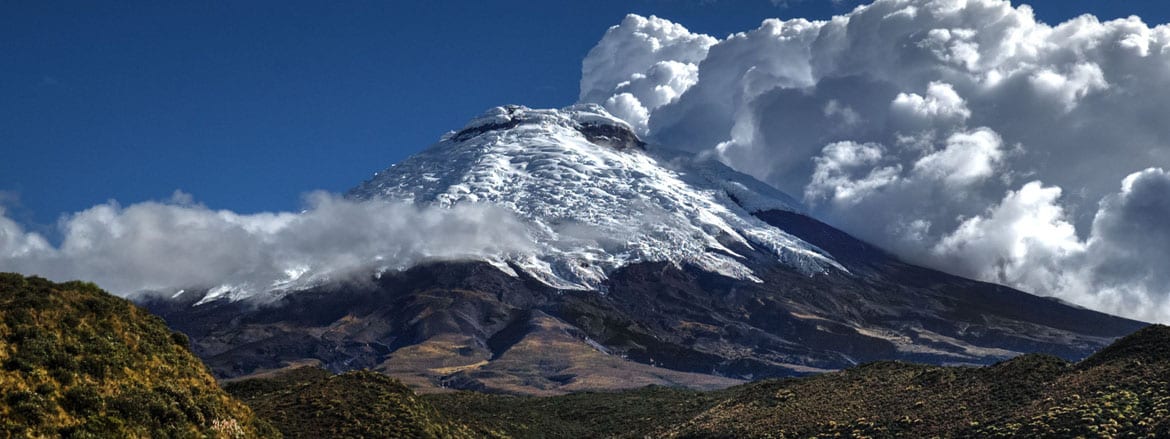
Rumiñahui (4,721 m) is an extinct, eroded volcano in Ecuador's Cotopaxi National Park, facing Cotopaxi across the Limpiopungo lagoon. It has no glacier, and most climbers do it as a long day hike and scramble from the lagoon at about 3,850 m, reaching one of its three rocky summits in about four to five hours. The final section involves loose rock and exposed scrambling. It is one of Ecuador's most popular acclimatisation climbs before Cotopaxi, and it can be climbed all year, with June to August and December to January often best. On ExpedReview, as of 23 October 2026, 1 operator has a verified client review for Rumiñahui: Summit Stoke, based in Ecuador (2.4★ from 1 review, May 2025), and the review is negative. Below are the review, routes, season, difficulty and how to choose an operator.
Rumiñahui: key facts | | | |---|---| | Elevation | 4,721 m (15,489 ft), main (south) summit | | Location | Cotopaxi National Park, about 45 km south of Quito, Ecuador | | Type | Extinct, heavily eroded stratovolcano; no glacier | | Summits | North, central and south (Cumbre Máxima) | | Start | Limpiopungo lagoon, about 3,850 m | | Typical climb | 6–9 hours return; scrambling near the top | | Season | All year; June–August and December–January often best | | Operators reviewed on ExpedReview | 1, with 1 verified review (as of 23 Oct 2026) |
Rumiñahui operators with verified reviews
ExpedReview ranks operators by their verified client reviews for each place: the star rating, adjusted so one or two reviews, or only old ones, count for less than many recent ones. Every review is checked by hand before it is published, critical reviews stay up, and operators cannot pay to appear or rank higher. Data as of 23 October 2026.
| Rank | Operator | Based in | Rating here | Reviews | Latest review | Guide-listed price |
|---|---|---|---|---|---|---|
| 1 | Summit Stoke | Ecuador | 2.4★ | 1 | May 2025 | No recent price listed |
What clients say
Summit Stoke. The only review, from May 2025, is critical. The reviewer took a beginner mountaineering course and says their guide was "very unsafe", laughed at and filmed their mistakes instead of correcting them, focused on selfies and videos rather than teaching, and did not keep a safe pace for acclimatisation. When the reviewer raised concerns, they say the owner told them to "suck it up and move on or loose money for the trip". The reviewer still recommends the trip and Ecuador, but not this company.
This is one review. The same company has two 5.0★ reviews on ExpedReview for Cotopaxi, from February 2026, describing beginner programmes in which clients felt safe and well supported. See our Cotopaxi guide. Read all reviews, and ask any operator how it handles complaints and safety concerns.
Why climb Rumiñahui?
Rumiñahui is a great first step on Ecuador's Avenue of the Volcanoes. It gets you above 4,500 m, near Cotopaxi's refuge height, without needing crampons or glacier skills, so it is ideal for acclimatisation before Cotopaxi, Cayambe or Chimborazo. The views of Cotopaxi's perfect cone across the lagoon are among the best in the country, and the páramo grassland around the base is home to wild horses, Andean foxes, deer and birds such as the Andean gull and Carunculated caracara.
The name
The mountain is named after Rumiñahui, an Inca general who led resistance to the Spanish conquest in what is now Ecuador in the 1530s. In Kichwa, the name is often translated as "stone face" or "stone eye". He is a national hero in Ecuador.
Routes
From Limpiopungo lagoon
Most climbers start at the Limpiopungo lagoon (about 3,850 m), reached by road in Cotopaxi National Park. The route crosses the páramo grassland, then climbs a long ridge of grass and sand towards the summits. Above about 4,400 m, the path becomes rocky and steeper.
The three summits
Rumiñahui has three summits:
- North summit. The easiest, often climbed as an acclimatisation hike, with a short, easy scramble at the top.
- Central summit. Reached by more difficult scrambling.
- South summit, or Cumbre Máxima (4,721 m). The highest, with steeper and more exposed scrambling on loose rock, sometimes using a rope.
Your guide will choose a summit to match your experience, acclimatisation and the conditions.
Season and weather
Rumiñahui can be climbed all year. June to August is often drier but windy, and December to January also tends to be good. Cloud often builds by late morning, so most teams start early. Rain, hail and snow are possible at any time.
Difficulty
The lower part of the climb is a long, steady hike. The upper part involves scrambling on loose volcanic rock, which can be exposed, especially on the south summit. The altitude makes it hard for anyone not yet acclimatised. You should be fit, steady on your feet and comfortable with some exposure.
Choosing an operator
- Ask about guide experience and certification, ideally ASEGUIM.
- Ask which summit is planned and how the guide will manage the scramble.
- Ask how the climb fits into your acclimatisation plan.
- Ask how the company handles concerns during a trip.
- Read reviews, including critical ones.
See our Ecuador guide.
Geology
Rumiñahui is an old, extinct stratovolcano whose original cone has been heavily eroded by ice and weather, leaving a jagged ring of rocky peaks around a wide, open caldera facing west. Unlike its neighbour Cotopaxi, which is young, symmetrical and active, Rumiñahui has not erupted in historical times. Its steep rocky towers are the remains of old lava and volcanic rock. The loose rock on the upper slopes reflects this long history of erosion, and climbers should be careful not to knock rocks onto people below.
Acclimatisation strategy
Rumiñahui fits neatly into most Ecuador programmes. A typical plan starts with a few days in Quito at about 2,850 m, including a hike up Rucu Pichincha (about 4,700 m) from the TelefériQo cable car. Climbers then move to lodges or haciendas near Cotopaxi National Park and climb Rumiñahui as a day trip, before going on to Illiniza Norte, Cayambe and Cotopaxi. Rumiñahui gets you close to the height of Cotopaxi's José Rivas refuge, so you arrive at the refuge already used to that altitude. If you feel strong symptoms of altitude sickness on Rumiñahui, such as a severe headache, nausea or loss of coordination, turn back and descend.
Sample day
- Early breakfast at a lodge near the park, then drive to Limpiopungo lagoon.
- Start walking at around 7 am on a clear trail across the páramo.
- Climb a long, steady ridge of grass and sand, with views of Cotopaxi behind you.
- Reach the base of the rocky summits after three to four hours.
- Scramble to the chosen summit, usually in under an hour.
- Descend the same way, reaching the lagoon in the early afternoon.
- Walk around the lagoon or rest before returning to the lodge.
Safety
- Loose rock. The upper slopes and summits are made of crumbly volcanic rock. Wear a helmet for the scramble, test holds before you trust them and keep groups close together to avoid rockfall.
- Weather. Cloud and rain can arrive quickly, making the rocks slippery and navigation difficult. Start early and turn back if conditions get worse.
- Altitude. At 4,721 m, altitude sickness is possible, especially early in a trip.
- Cold and sun. Temperatures near the summit can fall close to freezing, while the equatorial sun is very strong at altitude. Bring warm layers, waterproofs and high-factor sun cream.
- Navigation. The páramo is wide and open, and trails can be hard to follow in cloud. Climb with a guide or carry a GPS.
Gear
- Sturdy hiking boots with good grip on rock
- Warm layers, a waterproof jacket and trousers
- Gloves, a warm hat and a sun hat
- Sunglasses and high-factor sun cream
- A helmet for the scramble on the upper rocks
- Plenty of water and snacks, as there is no water on the route
- Trekking poles for the ascent and descent, which help a lot on the steep, sandy slopes
Getting there
Cotopaxi National Park is about two hours by road south of Quito. The main entrance is off the Pan-American Highway near Lasso, and a dirt road leads to the Limpiopungo lagoon. Most climbers travel with their operator, but private transfers can also be arranged from Quito or nearby towns such as Latacunga and Machachi. There are several lodges and haciendas around the park.
Who Rumiñahui suits
Rumiñahui suits fit hikers who want a challenging day climb with amazing views, and climbers acclimatising for Ecuador's glaciated volcanoes. The north summit is a good choice for beginners with a guide, while the south summit needs experience scrambling on exposed rock. Climbers who are nervous of heights should discuss the route with their guide beforehand.
Rumiñahui, Cotopaxi and the Illinizas
Rumiñahui is usually one of the first climbs of an Ecuador programme. After it, many climbers move on to Illiniza Norte (about 5,126 m), a higher non-glaciated scramble, then to glaciated peaks such as Cayambe and Cotopaxi, and finally Chimborazo. See our Cayambe guide and Chimborazo guide.
Cotopaxi National Park
Cotopaxi National Park, created in 1975, is one of Ecuador's most visited protected areas. It covers páramo grassland, wetlands and volcanic landscapes around Cotopaxi, Rumiñahui and Sincholagua. The Limpiopungo lagoon, at the foot of Rumiñahui, is a shallow wetland with reeds and birdlife, and an easy trail of about an hour circles part of it. It is a popular spot for photographs of Cotopaxi on clear mornings, and an easy walk for a rest or acclimatisation day. Park rules change from time to time, especially when Cotopaxi's volcanic activity increases, so check current access with your operator. Respect the fragile páramo by staying on paths, taking all rubbish with you and keeping a distance from wild horses and other animals.
Cost
ExpedReview has no recent guide-listed price for Rumiñahui. A guided day climb from a lodge near the park is usually much cheaper than a glacier climb, and it is often included in longer Ecuador programmes. Prices depend on group size, transport, whether park fees and a helmet are included, and the guide's experience. Ask exactly what is included and whether the guide is certified.
Training
You do not need technical mountaineering experience for Rumiñahui, but good fitness will make it more enjoyable. Train with long hill walks, ideally with some rocky scrambling, and build leg strength for the steep descent. If you are not used to exposure, try some easy scrambles at home before your trip.
Photography
Rumiñahui is one of the best places to photograph Cotopaxi. The early morning is usually clearest, with the volcano's snow cone reflected in the Limpiopungo lagoon on still days, and the light on Cotopaxi from the ridge of Rumiñahui is spectacular. Cloud usually builds by late morning, so start early if you want clear views. Keep cameras and phones secure during the scramble so your hands are free for the rock.
Frequently asked questions
How hard is Rumiñahui?
The lower part is a long hike, but the summits need scrambling on loose rock, and the altitude is challenging.
How long does it take to climb Rumiñahui?
About 6 to 9 hours return from Limpiopungo lagoon.
Do I need crampons on Rumiñahui?
Usually not, as there is no glacier, though snow can fall at any time.
Is Rumiñahui good acclimatisation for Cotopaxi?
Yes. It is one of the most popular acclimatisation climbs before Cotopaxi.
Which operators have verified reviews for Rumiñahui?
As of 23 October 2026, Summit Stoke (2.4★ from 1 review).
Which Rumiñahui summit should I climb?
The north summit is the easiest. The south summit, or Cumbre Máxima, is the highest but needs more exposed scrambling on loose rock.
Where is Rumiñahui?
In Cotopaxi National Park, about two hours by road south of Quito, opposite Cotopaxi across the Limpiopungo lagoon.
Do I need a guide for Rumiñahui?
A guide is strongly recommended, especially for the scramble to the higher summits and for navigation in cloud. Check current national park rules with your operator.
When is the best time to climb Rumiñahui?
It can be climbed all year, but June to August and December to January are often best. Start early to avoid afternoon cloud.
Is Rumiñahui a volcano?
Yes, it is an extinct, heavily eroded volcano with no glacier.
Can I climb Rumiñahui and Cotopaxi on the same trip?
Yes. Most Ecuador programmes climb Rumiñahui a few days before Cotopaxi, as both are in the same national park.
Can operators pay to rank higher on ExpedReview?
No. Operators cannot pay to appear, rank higher or have reviews removed.
Related articles
- How to choose a guide
- Best operators
- Ecuador Climbing Guides: Verified Reviews for Cotopaxi, Chimborazo and Cayambe
Climbing Ecuador's volcanoes: operators ranked by verified ExpedReview client reviews for Cotopaxi, Cayambe, Chimborazo and Rumiñahui, the main peaks, acclimatisation, season, volcanic activity, guides, cost and how to choose an operator.