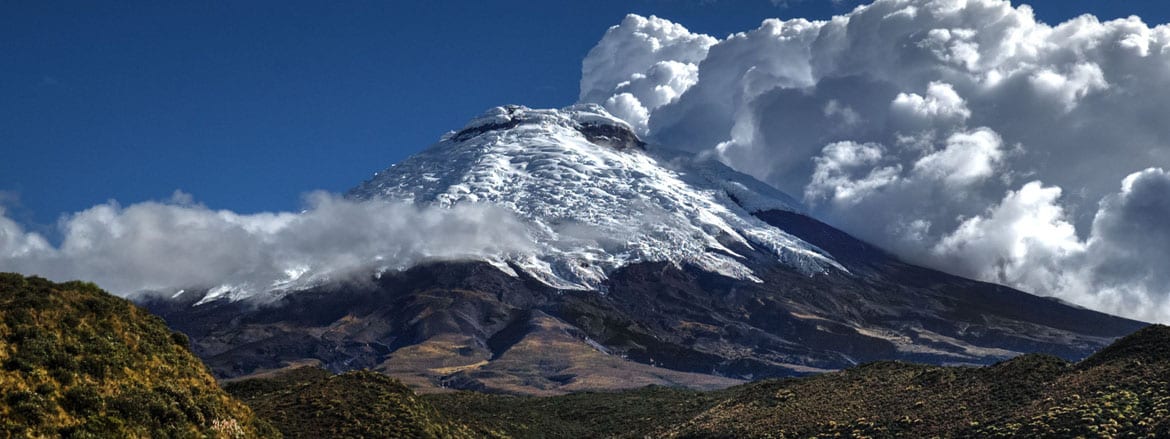
Ecuador Climbing Guides: Verified Reviews for Cotopaxi, Chimborazo and Cayambe
By Blake Penson, Founder of ExpedReview · Everest summiter · Seven Summits climber · 20-year mountaineer · Industry expert
Ecuador is one of the best places in the world to climb high, glaciated volcanoes, with several peaks over 5,000 m within a few hours' drive of Quito. The big three are Chimborazo (6,263 m), Cotopaxi (5,897 m) and Cayambe (5,790 m); most climbs are glaciated but not very technical, and are reached from mountain huts after acclimatising on lower peaks such as Rumiñahui. Climbing is possible all year, with December to January and June to August often considered best. On ExpedReview, as of 23 October 2026, 4 operators have 12 verified client reviews in Ecuador across 4 places. Ranked first is Climbing The Seven Summits (4.9★ from 7 reviews, latest February 2025), followed by Summit Stoke (4.1★ from 3 reviews, latest February 2026) and Ian Taylor Trekking (5.0★ from 1 review, latest July 2024). Below are the rankings, then a guide to climbing in Ecuador.
Ecuador: key facts | | | |---|---| | Highest peak | Chimborazo, 6,263 m | | Most popular climb | Cotopaxi, 5,897 m (active volcano) | | Other major peaks | Cayambe (5,790 m), Antisana (5,704 m), Illiniza Sur (about 5,248 m) | | Gateway | Quito, about 2,850 m | | Acclimatisation peaks | Pasochoa, Rucu Pichincha, Rumiñahui, Illiniza Norte, Imbabura | | Season | Year-round; December–January and June–August often best | | Volcano status | Monitored by the Instituto Geofísico (IG-EPN) | | Operators reviewed on ExpedReview | 4, with 12 verified reviews (as of 23 Oct 2026) |
Ecuador guides ranked by verified reviews
Rankings use each operator's verified ExpedReview client reviews in Ecuador: the star rating, adjusted so that one or two reviews, or only old ones, count for less than many recent ones; ties go to the operator with more reviews. Every review is checked by hand before it is published, critical reviews stay up, and operators cannot pay for a better position. Data as of 23 October 2026.
| Rank | Operator | Based in | Rating here | Reviews | Reviewed for | Latest review |
|---|---|---|---|---|---|---|
| 1 | Climbing The Seven Summits | United States | 4.9★ | 7 | Cayambe (6), Cotopaxi (1) | February 2025 |
| 2 | Summit Stoke | Ecuador | 4.1★ | 3 | Cotopaxi (2), Rumiñahui (1) | February 2026 |
| 3 | Ian Taylor Trekking | – | 5.0★ | 1 | Cotopaxi (1) | July 2024 |
| 4 | Kobler & Partner | Switzerland | 5.0★ | 1 | Chimborazo (1) | January 2020 |
Climbing The Seven Summits leads clearly, with the most reviews, mostly from its Ecuador volcanoes programme. Ian Taylor Trekking and Kobler & Partner have a perfect average but only one review each, and Kobler & Partner's is from 2020.
What clients say
Climbing The Seven Summits reviewers from February 2025, on a three-volcano programme, described excellent planning, a warm team atmosphere and "a complete sense of security and support" on three challenging mountains. One praised the briefing calls before signing up and a well-structured plan aimed at success; another said the Avenue of the Volcanoes was an incredibly beautiful high-altitude landscape. An earlier reviewer said the company organised a last-minute trip with a glacier course for an upcoming expedition and a summit of Cotopaxi, with a highly praised guide. Summit Stoke's reviews are mixed. Two 2026 reviewers of its beginner programmes were delighted: one with almost no prior experience said the local guide was amazing and they felt safe on all the climbs, and another described a well-organised, extraordinary multi-week beginner expedition with knowledgeable, fun and professional guides. But a May 2025 reviewer of a beginner course on Rumiñahui rated it 2.4 out of 5 and called the guide unsafe, saying he laughed at and filmed their mistakes instead of correcting them. Ian Taylor Trekking's reviewer summited Cotopaxi in 2024 and praised superb hotels and a highly experienced guide.
The main peaks
Chimborazo (6,263 m)
Chimborazo is Ecuador's highest mountain, an extinct volcano in the centre of the country. Because the Earth bulges at the equator, its summit is the farthest point on Earth's surface from the planet's centre. Most climbers use the normal route from the Whymper or Carrel huts, crossing rocky ground and a glacier to the Veintimilla summit and then a plateau to the slightly higher Whymper summit. It is a long, cold and serious climb, usually the last of a trip.
Cotopaxi (5,897 m)
Cotopaxi is the most popular climb in Ecuador, a near-perfect cone with a glacier and a crater at the top, in Cotopaxi National Park south of Quito. It is also one of the world's most active volcanoes: it erupted in 2015 and was closed to climbers until 2017, and renewed activity from late 2022 led to further restrictions. Always check its current status before planning a climb.
Cayambe (5,790 m)
Cayambe, north-east of Quito, is the highest point on the equator, which crosses its southern slopes, and the only place on the equator with permanent snow and ice. It is glaciated with crevasses, and is often climbed as a training peak before Cotopaxi or Chimborazo; six of Climbing The Seven Summits' reviews here are for Cayambe.
Acclimatisation peaks
Lower peaks such as Pasochoa (about 4,200 m), Rucu Pichincha (about 4,700 m), Rumiñahui (about 4,712 m) and Illiniza Norte (about 5,126 m) are used to acclimatise before the glaciated volcanoes. Illiniza Sur and Antisana are more technical and are for experienced climbers.
Acclimatisation
The biggest challenge in Ecuador is altitude. You can drive from Quito to a hut at around 4,800 m in a few hours, which makes it easy to go too high too fast. Good programmes start in Quito at about 2,850 m, then climb progressively higher peaks over a week or more before attempting Cotopaxi or Chimborazo. Summit nights usually start around midnight from the hut, to climb while the snow is firm.
When to go
Ecuador's mountains can be climbed year-round because the country sits on the equator. Many guides consider December to January and June to August the best periods, but conditions vary each year, and the weather on the volcanoes is often cloudy and windy. Daylight is about 12 hours all year. The eastern slopes of the Andes catch moist air from the Amazon, so peaks such as Cayambe and Antisana are often wetter and cloudier than those to the west, and snow conditions can vary a lot between neighbouring volcanoes in the same week. A flexible plan, with spare days, gives the best chance of reaching the summits.
Volcanic activity
Several of Ecuador's mountains are active volcanoes, and their status can change at short notice. The Instituto Geofísico of the Escuela Politécnica Nacional (IG-EPN) monitors them and publishes alerts, and the authorities announce park and route closures. Ask your operator how they track volcanic status and what alternative peaks they offer if a mountain is closed.
A short history
Ecuador's volcanoes have attracted scientists and climbers for more than two centuries. In 1802, the German naturalist Alexander von Humboldt climbed high on Chimborazo, then thought to be the highest mountain in the world, and his writing made the Avenue of the Volcanoes famous; the name for the line of peaks along the central valley is often credited to him. The first ascent of Cotopaxi was made in 1872 by the German geologist Wilhelm Reiss and the Colombian Ángel Escobar. In 1880, the English climber Edward Whymper, famous for the first ascent of the Matterhorn, made the first ascent of Chimborazo with the Italian guides Jean-Antoine and Louis Carrel, and also climbed Cayambe and other peaks on the same expedition. The two huts on Chimborazo are named after Whymper and Carrel. Today, Ecuador is a training ground for climbers from around the world, with a well-developed network of huts, hotels and local guides.
A typical programme
Many guided programmes follow a similar pattern over about two weeks. After two or three days in Quito, at about 2,850 m, with walks and a hike or cable-car trip up Rucu Pichincha, the team climbs one or two acclimatisation peaks, such as Pasochoa, Rumiñahui or Illiniza Norte, staying in haciendas or mountain lodges between climbs. Some programmes include a day of glacier training on Cayambe or Cotopaxi, covering crampon technique, self-arrest and rope travel. Then come the big volcanoes, usually Cayambe or Cotopaxi first, and Chimborazo last, when climbers are best acclimatised. Each summit climb usually starts from a hut around midnight and returns by the early afternoon. Rest days between climbs are important, and good operators build in spare days for bad weather.
Gear
On the glaciated volcanoes, you need mountaineering boots that take crampons, insulated layers, a waterproof shell, warm gloves and mittens, a helmet, a harness, an ice axe and crampons, glacier glasses and sunscreen for the strong equatorial sun. Operators often rent technical gear in Quito. Summit nights are cold and windy, often well below freezing, so bring warmer clothing than you might expect for a country on the equator.
Hazards
The main hazards are altitude sickness, crevasses, cold and wind, poor visibility and, on some routes, rockfall and avalanches. Altitude sickness is a serious risk because the huts are so easy to reach by car; symptoms such as a severe headache, vomiting, breathlessness at rest or confusion mean you should descend. On the glaciers, crevasses are hidden by snow, so teams climb roped together. Warming temperatures have made the glaciers smaller and some routes more broken, and conditions can change from year to year; good local guides know the current state of each route.
Getting there
Most climbers fly into Quito's Mariscal Sucre International Airport. The main peaks are within about two to four hours' drive of Quito, and most operators provide transport. Make sure your travel insurance covers mountaineering above 5,000 m and rescue.
Who Ecuador suits
Ecuador suits several kinds of climber. For beginners, it is one of the best places to make a first climb above 5,000 m, with a guide, on glaciated peaks that are not very technical and are close to hotels and roads. For climbers preparing for Aconcagua, Denali or a Himalayan peak, it is a place to test how your body copes with altitude and to practise glacier skills in a short trip. Several reviewers here were doing just that, including one who needed a glacier course for an upcoming expedition. Experienced climbers can try more technical routes, such as Illiniza Sur or Antisana, or less-climbed routes on Chimborazo. If you have never been above 4,000 m, choose a longer programme with more acclimatisation, and consider stopping at Cotopaxi or Cayambe rather than going for Chimborazo on your first trip.
Beyond the mountains
Ecuador is a small country with a lot to see, and many climbers add a few days to their trip. Quito's historic centre was one of the first places listed as a UNESCO World Heritage Site, in 1978. Further afield, the Galápagos Islands, the Amazon rainforest, the hot springs and waterfalls around Baños, and the cloud forests of Mindo are all popular. Plan any visits to lower altitudes after your climbs, so that you do not lose your acclimatisation.
Guides and safety
Ecuador has a strong guiding community, including Ecuadorian guides certified by the national association, ASEGUIM. Ask whether your guides are certified, how many clients each guide takes on glaciated peaks, and how they handle altitude sickness and turnarounds. The critical Summit Stoke review is a reminder to ask about a guide's teaching approach on beginner courses.
Questions to ask before you book
Before you book, ask the operator how many acclimatisation days the programme includes, and on which peaks; how many clients each guide takes on the glacier, since small rope teams are safer on the bigger volcanoes; whether the guides are ASEGUIM certified; where you will sleep before each summit; what happens if a volcano is closed or the weather is bad; and what is included in the price. Ask also for the summit success rate in recent seasons, and how the operator decides when to turn back. Compare the answers with what reviewers say.
Cost and how to choose
Ecuador is one of the most affordable places to climb above 5,000 m, and trips range from a single guided climb from Quito to multi-week programmes with several volcanoes and a glacier course. Ask what is included, such as hotels, huts, transport, park fees, equipment rental and meals. Choose an operator with an acclimatisation plan that suits your experience, certified guides and good reviews. Our Ecuador volcanoes guide has more detail.
Frequently asked questions
What is the best time to climb in Ecuador?
All year, with December to January and June to August often considered best.
Is Cotopaxi open to climbers?
It depends on volcanic activity. Cotopaxi was closed after its 2015 eruption and restricted again from late 2022; check its current status before you book.
How high is Chimborazo?
6,263 m. Its summit is the farthest point on Earth's surface from the planet's centre.
Do I need experience to climb in Ecuador?
Many operators run beginner programmes with glacier training, but you need good fitness and a careful acclimatisation plan.
Which operator is ranked first in Ecuador on ExpedReview?
As of 23 October 2026, Climbing The Seven Summits is ranked first, with 4.9★ from 7 verified reviews, the latest from February 2025.