Cayambe Climbing Guide: Route, Refuge, Season, Difficulty and Verified Reviews
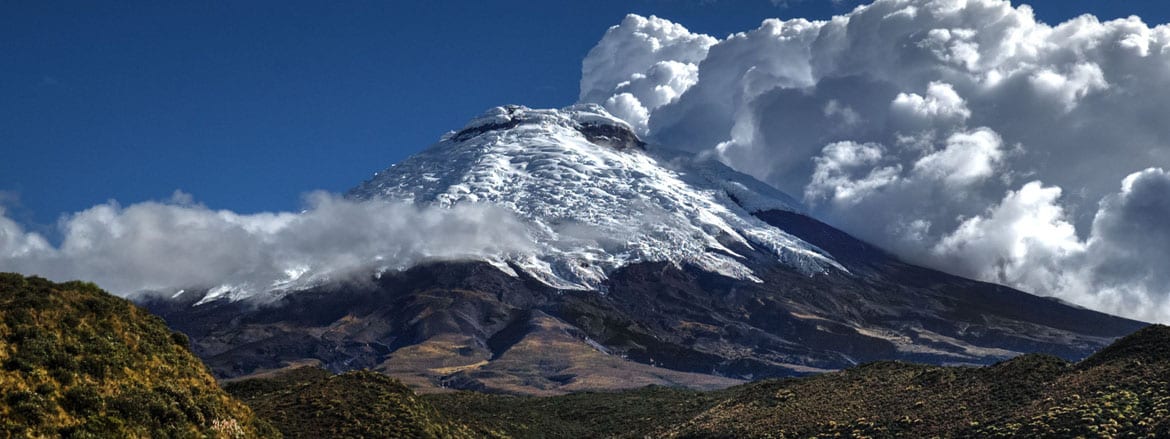
Cayambe (5,790 m), north-east of Quito, is Ecuador's third-highest mountain and the highest point on the equator: its south slopes are the only place on the equator with permanent snow and ice. Climbers use the Ruales-Oleas-Berge refuge at about 4,600 m and make a night-time ascent of about 7 to 9 hours on a heavily crevassed glacier, with some steeper snow and ice near the top. It is more serious than Cotopaxi because of crevasses, seracs and frequent bad weather, and climbers usually attempt it as part of a one- to two-week programme of acclimatisation hikes and volcano climbs. Climbs are possible all year, with December to February and June to August often best. On ExpedReview, as of 23 October 2026, 1 operator has 6 verified client reviews for Cayambe: Climbing The Seven Summits, based in the US (4.9★, latest February 2025, from US$4,995). Below are the reviews, the route, season, difficulty and how to choose an operator.
Cayambe: key facts | | | |---|---| | Elevation | 5,790 m (18,996 ft) | | Location | Eastern Cordillera, Cayambe Coca National Park, about 70 km north-east of Quito | | Type | Glaciated stratovolcano, considered active | | First ascent | 1880: Edward Whymper with Jean-Antoine and Louis Carrel | | Base | Ruales-Oleas-Berge refuge, about 4,600 m | | Summit day | About 7–9 hours up, 3–4 hours down | | Season | All year; December–February and June–August often best | | Operators reviewed on ExpedReview | 1, with 6 verified reviews (as of 23 Oct 2026) |
Cayambe operators with verified reviews
ExpedReview ranks operators by their verified client reviews for each place: the star rating, adjusted so one or two reviews, or only old ones, count for less than many recent ones. Every review is checked by hand before it is published, and operators cannot pay to appear or rank higher. Prices are set by the operators themselves. Data as of 23 October 2026.
| Rank | Operator | Based in | Rating here | Reviews | Latest review | Guide-listed price |
|---|---|---|---|---|---|---|
| 1 | Climbing The Seven Summits | United States | 4.9★ | 6 | February 2025 | From US$4,995 (updated December 2025) |
What clients say
Climbing The Seven Summits. The six reviews were all posted in February 2025 and describe multi-peak Ecuador programmes rather than Cayambe alone. One reviewer calls it "an outstanding experience at all levels", from planning to "a warm team atmosphere" and three summits "with a complete sense of security and support". Another says safety "was always a priority" throughout. One client who climbed Cayambe and Cotopaxi in November 2018 with guide Mike Hamill praises seamless logistics, "outstanding" accommodation and food on and off the mountain and "amazing" local partner guides. Another was moved to write a poem about the Avenue of the Volcanoes, describing clear night skies and sunrise from the summit.
Why climb Cayambe?
Cayambe gives you a summit right on the equator, and its glaciers and crevasse fields feel more like a big Himalayan or Andean mountain than many of Ecuador's other volcanoes. It is a great training peak for climbers heading to higher mountains, and it is usually climbed as part of an Ecuador volcano programme, often before Cotopaxi and Chimborazo.
History
Edward Whymper, best known for the first ascent of the Matterhorn, made the first ascent of Cayambe in 1880 with the Italian guides Jean-Antoine and Louis Carrel, during the same expedition on which they made the first ascent of Chimborazo. The name Cayambe is thought to come from local indigenous languages, and the nearby town of Cayambe is known for its bizcochos (biscuits) and the Inti Raymi festival.
The normal route
Getting to the refuge
From Quito, drive about two to three hours north-east to the town of Cayambe, then up a rough track to the Ruales-Oleas-Berge refuge at about 4,600 m. Four-wheel-drive vehicles are usually needed for the final section. The refuge has bunks, a kitchen and simple meals.
Summit night
Teams usually leave around midnight or 1 am. The route climbs rocky ground above the refuge to the edge of the glacier, where climbers put on crampons and rope up. It then climbs the glacier, weaving through crevasses and below seracs, to a steeper section near the summit. Conditions change from year to year as crevasses open and close, so guides pick the route on the day. Climbers usually reach the summit at dawn, with views of Antisana, Cotopaxi and the Amazon basin on clear days. The descent follows the same route, ideally before the sun softens the snow.
Season and weather
Ecuador's volcanoes can be climbed all year, but conditions vary. Cayambe sits on the eastern side of the Andes, where moist air from the Amazon brings frequent cloud, wind and snow. December to February and June to August are often the most stable months. Expect cold, windy nights and possible whiteouts at any time of year.
Difficulty
Cayambe is more demanding than Cotopaxi. The glacier is heavily crevassed, there are serac and avalanche hazards and the weather is often poor. You need to be comfortable roped together on glaciers, walking in crampons and using an ice axe, and fit for a summit night of 10 to 13 hours in total.
Guide rules
Ecuador's rules require climbers on its main glaciated volcanoes within national parks to be accompanied by a licensed mountain guide. Ask your operator to confirm current rules and that its guides are certified by ASEGUIM, the Ecuadorian mountain guide association.
Choosing an operator
- Check guide certification and the guide-to-client ratio on the glacier, usually one guide for two clients.
- Ask about acclimatisation before Cayambe, such as hikes on Pasochoa, Rucu Pichincha or the Imbabura area.
- Ask what happens in bad weather and whether spare days are built in.
- Ask what is included, such as transfers, refuge nights, gear rental and meals.
- Read recent reviews.
For more on the region, see our Ecuador guide.
Cayambe and the equator
The equator crosses Cayambe's southern flank high on the glacier, making it the highest point on the equator and the only place on the line with permanent snow and ice. Because the Earth bulges at the equator, the summits of Ecuador's volcanoes are among the farthest points from the centre of the Earth. Chimborazo is the farthest of all, but Cayambe is the only one right on the line. On a clear day from the summit, you can look over the glaciers to the Amazon in the east and to the inter-Andean valley and Quito in the south-west.
Acclimatisation
Quito sits at about 2,850 m, which is a good first base for acclimatisation. A typical Ecuador programme spends several days hiking to gradually higher points before attempting a glaciated summit. Common acclimatisation hikes include Rucu Pichincha (about 4,700 m) above Quito, Pasochoa and the Fuya Fuya peaks near Otavalo, and Imbabura (about 4,600 m). Many programmes also spend nights at haciendas at 3,000 m or above. Climbers usually attempt Cayambe after a week or so in the country, often as a step before Cotopaxi and Chimborazo. Attempting Cayambe without acclimatisation is a common reason for failure and altitude sickness.
Dangers on Cayambe
- Crevasses. The glacier is heavily crevassed, and snow bridges can be weak. Rope teams and crevasse rescue skills are essential.
- Seracs and avalanches. Some parts of the route pass below ice cliffs, and new snow can bring avalanche danger. Guides choose routes carefully and move quickly through exposed areas.
- Weather. Cloud, wind and snow arrive frequently from the Amazon side. Whiteouts make navigation difficult on the glacier.
- Altitude illness, especially for climbers who have not acclimatised well.
- Cold. Night temperatures on the glacier can fall to −10 °C or lower, with wind chill.
Training and experience
Cayambe suits climbers who have done some glacier travel, for example on a mountaineering course, an alpine peak or Cotopaxi. Many programmes include a day of snow and ice training on the glacier before the summit attempt, covering cramponing, ice axe use, roped travel and self-arrest. Train for months with long hill days carrying a pack, stair and step work and strength training. A good level of fitness will make the long summit night much more enjoyable.
Gear
You will need:
- Mountaineering boots compatible with crampons
- Crampons, an ice axe, a harness and a helmet
- Warm layers, a down jacket, waterproof shell jacket and trousers
- Insulated gloves and mitts, a warm hat and a balaclava
- A headlamp with spare batteries
- Glacier glasses, goggles and high-factor sun cream
- A sleeping bag for the refuge
Many operators in Quito rent technical gear, so you do not need to bring everything from home.
Cost
On ExpedReview, Climbing The Seven Summits lists its Ecuador programme from US$4,995. Ecuador programmes usually cover several peaks, with guides, transport, hotels, haciendas, refuge nights and meals, so compare inclusions carefully. Shorter local trips that climb only Cayambe cost much less but need you to arrive already acclimatised.
Cayambe, Cotopaxi and Chimborazo
Most climbers do Cayambe as part of a programme with Cotopaxi and sometimes Chimborazo, Ecuador's highest peak. Cayambe is more technical than Cotopaxi but lower. Chimborazo is higher and longer, and usually comes last. See our Cotopaxi guide.
Quito and travel in Ecuador
Quito, Ecuador's capital, is a UNESCO World Heritage city with a beautifully preserved colonial centre. It has an international airport with flights from North America and Europe. The US dollar is Ecuador's official currency. Most visitors can enter without a visa for short stays, but check the rules for your passport. Petty crime is a risk in cities, so follow local advice and use registered taxis or your operator's transport.
Sample programme
A typical guided Ecuador programme that includes Cayambe might look like this:
- Arrive in Quito.
- City tour and acclimatisation in Quito.
- Hike Rucu Pichincha.
- Drive north to the Otavalo area and hike Fuya Fuya or Imbabura.
- Drive to the Cayambe refuge; glacier skills training.
- Summit night on Cayambe, then descend and rest.
- Drive to Cotopaxi National Park.
- Rest or acclimatisation hike.
- Move to the José Rivas refuge.
- Summit night on Cotopaxi.
- Return to Quito, or continue to Chimborazo.
Programmes vary a lot, and good operators build in spare days for weather.
Who Cayambe suits
Cayambe suits fit trekkers and climbers with some glacier experience who want a real high-altitude glacier climb without travelling to the Himalaya. It is a great choice for climbers preparing for Aconcagua, Denali or Himalayan peaks, as it tests crampon skills, roped travel and coping with altitude. Beginners can climb it with a good guide and training, but should expect a demanding night and be ready to turn back if conditions are poor.
The refuge
The Ruales-Oleas-Berge refuge is named after three Ecuadorian climbers who died in an avalanche on Cayambe in 1974. It sits on a rocky ridge below the glacier, with views of the mountain and, on clear evenings, the lights of the valley far below. The refuge has dormitory bunks, a dining area and a kitchen, and some operators supply their own cook. Nights are cold and short, as teams usually go to bed early and rise around midnight. Drink plenty, eat well and rest during the afternoon before the climb.
Frequently asked questions
How hard is Cayambe?
It is a moderately technical glacier climb, more demanding than Cotopaxi because of crevasses, seracs and frequent bad weather.
How long does it take to climb Cayambe?
About 7 to 9 hours up from the refuge and 3 to 4 hours down.
When is the best time to climb Cayambe?
It can be climbed all year, but December to February and June to August are often best.
Do I need a guide to climb Cayambe?
Yes. Ecuador requires climbers on its main glaciated volcanoes to go with a licensed guide.
Which operators have verified reviews for Cayambe?
As of 23 October 2026, Climbing The Seven Summits (4.9★ from 6 reviews).
Is Cayambe harder than Cotopaxi?
Yes, most climbers find Cayambe harder because of its crevasses, seracs and weather, even though it is lower.
Where do Cayambe climbs start?
From the Ruales-Oleas-Berge refuge at about 4,600 m, about three hours' drive from Quito.
Is Cayambe on the equator?
Yes. The equator crosses its southern flank, making Cayambe the highest point on the equator and the only place on it with permanent snow and ice.
Who first climbed Cayambe?
Edward Whymper, with Jean-Antoine and Louis Carrel, in 1880.
Can operators pay to rank higher on ExpedReview?
No. Operators cannot pay to appear, rank higher or have reviews removed.
Related articles
- How to choose a guide
- Best operators
- Ecuador Climbing Guides: Verified Reviews for Cotopaxi, Chimborazo and Cayambe
Climbing Ecuador's volcanoes: operators ranked by verified ExpedReview client reviews for Cotopaxi, Cayambe, Chimborazo and Rumiñahui, the main peaks, acclimatisation, season, volcanic activity, guides, cost and how to choose an operator.