Vinson Massif Guides: Verified Reviews, Cost, Route and How to Climb Antarctica's Highest Peak
Mount Vinson, at 4,892 m (16,050 ft), is the highest mountain in Antarctica and one of the Seven Summits. It lies in the Sentinel Range of the Ellsworth Mountains, about 1,200 km from the South Pole. The Normal Route is technically straightforward, with glacier travel and one steep fixed-rope headwall, but the cold, the remoteness and the cost make it a serious expedition. Almost every climber flies from Punta Arenas in Chile to the Union Glacier blue-ice runway, then on a smaller ski plane to Vinson Base Camp at about 2,100 m. The season runs from about late November to January, in 24-hour daylight, and expeditions typically take two to three weeks including weather days. On ExpedReview, as of 23 October 2026, six operators have 16 verified client reviews for Vinson. Ranked first is Climbing The Seven Summits (4.5★ from 7 reviews), followed by Antarctic Logistics & Expeditions (ALE) (4.9★ from 4) and Furtenbach Adventures (4.6★ from 2). Listed starting prices are US$55,200 (Furtenbach Adventures, June 2026) and US$56,495 (Climbing The Seven Summits, March 2026). Below are the rankings, then everything you need to plan a Vinson climb.
Vinson Massif: key facts | | | |---|---| | Height | 4,892 m (16,050 ft) | | Location | Sentinel Range, Ellsworth Mountains, West Antarctica | | Rank | Highest in Antarctica; one of the Seven Summits | | First ascent | 18 December 1966, American Antarctic Mountaineering Expedition led by Nicholas Clinch | | Standard route | Normal Route via the Branscomb Glacier | | Access | Fly Punta Arenas (Chile) to Union Glacier, then ski plane to Vinson Base Camp | | Base Camp | about 2,100 m | | Season | About late November to January | | Typical expedition length | About 2–3 weeks including weather days | | Listed starting prices on ExpedReview | US$55,200–56,495 (as of Oct 2026) | | Operators reviewed on ExpedReview | 5 listed here, with 15 verified reviews |
Guides ranked by verified reviews
Rankings use each operator's verified ExpedReview client reviews for Vinson: the star rating, adjusted so that one or two reviews, or only old ones, count for less than many recent ones. Every review is checked by hand before it is published, and critical reviews stay up. Data as of 23 October 2026.
| Operator | Based in | Rating here | Reviews | Latest review | From price |
|---|---|---|---|---|---|
| Climbing The Seven Summits | United States | 4.5★ | 7 | February 2024 | US$56,495 (updated March 2026) |
| Antarctic Logistics & Expeditions (ALE) | United States | 4.9★ | 4 | January 2020 | Not listed |
| Furtenbach Adventures | Austria | 4.6★ | 2 | February 2023 | US$55,200 (updated June 2026) |
| AAI (Alpine Ascents International) | United States | 4.0★ | 1 | January 2020 | Not listed |
| Laserer Alpin | Austria | 4.0★ | 1 | October 2021 | Not listed |
The counts on this page cover only the five operators listed above, with 15 verified reviews between them in total. Adventure Consultants also runs Vinson expeditions but had no Vinson reviews on ExpedReview at the time of writing.
Category scores from those reviews:
| Operator | Safety | Value | Food | Team spirit | Camps |
|---|---|---|---|---|---|
| Climbing The Seven Summits | 4.6 | 4.9 | 4.3 | 4.6 | 4.3 |
| ALE | 4.8 | 5.0 | 5.0 | 4.8 | 5.0 |
| Furtenbach Adventures | 5.0 | 4.5 | 4.0 | 5.0 | 4.5 |
| AAI | 3.0 | 5.0 | 4.0 | 4.0 | 4.0 |
| Laserer Alpin | 4.0 | 4.0 | 4.0 | 5.0 | 3.0 |
What clients say
Across these reviews, food was the most common topic, followed by safety and summit outcomes. Reviewers of Climbing The Seven Summits praised the guides by name, the help with qualifying for the climb and with paperwork, and the pre-trip communication; several were completing or working through the Seven Summits. A Furtenbach Adventures reviewer described the trip as "like going to the moon". A Laserer Alpin reviewer from the 2015 season said the trip was well organised and good value, and that good weather meant the team returned to Base Camp after little more than a week. An ALE reviewer highlighted what they learned from guides, rangers and teammates who had climbed the other six summits.
Why climb Vinson?
For most climbers, Vinson is part of the Seven Summits, and often one of the last because of its cost and logistics. But it is also a unique experience in its own right: a climb in the interior of Antarctica, among unclimbed peaks and vast glaciers, in constant daylight. Few people ever reach the Antarctic interior, and fewer still stand on its highest point. See our Seven Summits guide.
Getting to Vinson
Almost all Vinson expeditions use the logistics of Antarctic Logistics & Expeditions (ALE), which runs the only private camp and runway in the Antarctic interior. The journey is:
- Punta Arenas, Chile. Climbers gather for gear checks and briefings, then wait for a weather window.
- Flight to Union Glacier. A long-range jet flies about four and a half hours to a blue-ice runway at Union Glacier Camp.
- Ski plane to Vinson Base Camp. A smaller ski-equipped plane flies to Vinson Base Camp on the Branscomb Glacier, at about 2,100 m.
Weather can delay flights for days at each stage, so expeditions build in spare time. On the way home, weather can also delay the return from Base Camp and from Union Glacier.
The Normal Route, camp by camp
| Camp | Approximate altitude | Notes |
|---|---|---|
| Base Camp, Branscomb Glacier | 2,100 m | Ski-plane landing; ALE-supported camp |
| Low Camp | 2,750 m | Gentle glacier travel, hauling sleds |
| High Camp | 3,700–3,800 m | Reached by fixed ropes up a steep headwall |
| Summit | 4,892 m | Long summit day up a valley and the summit ridge |
From Base Camp, climbers haul sleds up the Branscomb Glacier to Low Camp. The next section is the steepest: a headwall of snow and ice about 1,000 m high, climbed on fixed ropes with jumars, to High Camp on a broad col. Teams often carry loads to High Camp and return to Low Camp before moving up, to acclimatise and spread the weight. Summit day climbs a long valley to the summit ridge and a short, exposed final section to the top. A round trip from High Camp usually takes eight to twelve hours.
The Normal Route is not technically difficult by alpine standards, but it is long and cold, and the headwall and summit ridge demand good crampon technique and comfort with fixed ropes.
A typical Vinson itinerary
Itineraries vary by operator, but a common pattern is:
| Day | Plan |
|---|---|
| 1–2 | Arrive in Punta Arenas; gear check, briefing and packing |
| 3 | Fly to Union Glacier, then on to Vinson Base Camp if weather allows |
| 4–5 | Move to Low Camp, hauling sleds |
| 6–8 | Carry loads up the headwall, return, then move to High Camp |
| 9–11 | Summit day when the weather allows, with spare days |
| 12–14 | Descend to Base Camp and fly to Union Glacier |
| 15+ | Fly back to Punta Arenas; spare days for weather delays |
The ExpedReview Vinson page lists an average expedition length of about 16 days, but delays can make it longer, so avoid tight onward plans.
Training for Vinson
Training for Vinson should focus on endurance and strength for long days hauling a sled and carrying a pack. A good plan includes:
- Aerobic base: four to six sessions a week of hiking, running, cycling or stair climbing, building over several months.
- Strength: legs, core and upper body, including exercises for hauling and ascending fixed ropes.
- Load carrying: weekly hikes with a heavy pack, ideally on steep terrain.
- Tyre dragging: a common way to simulate sled hauling.
- Skills: practise jumaring, crampon technique and crevasse rescue before you go.
See our mountaineering training guide.
Beyond the summit
Many climbers combine Vinson with other activities in Antarctica. Some operators offer ascents of other peaks in the Sentinel Range, such as Mount Shinn, ski expeditions, or flights to the South Pole. These add time and cost but can make the trip even more memorable. Ask your operator what is possible in your season.
Best time to climb Vinson
The season runs during the Antarctic summer, from about late November to January. There is 24-hour daylight, which makes navigation easier and allows flexible schedules, but temperatures remain extremely cold. At Base Camp, temperatures typically fall well below freezing, and higher on the mountain they can drop to −30 °C or lower, especially in wind or when the sun dips behind the ridges. Storms can pin teams in their tents for days.
Cold: the main challenge
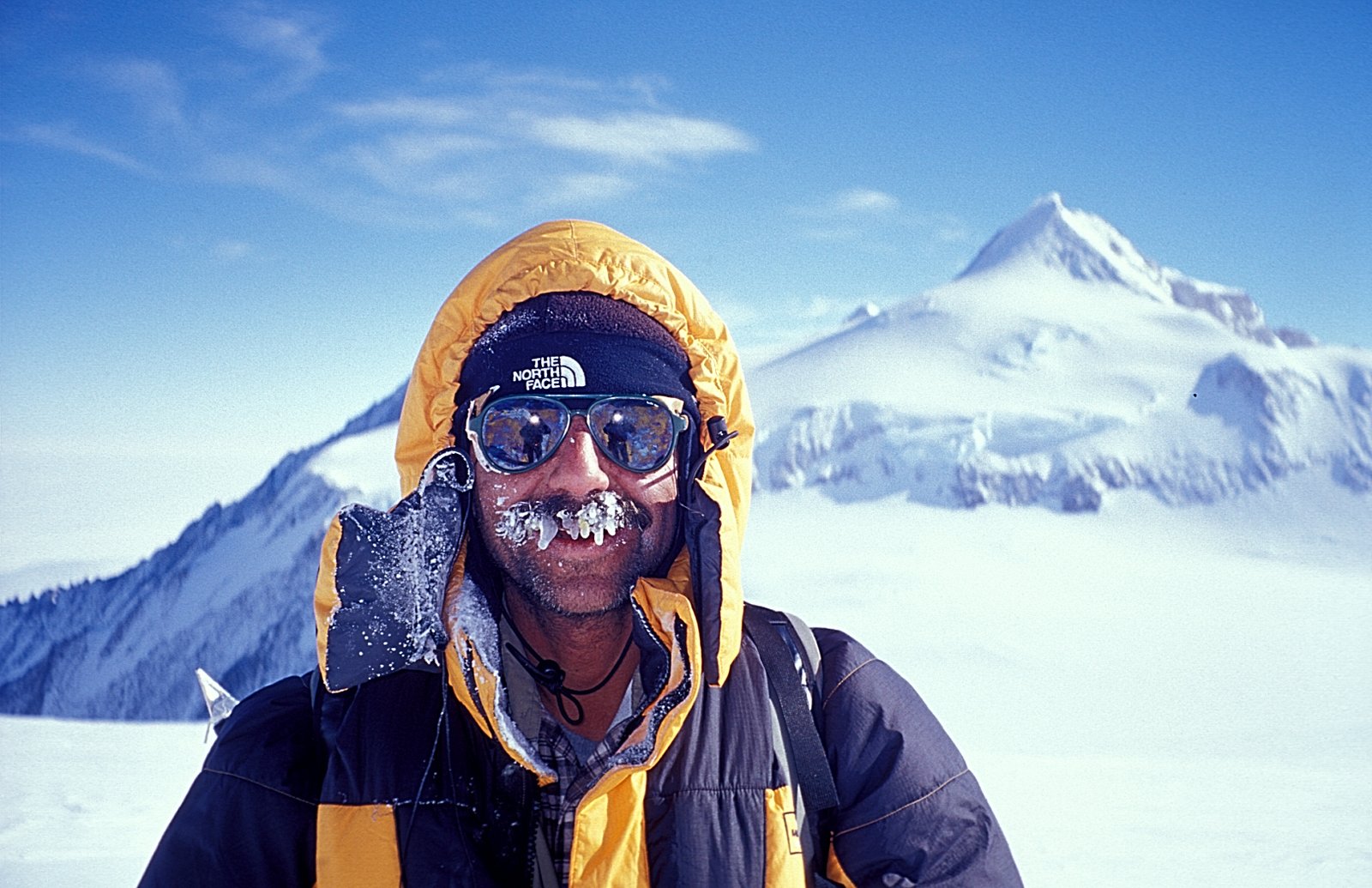
Vinson is lower than Aconcagua or Denali, but it is often colder. Because the atmosphere is thinner near the poles, Vinson also "feels" higher than its height suggests, a commonly noted effect at high latitudes. Frostbite is the main risk, so kit and cold-management skills are crucial: keeping hands, feet and face protected, managing sweat, eating and drinking enough, and keeping water and batteries from freezing.
Experience and skills you need
Before Vinson, climbers should be comfortable with:
- Glacier travel and crevasse rescue.
- Climbing steep snow and ice on fixed ropes with a jumar.
- Hauling a sled and camping in extreme cold.
- Altitude above 5,000 m, for example on Aconcagua or Kilimanjaro.
- Multi-day expeditions in remote places, ideally Denali.
Many operators require evidence of previous expeditions. See our Denali guide and Aconcagua guide.
What to bring
Kit for Vinson is similar to a Denali list, with a strong focus on cold: double or triple mountaineering boots with insulated overboots if needed, an expedition down parka and down trousers, a sleeping bag rated to about −35 °C or colder, warm mitts and multiple pairs of gloves, face protection, goggles and glacier glasses, a harness, crampons, ice axe and jumar. Operators provide tents, cooking equipment and sleds. See our Denali guide and how to choose mountaineering boots.
Cost
Vinson is one of the most expensive of the Seven Summits because of the flights into the Antarctic interior. On ExpedReview, listed starting prices are US$55,200 (Furtenbach Adventures, updated June 2026) and US$56,495 (Climbing The Seven Summits, updated March 2026). These are starting prices supplied by the operators, not quotes. Budget separately for flights to Punta Arenas, hotels while you wait, personal equipment and insurance with rescue cover. See how much it costs to climb Vinson.
How to choose a Vinson operator
Because nearly every Vinson team flies with ALE and uses the same route, the differences between operators lie in the details. Questions worth asking:
- Guide experience. How many times have the lead guides been on Vinson, and do they hold IFMGA or equivalent qualifications?
- Guide-to-client ratio. A ratio of one guide to three or four clients is common, and smaller is better on summit day.
- Team size. Smaller teams move faster and are easier to manage in the cold.
- Spare days. How many weather days are built in, and what happens if flights are delayed?
- What is included. Check flights from Punta Arenas, hotels, food, group kit and permit costs.
- Medical and rescue plans. What medical training do the guides have, and how is evacuation arranged?
- Reviews. Read verified reviews from recent seasons, and pay attention to comments on safety, food and camps.
Be wary of very low prices: the flights alone are a large part of the cost, so a much cheaper trip may mean fewer guides or fewer spare days. See how to choose a guide, and compare the rankings at the top of this page.
Permits and environmental rules
Antarctica is governed by the Antarctic Treaty and its Protocol on Environmental Protection. Expeditions need authorisation from the national authority of the organiser's country, which your operator and ALE usually arrange. Climbers must follow strict rules: all waste, including human waste, is flown out, and climbers must avoid disturbing the environment. Choosing operators who follow these rules helps keep Antarctica pristine.
Rescue and safety
Rescue in Antarctica depends on ALE's resources and the weather. ALE maintains medical staff and aircraft during the season, but evacuations can be delayed by storms for days. Teams must be self-sufficient and prepared to manage injuries, altitude illness and frostbite. Check that your insurance covers evacuation from Antarctica, which can be very expensive.
History
Vinson was first sighted from the air in 1958 and named after Carl Vinson, a US congressman who supported Antarctic exploration. The first ascent came on 18 December 1966, by the American Antarctic Mountaineering Expedition led by Nicholas Clinch, which also made the first ascents of several other peaks in the Sentinel Range. In 2004, a survey measured its height at 4,892 m. Since ALE began running flights to the interior in the 1980s and 1990s, Vinson has become a regular, though still expensive, objective for Seven Summits climbers.
Frequently asked questions
How high is Mount Vinson?
4,892 m (16,050 ft), the highest in Antarctica.
Which operator is ranked first for Vinson on ExpedReview?
Climbing The Seven Summits, with 4.5★ from 7 verified reviews (latest February 2024), as of 23 October 2026.
How much does it cost to climb Vinson?
Listed starting prices on ExpedReview are US$55,200 to US$56,495, before flights to Punta Arenas, equipment and insurance.
When is the best time to climb Vinson?
From about late November to January, during the Antarctic summer.
How long does it take to climb Vinson?
About two to three weeks including flights and weather days.
Is Vinson technically difficult?
No, but the fixed-rope headwall and summit ridge need good crampon technique, and the cold is extreme.
How do you get to Vinson?
Fly to Punta Arenas in Chile, then on ALE's flight to the Union Glacier blue-ice runway, and finally by ski plane to Vinson Base Camp at about 2,100 m.
How cold is it on Vinson?
Very cold. Temperatures higher on the mountain can fall to −30 °C or lower, especially in wind, even in the Antarctic summer.
Do I need experience to climb Vinson?
Yes. Operators expect glacier travel, fixed-rope and cold-weather camping experience, and many want previous expeditions such as Aconcagua or Denali.
Can I see the South Pole on the same trip?
Some operators offer South Pole flights or ski trips before or after Vinson, at extra cost. Ask your operator.
How are ExpedReview reviews verified?
Every review is checked by hand by our team before it is published, and critical reviews stay up.
Related articles
- How to choose a guide
- Best operators
- Antarctica Climbing Guides: Verified Reviews for Vinson Massif and Expeditions
Climbing in Antarctica: operators ranked by verified ExpedReview client reviews for Vinson Massif, how Antarctic expeditions work via Punta Arenas and Union Glacier, the season, cold, skills, cost, rules and how to choose an operator.
- How Much Does It Cost to Climb Mount Vinson? Prices, Logistics and What You Pay For (US$50,000 to US$60,000)
Listed Vinson Massif expedition prices on ExpedReview, why Antarctica costs what it does, and which operators verified climbers rate.