Antarctica Climbing Guides: Verified Reviews for Vinson Massif and Expeditions
By Blake Penson, Founder of ExpedReview · Everest summiter · Seven Summits climber · 20-year mountaineer · Industry expert
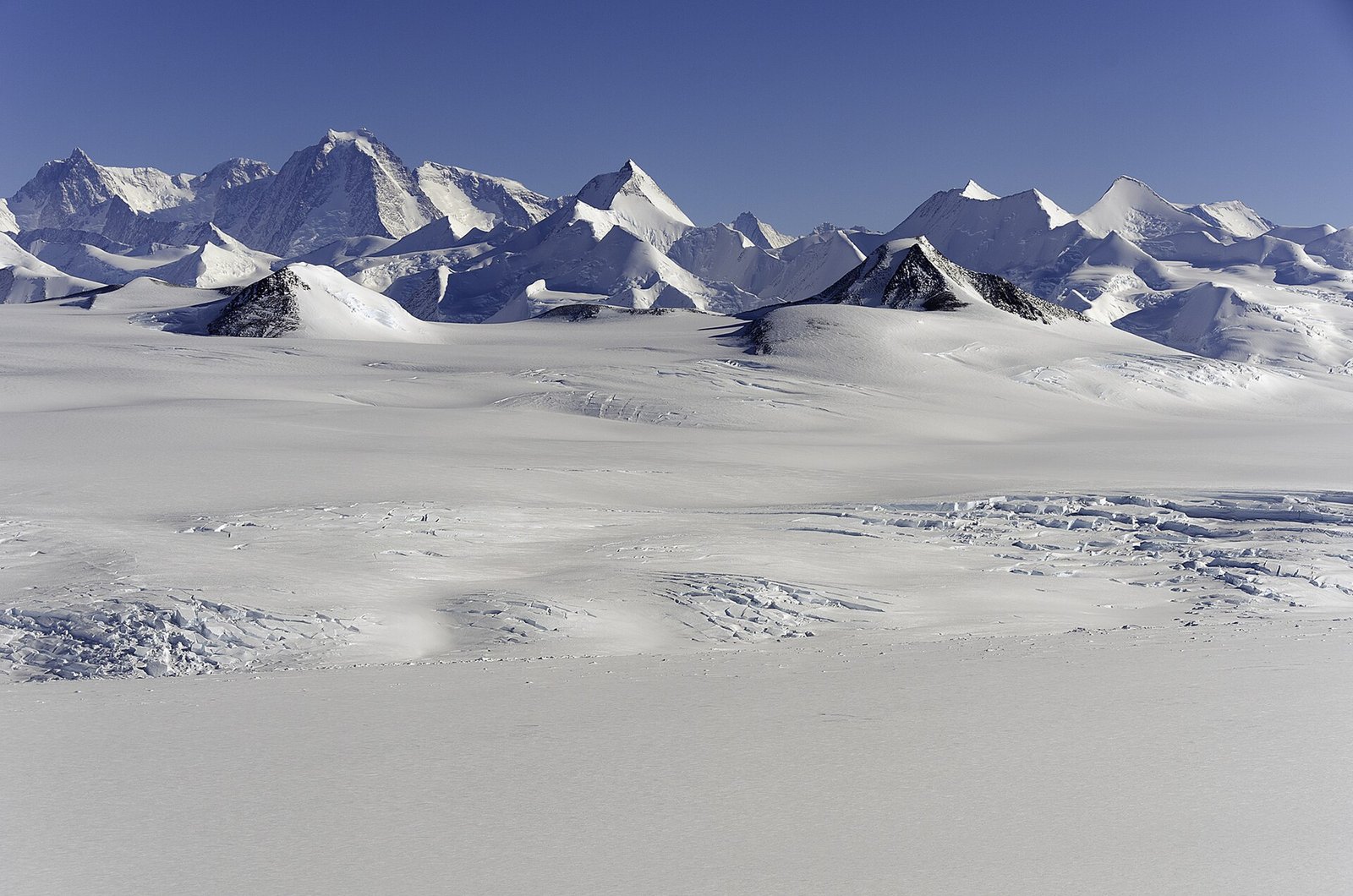
Mountaineering in Antarctica means, for almost every climber, Vinson Massif (4,892 m), the continent's highest peak and one of the Seven Summits. Expeditions run in the austral summer, from about late November to January, and nearly all fly from Punta Arenas in Chile to the blue-ice runway at Union Glacier, then by ski plane to Vinson Base Camp at about 2,100 m. The climb itself is not technical, but the cold, the isolation, the dependence on flights and the cost make it unlike any other mountain. On ExpedReview, as of 23 October 2026, 5 operators have 15 verified client reviews in Antarctica, all for Vinson Massif. Ranked first is Climbing The Seven Summits (4.5★ from 7 reviews, latest February 2024), followed by Antarctic Logistics & Expeditions (ALE) (4.9★ from 4 reviews, latest January 2020) and Furtenbach Adventures (4.6★ from 2 reviews, latest February 2023). Below are the rankings, then a guide to climbing in Antarctica.
Antarctica: key facts | | | |---|---| | Highest peak | Vinson Massif, 4,892 m (16,050 ft) | | Range | Sentinel Range, Ellsworth Mountains, West Antarctica | | Gateway | Punta Arenas, Chile | | Access | Jet to Union Glacier, then ski plane to Vinson Base Camp | | Season | About late November to January | | Typical Vinson expedition | About 2 to 3 weeks including weather days | | Operators reviewed on ExpedReview | 5, with 15 verified reviews (as of 23 Oct 2026) |
Antarctica guides ranked by verified reviews
Rankings use each operator's verified ExpedReview client reviews in Antarctica: the star rating, adjusted so that one or two reviews, or only old ones, count for less than many recent ones; ties go to the operator with more reviews. Every review is checked by hand before it is published, and operators cannot pay for a better position. Data as of 23 October 2026.
| Rank | Operator | Based in | Rating here | Reviews | Latest review |
|---|---|---|---|---|---|
| 1 | Climbing The Seven Summits | United States | 4.5★ | 7 | February 2024 |
| 2 | Antarctic Logistics & Expeditions (ALE) | – | 4.9★ | 4 | January 2020 |
| 3 | Furtenbach Adventures | Austria | 4.6★ | 2 | February 2023 |
| 4 | AAI (Alpine Ascents International) | United States | 4.0★ | 1 | January 2020 |
| 5 | Laserer Alpin | Austria | 4.0★ | 1 | October 2021 |
Climbing The Seven Summits ranks first despite a lower average than ALE, because it has more and more recent reviews. On our Vinson page, Climbing The Seven Summits lists Vinson from US$56,495 (updated March 2026) and Furtenbach Adventures from US$55,200 (updated June 2026). Alpine Ascents International and Laserer Alpin have not claimed their ExpedReview profiles.
What clients say
The Climbing The Seven Summits reviews are detailed and warm. Reviewers from the 2021–22, 2022–23 and 2023–24 seasons named their guides and praised the support they received before departure, from paperwork, including Covid documents in 2022, to check-ins a month and a week before the trip. One reviewer completing the Seven Summits on Vinson said the guides' professionalism, camaraderie and teamwork made the difference. Furtenbach Adventures' two 2023 reviewers described a lifetime experience with a "safety first" team; one compared it to going to the moon. ALE's reviewer described a perfect trip and learning from guides, rangers and teammates who had climbed the other six summits. The Laserer Alpin reviewer, writing in 2021 about a 2015 expedition, called it well guided and good value, and said lucky weather got them back to base camp in little more than a week.
How Antarctic expeditions work
Antarctica has no permanent towns, airports or rescue services in the interior, so all climbing depends on private logistics. Almost every Vinson expedition uses Antarctic Logistics & Expeditions, which runs Union Glacier Camp, the only private seasonal camp and runway in the Antarctic interior, and the ski-plane flights to Vinson Base Camp. ALE also runs its own guided Vinson expeditions, and supplies flights, camps, communications, medical support and search and rescue for other operators. That is why every operator's itinerary looks similar: the differences are in the guides, the team size, the preparation and the support before and after the climb.
Getting there
Climbers gather in Punta Arenas, at the southern tip of Chile, for gear checks and a briefing. When the weather allows, a long-range jet flies about four and a half hours to the blue-ice runway at Union Glacier, where wheeled aircraft land on hard, wind-polished ice. From Union Glacier, a ski-equipped plane takes teams to Vinson Base Camp, at about 2,100 m on the Branscomb Glacier. Weather can delay any of these flights by days, in both directions, so expect waiting time in Punta Arenas, at Union Glacier or at base camp, and plan your onward travel with plenty of slack.
Climbing Vinson
The Normal Route climbs the Branscomb Glacier to Low Camp, at about 2,800 m, then a steep headwall on fixed lines to High Camp, at about 3,700 to 3,800 m, and on to the summit on a long, cold day. It is a glacier climb with steep snow and ice on the headwall and a short, exposed summit ridge, and teams usually use sleds on the lower glacier. Most expeditions reach the summit in about a week to ten days from base camp, depending on weather. Our Vinson guide covers the route camp by camp.
Cold, light and weather
Antarctica's interior is the coldest, windiest and driest place on Earth. In the austral summer, temperatures on Vinson are typically well below freezing, and colder still with wind; summit day can be extremely cold. Because the sun never sets in December and January, there is no darkness, so teams often adjust their schedules to climb in the "warmer" part of the 24-hour day, and you will need an eye mask to sleep. The dry air and high latitude mean that the effective altitude feels higher than on a mountain of the same height nearer the equator. Storms with high winds can pin teams in camp for days, and good tent and camp skills are essential.
Skills and experience
Vinson is not technical, but it is a serious cold-weather expedition. Operators usually expect experience of multi-day glacier travel, camping on snow, fixed lines, and cold-weather climbing on peaks such as Denali, Aconcagua or a high Himalayan peak. Many Vinson climbers are working on the Seven Summits, and some, like one of our reviewers, finish them here. You must be able to manage your own warmth, food and water in extreme cold, and protect your hands, feet and face from frostbite. See our Alaska and Denali page for one of the best preparation climbs.
Gear
You will need expedition-grade clothing and boots, often the same as for an 8,000 m peak: insulated double or triple boots, an expedition down suit or jacket and trousers, heavy mittens, face protection, goggles and a sleeping bag rated to around minus 40 °C. Operators provide detailed kit lists and often check your gear in Punta Arenas. Spare gloves, hand and foot warmers, and a pee bottle are essential.
Cost
Vinson is one of the most expensive mountains in the world to climb, because of the cost of flights and logistics in Antarctica. On ExpedReview, the listed starting prices are US$56,495 (Climbing The Seven Summits, updated March 2026) and US$55,200 (Furtenbach Adventures, updated June 2026). On top of that, budget for flights to Punta Arenas, hotels while you wait, personal equipment and insurance with rescue and evacuation cover.
Rules and the Antarctic Treaty
Antarctica is governed by the Antarctic Treaty, which reserves the continent for peaceful purposes and science, and by its Protocol on Environmental Protection. Expeditions must be authorised by the national authority of their organiser, and operators follow strict rules on waste, including removing all human waste from the mountain, and on wildlife. When you book with an established operator, the permits are handled for you, but you will be briefed on the rules and expected to follow them.
Beyond Vinson
Other Antarctic mountain trips are possible but rare, and some operators offer climbs of nearby peaks in the Sentinel Range, ski expeditions such as the "last degree" to the South Pole, and visits to emperor penguin colonies. The Antarctic Peninsula, reached by ship from Argentina or Chile, is a separate region, visited mainly by expedition cruises, with some ski-touring and mountaineering voyages. These are very different trips from Vinson.
A short history of climbing in Antarctica
Vinson Massif was only discovered in 1958, from the air, by US Navy aircraft, and it was named after Carl Vinson, a US congressman who supported Antarctic exploration. The first ascent came on 18 December 1966, by the American Antarctic Mountaineering Expedition led by Nicholas Clinch, which also made the first ascents of several other peaks in the Sentinel Range. For the next two decades, the mountain was out of reach of anyone without government support. That changed in the 1980s, when private flights into the interior made it possible for paying climbers to reach the mountain, and Vinson became part of the Seven Summits challenge. Today, climbers attempt it every season, all in a short window and nearly all on the same route, which makes Antarctica one of the most controlled and best-supported climbing regions despite its remoteness.
A typical expedition, step by step
A typical Vinson expedition follows the same pattern. You arrive in Punta Arenas a couple of days before the planned flight, meet your team, and have your gear checked. Bags are weighed, since flights have strict limits. When the forecast at Union Glacier is good, you fly south, often at short notice, and spend a night or more at Union Glacier Camp before the ski-plane flight to Vinson Base Camp. From base camp, teams carry and haul loads up the Branscomb Glacier to Low Camp, rest, then climb the fixed lines to High Camp, often carrying loads first and returning to sleep lower. After a rest and acclimatisation day at High Camp, the team waits for a calm, clear day for the summit. The descent to base camp usually takes one or two days, followed by the flight back to Union Glacier and, when the weather allows, the jet back to Chile. Total time is about two to three weeks, but plan for delays at either end.
Health and safety
The main risks on Vinson are cold injury, altitude illness, crevasses on the glacier and a slip on the steep sections. Frostbite is the most common serious problem, and it can happen quickly in the wind on summit day, so good clothing, careful layering, and early action on cold hands or feet are vital. Although Vinson is lower than Aconcagua or Denali, climbers can still get acute mountain sickness, and the operator's acclimatisation plan matters. ALE provides medical staff at Union Glacier and coordinates evacuations, but any rescue depends on the weather, so help can be days away. Your insurance must explicitly cover mountaineering and evacuation from Antarctica, which some standard policies exclude. Ask your operator which policies their past clients have used, and check the exclusions before you book.
Training for Vinson
Train for long days carrying a heavy pack and pulling a loaded sled, which uses different muscles from walking uphill. Many climbers practise by dragging tyres. Build endurance over several months, and practise using your mittens, crampons and ascender on fixed lines, so that you can handle them confidently in extreme cold. Time on an expedition peak in cold conditions, such as Denali in May or a winter climb in the Alps, is the best preparation. The more self-sufficient you are in camp, the more energy you will have for the summit.
How to choose an operator
Because nearly every Vinson team flies with ALE and climbs the same route, focus on the details. Ask who the guides are and how many times they have climbed Vinson, the guide-to-client ratio, the team size, how the operator prepares you for the cold, what is included in the price, how weather delays are handled and paid for, and the cancellation policy. Read the reviews above, and our Vinson guide for more questions.
Frequently asked questions
How do you get to Vinson Massif?
Climbers fly from Punta Arenas in Chile to the Union Glacier blue-ice runway, then on a ski plane to Vinson Base Camp at about 2,100 m.
When is the season for climbing in Antarctica?
About late November to January, during the austral summer, when there is 24-hour daylight.
How much does it cost to climb Vinson?
On ExpedReview, listed starting prices are US$55,200 (Furtenbach Adventures) and US$56,495 (Climbing The Seven Summits), before flights to Chile, gear and insurance.
Is Vinson technical?
No, but it is a serious cold-weather expedition with steep fixed lines on the headwall and an exposed summit ridge.
Which operator is ranked first in Antarctica on ExpedReview?
As of 23 October 2026, Climbing The Seven Summits is ranked first, with 4.5★ from 7 verified reviews, the latest from February 2024.