Mont Blanc Climbing Guide: Goûter and Trois Monts Routes, Season, Difficulty and Verified Reviews
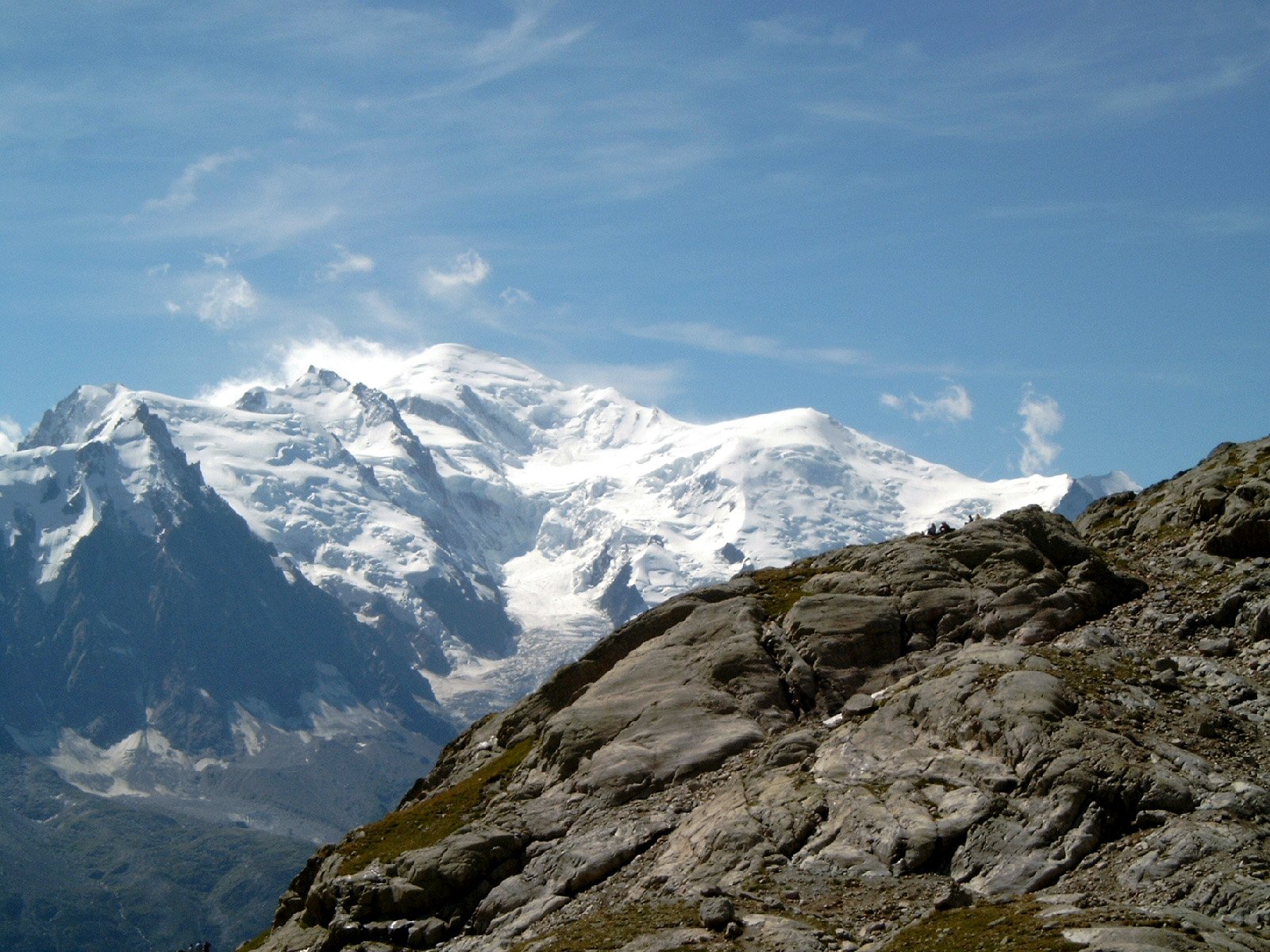
Mont Blanc, on the border of France and Italy, is the highest mountain in the Alps and Western Europe, at about 4,806 m in recent surveys (traditionally given as 4,810 m). Most guided climbers take the Goûter route from Saint-Gervais, staying at the Tête Rousse or Goûter hut and crossing the rockfall-prone Grand Couloir, or the more technical Trois Monts route from the Aiguille du Midi. Guided programmes usually take five to seven days, including acclimatisation climbs, and the season runs from mid-June to mid-September. It is an alpine climb needing fitness, crampon skills and good acclimatisation, and heat and rockfall now close or shorten some seasons. On ExpedReview, as of 23 October 2026, 4 operators have 11 verified client reviews for Mont Blanc. SummitGuides, based in Italy, ranks first (4.6★ from 8 reviews, latest October 2026, from €3,280). Below are the rankings, what clients say, the routes, season, difficulty and how to choose a guide.
Mont Blanc: key facts | | | |---|---| | Elevation | About 4,806 m in recent surveys; traditionally 4,810 m (15,781 ft) | | Location | Mont Blanc massif, France–Italy border | | First ascent | 8 August 1786: Jacques Balmat and Michel-Gabriel Paccard | | Main routes | Goûter (normal route), Trois Monts, Italian routes | | Gateways | Chamonix and Saint-Gervais (France), Courmayeur (Italy) | | Typical guided programme | 5–7 days, including acclimatisation | | Season | Mid-June to mid-September | | Operators reviewed on ExpedReview | 4, with 11 verified reviews (as of 23 Oct 2026) |
Mont Blanc operators with verified reviews
ExpedReview ranks operators by their verified client reviews for each place: the star rating, adjusted so one or two reviews, or only old ones, count for less than many recent ones. Every review is checked by hand before it is published, and operators cannot pay to appear or rank higher. Prices are set by the operators themselves. Data as of 23 October 2026.
| Rank | Operator | Based in | Rating here | Reviews | Latest review | Guide-listed price |
|---|---|---|---|---|---|---|
| 1 | SummitGuides | Italy | 4.6★ | 8 | October 2026 | From €3,280 (updated October 2026) |
| 2 | Mont Blanc Guides | Not listed | 5.0★ | 1 | March 2019 | No recent price listed |
| 3 | Adventure Consultants | New Zealand | 1.4★ | 1 | August 2022 | From US$3,730, up to US$7,210 (updated January 2026) |
| 4 | Peaks Hunter | Not listed | 1.4★ | 1 | June 2024 | No recent price listed |
What clients say
SummitGuides. Eight reviews from September and October 2026 are mostly very positive. A beginner alpinist calls the summit "the most memorable experience" and says the climb was "eye opening" about the physical and mental strength needed. Others describe a "professional, safe, and fantastic experience" and an "incredibly high standard of guiding", praising guides such as Filippo, Martin and Andrea. Two reviews show how conditions shape a trip. In one, heat made rockfall in the Grand Couloir too dangerous, so the group climbed Gran Paradiso, went about halfway up Mont Blanc and turned back. In another, bad weather led the guides to switch to three peaks on Monte Rosa. Both reviewers praised the guides for putting safety first. One review is negative, describing a poorly organised trip leader, a guide who moved too fast and an issue that was not resolved satisfactorily.
Adventure Consultants. A single August 2022 review is strongly negative. The reviewer says the trip was changed to a cheaper Gran Paradiso version and describes the guide as impatient and rude, and their complaint to the office as unresolved. This is one review only.
Peaks Hunter. A June 2024 review is strongly negative, alleging cancellations, requests for more money and dishonesty.
Mont Blanc Guides. One review from March 2019 gives 5.0★.
Why climb Mont Blanc?
Mont Blanc is the birthplace of modern mountaineering. Its first ascent in 1786 is often seen as the start of alpinism, and Chamonix remains one of the world's great climbing towns. The climb gives a real alpine experience, with glaciers, ridges, huts and a summit far above the surrounding peaks, within easy reach of European airports. For many climbers, it is the step between trekking peaks and bigger mountains such as the Andes or Himalaya, and for some it is their European summit in the Seven Summits.
History
In 1760, the Genevan scientist Horace-Bénédict de Saussure offered a reward for the first ascent. Jacques Balmat, a crystal hunter, and Michel-Gabriel Paccard, a doctor, both from Chamonix, reached the top on 8 August 1786. De Saussure himself climbed it the next year. In 1808, Marie Paradis became the first woman to reach the summit.
Routes
Goûter route
The Goûter route is the most popular. Climbers take the Mont Blanc Tramway from Saint-Gervais to the Nid d'Aigle (about 2,372 m), then hike to the Tête Rousse hut (3,167 m). From there, the route crosses the Grand Couloir, a gully notorious for rockfall, and climbs the steep rocky Aiguille du Goûter ridge to the Goûter hut at about 3,835 m. On summit day, teams leave in the early hours, climbing over the Dôme du Goûter to the Vallot emergency shelter (about 4,362 m) and along the narrow Bosses ridge to the summit.
Trois Monts route
The Trois Monts route starts from the Aiguille du Midi cable car above Chamonix and the Cosmiques hut (3,613 m). It crosses the shoulders of Mont Blanc du Tacul and Mont Maudit, with steep snow and ice, crevasses and serac danger, and reaches the summit from the Col de la Brenva. It is more technical and is often used as a descent or by experienced teams.
Italian routes
From Courmayeur, the Gonella route and others are less crowded but longer and more remote.
Season
The season usually runs from mid-June to mid-September, when huts are open. In recent hot summers, rockfall in the Grand Couloir has become so dangerous that authorities have advised against the route or huts have closed during heatwaves, so trips may change at short notice, as several reviewers above found.
Hut bookings
On the Goûter route, climbers must have a reservation at the Tête Rousse or Goûter hut, and local rules prohibit camping on most of the route. Huts book up quickly, so guides usually arrange reservations months in advance.
Difficulty
Mont Blanc's normal route is graded PD (peu difficile) in the Alpine system. It requires fitness for a long summit day of 10 to 14 hours, good crampon technique, comfort on exposed ridges and rock scrambling, and acclimatisation. Altitude illness is common among climbers who rush.
Cost
On ExpedReview, SummitGuides lists Mont Blanc from €3,280 and Adventure Consultants from US$3,730 to US$7,210. Costs include guide fees, hut nights, lifts and the tramway, and acclimatisation climbs. One guide usually takes one or two clients on Mont Blanc.
Choosing a guide
- Check the guide's qualifications. Look for IFMGA/UIAGM-certified mountain guides.
- Ask about the guide-to-client ratio. One to one or one to two is standard on the summit day.
- Ask about acclimatisation, such as climbs on Gran Paradiso or in the Monte Rosa area.
- Ask what happens in bad conditions. Good guides change plans, as the reviewers above describe.
- Read recent reviews.
See our Alps guide.
Acclimatisation
Most guided Mont Blanc programmes spend three or four days acclimatising before the summit attempt. Common options include nights at huts above 3,000 m and climbs of Gran Paradiso (4,061 m) in Italy, peaks in the Monte Rosa massif such as the Pyramide Vincent or Punta Gnifetti, or routes around the Aiguille du Midi and the Vallée Blanche. These days also let your guide check your crampon technique, fitness and pace, and teach you to move roped together. Climbers who skip acclimatisation are much more likely to suffer altitude sickness or to be turned back.
The Grand Couloir
The Grand Couloir, also called the Couloir du Goûter, is the most dangerous part of the normal route. Climbers cross it on the way between the Tête Rousse and Goûter huts, a traverse of only around 100 m, but rocks regularly fall down the gully, especially in the afternoon and in hot weather. A cable helps climbers cross, and guides time the crossing for early morning when the rock is frozen. Many accidents on Mont Blanc happen here. As glaciers and permafrost retreat in warmer summers, rockfall is getting worse, which is why guides increasingly turn back or choose alternative routes in heatwaves.
Summit day on the Goûter route
From the Goûter hut, teams usually leave around 2 or 3 am. The route climbs steadily up the snow slopes of the Dôme du Goûter, then descends slightly to the Col du Dôme and climbs to the Vallot shelter. Above Vallot, the route follows the narrow, exposed Bosses ridge to the summit, with steep drops on either side. After the summit, climbers descend the same way to the Goûter hut, and often all the way down to the Nid d'Aigle on the same day or the next. Total time is often 10 to 14 hours.
Weather and conditions
Weather on Mont Blanc can change quickly. Storms can bring strong winds, very low temperatures and poor visibility, even in summer. Guides watch forecasts closely and may wait or change plans. Summit temperatures can fall below −15 °C with wind chill, while lower down, heat can soften the snow and increase rockfall and avalanche risk.
Training and experience
You should be able to walk uphill for many hours with a loaded pack, and ideally have some experience of walking in crampons, using an ice axe and scrambling on rock. A previous climb of a 4,000 m peak or a glacier course is very useful. Train with long hill days, stair climbing and strength work, especially for the descent, which is hard on the knees.
Gear
You will need mountaineering boots suitable for crampons, crampons, an ice axe, a harness, a helmet, warm layers, a down jacket, waterproofs, gloves and mitts, glacier glasses and sun cream. Your guide will provide ropes and technical gear. Many items can be rented in Chamonix or Courmayeur.
Mont Blanc for Seven Summits climbers
There are two ways of counting Europe's highest peak in the Seven Summits. Mont Blanc is the highest peak of the Alps and Western Europe, while Elbrus, in the Caucasus, is higher and usually counted as Europe's highest. Some climbers do both. See our Elbrus guide.
Chamonix and Saint-Gervais
Chamonix is the main base for Mont Blanc climbers, with the Compagnie des Guides de Chamonix, founded in 1821, gear shops, the Aiguille du Midi cable car and the Office de Haute Montagne, which gives free advice on current conditions. Saint-Gervais, a short drive away, is the start of the Mont Blanc Tramway to the Nid d'Aigle. Geneva airport is about an hour's drive from Chamonix, making Mont Blanc one of the easiest big mountains to reach.
Who Mont Blanc suits
Mont Blanc suits fit hill walkers and trekkers who want to step into alpine climbing with a guide, and climbers building experience for higher mountains. It is not a good first mountain for someone uncomfortable with heights or exposure, because the Aiguille du Goûter ridge and the Bosses ridge are steep and airy. If you are unsure, start with a guided alpine course or an easier 4,000 m peak, such as Gran Paradiso or the Breithorn, before attempting Mont Blanc.
Frequently asked questions
How hard is Mont Blanc?
The normal route is graded PD. It is not highly technical, but it is long, high and exposed, with rockfall danger in the Grand Couloir.
How long does it take to climb Mont Blanc?
Guided programmes usually take five to seven days, including acclimatisation.
When is the best time to climb Mont Blanc?
Mid-June to mid-September, when huts are open.
Do I need a guide for Mont Blanc?
It is not required, but strongly recommended for climbers without alpine experience.
Which operators have verified reviews for Mont Blanc?
As of 23 October 2026, SummitGuides (4.6★ from 8), Mont Blanc Guides (5.0★ from 1), Adventure Consultants (1.4★ from 1) and Peaks Hunter (1.4★ from 1).
What is the Grand Couloir?
A gully on the Goûter route between the Tête Rousse and Goûter huts, known for rockfall. Guides cross it early in the morning, when the rock is frozen.
Do I need to book huts for Mont Blanc?
Yes. On the Goûter route you need a hut reservation, and camping is restricted. Guides usually book months ahead.
How much does it cost to climb Mont Blanc with a guide?
On ExpedReview, SummitGuides lists Mont Blanc from €3,280 and Adventure Consultants from US$3,730.
Who made the first ascent of Mont Blanc?
Jacques Balmat and Michel-Gabriel Paccard, on 8 August 1786.
Where do Mont Blanc climbs start?
Most start in Chamonix or Saint-Gervais in France, or Courmayeur in Italy.
Can operators pay to rank higher on ExpedReview?
No. Operators cannot pay to appear, rank higher or have reviews removed.
Related articles
- How to choose a guide
- Best operators
- Alps and Europe Mountain Guides: Verified Reviews, Best Climbs, Seasons and How to Choose
Mountain guides in the Alps and Europe ranked by verified ExpedReview client reviews, with a guide to Mont Blanc, Monte Rosa, Gran Paradiso, the Haute Route, Chamonix and the Aosta Valley: seasons, grades, huts, skills and how to choose a guide.
- Mont Blanc Routes Compared: Goûter, Trois Monts, Grands Mulets and Italian Routes (2026)
The main climbing routes up Mont Blanc compared: the Goûter (normal) route, the Trois Monts route, the Grands Mulets route and the Italian Gonella route, with grades, huts, height gain, hut reservation rules and how to choose.