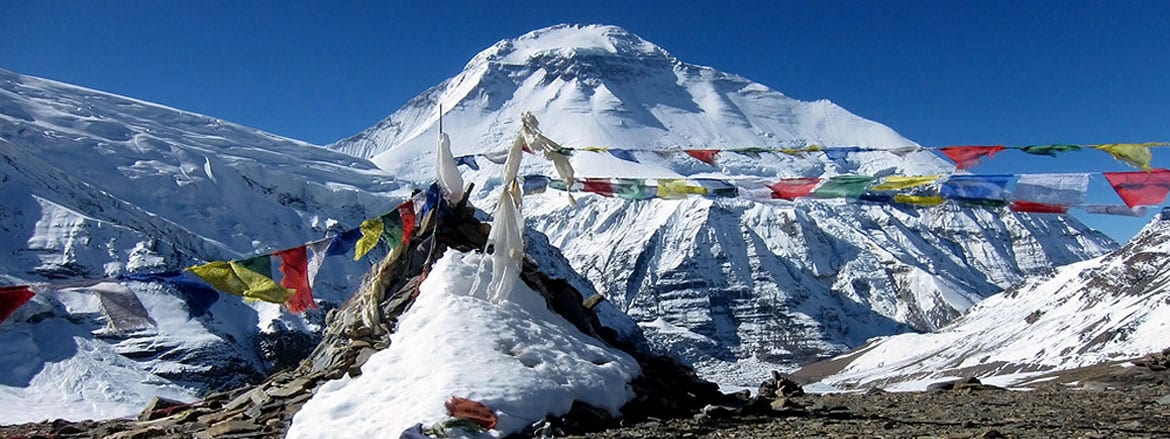
Dolpo Trek: Verified Guide Reviews, Upper and Lower Dolpo Routes, Permits, Season and Cost
Dolpo is one of the most remote and least visited regions of Nepal: a high, dry, trans-Himalayan land north of the Dhaulagiri range, bordering Tibet, where Tibetan Buddhist and Bon communities still live much as they have for centuries. Treks start with flights from Nepalgunj to Juphal and come in two main forms: Lower Dolpo, about two weeks to the turquoise Phoksundo Lake and over passes above 5,000 m, and Upper Dolpo, a three- to four-week camping expedition to Shey Gompa and the villages of inner Dolpo, which needs one of Nepal's most expensive restricted area permits. The best season is May to October, because Dolpo lies in the rain shadow of the Himalaya. On ExpedReview, as of 23 October 2026, one operator has verified client reviews for Dolpo: The Mountain Company (5.0★ from 4 reviews, latest May 2021). Below are the rankings, then a full guide to trekking in Dolpo.
Dolpo: key facts | | | |---|---| | Location | Dolpa district, western Nepal, north of the Dhaulagiri Himal | | Protected area | Shey Phoksundo National Park, Nepal's largest national park | | Highlights | Phoksundo Lake, Shey Gompa and Crystal Mountain, Saldang, Bon and Buddhist monasteries | | Access | Flight from Nepalgunj to Juphal | | High passes | Several over 5,000 m, depending on the route | | Lower Dolpo trek | About 2 to 3 weeks | | Upper Dolpo trek | About 3 to 4 weeks, camping | | Permits | National park permit; restricted area permit (Upper Dolpo much more expensive) | | Best season | About May to October | | Operators reviewed on ExpedReview | 1, with 4 verified reviews (as of 23 Oct 2026) |
Dolpo guides ranked by verified reviews
Rankings use each operator's verified ExpedReview client reviews for Dolpo. Every review is checked by hand before it is published, and operators cannot pay for a better position. Data as of 23 October 2026.
| Rank | Operator | Based in | Rating here | Reviews | Latest review |
|---|---|---|---|---|---|
| 1 | The Mountain Company | United Kingdom | 5.0★ | 4 | May 2021 |
The Mountain Company did not list a recent price at the time of writing.
What clients say
All four reviews were written in May 2021 and are rated 4.8 or 5. Reviewers describe Upper Dolpo as remote and exceptional, combining stunning scenery with Tibetan culture: chortens, monasteries, mani walls and prayer wheels, and rural communities that see very little tourism. One reviewer, who had trekked in Nepal three times before, did a longer Upper Dolpo to Mustang trek on the Great Himalaya Trail with the company in 2018. Others singled out Phoksundo Lake, the wildlife, faultless logistics and a strong team of leaders, Sherpas, cooks and porters. One described the trek as challenging. As all reviews are more than five years old, ask for recent references.
Why trek in Dolpo?
Dolpo is for trekkers who want a true wilderness experience, far from teahouses and crowds. Lower Dolpo was only opened to foreign trekkers in 1989 and Upper Dolpo in the early 1990s, and Upper Dolpo remains a restricted area with few visitors each year. Peter Matthiessen's classic book The Snow Leopard, about his 1973 journey to Shey Gompa with the biologist George Schaller, made Dolpo famous, and the film Himalaya (also released as Caravan), shot in Dolpo with local people, showed the yak caravans that still carry salt and grain over the passes.
The landscape is unlike most of Nepal. North of the main Himalayan range, Dolpo is a high, arid plateau of brown and ochre hills, deep gorges and snowy passes, more like Tibet than the green valleys to the south. Wildlife includes blue sheep and, very rarely seen, the snow leopard. The people of Dolpo, the Dolpo-pa, speak a Tibetan dialect and follow Tibetan Buddhism or Bon, the pre-Buddhist religion of Tibet, and the region has some of the best preserved Bon monasteries anywhere.
A short history of Dolpo
For most of its history Dolpo looked north rather than south. Its villages were linked to Tibet by trade, religion and language, and for centuries the Dolpo-pa traded salt from the Tibetan lakes for grain grown in the lower valleys of Nepal, carrying both on yak and sheep caravans over the high passes. After the Chinese takeover of Tibet in the 1950s and the closing of the border, the old trade routes weakened and Dolpo's economy changed, but many families still follow a seasonal cycle of farming, herding and trading, and still move down to lower valleys in winter.
Some of Dolpo's monasteries are many centuries old, and the region holds a remarkable collection of religious art and texts. Its isolation helped preserve them, but it also means communities have little access to health care and education. Several charities work in the region on schools and clinics, and the visits of trekkers, though few, are an important source of income.
Wildlife and the snow leopard
Shey Phoksundo National Park protects a wide range of high-altitude wildlife. Blue sheep, or bharal, are common on the slopes around Shey Gompa and are the main prey of the snow leopard. Himalayan griffon vultures, lammergeiers and golden eagles soar over the gorges, and lower forests hold musk deer, Himalayan black bear and langur monkeys. Snow leopards are present, but they are extremely shy and rarely seen; Matthiessen himself never saw one on his famous journey, and the book's power comes partly from that absence. A sighting is a rare stroke of luck, not something any operator can promise.
Dolpo and the Great Himalaya Trail
The Great Himalaya Trail is a network of routes that crosses the whole length of the Nepal Himalaya, from Kangchenjunga in the east to Humla in the far west. Dolpo is one of its wildest and most celebrated sections, and many trekkers walk from Upper Dolpo east into Mustang or west towards Rara Lake and Humla. These are long, serious journeys of a month or more, and need careful planning, multiple permits and a very experienced operator.
Phoksundo Lake
Phoksundo Lake, at about 3,600 m, is the jewel of Lower Dolpo. Its water is an extraordinary turquoise blue, and it is often described as the deepest lake in Nepal. The village of Ringmo stands at its southern end, beside a high waterfall, and the Bon monastery of Tshowa sits on the shore nearby. The trail along the western side of the lake, cut into the cliffs, is one of the most famous and exposed paths in Nepal. Lakes are sacred in local belief, so swimming is not appropriate.
Lower Dolpo
The Lower Dolpo trek is the more accessible option. It usually starts at Juphal and follows the Suli Gad valley to Phoksundo Lake, with time to explore Ringmo. A circuit then crosses high passes such as the Baga La and Numa La, both above 5,000 m, through the villages of Dho Tarap and Tarap valley, and returns to Juphal. It takes about two to three weeks. Teahouse-style accommodation exists in some villages, but most organised treks still camp. Lower Dolpo needs a restricted area permit, but it is much cheaper than the Upper Dolpo permit.
Upper Dolpo
The Upper Dolpo trek is one of the great expeditions of the Himalaya. From Phoksundo Lake it crosses the Kang La, a high pass above 5,000 m, to Shey Gompa, the monastery below the sacred Crystal Mountain, where pilgrims walk a circuit around the peak. It continues through Namgung, Saldang, one of the largest villages in Upper Dolpo, and other high villages, and returns by different passes or continues into Mustang. It takes about three to four weeks and is a full camping trek, with tents, cooks and a team of porters or pack animals. It is often part of the Great Himalaya Trail, which crosses the whole of Nepal.
Upper Dolpo needs a restricted area permit, now US$50 per person per day according to the Nepal Tourism Board, which makes it one of the most expensive treks in Nepal. Permits are issued only through registered agencies, and trekkers must have a licensed guide; since March 2026 solo trekkers can obtain the permit, where previously groups of at least two were required (The Kathmandu Post). Check the latest rules before booking, because permit fees and conditions change.
An outline Upper Dolpo itinerary
Every operator's route is a little different, but a classic Upper Dolpo trek runs roughly as follows. After flying to Nepalgunj and on to Juphal, the first days follow the Suli Gad river upstream through pine forest and small villages to Ringmo and Phoksundo Lake, with a rest day at the lake to acclimatise and visit Tshowa monastery. The trail then follows the cliffside path around the lake and up the remote Phoksundo Khola valley to camps below the Kang La. Crossing the pass brings you down to Shey Gompa, where most groups spend a day for the Crystal Mountain kora or simply to rest. From Shey the route crosses further passes to Namgung, with its cliffside monastery, and Saldang, then either loops back south through the Tarap valley to Juphal or heads east towards Mustang. Expect around three to four weeks, including spare days for flights and weather.
Getting there
Most treks begin in Kathmandu with a flight to Nepalgunj in the far west of the country, a night there, and an early flight to Juphal, a small airstrip in Dolpa district. Flights to Juphal are often delayed by wind and weather, so allow spare days at both ends. Trekkers continuing from Upper Dolpo into Mustang finish with a road journey or flight from Jomsom.
Season
Dolpo lies in the rain shadow of the Dhaulagiri range, so it is much drier than most of Nepal and can be trekked during the monsoon months. The best season is from about May to October, with the main trekking period in spring and early autumn. In winter, the high passes are snowbound and many villagers move to lower valleys. Days can be hot in summer and nights cold at high camps throughout the season.
How hard is the trek?
Dolpo treks are demanding. They are long, remote, with several passes above 5,000 m, rough and exposed trails, and days far from help. Upper Dolpo is more serious, with long stages between villages, high camps and the full logistics of a camping expedition. Trekkers should have previous experience of multi-day treks at altitude, be fit for six to eight hours of walking a day, and be comfortable with camping life and limited communications. Helicopter rescue is possible but depends on weather. Learn the symptoms of acute mountain sickness and make sure your insurance covers helicopter evacuation at altitude.
Life in camp
Most Dolpo treks are fully supported camping trips. A typical day starts with tea brought to your tent, breakfast in a mess tent, and walking in the cool morning. The crew packs the camp and overtakes you on the trail, so tents are often up when you arrive. Afternoons are spent resting, exploring villages and monasteries and acclimatising. Food is cooked by the expedition team and is usually much better than people expect. Camping gives you more flexibility than teahouse treks, but it costs more and needs a strong, well-equipped crew.
Culture and responsible trekking
Dolpo's culture is fragile. Ask before photographing people or the inside of monasteries, walk clockwise around Buddhist chortens and mani walls, and anticlockwise around Bon ones, and dress modestly. Carry out your rubbish and avoid leaving anything at camp. Buy local produce when you can and favour operators that hire local staff and pack animals. Ask your operator how they treat porters and how they handle waste.
Kit
You need sturdy, broken-in boots, layers for hot days and freezing nights, a warm sleeping bag rated to about -15°C, a down jacket, waterproofs, sun protection, trekking poles and water treatment. Operators usually supply tents, mess tents and kitchen equipment. Our guide to choosing mountaineering boots will help with footwear.
How to choose a Dolpo operator
Few operators run Dolpo treks, so look for experience in the region. Ask how many Dolpo treks they have run, the size of the crew, the camping and kitchen equipment, how they handle permits, contingency days for Juphal flights, communication equipment such as satellite phones, and evacuation plans. For other treks and climbs in the area, see our Dhaulagiri region page and Dhaulagiri I guide. For a teahouse trek with a similar trans-Himalayan landscape, look at Upper Mustang.
Frequently asked questions
Where is Dolpo?
Dolpo is in Dolpa district in western Nepal, north of the Dhaulagiri range and bordering Tibet.
How long is the Dolpo trek?
Lower Dolpo treks take about two to three weeks; Upper Dolpo treks take about three to four weeks.
How much is the Upper Dolpo permit?
According to the Nepal Tourism Board, the Upper Dolpo restricted area permit is US$50 per person per day. Check current fees before you go.
When is the best time to trek in Dolpo?
From about May to October. Dolpo lies in the rain shadow, so it can be trekked in the monsoon months.
Is Dolpo trek hard?
Yes. It is long and remote, with several passes above 5,000 m and, in Upper Dolpo, a full camping expedition.
Which operator is ranked for Dolpo on ExpedReview?
As of 23 October 2026, The Mountain Company is the only operator with verified Dolpo reviews, with 5.0★ from 4 reviews, the latest from May 2021.
Related articles
- How to choose a guide
- Best operators
- Dhaulagiri & Dolpo Guides: Verified Reviews, Expeditions and Treks
Dhaulagiri I (8,167 m), Putha Hiunchuli, the Dhaulagiri Circuit and Dolpo: operators ranked by verified ExpedReview client reviews, plus routes, permits, seasons, skills and how to choose a guide.