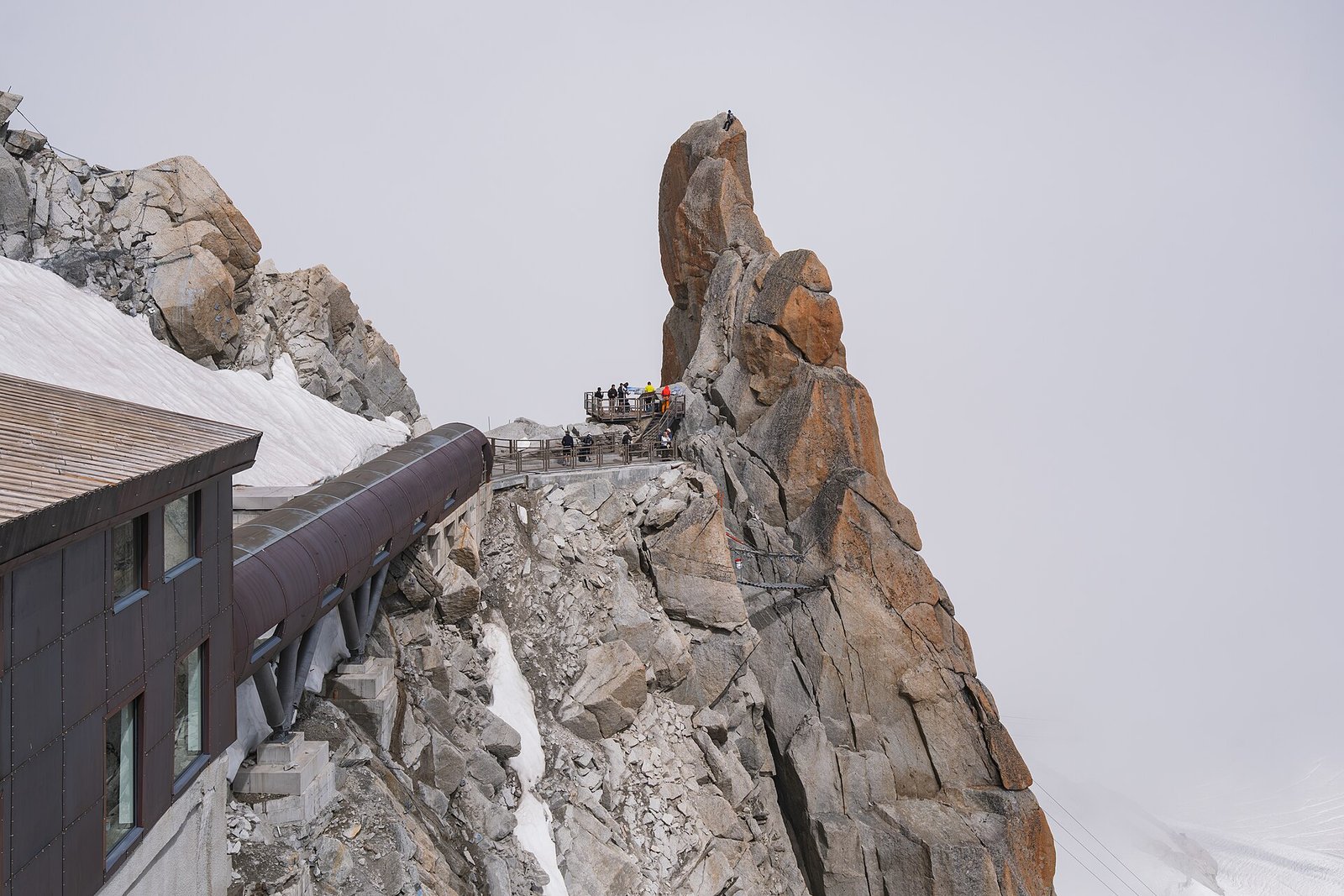
Chamonix Mountain Guides: Verified Reviews for Mont Blanc, Courses and Ski Tours
Chamonix-Mont-Blanc, the French valley town at the foot of Mont Blanc (about 4,806 m), is one of the birthplaces of alpinism and the main base for mountaineering, ski touring and trekking in the Mont Blanc massif. Popular trips include guided climbs of Mont Blanc, alpine mountaineering courses on the glaciers, the Vallée Blanche ski descent, the Chamonix to Zermatt Haute Route and the Tour du Mont Blanc trek. Summer climbing and trekking run from about June to September, and skiing from about December to April, with spring best for longer ski tours. On ExpedReview, as of 23 October 2026, 1 operator has 1 verified client review for Chamonix: Adventure Consultants (5.0★, October 2026). Below are the ranking and the review, then a guide to climbing from Chamonix.
Chamonix: key facts | | | |---|---| | Location | Haute-Savoie, France, near the Swiss and Italian borders | | Valley altitude | About 1,035 m | | Highest peak | Mont Blanc, about 4,806 m (4,805.59 m when measured in 2023) | | Nearest airport | Geneva, about 1–1.5 hours by road | | Summer season | About June to September | | Ski season | About December to April; March to May for longer ski tours | | Oldest guiding company | Compagnie des Guides de Chamonix, founded 1821 | | Operators reviewed on ExpedReview | 1, with 1 verified review (as of 23 Oct 2026) |
Chamonix guides ranked by verified reviews
Rankings use each operator's verified ExpedReview client reviews for Chamonix: the star rating, adjusted so that one or two reviews, or only old ones, count for less than many recent ones. Every review is checked by hand before it is published, and operators cannot pay for a better position. Data as of 23 October 2026.
| Rank | Operator | Based in | Rating here | Reviews | Latest review | Price |
|---|---|---|---|---|---|---|
| 1 | Adventure Consultants | New Zealand | 5.0★ | 1 | October 2026 | No recent price listed |
With one review, this ranking is only a starting point. Chamonix has hundreds of qualified mountain guides, from the Compagnie des Guides to small independent companies and international operators, and we will add them as verified reviews come in.
What clients say
Adventure Consultants' reviewer, writing in October 2026 after a course and climb, said they could not say enough positive things about the experience. They praised the operations manager for coordinating shuttles, hotels and guides, so that apart from their own travel to Geneva everything was taken care of, and described their two guides as knowledgeable, professional, attentive and committed to keeping everyone safe, comfortable and supported. The instruction was excellent, they said, and the trip was "one of the best experiences of my life".
A short history
Chamonix's place in mountaineering history began in 1786, when Jacques Balmat and Michel-Gabriel Paccard set out from the valley and made the first ascent of Mont Blanc. The scientist Horace-Bénédict de Saussure, who had offered a reward for the first ascent, climbed it the following year, and travellers soon followed. In 1821, local guides founded the Compagnie des Guides de Chamonix, often described as the oldest mountain guide company in the world. Chamonix hosted the first Winter Olympic Games in 1924, and the cable car to the Aiguille du Midi, opened in 1955, made the high glaciers accessible in hours. Today, the town is home to France's national school of skiing and mountaineering, ENSA, which trains French mountain guides.
Mont Blanc
Mont Blanc is the highest mountain in the Alps and in Western Europe outside the Caucasus. Its height varies slightly from year to year with the depth of the summit ice cap; it was measured at 4,805.59 m in 2023. The two most popular guided routes are the Goûter route, from the Nid d'Aigle via the Tête Rousse and Goûter huts, and the Trois Monts route, from the Aiguille du Midi via Mont Blanc du Tacul and Mont Maudit. The Goûter route is the least technical, but climbers must cross the Grand Couloir, a gully notorious for rockfall, which has become more dangerous in hot summers. The Trois Monts route is more technical, with steep snow and ice slopes and serac danger. Guided climbs usually take five to six days including acclimatisation, often on peaks such as the Gran Paradiso or around the Aiguille du Midi. Huts on Mont Blanc must be booked well in advance, and the authorities have introduced rules to limit overcrowding and unprepared climbers on the Goûter route.
Courses and other climbs
Chamonix is one of the best places in the world to learn alpine climbing. Introductory courses, usually five or six days, teach crampon and ice-axe techniques, glacier travel, crevasse rescue and alpine rock, on the Mer de Glace glacier and from the Aiguille du Midi, and often finish with a classic peak. Popular objectives include the Aiguille du Tour, the Cosmiques Arête, the traverse of the Pointes Lachenal and the Arête des Rochefort, as well as more serious climbs such as the Aiguille Verte and the Dent du Géant on the Italian side.
Skiing and ski touring
In winter and spring, Chamonix is famous for off-piste skiing and ski touring. The Vallée Blanche, a long glacier descent of about 20 km from the Aiguille du Midi to Chamonix, is a classic, best done with a guide because of crevasses and seracs. Ski tourers use the Grands Montets and other lifts as starting points, and in spring, many teams set off on the Haute Route to Zermatt.
Trekking
The Tour du Mont Blanc is one of the world's best-known treks, a circuit of about 170 km around the Mont Blanc massif through France, Italy and Switzerland, usually walked in 10 to 12 days from late June to mid-September. Shorter hikes in the Aiguilles Rouges, such as Lac Blanc, give some of the best views of Mont Blanc and the Chamonix aiguilles. The Tour du Mont Blanc does not need a guide, but guided and self-guided options, with huts and luggage transfers booked for you, are popular, and huts along the route fill up months in advance in July and August.
Seasons and weather
The main summer season runs from about June to September. Early summer often has better snow cover, which makes glacier crossings and snow routes safer, while late summer can bring bare ice, open crevasses and more rockfall. Heatwaves have become more frequent, and in recent hot summers, some routes, including the Goûter route on Mont Blanc, have become dangerous because of rockfall, and local authorities and guides have advised against climbing them for periods. Winter brings deep snow and cold, with the main skiing from about December to April. Spring is the best time for long ski tours. Weather in the massif can change quickly, and storms on Mont Blanc can be severe even in summer, so guided climbs usually keep spare days.
A typical guided Mont Blanc week
Most guided Mont Blanc programmes follow a similar plan. The first day is spent meeting the guide, checking gear and practising crampon and ice-axe skills, often on the Mer de Glace or a nearby glacier. The next two or three days are for acclimatisation, with nights in high huts and climbs of peaks of about 3,500 to 4,000 m, such as the Aiguille du Tour, Gran Paradiso or a route from the Aiguille du Midi. These climbs also let the guide check that the client is ready for Mont Blanc. Then comes the climb itself: on the Goûter route, a day up from the Nid d'Aigle to the Goûter hut at about 3,835 m, then an early start for the summit, via the Dôme du Goûter, the Vallot emergency shelter and the Bosses ridge, and a long descent to the valley. A spare day is usually kept for bad weather. If conditions are not good, guides may switch routes or offer another objective.
Acclimatisation
Mont Blanc is high enough to cause altitude sickness, and the easy access by lift and train makes it tempting to go up too fast. Climbers who skip acclimatisation are more likely to feel sick, move slowly and turn back, and slow climbers face more danger on long routes. The safest plan is several nights at increasing altitude before the summit attempt, which is why most guided programmes include acclimatisation climbs. If you have recently been at altitude, tell your guide, as it may change the plan.
Beyond Chamonix
Chamonix is close to two other great mountain centres. Through the Mont Blanc Tunnel, Courmayeur in Italy's Aosta Valley is the base for the Italian side of Mont Blanc and the Gran Paradiso. To the east, Zermatt in Switzerland is the base for the Matterhorn and the 4,000 m peaks of the Monte Rosa massif, reached from Chamonix in a few hours by train or on foot via the Haute Route.
Hazards
The main hazards around Chamonix are rockfall, crevasses, serac falls, avalanches, altitude and sudden storms. Climate change is making many of them worse: glaciers are retreating, the permafrost that holds the rock together is thawing, and some classic routes have become unstable. The Grand Couloir on the Goûter route is the best-known danger spot, with many accidents over the years. Altitude sickness is also a risk on Mont Blanc, especially for climbers who go up too quickly from the valley. Mountain rescue in Chamonix is run by the PGHM, a specialist gendarmerie unit, and is very efficient, but it cannot reach climbers in bad weather. Make sure your insurance covers mountaineering and rescue.
Guides and qualifications
In France, only state-qualified mountain guides, holders of the Diplôme d'État de guide de haute montagne, which is recognised internationally as IFMGA/UIAGM, can lead clients on glaciers and technical mountain terrain. Ask for your guide's qualifications. Guide-to-client ratios matter: on Mont Blanc, many guides take one or two clients on summit day, and on courses, ratios of around one guide to four clients are common. Guides from international operators often work alongside local guides, as in the Adventure Consultants review above.
Getting there
Geneva airport is about 1 to 1.5 hours by road from Chamonix, with frequent shared and private shuttles. Trains run from Saint-Gervais-les-Bains up the valley to Chamonix, and the Mont Blanc Tunnel links Chamonix with Courmayeur in Italy. Local buses and trains in the valley are free or cheap with a guest card. Many visitors stay in Chamonix itself, or in Argentière or Les Houches.
Cost
Chamonix can be expensive, especially in the high season. A guided Mont Blanc climb or a mountaineering course is usually priced per person and includes the guide, while huts, lifts, meals and accommodation in the valley are often extra. Private guides charge by the day, plus their expenses in huts and on lifts. Look for current prices on each operator's ExpedReview profile, and check what is included.
Gear
For summer mountaineering, you need mountaineering boots that take crampons, crampons, an ice axe, a harness, a helmet, warm and waterproof layers, gloves, glacier glasses, sun protection and a backpack of about 35 to 45 litres. Chamonix has many shops that rent and sell equipment, and guides will check your gear before the trip. For ski touring, you need touring skis and boots, skins, ski crampons and an avalanche transceiver, shovel and probe.
How to choose a guide
Choose a guide or operator with fully qualified mountain guides, and ask about the guide-to-client ratio, the acclimatisation plan, which route they will use on Mont Blanc and why, what happens in bad weather or dangerous conditions, and what is included in the price. If you are new to alpine climbing, a course before a Mont Blanc attempt is the safest way to start, and many operators combine them. Be honest about your fitness and experience, and read the reviews above. Our Alps page covers more operators in the range.
Frequently asked questions
When is the best time to climb Mont Blanc from Chamonix?
From about June to September, with early summer often having better snow conditions. In hot spells, rockfall can make some routes dangerous.
How long does it take to climb Mont Blanc?
Guided climbs usually take five to six days including acclimatisation, with two days on the mountain itself.
Do I need a guide to climb Mont Blanc?
Unless you have alpine experience, yes. Only qualified mountain guides can lead clients on glaciers in France.
What is the Vallée Blanche?
A long off-piste glacier ski descent of about 20 km from the Aiguille du Midi to Chamonix, best done with a guide.
Which operator is ranked first for Chamonix on ExpedReview?
As of 23 October 2026, Adventure Consultants is the only ranked operator, with 5.0★ from 1 verified review from October 2026.
Related articles
- How to choose a guide
- Best operators
- Alps and Europe Mountain Guides: Verified Reviews, Best Climbs, Seasons and How to Choose
Mountain guides in the Alps and Europe ranked by verified ExpedReview client reviews, with a guide to Mont Blanc, Monte Rosa, Gran Paradiso, the Haute Route, Chamonix and the Aosta Valley: seasons, grades, huts, skills and how to choose a guide.