Best Mountains to Climb in China, Tibet and Xinjiang (2026): Everest North, Cho Oyu, Muztagh Ata and More
By Blake Penson · September 6, 2021
Category: destination-guides
10 min read
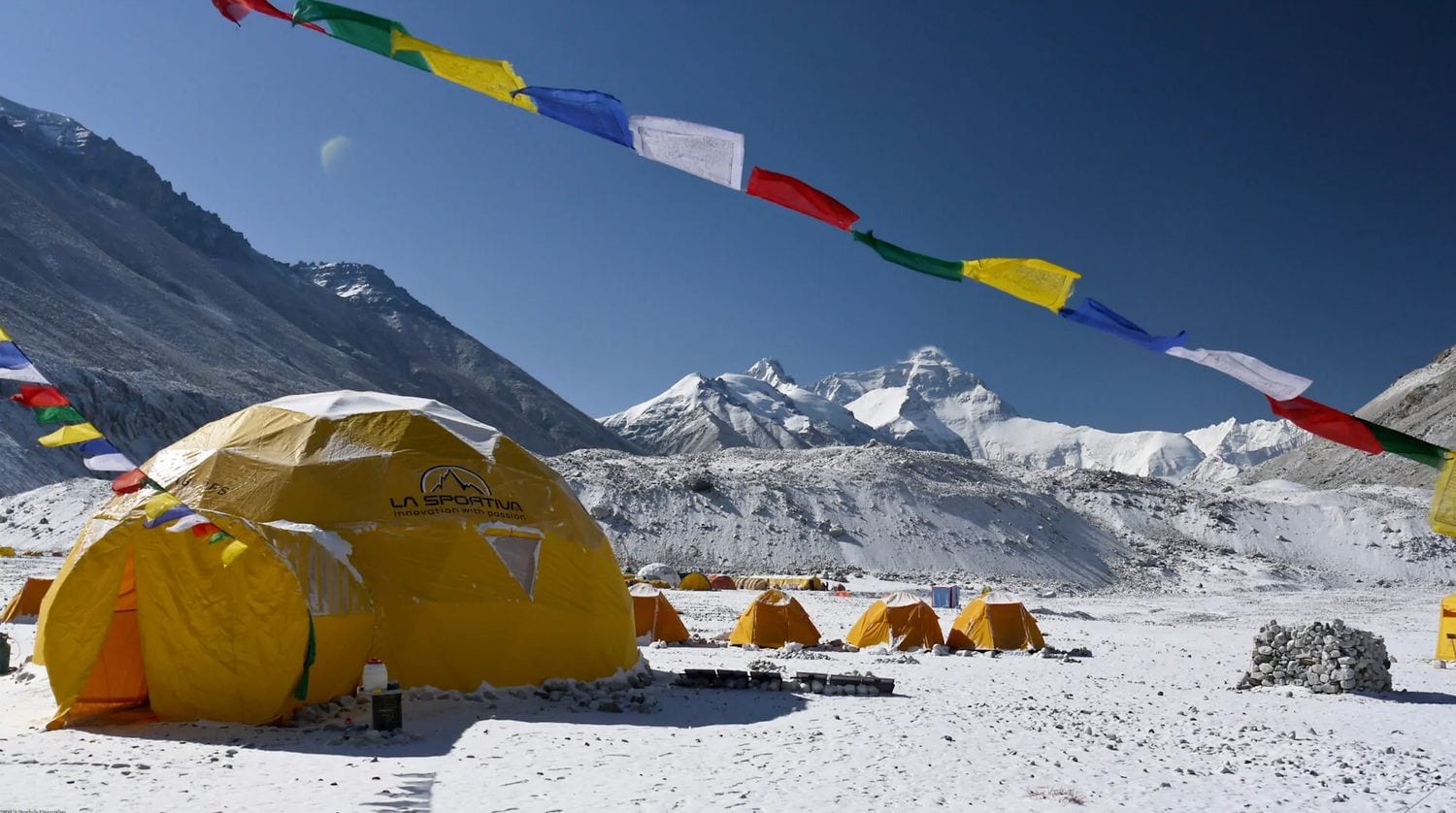
China's best mountaineering is in Tibet and Xinjiang, with a few classic peaks in Sichuan and Yunnan. The headline objectives are Everest by the Northeast Ridge (8,849 m) and Cho Oyu (8,188 m) and Shishapangma (8,027 m) in Tibet, Muztagh Ata (about 7,509 m) in Xinjiang, the steep and dangerous Gongga Shan (Minya Konka, 7,556 m) in Sichuan, and beginner-friendly Haba Snow Mountain (5,396 m) in Yunnan. All foreign climbers need a Chinese visa plus extra permits arranged through a licensed agency, and Tibet climbs are controlled by the China Tibet Mountaineering Association (CTMA). Important for 2026: Tibet's 8,000 m peaks, including Everest's north side, were closed to foreign expeditions in spring and autumn 2026. Check the current status with a licensed operator before planning a Tibet climb for 2027.
| Peak | Height | Region | Difficulty | Main season |
|---|---|---|---|---|
| Everest (Northeast Ridge) | 8,849 m | Tibet | Very high altitude; moderately technical | April–May |
| Cho Oyu | 8,188 m | Tibet (Nepal border) | One of the more accessible 8,000ers | Sept–Oct; spring |
| Shishapangma | 8,027 m | Tibet | Moderate technically; avalanche risk | Sept–Oct; spring |
| Muztagh Ata | about 7,509 m | Xinjiang | Non-technical; ski-able; very cold | July–August |
| Gongga Shan (Minya Konka) | 7,556 m | Sichuan | Highly technical; dangerous | Autumn; spring |
| Mount Siguniang | 6,250 m | Sichuan | Technical | Varies by route |
| Haba Snow Mountain | 5,396 m | Yunnan | Basic snow climb | Spring; autumn |
The 2026 Tibet closure: what climbers need to know
In 2026, Chinese authorities did not issue permits for foreign expeditions to Everest's north side, Cho Oyu or Shishapangma, first in spring and then again in autumn. News reports linked the closure to investigations in Tibet, including over a controversial fireworks display in the Shigatse area and alleged irregularities in foreign permit administration. Data gathered by ExpedReview from news reports by ExplorersWeb and others.
There is no guarantee when the peaks will reopen. If you are considering Everest's north side or Cho Oyu from Tibet for 2027, choose an operator with a clear refund or transfer policy and a Nepal-side alternative. ExpedReview's Everest North rankings and the Tibet region page track operators who run these climbs.
Getting permission to climb in China
Climbing in China involves several layers of paperwork:
- A Chinese visa. Most nationalities need one. Some visa-free arrangements do not cover travel to Tibet.
- A Tibet Travel Permit and other Tibet permits, if you are going to Tibet. These are only issued through licensed Chinese agencies, and you cannot travel independently in Tibet.
- A climbing permit from the relevant mountaineering association, such as the CTMA in Tibet or regional associations in Xinjiang, Sichuan and Yunnan.
- Local travel and border permits for some remote areas near international borders.
Rules change often and can be suspended at short notice. Book through an experienced operator who handles permits every season.
1. Everest via the Northeast Ridge (Tibet)
Everest's north side is reached by road to Everest Base Camp in Tibet (about 5,150 to 5,200 m). From there, expeditions move up to an intermediate camp and Advanced Base Camp (about 6,400 m), then climb to the North Col (about 7,000 m), and higher camps on the North Ridge and Northeast Ridge before the summit push.
What makes it different from Nepal:
- Road access to base camp, so no long trek, and no Khumbu Icefall.
- Colder and windier conditions, especially high on the ridge.
- A long summit day at extreme altitude, including the famous First, Second and Third Steps. The Second Step has had a ladder since 1975.
- More limited rescue options. Helicopter rescue is not generally available on the Tibetan side.
Everest's height of 8,848.86 m was announced jointly by Nepal and China in December 2020. Most guides round it to 8,849 m.
See ExpedReview's comparison of the South Col and Northeast Ridge and the Everest cost guide.
2. Cho Oyu (Tibet)
At 8,188 m, Cho Oyu is the sixth-highest mountain in the world and is often called the most accessible 8,000 m peak. The standard Northwest Ridge route from Tibet has relatively low technical difficulty, with one notable rock and ice step and a long summit plateau. Many climbers use it as preparation for Everest.
Cho Oyu straddles the Nepal-Tibet border. Some operators now run a Nepal-side route as an alternative when Tibet is closed. Ask your operator which side they plan to use and how they manage avalanche risk.
3. Shishapangma (Tibet)
Shishapangma, at 8,027 m, is the lowest of the 14 eight-thousanders and the only one entirely within China. Its north-side route is moderate technically, but there is a distinction between the central summit and the slightly higher main summit, which is reached by an exposed ridge traverse. Avalanches have caused serious accidents, including the October 2023 avalanche that killed two American climbers and two Nepali guides.
ExpedReview's article on finding the true summits of the 8,000ers explains why Shishapangma's summit has been debated.
4. Muztagh Ata (Xinjiang)
Muztagh Ata, the "Father of Ice Mountains", rises above the Karakoram Highway near Karakul Lake in western Xinjiang. Its height is usually given as about 7,509 m, though some sources give 7,546 m. The standard west-side route is non-technical, with long, gentle snow slopes that many climbers ascend on skis or snowshoes. That makes it a popular first 7,000 m peak.
The challenges are altitude, cold and the long distance between camps. Expeditions usually take about three weeks, in July and August. Travel to the area involves Xinjiang permits and security checks, so allow time for paperwork. See ExpedReview's Muztagh Ata page.
5. Gongga Shan / Minya Konka (Sichuan)
Gongga Shan, at 7,556 m, is the highest mountain in Sichuan and the easternmost 7,000 m peak in the world. It is steep, heavily glaciated and avalanche-prone, and it has a high fatality rate compared with the number of ascents. It was first climbed in 1932 by an American expedition. Gongga Shan is a peak for highly experienced alpinists, not a commercial objective.
For trekkers, the Gongga region offers spectacular routes around the mountain through Tibetan villages and monasteries.
6. Mount Siguniang (Sichuan)
Mount Siguniang, meaning "Four Girls Mountain", is a group of four peaks in western Sichuan. The highest is about 6,250 m. The surrounding valleys are a national park with excellent trekking, and the lower peaks are used for training climbs. The main peak has technical routes on rock, snow and ice that attract serious alpinists.
7. Haba Snow Mountain (Yunnan)
Haba Snow Mountain, at 5,396 m, rises above Tiger Leaping Gorge in northwest Yunnan. Its standard route is a basic snow climb, often done in three to four days, and it is a popular first snow peak for Chinese climbers. Crampons, an ice axe and basic rope skills are needed on the upper slopes.
Other notable peaks and treks
- Kongur Tagh (7,649 m) and Kongur Tiube in Xinjiang: big, remote peaks near Muztagh Ata for experienced expeditions.
- K2's north side (8,611 m): approached from the Shaksgam Valley in Xinjiang, far less climbed than the Pakistani side.
- Mount Kailash (6,638 m): sacred to Hindus, Buddhists, Jains and Bon followers. Climbing is not permitted, but the pilgrimage circuit (kora) of about 52 km is one of Tibet's great treks.
- The Tibetan Plateau: trekking and cultural tours, covered on ExpedReview's Tibetan Plateau page.
Travel logistics: getting to the mountains
Each region has a different gateway, and the approach often takes several days.
| Region | Usual gateway | Approach |
|---|---|---|
| Tibet (Everest North, Cho Oyu, Shishapangma) | Lhasa, or overland from Kathmandu when the border is open to groups | Several days of driving west across the plateau, with acclimatisation stops at towns such as Shigatse and Tingri |
| Xinjiang (Muztagh Ata, Kongur) | Kashgar | A few hours on the Karakoram Highway to Karakul Lake and the base camp area |
| Sichuan (Gongga, Siguniang) | Chengdu | A long drive into the mountains of western Sichuan |
| Yunnan (Haba) | Lijiang or Shangri-La (Zhongdian) | Road access to Haba village, then a hike to base camp |
Internet access in China is restricted, and many Western apps, maps and messaging services do not work without special arrangements. Download offline maps, share your itinerary with someone at home, and ask your operator how they communicate on the mountain. Satellite communicators may be restricted in some areas, so check the current rules before you travel.
What to pack for a climb in China
The gear list depends on the peak, but Chinese mountains share a few features: long, cold nights, strong wind on the high plateau and limited options for buying specialist gear locally. Bring everything you need from home, including double boots for 7,000 m and 8,000 m peaks, an expedition down suit or heavy down jacket, warm mitts, high-factor sunscreen and glacier glasses. On Muztagh Ata, skis or snowshoes make the long slopes far easier. ExpedReview's Everest gear list is a good starting point for the 8,000 m peaks.
When to climb in China
| Area | Best months | Notes |
|---|---|---|
| Tibet 8,000 m peaks | April–May (Everest); September–October and spring (Cho Oyu, Shishapangma) | Subject to permit availability |
| Xinjiang (Muztagh Ata) | July–August | Cold, stable summer conditions |
| Sichuan (Gongga, Siguniang) | Autumn (Oct–Nov) and spring | Monsoon cloud in summer |
| Yunnan (Haba) | Spring and autumn | Avoid the summer rainy season |
Altitude and acclimatisation in Tibet
Tibet is high. Lhasa sits at about 3,650 m, and road travel to base camps reaches over 5,000 m quickly. Driving rather than walking to altitude makes it easier to ascend too fast. Most expeditions spend several days in Lhasa and on the drive west to acclimatise. Learn the symptoms of AMS, HAPE and HACE, and choose an itinerary with gradual altitude gains.
Choosing an operator for a climb in China
- Ask about permit risk. What happens if the climb is cancelled by the authorities?
- Check their experience in China. How many seasons have they operated on your chosen mountain?
- Understand rescue limits. Helicopter rescue is limited in Tibet and Xinjiang, so medical care and oxygen on the mountain matter more.
- Read verified reviews. ExpedReview shows ratings from verified climbers on each mountain page, including Everest North and the Everest region.
| Operator (Everest Northeast Ridge) | ER average rating | Verified reviews |
|---|---|---|
| Furtenbach Adventures | 4.8 / 5 | 12 |
| Kobler & Partner | 5.0 / 5 | 2 |
| Summitclimb | 4.6 / 5 | 2 |
Ratings are from verified ExpedReview client reviews (minimum two reviews; data as of 22 October 2026).
Frequently asked questions
What is the best mountain to climb in China?
For experienced high-altitude climbers, Everest's north side and Cho Oyu are the best-known objectives. For a first 7,000 m peak, Muztagh Ata is a popular choice. For a first snow peak, Haba Snow Mountain is a common starting point.
Can foreigners climb Everest from China?
Yes, normally, through a licensed operator and the China Tibet Mountaineering Association. However, permits for foreigners were not issued in 2026.
Is Tibet open for climbing in 2026?
Tibet's 8,000 m peaks were closed to foreign expeditions in spring and autumn 2026. Check with a licensed operator for 2027.
How many 8,000 m peaks are in China?
Nine of the 14 eight-thousanders are in China or on its borders, including Everest, K2, Lhotse, Makalu, Cho Oyu, Shishapangma, Broad Peak and the two Gasherbrums. Only Shishapangma is entirely within China.
How high is Muztagh Ata?
About 7,509 m, although some sources give 7,546 m.
Can you climb Mount Kailash?
No. Climbing is not permitted on Kailash because it is sacred. Pilgrims and trekkers walk the kora around it.
Is Everest harder from Tibet or Nepal?
The north side has no Khumbu Icefall but is colder, windier and has a longer, more exposed summit day. Many climbers consider it harder overall, while the south side is technically more complex in the Icefall.
Do I need a guide to climb in Tibet?
Yes. Foreigners cannot travel independently in Tibet, and climbs must be organised through licensed agencies.
What is the easiest snow mountain to climb in China?
Haba Snow Mountain in Yunnan is often considered one of the easiest snow peaks above 5,000 m, but it still needs crampons and basic mountaineering skills.
Tags: tibet, china, xinjiang, cho-oyu, everest-north-side