How Climate Change Affects Mountaineering in the Alps: Glacier Loss, Rockfall and Changing Routes
By Blake Penson · August 22, 2022
Category: expedition-news
5 min read
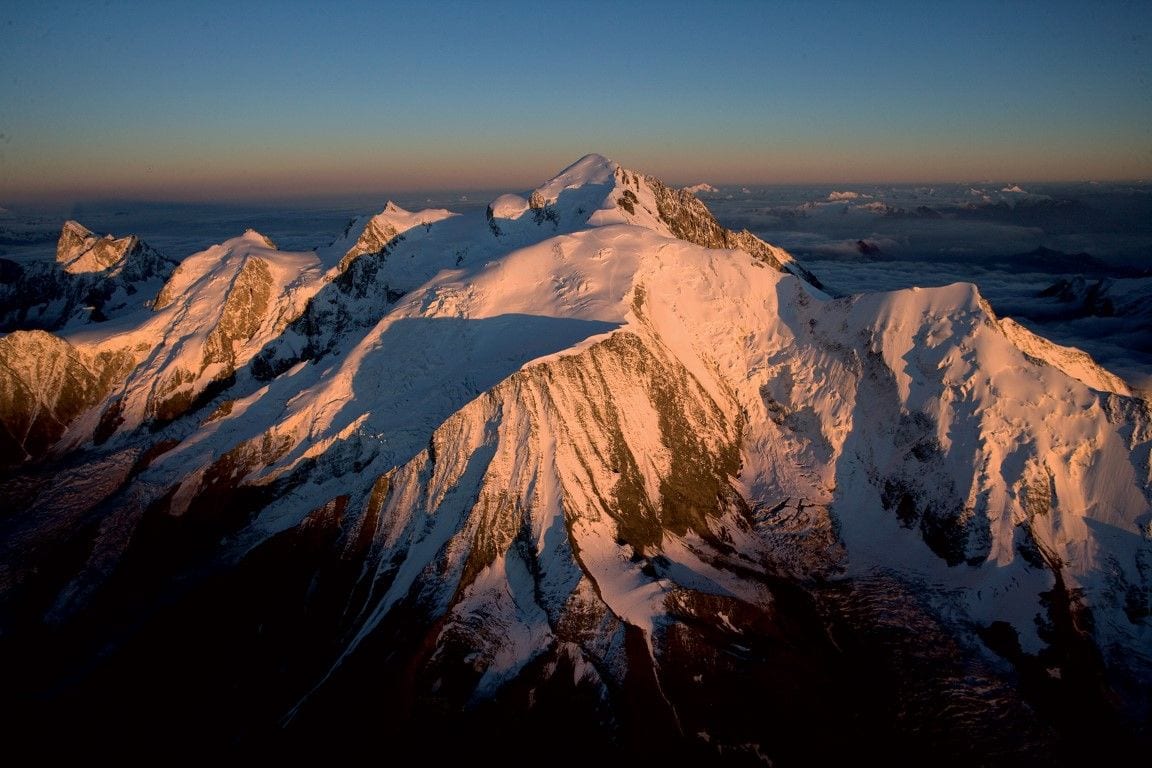
Climate change is making Alpine mountaineering more dangerous and less predictable. Glaciers are shrinking fast: Switzerland's glaciers lost about 6% of their ice volume in 2022 and 4% in 2023, a combined 10% in two years, and another 3% in 2025, according to Glacier Monitoring Switzerland (GLAMOS). The freezing level now regularly rises above the highest summits in heatwaves, reaching a record 5,298 m over Switzerland in August 2023. As ice and permafrost that bind mountain faces melt, rockfall and serac falls increase, glaciers become bare, crevassed and harder to cross, and approaches to huts become longer and more hazardous. Some classic routes are now dangerous in high summer, and the main climbing season is shifting earlier in the year. Climbers can adapt by climbing earlier in the season and earlier in the day, checking local conditions, hiring local guides and choosing routes that suit current conditions. For a wider view beyond the Alps, see how climate change is making mountaineering riskier.
| Fact | Value | Source |
|---|---|---|
| Swiss glacier volume lost, 2022 | About 6% | GLAMOS |
| Swiss glacier volume lost, 2023 | About 4% (second-largest on record) | GLAMOS |
| Swiss glacier volume lost, 2025 | 3.0% (about 1.4 km³) | GLAMOS |
| Swiss glaciers that disappeared, 2016–2023 inventories | 159 (about 11%) | GLAMOS |
| Record zero-degree level over Switzerland | 5,298 m (August 2023) | MeteoSwiss |
| Marmolada serac collapse | 3 July 2022, 11 deaths | Italian authorities |
| Birch glacier collapse, Blatten | 28 May 2025, village largely destroyed | GLAMOS |
What climate change is doing to Alpine glaciers
Alpine glaciers depend on a balance between winter snowfall and summer melt. In recent years, dry winters and hot summers have tipped that balance sharply. In 2022, low winter snow cover, Saharan dust on the spring snow and long heatwaves produced what GLAMOS called record-breaking losses, shattering the previous record from the hot summer of 2003. 2023 brought another dry winter and hot summer, and by GLAMOS's measure, 10% of Swiss glacier volume disappeared in two years. In 2025, glaciers lost another 3%, which GLAMOS ranks among the most negative years since observations began in 1914.
Thomas Häusler, a climate expert at WWF Switzerland, explained the process to ExpedReview in 2022. Less snowfall in winter means less snow is converted into firn and eventually ice, so glaciers cannot recover what they lose in summer. Bare ice also reflects less sunlight than snow, so it absorbs more heat and melts faster. This feedback speeds up retreat.
Melting is happening high up too. GLAMOS reports that at Colle Gnifetti, a saddle on Monte Rosa at almost 4,500 m, substantial surface melting has occurred, and the temperature 20 m below the surface has warmed by 2.1 °C over 35 years. In August 2023, MeteoSwiss measured the zero-degree level at a record 5,298 m, meaning temperatures were above freezing even on the 4,634 m summit of Monte Rosa's Dufourspitze, Switzerland's highest point.
How melting glaciers and permafrost affect climbers
"The shrinking of a glacier can lead to destabilization of mountainsides, landslides or rock falls with negative consequences for pastures, human settlements, installations, mountain paths and mountaineering routes, and the population," Häusler told ExpedReview. "Glaciers that are disintegrating can result in large ice avalanches, which may trigger additional rock falls, landslides or mudslides. Disappearing glaciers can alter mountaineering paths or make access to mountain huts more difficult."
For climbers, the main effects are:
- More rockfall. Permafrost acts like glue in high, steep rock faces. When it thaws, rock that was frozen in place can fall, especially in the afternoon and during heatwaves. Gullies and couloirs that were safe snow climbs can become dangerous.
- Serac and ice avalanches. Warming can weaken hanging glaciers and seracs.
- Bare, broken glaciers. Without snow cover, glaciers expose crevasses and hard, slippery ice. Snow bridges are thinner and weaker. See glacier travel.
- Longer, harder approaches. As glaciers thin and retreat, moraines are left steep and unstable, and some huts now need ladders or new paths to reach them.
- Changing routes. Some routes are now out of condition for much of the summer, and some classic snow and ice climbs have changed beyond recognition.
- Shorter seasons. Many routes are best climbed earlier, in late spring and early summer, while they still have snow cover.
Mont Blanc and the Goûter route
The Goûter route on Mont Blanc, the most popular way up western Europe's highest mountain, crosses the Grand Couloir, a gully notorious for rockfall. In hot, dry summers, rockfall there gets worse. In summer 2022, French authorities closed the Goûter and Tête Rousse refuges because of rockfall, and local guiding companies suspended climbs on the route. The mayor of Saint-Gervais proposed that climbers pay a €15,000 deposit to cover the potential cost of rescue and funerals, a sign of how concerned local authorities had become. See Mont Blanc routes and Mont Blanc.
The Grand Couloir is most dangerous in the afternoon, when the sun warms the face. Climbers cross it early in the morning, quickly and one at a time. In heatwaves, guides may stop running the route altogether.
Marmolada, July 2022
On 3 July 2022, part of the glacier on Marmolada, the highest mountain in the Dolomites at 3,343 m, collapsed during a heatwave. The ice avalanche killed 11 people and injured several others. Before the collapse, a record temperature of about 10 °C had been measured at the summit. Authorities pointed to unusually high temperatures and a very dry winter as contributing factors. The disaster highlighted how heat can destabilise glaciers that had been considered relatively safe.
Blatten, May 2025
On 28 May 2025, a large part of the Birch glacier in Switzerland's Lötschental collapsed after rockfall from the mountain above had loaded it with debris. The resulting rock and ice avalanche destroyed most of the village of Blatten. Monitoring of the glacier and the mountain had allowed authorities to evacuate the village days earlier, and GLAMOS recorded one fatality. It showed both the scale of the hazards and the value of monitoring.
The Matterhorn, July 2003
The hot summer of 2003 was an early warning. On 15 July 2003, a large rockfall broke away at about 3,400 m on the Hörnli ridge, the Matterhorn's normal route, cutting off the descent for the climbers above. Air Zermatt helicopters evacuated about 90 climbers to the Hörnli hut, and no one was injured. Zermatt and the local guides' association closed the mountain for several days while the rock was assessed and secured. Rescue chief Bruno Jelk blamed the heat, which had thawed the permafrost that holds the mountain together. Scientists have monitored the Matterhorn closely ever since. See Alpine regions.
Huts, water and access
Climate change also affects the infrastructure climbers rely on. Many Alpine huts depend on snowfields and small glaciers for water, and in hot, dry summers some have had to restrict water use or close early. As glaciers thin, the paths, ladders and stairways from glaciers up to huts get longer, and some have had to be rebuilt or rerouted. Retreating ice also leaves steep, loose moraine walls that are unpleasant and hazardous to cross. Before your trip, check hut opening dates and access notes with the hut itself or the local Alpine club, and allow extra time for approaches that may be longer than guidebooks describe.
Is the Alps season moving?
The traditional high season for Alpine mountaineering is July and August, when huts are open and lifts are running. Increasingly, guides recommend June and early July for snow and ice routes, and some popular routes are now best in late spring or even autumn, when cold nights refreeze the snow and stabilise loose rock. Rock routes on solid, lower-altitude granite are often good alternatives during heatwaves. The practical lesson for climbers planning a trip is flexibility: build a plan around a range of objectives and dates rather than a single peak on a single weekend, and be ready to switch to a safer objective if conditions are poor. See Chamonix and the Haute Route.
Local guides and stakeholders adapt
Nicholas Bornstein, founder of Protect Our Winters Switzerland, told ExpedReview in 2022 that mountaineers would have to adapt to worsening summer conditions by shifting their expeditions earlier in the season.
"We are already observing a trend that the summer season is increasingly being shortened as some routes become unnavigable in the middle of summer due to rockfall or bare glaciers," he said. "We expect this trend to continue in the future."
He added that rising temperatures, less glacier cover, more extreme weather events and more rockfall would force guides and authorities to respond. "This may include measures like the closing of mountain huts that lead up to peaks, mountain guides not offering some ascension routes due to dangerous conditions or authorities demanding deposits to cover rescue costs," he said.
Since then, Alpine guides have increasingly adjusted their programmes: running classic routes earlier in the summer, switching to alternative routes during heatwaves, and in some cases dropping routes that are no longer safe in summer. Many guides now monitor freezing levels and overnight refreezing closely, because a night that does not freeze makes snow bridges and loose rock far more hazardous. See why it pays to hire an IFMGA guide.
How to climb safely in a warming Alps
- Go earlier in the season. Late spring and early summer often offer better snow cover on many routes.
- Start early. Aim to be off glaciers and away from rockfall-prone slopes before the sun warms them.
- Check the freezing level. If it stays above the route overnight, the snow will not refreeze. Consider postponing or choosing a different route.
- Ask locally. Hut wardens, guide offices and local mountain information services have the latest conditions.
- Be flexible. Have alternative routes and dates in mind.
- Rope up and probe on glaciers, even ones that look dry.
- Wear a helmet and avoid lingering below rock faces and seracs.
Reducing your climate impact
Bornstein said virtually all mountaineering activities emit CO₂. "First and foremost, the transport of people to the mountains: most people travel to the mountains by car," he said. He also highlighted flights, helicopter supply of huts, and the construction and upkeep of cable cars, lifts and huts.
He called on governments to encourage climate-friendly behaviour, "This should include the increased use of public transport to and in the mountains, a drastic reduction or the prohibition of heli-mountaineering, climate-friendly management of alpine accommodation, as well as encouraging meat-free nutrition in mountain huts and resorts."
Practical steps for climbers include travelling to the Alps by train where possible, using public transport in the valleys, staying longer rather than making several short trips, sharing cars, buying durable gear and repairing it, and supporting climate advocacy groups in the mountains.
Where to check Alpine conditions
Good information is your best defence in a changing Alps. In Chamonix, the Office de Haute Montagne (OHM) publishes route conditions and advice and can answer questions in person. National weather services such as MeteoSwiss and Météo-France publish forecasts, including freezing levels, and avalanche bulletins are issued by the SLF in Switzerland and Météo-France in France. Hut wardens are often the best source of up-to-date information about approaches, glacier conditions and recent rockfall. Local guide offices know which routes are in condition. Check several sources a few days before your climb and again the evening before.
Frequently asked questions
How is climate change affecting the Alps?
Glaciers are shrinking rapidly, the freezing level is rising, permafrost is thawing, and rockfall and ice avalanches are increasing. Swiss glaciers lost 10% of their volume in 2022 and 2023 combined.
Is it still safe to climb Mont Blanc?
It can be, but conditions on the Goûter route vary. Rockfall in the Grand Couloir increases in hot, dry weather. Check conditions, start early and consider climbing earlier in the season or with a guide.
What happened on Marmolada in 2022?
On 3 July 2022, part of Marmolada's glacier collapsed during a heatwave, killing 11 people.
Will Alpine glaciers disappear?
Many small glaciers have already disappeared. GLAMOS reports that 159 Swiss glaciers vanished between its 2016 and 2023 inventories, and losses are continuing.
When is the best time to climb in the Alps now?
Many routes are now best climbed earlier in the season, in June and early July, when snow cover is better. Conditions vary, so check locally.
How can climbers reduce their climate impact?
Travel by train and public transport where possible, share cars, stay longer and repair gear.
Tags: alps, climate-change, mont-blanc, marmolada, glacier-retreat