Alpamayo Climbing Guide: Ferrari Route, Approach, Season, Difficulty and Verified Reviews
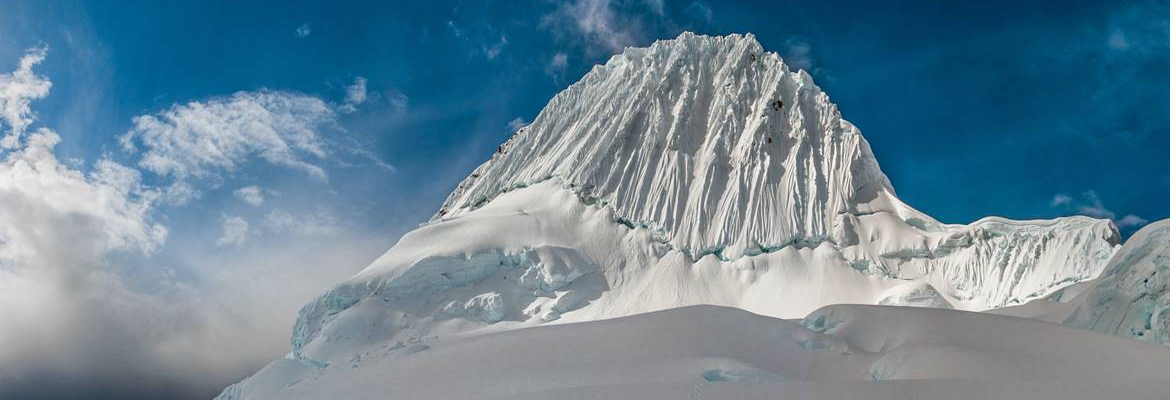
Alpamayo (5,947 m), in Peru's Cordillera Blanca, is often called the most beautiful mountain in the world, thanks to the fluted ice pyramid of its south-west face. Most climbers take the Ferrari route or one of the neighbouring lines on that face: about 400 to 450 m of steep snow and ice at 60 to 70 degrees, climbed from a high camp on the col at about 5,400 m and usually descended by abseil. It is a technical ice climb for experienced alpinists, not a trekking peak. Expeditions usually take 10 to 14 days from Huaraz, including acclimatisation, and the season runs from May to September. On ExpedReview, as of 23 October 2026, 2 operators have 3 verified client reviews for Alpamayo: Exped Tribe, based in Switzerland (5.0★ from 2 reviews, latest December 2025), and Adventure Consultants, based in New Zealand (5.0★ from 1, February 2026, from US$7,750). Below are the reviews, the route, season, difficulty and how to choose an operator.
Alpamayo: key facts | | | |---|---| | Elevation | 5,947 m (19,511 ft) | | Location | Cordillera Blanca, Huascarán National Park, Áncash, Peru | | First ascent | 1957, German expedition led by Günter Hauser (an earlier 1951 Franco-Belgian ascent did not reach the true summit) | | Standard route | Ferrari route and neighbouring lines, south-west face | | Angle | About 60–70° snow and ice | | Gateway | Huaraz, with the approach from Cashapampa | | Typical length | About 10–14 days from Huaraz | | Season | May to September | | Operators reviewed on ExpedReview | 2, with 3 verified reviews (as of 23 Oct 2026) |
Alpamayo operators with verified reviews
ExpedReview ranks operators by their verified client reviews for each place: the star rating, adjusted so one or two reviews, or only old ones, count for less than many recent ones. Every review is checked by hand before it is published, and operators cannot pay to appear or rank higher. Prices are set by the operators themselves. Data as of 23 October 2026.
| Rank | Operator | Based in | Rating here | Reviews | Latest review | Guide-listed price |
|---|---|---|---|---|---|---|
| 1 | Exped Tribe | Switzerland | 5.0★ | 2 | December 2025 | No recent price listed |
| 2 | Adventure Consultants | New Zealand | 5.0★ | 1 | February 2026 | From US$7,750 (updated January 2026) |
AAI (American Alpine Institute) also runs Alpamayo trips but has no reviews for it on ExpedReview yet.
What clients say
Exped Tribe. Two reviews from August and December 2025 describe combined Alpamayo and Chopicalqui expeditions. One group says they felt safe throughout and "all summited Alpamayo (which to our understanding is not very often the case)", praising guides who adapted the pace to the group's skills. Another calls the service "outstanding", praising the porters and chefs and tour leader Davide, who made sure the group was well acclimatised.
Adventure Consultants. A February 2026 review titled "Fast and Light" describes "another great adventure", with guide and clients making "an excellent rope team", logistics that were "fairly advanced for such a technical mountain" and an acclimatisation schedule that "worked well".
Why climb Alpamayo?
Alpamayo's south-west face, with its sharp, fluted ridges of snow and ice, is one of the most photographed mountain faces on Earth. In 1966, a poll in the German magazine Alpinismus voted it the most beautiful mountain in the world. For alpinists, climbing it means steep, sustained ice at high altitude, on a classic line, in one of the world's great ranges. It is often combined with other Cordillera Blanca peaks, such as Chopicalqui, Pisco or Huascarán.
History
A Franco-Belgian expedition reached the north ridge in 1951, but a cornice collapse and later disputes meant their ascent did not reach the true summit. In 1957, a German expedition led by Günter Hauser made the first ascent of the true summit via the north ridge. The south-west face was first climbed in 1975 by an Italian team led by Casimiro Ferrari, and the route bears his name. Other lines on the face, such as the French Direct, have since become popular.
The route
Approach
From Huaraz, drive about three hours to Cashapampa (about 2,900 m). From there, the route follows the Santa Cruz valley, part of the famous Santa Cruz trek, for one to two days to Alpamayo base camp at about 4,300 m, with donkeys carrying the loads. Above base camp, a moraine camp at about 4,900 m leads to a glacier climb to the col camp at about 5,400 m.
Summit day
From the col camp, teams descend slightly and cross the glacier to the foot of the south-west face. The Ferrari route then climbs a steep flute of snow and ice for about 400 to 450 m, with angles of 60 to 70 degrees, to the summit ridge. Conditions on the face change from year to year as the flutes and the summit cornice change, so guides pick the best line. Teams usually descend by abseil down the same or a neighbouring line.
Season
The climbing season is the Peruvian dry season, from May to September, with June to August usually most stable. Afternoon clouds are common, and the north-east of the Cordillera Blanca is often cloudier.
Difficulty
Alpamayo is graded about D or D+ (difficile) in the Alpine system. You need to be confident leading or following steep ice with two technical tools, comfortable with abseiling and able to move efficiently at nearly 6,000 m. Most operators expect previous experience on steep ice and Alpine routes of similar grade.
Choosing an operator
- Check the guide-to-client ratio. One guide for one or two clients is standard on the face.
- Ask about acclimatisation, such as climbs of Urus, Ishinca or Pisco first.
- Ask how the operator chooses the line and what happens if the face is in poor condition.
- Ask what is included, such as transport, donkeys, porters, camps, food and park fees.
- Read recent reviews.
See our Peru and Bolivia guide.
Acclimatisation
Huaraz sits at about 3,050 m, so it is a good place to start acclimatising. Most Alpamayo programmes spend a week or more acclimatising before heading for the mountain. Common options include day hikes to Laguna Churup or Laguna 69, and climbs of easier peaks such as Urus (about 5,420 m), Ishinca (about 5,530 m) or Pisco (about 5,750 m). These climbs also let your guide check your ice and crampon skills. Climbers who go straight to Alpamayo without acclimatising are much less likely to summit and risk altitude sickness.
Sample itinerary
- Arrive in Lima and travel to Huaraz.
- Rest and acclimatisation in Huaraz.
- Acclimatisation hike, such as Laguna Churup.
- Travel to the Ishinca valley.
- Climb Urus or Ishinca.
- Return to Huaraz and rest.
- Drive to Cashapampa and trek up the Santa Cruz valley.
- Trek to Alpamayo base camp.
- Climb to the moraine camp.
- Climb to the col camp.
- Summit day on Alpamayo and return to the col.
- Descend to base camp.
- Trek out to Cashapampa and drive to Huaraz.
- Spare day for weather.
Dangers on Alpamayo
- Ice and rockfall. The face can shed ice, especially as the sun warms it, so teams start in the early hours.
- Cornices. The summit cornice is fragile. Climbers often stop just below the true summit to avoid it.
- Seracs and crevasses on the glacier below the col and around the face.
- Altitude illness, especially for climbers who have not acclimatised well.
- Exhaustion and cold on a long, technical summit day.
- Abseiling errors. Many mountaineering accidents happen on descent, so good abseil technique and anchors are vital.
Training and experience
Before Alpamayo, you should have climbed several Alpine routes of AD or D grade, with steep snow and ice, ideally including a peak above 5,000 m. Practise front-pointing on steep ice with two technical tools, building and using ice screw anchors, and abseiling, including from V-threads (Abalakov anchors). Train for months with long hill days carrying a pack, strength and core training, and some ice climbing at a wall or in winter conditions if you can.
Gear
You will need:
- Insulated or double mountaineering boots
- Technical crampons
- Two technical ice tools
- A harness, helmet, belay device and carabiners
- Ice screws and slings (your guide will advise)
- Warm layers, a down jacket and waterproof shells
- Insulated gloves and mitts
- Glacier glasses, goggles and high-factor sun cream
- A sleeping bag rated to about −15 °C
Gear can be rented in Huaraz, but check the quality carefully.
Cost
On ExpedReview, Adventure Consultants lists Alpamayo from US$7,750. Costs depend on the guide ratio, the length of the acclimatisation programme, whether porters carry to the col camp and what is included. Local Huaraz agencies are often much cheaper but vary greatly in quality. Ask for full details of what is included.
Huaraz and the Cordillera Blanca
Huaraz is Peru's mountaineering capital, with many agencies, guides, gear shops and hostels. The Cordillera Blanca, the highest tropical mountain range in the world, includes Huascarán, Peru's highest peak at about 6,768 m. Most of the range is in Huascarán National Park, a UNESCO World Heritage site, and visitors need a park permit. Huaraz is reached by bus or car from Lima in about eight hours.
Alpamayo and the Santa Cruz trek
The approach to Alpamayo follows part of the Santa Cruz trek, one of the most popular treks in Peru. Non-climbers can see Alpamayo's famous face from a short detour to the Alpamayo base camp area or from viewpoints along the trek. This makes it a good option for climbers travelling with partners who do not climb.
Who Alpamayo suits
Alpamayo suits experienced alpinists who are comfortable on steep ice and want a classic, technical climb at high altitude. It is a great goal for climbers stepping up from Alpine ice routes to bigger mountains. It is not suitable for beginners or climbers with no steep ice experience.
Life on the mountain
Base camp in the Santa Cruz valley is a grassy meadow beside a stream, with views of Alpamayo and the surrounding peaks. Arrieros (muleteers) and their donkeys carry loads to base camp, and on many expeditions porters carry tents and gear to the moraine and col camps. Cooks prepare meals at base camp, and the Exped Tribe reviewers singled out their porters and chefs. Higher up, camps are on snow and ice, and nights are cold. The col camp, on a broad snow saddle, is a dramatic place to stay, with the south-west face rising in front of you.
Alpamayo and other Cordillera Blanca peaks
Many climbers combine Alpamayo with another peak. Chopicalqui (about 6,354 m), as both Exped Tribe groups did, is a higher, less technical glacier climb. Pisco is a popular acclimatisation peak with fantastic views. Huascarán, Peru's highest, is a bigger, longer expedition. Quitaraju (about 6,036 m), next to Alpamayo and reached from the same col, is another classic ice climb often attempted on the same trip.
Changing conditions
Glaciers in the Cordillera Blanca have shrunk significantly over recent decades, and Alpamayo's face changes from season to season. In some years, the flutes are well formed with good snow and ice, while in others they are icier, thinner or overhung by unstable cornices. Experienced local guides and operators follow conditions closely and will choose a different line, or a different peak, if the face is unsafe.
Frequently asked questions
How hard is Alpamayo?
It is a technical ice climb, graded about D or D+, with about 400 to 450 m of 60 to 70 degree snow and ice.
How long does it take to climb Alpamayo?
About 10 to 14 days from Huaraz, including acclimatisation.
When is the best time to climb Alpamayo?
May to September, with June to August usually best.
Why is Alpamayo called the most beautiful mountain in the world?
In 1966, a poll in the German magazine Alpinismus voted it the most beautiful mountain in the world, thanks to its fluted south-west face.
Which operators have verified reviews for Alpamayo?
As of 23 October 2026, Exped Tribe (5.0★ from 2) and Adventure Consultants (5.0★ from 1, from US$7,750).
Do I need experience to climb Alpamayo?
Yes. You should be comfortable on steep ice with two technical tools, with abseiling and with long days at high altitude.
Where do Alpamayo climbs start?
From Huaraz. Teams drive to Cashapampa and trek up the Santa Cruz valley to base camp.
How much does it cost to climb Alpamayo?
On ExpedReview, Adventure Consultants lists Alpamayo from US$7,750. Prices vary with the guide ratio and inclusions.
Who first climbed Alpamayo?
A German expedition led by Günter Hauser made the first ascent of the true summit in 1957.
Can operators pay to rank higher on ExpedReview?
No. Operators cannot pay to appear, rank higher or have reviews removed.
Related articles
- How to choose a guide
- Best operators
- Peru and Bolivia Climbing Guides: Verified Reviews for Alpamayo and the Andes
Climbing in the Andes of Peru and Bolivia: operators ranked by verified ExpedReview client reviews for Alpamayo, plus the Cordillera Blanca and Cordillera Real, Huascarán, Chopicalqui, Huayna Potosí and Illimani, season, acclimatisation, skills, cost and how to choose a guide.