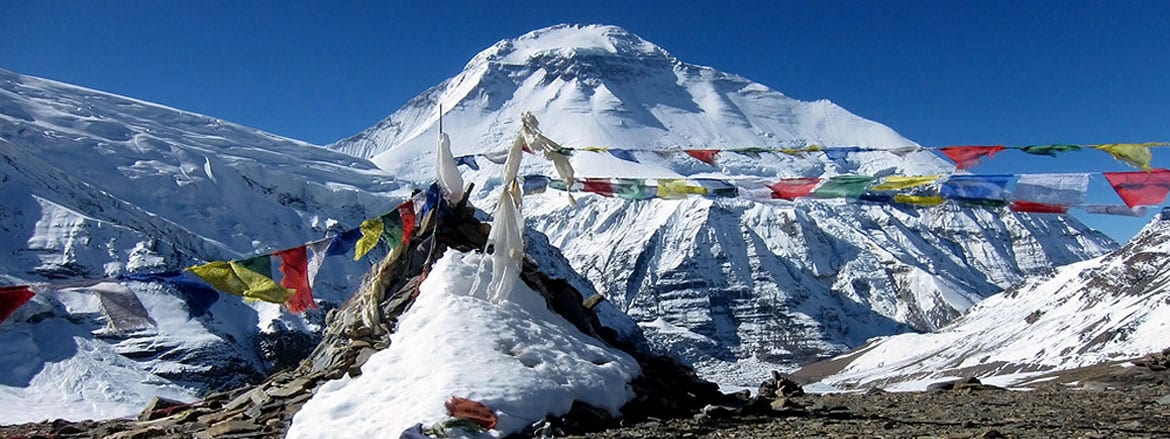
Putha Hiunchuli (Dhaulagiri VII) Guides: Verified Reviews and Climbing Guide
Putha Hiunchuli (7,246 m, 23,773 ft), also called Dhaulagiri VII, is the westernmost major peak of the Dhaulagiri Himal, on the edge of the Dolpo region of western Nepal, and is widely regarded as one of the most accessible 7,000-metre peaks in the Himalaya. The standard route is a long, mostly non-technical glacier and snow climb, with a few steeper sections, from a base camp reached after a remote trek from Juphal airstrip in Dolpo. Expeditions usually take about four weeks, in autumn or spring. On ExpedReview, as of 23 October 2026, 1 operator has 1 verified client review for Putha Hiunchuli: Furtenbach Adventures (5.0★, March 2026). Below are the ranking and review, then a guide to the expedition.
Putha Hiunchuli (Dhaulagiri VII): key facts | | | |---|---| | Height | 7,246 m (23,773 ft) | | Location | Western Dhaulagiri Himal, Dolpo region, Nepal | | First ascent | 1954, by Jimmy Roberts and Ang Nyima | | Standard route | Glacier and snow slopes from the north-east/east side | | Approach | Fly Kathmandu–Nepalgunj–Juphal, then trek about a week | | Typical expedition | About 4 weeks | | Seasons | Autumn (September–October) and spring (April–May) | | Operators reviewed on ExpedReview | 1, with 1 verified review (as of 23 Oct 2026) |
Putha Hiunchuli guides ranked by verified reviews
Rankings use each operator's verified ExpedReview client reviews for the peak: the star rating, adjusted so that one or two reviews, or only old ones, count for less than many recent ones. Every review is checked by hand before it is published, and operators cannot pay for a better position. Data as of 23 October 2026.
| Rank | Operator | Based in | Rating here | Reviews | Latest review |
|---|---|---|---|---|---|
| 1 | Furtenbach Adventures | Austria | 5.0★ | 1 | March 2026 |
No operator lists a current price for Putha Hiunchuli on ExpedReview, so ask each one directly. One review is a thin basis for comparison, so read operators' reviews on other Himalayan peaks too.
What clients say
The single review, from March 2026, is short and enthusiastic: a "perfectly organised expedition with amazing Sherpa team", singling out a Sherpa named Kunga as "first class". It does not give details of the route or the dates of the trip.
The mountain
Putha Hiunchuli lies at the western end of the Dhaulagiri massif, west of Dhaulagiri I (8,167 m), the world's seventh-highest mountain, and its numbered satellites. To its north and west is Dolpo, a high, dry region of Tibetan Buddhist culture, and to the south are the forested hills of Myagdi and Rukum. The mountain is a broad, glaciated peak with long, moderate slopes on its north and east sides, which is why it is climbed without the steep ice and rock of many other 7,000-metre peaks. The views from the summit take in the Dhaulagiri range, the Kanjiroba Himal and peaks in Tibet.
History
The first ascent was made in 1954 by the British officer Jimmy Roberts and the Sherpa Ang Nyima. Roberts, a Gurkha officer, later founded Mountain Travel Nepal in 1964, the first trekking company in Nepal, and is often called the father of trekking. For decades the peak was rarely climbed, because Dolpo was closed to foreigners until 1989 and remains a restricted area, but since the 2000s it has become a regular commercial objective for climbers seeking a first 7,000-metre summit away from the crowds.
Approach
Most expeditions fly from Kathmandu to Nepalgunj, on the plains near the Indian border, then take a small plane to Juphal, a mountain airstrip in Dolpo, at about 2,500 m. From Juphal, the trek follows the Thuli Bheri river past Dunai, the district headquarters, and Tarakot, then continues east up the Barbung Khola valley through small villages before turning off towards the mountain. Exact routes and camps vary between operators. Base camp is at about 4,900–5,000 m. The trek usually takes about a week and is an important part of acclimatisation. Flights to Juphal are often delayed by weather, so itineraries include spare days. Some teams approach from the south, through Dhorpatan, a longer and wilder route.
The route
From base camp, the standard route climbs moraine and glacier to Camp 1, at about 5,500–5,600 m, then up broad snow slopes and a glacier with crevasses to Camp 2, at about 6,000–6,400 m, depending on the operator. Some teams place a third camp higher. The summit day follows a long snow ridge and slopes to the top, with a few short steeper sections of snow or ice, sometimes up to about 40–45°, where operators fix rope. The difficulty is more about altitude, length and cold than technical climbing, and the summit day can take 10 to 14 hours from the top camp and back. Strong winds are common on the upper slopes, and deep snow after storms can make progress slow and increase avalanche risk.
Difficulty and experience
Putha Hiunchuli is often described as one of the easiest 7,000-metre peaks technically, and it is a popular first 7,000er and preparation for 8,000-metre peaks such as Manaslu or Cho Oyu. But it is not a trekking peak. Climbers need to be comfortable with crampons, an ice axe, roped glacier travel, and ascending and descending fixed ropes with a jumar and rappel device. Most operators ask for experience on a 6,000-metre peak, such as Island Peak, Mera Peak or Lobuche, or on high peaks in the Andes. Good fitness and a track record at altitude matter more than technical skill. Supplementary oxygen is not normally used, though some operators carry it for emergencies.
A typical expedition
Most Putha Hiunchuli expeditions last about 25 to 30 days from Kathmandu. A typical itinerary includes two or three days in Kathmandu for permits and briefings, flights to Nepalgunj and Juphal, about a week of trekking to base camp, about two weeks on the mountain with rotations to the higher camps and a summit window, and a trek back to Juphal for the flight out. Some operators reduce the trek by using helicopters, but that also reduces time for acclimatisation. Extra days are built in for weather, flights and summit attempts.
When to go
The main seasons are autumn, from about September to October, and spring, from about April to May. Dolpo lies partly in the rain shadow of the Dhaulagiri range, so it gets less monsoon rain than much of Nepal, and some teams climb in early autumn when other regions are still wet. Autumn usually brings clear, stable weather but colder temperatures as the season goes on, while spring is warmer but may bring more afternoon cloud and snow. Winter is very cold, with heavy snow on the passes, and the monsoon brings rain to the approach.
Permits and logistics
Climbers need a Nepal climbing permit for the peak, issued through a registered Nepali agency, as well as permits for the Dolpo region, which includes restricted areas that require a special permit and a licensed guide, and for Shey Phoksundo National Park if the route enters it. Nepal has revised its climbing royalties and rules in recent years, including requirements for guides, insurance and waste management, so check the current fees and requirements with your operator. Expeditions are supported by Nepali guides, cooks and porters, and, in Dolpo, often by mules or yaks. The remote location means rescue is by helicopter, weather permitting, so insurance covering helicopter evacuation from high altitude is essential.
Cost
No operator lists a price for Putha Hiunchuli on ExpedReview, so ask each one directly. Costs are usually lower than for an 8,000-metre peak, because permits are cheaper and oxygen is not normally used, but the remote approach, with charter flights and pack animals, adds to logistics. When comparing prices, check what is included: permits, domestic flights, hotels in Kathmandu and Nepalgunj, the trek, base camp services, fixed ropes, Sherpa support, oxygen for emergencies, and insurance. See our Everest cost guide for a broader view of Himalayan expedition costs.
Gear
Climbers need gear for 7,000 m in cold, windy conditions: double mountaineering boots or high-altitude boots, crampons, an ice axe, a harness, a jumar, a rappel device, carabiners and slings, a helmet, a down suit or down jacket and trousers, warm gloves and mittens, a sleeping bag rated to about -30°C, and good sunglasses and goggles. Operators usually provide tents, ropes, cooking equipment and group gear. Ask your operator for the full kit list.
Culture and environment
The trek through Dolpo is one of the attractions of the expedition. The region's villages, monasteries and chortens reflect a Tibetan Buddhist culture that has changed less than in many parts of Nepal, partly because the region was closed to outsiders for so long. Dolpo became widely known through Peter Matthiessen's book The Snow Leopard and the film Himalaya (also released as Caravan), which was shot in the region. Treat local customs with respect, walk clockwise around chortens and mani walls, ask before photographing people, and avoid leaving rubbish, since waste disposal in remote valleys is difficult. Good operators carry out their waste from base camp and the higher camps, as Nepal's rules now require, and use local staff and services where possible.
How it compares with other first 7,000ers
Climbers choosing a first 7,000-metre peak often compare Putha Hiunchuli with Baruntse in eastern Nepal, Himlung Himal near Manaslu, and Lenin Peak in the Pamirs. Putha Hiunchuli is generally the least technical of these in Nepal, with fewer steep sections than Baruntse, and much quieter than Himlung or Lenin Peak, but its approach is longer and depends on small-plane flights to Juphal. Baruntse offers more technical climbing and the chance to climb Mera Peak on the way; Himlung has an easier approach by road; Lenin Peak is cheaper but often crowded and known for severe weather. The right choice depends on your experience, the time you have and the kind of trip you want.
Safety
The main risks on Putha Hiunchuli are altitude illness, cold injury, crevasses, avalanches after heavy snow, and the remoteness of the region, which means rescue depends on the weather and on helicopters reaching the area. Because the climb is technically easy, some climbers underestimate it; the altitude is the same as on harder 7,000-metre peaks, and climbers have died from altitude illness and exhaustion on easy-angled terrain. A gradual acclimatisation plan, with rotations to the higher camps before the summit attempt, is the most important safeguard. Ask your operator about their evacuation plans, communication equipment, emergency oxygen and medical kit, and turnaround times.
Training
Prepare for several months. Build endurance with long hikes carrying 15 to 20 kg and plenty of ascent, and add strength training for the legs and core and regular cardiovascular training. Practise fixed-rope techniques and glacier travel, and if possible climb a 6,000-metre peak first to see how your body copes with altitude. Practise with the boots, gloves and pack you will use on the expedition, so that nothing is new on summit day.
How to choose an operator
Ask each operator about the experience of the expedition leader and the Nepali guides on Putha Hiunchuli, their success and safety record, the guide-to-client ratio on summit day, the acclimatisation plan, how they handle flight delays to Juphal, emergencies and evacuation, and what is included in the price. Ask about group size, the standard of base camp and food, and support for climbers who need to turn back. Read reviews of the operator on other Himalayan peaks, and our how-to-choose guide. For the wider region, see our Dolpo page and Dhaulagiri page.
Frequently asked questions
Is Putha Hiunchuli a good first 7,000-metre peak?
Yes. It is one of the most accessible 7,000-metre peaks technically, though the altitude, remoteness and long summit day still make it demanding. Most operators expect experience on a 6,000-metre peak.
How long does a Putha Hiunchuli expedition take?
About 25 to 30 days from Kathmandu, including the flights to Juphal and the trek in.
Do I need special permits for Dolpo?
Yes. Besides the climbing permit, parts of Dolpo are restricted areas that require a special permit and a licensed guide, arranged through a registered agency.
When is the best time to climb Putha Hiunchuli?
In autumn, from about September to October, or in spring, from about April to May.
Which operator is ranked first for Putha Hiunchuli on ExpedReview?
As of 23 October 2026, Furtenbach Adventures is the only ranked operator, with 5.0★ from 1 verified review, from March 2026.
Related articles
- How to choose a guide
- Best operators
- Dhaulagiri & Dolpo Guides: Verified Reviews, Expeditions and Treks
Dhaulagiri I (8,167 m), Putha Hiunchuli, the Dhaulagiri Circuit and Dolpo: operators ranked by verified ExpedReview client reviews, plus routes, permits, seasons, skills and how to choose a guide.