Poon Hill Trek: Guide, Itinerary and Verified Reviews
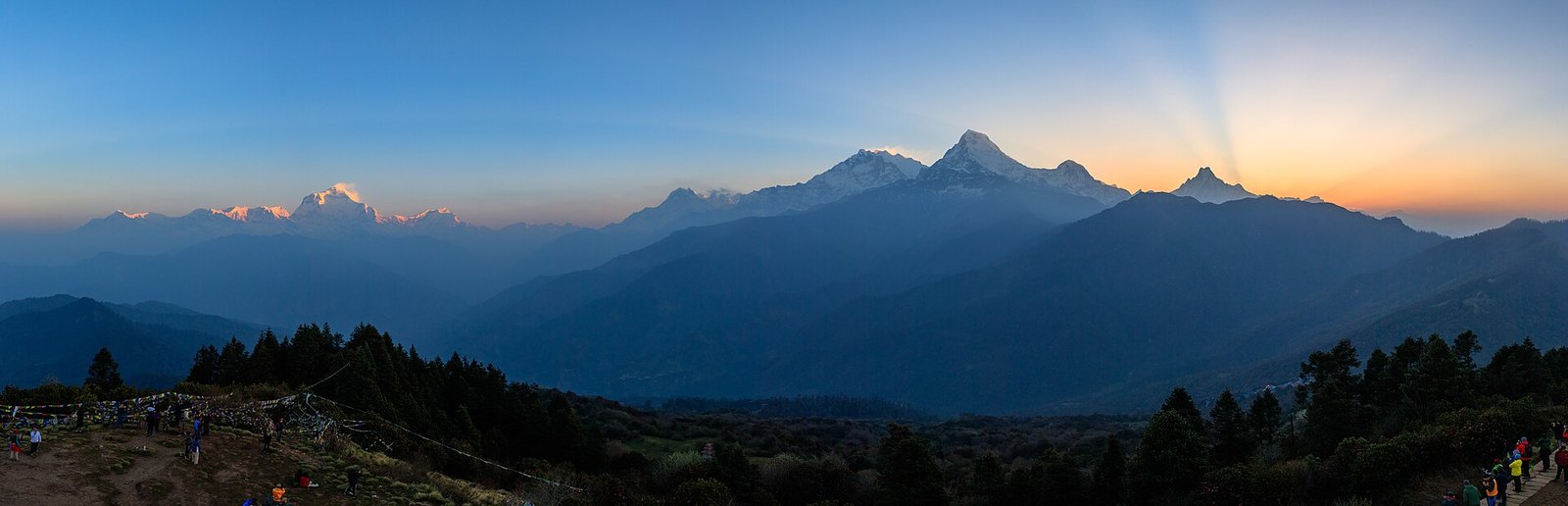
The Poon Hill trek (also called the Ghorepani Poon Hill trek) is Nepal's best-known short trek: three to five days from near Pokhara through Gurung and Magar villages and rhododendron forest to Poon Hill (3,210 m), where the sunrise lights up Dhaulagiri, the Annapurna range and Machhapuchhre. It is an easy-to-moderate walk that suits families, first-time trekkers and anyone with a few spare days in Pokhara. On ExpedReview, as of 23 October 2026, one operator has one verified client review for Poon Hill: Dream Himalaya Adventures (5.0★, January 2026). Below are the review, the itinerary, permits, costs and how to choose a guide.
Poon Hill trek: key facts | | | |---|---| | Highest point | Poon Hill, 3,210 m | | Main overnight | Ghorepani, about 2,860 m | | Start and finish | Nayapul, Ulleri or Hile (near Pokhara); often finishing via Ghandruk | | Typical length | 3–5 days | | Difficulty | Easy to moderate; long stone staircases | | Best months | October–November and March–April | | Permits | Annapurna Conservation Area Permit (NPR 3,000) and TIMS card | | Guide | A licensed guide is required for foreign trekkers | | Operators reviewed on ExpedReview | 1, with 1 verified review (as of 23 Oct 2026) |
Poon Hill trek operators with verified reviews
ExpedReview ranks operators by their verified client reviews for each place: the star rating, adjusted so one or two reviews, or only old ones, count for less than many recent ones. Every review is checked by hand before it is published, and operators cannot pay to appear or rank higher. Data as of 23 October 2026.
| Rank | Operator | Based in | Rating here | Reviews | Latest review |
|---|---|---|---|---|---|
| 1 | Dream Himalaya Adventures | Nepal | 5.0★ | 1 | January 2026 |
What the review says. The client joined a four-day Poon Hill trek with a guide named Dawa in January 2026 and calls it a truly fabulous experience with breathtaking scenery. They describe Dawa as helpful and detail-oriented, someone who went above and beyond, and say he met them before the trek to go through the plan. A winter trip like this one shows the route can work well outside the main seasons, with clear mornings and quiet trails.
Bold Himalaya and Everest Trekking Routes also list this trek on ExpedReview but have no verified reviews for it yet.
Why Poon Hill is so popular
Poon Hill offers a lot for very little time. In a few days you walk from subtropical farmland to cool forest, stay in friendly villages, and stand on a hilltop facing one of the great mountain panoramas in Nepal. From the viewing tower you look across to Dhaulagiri (8,167 m) and its icefall, Tukuche Peak and Nilgiri, Annapurna South and Annapurna I, Hiunchuli, and the fishtail summit of Machhapuchhre, which is sacred and closed to climbing. On a clear morning the first light hits Dhaulagiri and moves along the range.
The trek never goes high enough to be a big altitude risk, the lodges are comfortable, and the start is only an hour or two by road from Pokhara. That makes it a good first trek in Nepal and a good family trip.
Typical itinerary
There are many variations. The most common four-day loop runs anticlockwise:
| Day | Route | Sleeping height | Walking time |
|---|---|---|---|
| 1 | Drive Pokhara to Hile or Tikhedhunga, walk to Ulleri | About 2,020 m | 3–4 hours |
| 2 | Ulleri to Ghorepani | About 2,860 m | 4–5 hours |
| 3 | Dawn climb to Poon Hill, then Ghorepani to Tadapani | About 2,630 m | 6–7 hours |
| 4 | Tadapani to Ghandruk, drive to Pokhara | — | 3–4 hours |
The Ulleri steps. The climb from Tikhedhunga to Ulleri is the hardest part, a long stone staircase of several thousand steps up a steep hillside. Take it slowly and use walking poles.
Ghorepani. The name means "horse water", from the days when it was a stop for mule trains between Pokhara and the Kali Gandaki. Today it is a busy village of lodges set in rhododendron forest.
Sunrise on Poon Hill. You leave Ghorepani in the dark, about an hour before sunrise, and climb steeply for 45 minutes to an hour to the top, where there are tea stalls and a viewing tower. Bring a headtorch and warm layers. In the main seasons the top can be crowded at dawn, so a guide may suggest climbing a little earlier or going on to the quieter viewpoint at Gurung Hill on the way to Tadapani.
Ghandruk. One of the largest Gurung villages in the area, with stone houses, a small museum and close views of Annapurna South and Machhapuchhre. Many treks end here with a drive back to Pokhara.
Longer variations
- Five days, with a night in Ghandruk, gives a more relaxed pace and time in the village.
- Poon Hill and Annapurna Base Camp combine in about 9 to 11 days, going from Tadapani or Ghandruk on to Chhomrong and the Annapurna Sanctuary. See our Annapurna Base Camp guide.
- Poon Hill and Khopra Ridge add a quieter, higher detour to about 3,660 m, with a view of Dhaulagiri and Annapurna South from a ridge-top lodge. See our Khopra Ridge page.
- Mardi Himal is a separate short trek nearby, along a ridge towards Machhapuchhre. See our Mardi Himal page.
Permits and the guide rule
Poon Hill lies inside the Annapurna Conservation Area. Since 1 April 2023, foreign trekkers in Nepal's national parks and conservation areas outside the Khumbu must trek with a licensed guide. You need:
- Annapurna Conservation Area Permit (ACAP): NPR 3,000 for foreigners and NPR 1,000 for SAARC nationals.
- TIMS card: issued through a registered trekking agency; ask your operator for the current fee.
Your operator normally arranges both in Pokhara or Kathmandu. Bring passport photos and a copy of your passport.
When to go
| Season | Months | What to expect |
|---|---|---|
| Autumn | October–November | Clearest views, comfortable temperatures, busiest |
| Winter | December–February | Cold mornings, often very clear, few trekkers; occasional snow at Ghorepani |
| Spring | March–April | Rhododendrons in flower, warmer, some haze on the mountains |
| Monsoon | June–September | Rain, leeches, landslides on roads, mountains often hidden |
If you want the rhododendrons in bloom, the forest around Ghorepani is usually at its best in March and early April. For the clearest mountain views, go in October and November or on a clear winter morning.
Fitness and difficulty
You need no mountaineering skills. You should be able to walk four to seven hours a day on steep stone steps for several days. The total height gain from the road to Poon Hill is around 1,500 m to 2,000 m, depending on where you start, and the descent puts heavy strain on the knees. Regular walking, stair climbing and a few longer hill days in the weeks before will make the trek much more enjoyable.
Altitude sickness is rare at these heights, but not impossible above about 2,500 m. Drink plenty of water, go slowly and tell your guide if you feel unwell.
What it costs
ExpedReview does not hold a current price for Poon Hill from the reviewed operator. A guided package usually includes transport from Pokhara to the trailhead and back, a licensed guide, permits, tea-house rooms and often meals. Porters cost extra. Things usually not included are your transport to Pokhara, hotels in Pokhara, drinks, snacks, hot showers, charging, tips and travel insurance. Compare quotes line by line, and ask whether meals are included and whether the guide is licensed.
How to choose a guide or operator
- Ask for a licensed guide by name. The 2023 rule means you must have one; check their licence and how often they lead this route.
- Ask what the price covers. Permits, transport, meals and lodging should be clear in writing.
- Ask about group size and pace. Families and first-time trekkers may want a private trip at a slower pace.
- Ask about porters. Load limits, insurance and fair pay matter on every trek.
- Ask about flexibility. Can you add a night in Ghandruk or a detour to Khopra Ridge?
- Read reviews. Look for detail about the guide and how problems were handled.
The villages and their people
The Poon Hill area is home mainly to Gurung and Magar people. Both communities are famous for the Gurkha soldiers who have served in the British and Indian armies for two centuries, and you will see memorials, pension offices and well-kept houses built with army earnings in villages such as Ghandruk. Gurung culture shows in the stone-roofed houses, the terraced millet and rice fields and the hospitality of the lodges, many of which have been run by the same families for decades.
Ghandruk is one of the best places on the trek to learn about this culture. The village has a small Gurung museum with traditional tools, clothing and household objects, and many lodges are happy to talk about local customs. If you visit during a festival such as Dashain or Tihar in autumn, you may see dancing, swings and village celebrations, though some lodges close for a day or two.
As anywhere in Nepal, dress modestly, ask before photographing people, and remove your shoes before entering homes or shrines.
Tea houses and food
Lodges on the Poon Hill route are some of the best in Nepal's mountains. Most have private twin rooms with thin walls, shared bathrooms and hot showers powered by gas or solar heaters, and a dining room with a stove where trekkers gather in the evening. Wi-Fi and charging are usually available for a small fee. Menus are long and include dal bhat, noodles, pasta, pancakes, soups and apple pie. Dal bhat comes with free refills and is the best fuel for the trail. Many trekkers also enjoy the local apple brandy and honey sold in the villages.
Rooms are basic and cool at night, especially in winter at Ghorepani. A warm sleeping bag or liner makes a big difference, even though lodges provide blankets.
Trekking with children or older relatives
Poon Hill is one of the best treks in Nepal for families. Days are short to moderate, villages are close together, and there are plenty of lodges if you need to stop early. A private trip with your own guide lets you set the pace. Consider adding a fifth day so children have a short day between the big climbs, and hire a porter so they can walk with a light pack. Check that your travel insurance covers trekking for every member of the family.
What to pack
- Comfortable, broken-in walking shoes or boots
- A light down jacket or warm fleece for dawn on Poon Hill
- A waterproof jacket, quick-drying layers and a sun hat
- Walking poles for the stone steps
- Headtorch, water bottle and purification tablets
- A sleeping bag or warm liner, especially from November to February
- Cash in Nepali rupees, as there are no reliable cash machines on the trail
Responsible trekking
Carry out all rubbish, including plastic bottles and batteries. Refill bottles with treated water rather than buying new ones; many lodges sell filtered water. Respect local customs, tip your guide and porter fairly at the end of the trek, and choose an operator that pays and insures its staff properly.
Getting there
Pokhara is the gateway. It is about 25 minutes by plane or six to eight hours by road from Kathmandu, and has its own international airport. From Pokhara, a jeep or taxi takes about an hour and a half to two hours to Nayapul, Birethanti or further up the road to Hile, Tikhedhunga or even Ulleri, depending on the road and the season. Roads in the hills have been extended in recent years, which shortens the walk but also means some lower sections now follow dirt roads. A good guide will pick trails that avoid them.
At the end of the trek, jeeps run from Ghandruk or Kimche back to Pokhara. If you go on to Annapurna Base Camp instead, the return is usually via Jhinu Danda, with its hot springs, and the road head at Siwai or Nayapul.
Frequently asked questions
How long is the Poon Hill trek?
Three to five days, with four days the most common. It can be extended to combine with Annapurna Base Camp, Khopra Ridge or other nearby routes.
How high is Poon Hill?
Poon Hill is 3,210 m. Most trekkers sleep at Ghorepani, about 2,860 m, and climb to the top for sunrise.
Is the Poon Hill trek difficult?
It is easy to moderate. There is no technical ground, but the stone staircases, especially up to Ulleri, are steep and long.
Do I need a guide for Poon Hill?
Yes. Since 1 April 2023, foreign trekkers in the Annapurna Conservation Area must trek with a licensed guide.
What permits are needed for the Poon Hill trek?
An Annapurna Conservation Area Permit (NPR 3,000 for foreigners) and a TIMS card.
What can you see from Poon Hill?
Dhaulagiri, Tukuche Peak, Nilgiri, Annapurna South, Annapurna I, Hiunchuli and Machhapuchhre, among others.
Which operators have verified reviews for Poon Hill?
As of 23 October 2026, Dream Himalaya Adventures has one verified review (5.0★, January 2026).
Can operators pay to rank higher on ExpedReview?
No. Operators cannot pay to appear, rank higher or have reviews removed.
Related articles
- How to choose a guide
- Best operators
- Annapurna and Mustang Trekking and Climbing Guides: Verified Reviews
Treks and climbs in Nepal's Annapurna and Mustang region: operators ranked by verified ExpedReview client reviews, plus a guide to the Annapurna Circuit, Annapurna Base Camp, Poon Hill, Mardi Himal, Upper Mustang, Annapurna I and nearby peaks, with permits, guide rules, seasons and how to choose.