Mount Logan Guides: Verified Reviews, King Trench Route, Permits and How to Climb Canada's Highest Peak
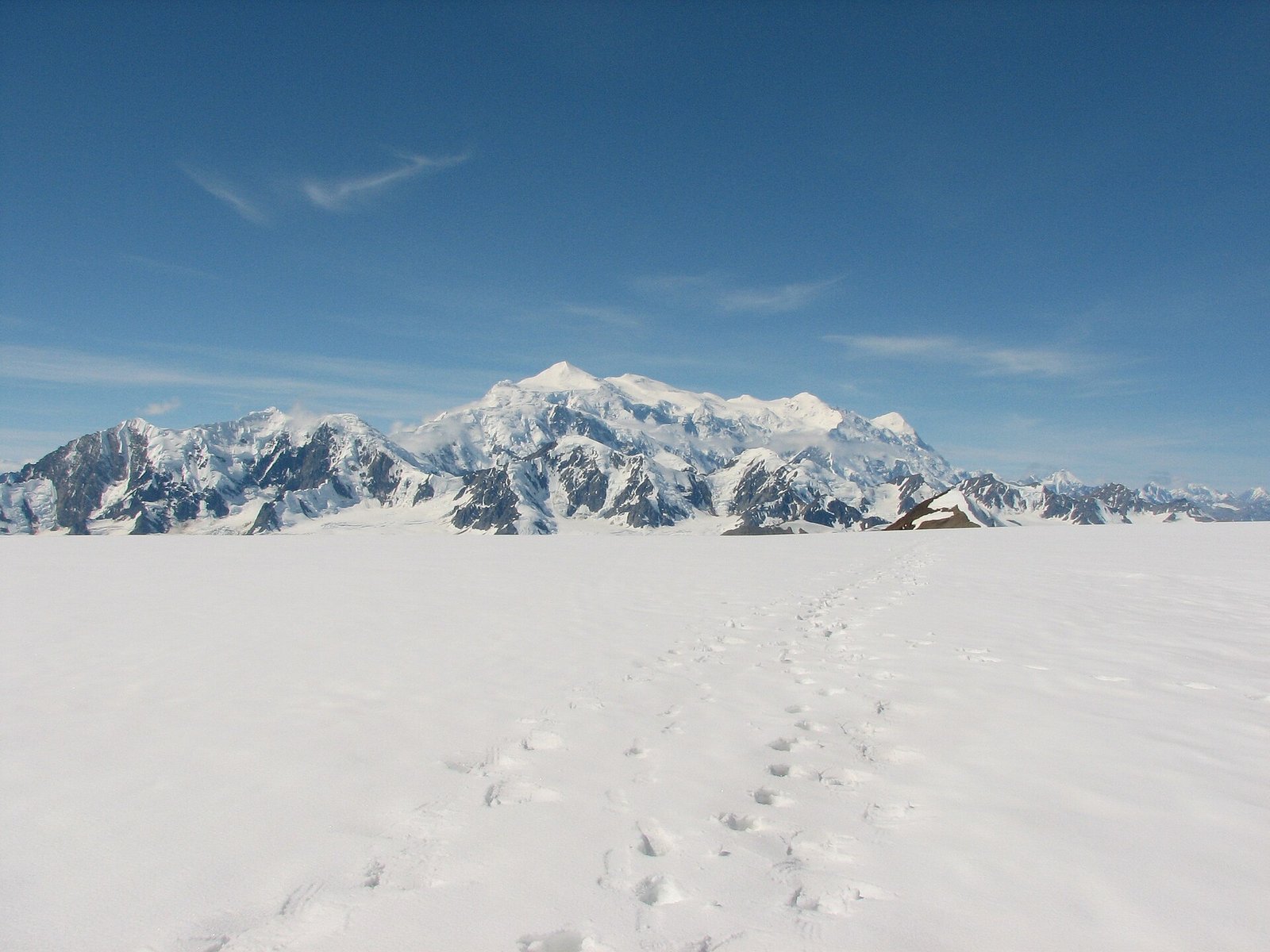
Mount Logan, at 5,959 m (19,551 ft), is the highest mountain in Canada and the second highest in North America after Denali. It rises in the St. Elias Mountains of Kluane National Park and Reserve in the south-west Yukon, in the heart of one of the largest non-polar icefields in the world, and its massif is often described as having the largest base of any non-volcanic mountain on Earth. The standard route, the King Trench, is a long, glaciated, non-technical but serious expedition of about three weeks, reached by ski plane from Kluane Lake. Climbers need a Parks Canada mountaineering permit and an aircraft landing permit, and must be fully self-sufficient: there are no porters, fixed camps or rangers on the mountain. The season runs from about mid-April to late June. On ExpedReview, as of 23 October 2026, one operator has a verified client review for Mount Logan: Mountain Madness (4.8★ from 1 review, June 2019). Below are the rankings, then everything you need to plan a Logan expedition.
Mount Logan: key facts | | | |---|---| | Height | 5,959 m (19,551 ft) | | Location | St. Elias Mountains, Kluane National Park and Reserve, Yukon, Canada | | Rank | Highest in Canada; second highest in North America; one of the Seven Second Summits | | First ascent | 23 June 1925, by a Canadian-American team led by Albert MacCarthy | | Standard route | King Trench (west side) | | Other routes | East Ridge, a longer technical ridge | | Access | Ski plane from Kluane Lake area (Silver City), Yukon | | Permits | Parks Canada mountaineering permit and aircraft landing permit | | Season | About mid-April to late June | | Typical expedition length | About 3 weeks | | Operators reviewed on ExpedReview | 1, with 1 verified review (as of 23 Oct 2026) | | Currency | Canadian dollar (CAD) |
Mount Logan guides ranked by verified reviews
Rankings use each operator's verified ExpedReview client reviews for this route: the star rating, adjusted so that one or two reviews, or only old ones, count for less than many recent ones. Every review is checked by hand before it is published, and critical reviews stay up. Data as of 23 October 2026.
| Rank | Operator | Based in | Rating here | Reviews | Latest review | From price |
|---|---|---|---|---|---|---|
| 1 | Mountain Madness | United States | 4.8★ | 1 | June 2019 | Not listed |
With a single review from 2019, this ranking says little on its own. Ask any Logan operator how many King Trench expeditions it has run in recent seasons, its guide-to-client ratio, and its summit and safety record.
What clients say
The one verified reviewer, writing about a Mountain Madness expedition, spent nine days on the mountain before altitude problems forced an early departure, but described the trip as great and the guides as exceptional, saying they used their skill and mountaineering knowledge to keep the team safe. It is a reminder that on Logan, as on any high glaciated peak, altitude can end an expedition even for well-prepared climbers.
Why climb Mount Logan?
Logan is one of the great wilderness climbs. Unlike Denali, it sees only a small number of expeditions each year, so you may have the mountain largely to yourself. The scale is enormous: the summit plateau alone is a vast, high ice field above 5,000 m, with several summits, and the surrounding Icefield Ranges include Mount St. Elias, Mount Lucania, King Peak and Mount Steele. For climbers working through the Seven Second Summits, the second-highest peak on each continent, Logan is the North American objective. It is also excellent preparation for Denali or higher expeditions, because it demands the same self-sufficiency, sled hauling and cold-weather skills.
The King Trench route
The King Trench, on the west side of the mountain, is the standard route. It was not the route of the first ascent but has become the most popular because it is the most direct and least technical way to the summit plateau. Typical camps, according to guided itineraries, are:
| Camp | Approximate altitude | Notes |
|---|---|---|
| Base Camp, Quintino Sella Glacier | 2,750 m | Ski-plane landing |
| Camp 1 | 3,300 m | Glacier travel, crevasses |
| King Col | 4,130 m | Col between Logan and King Peak; often a long stay |
| Camp 3 | about 4,870 m | Above the steeper slopes of the King Trench |
| High camp, summit plateau | about 5,080 m | Edge of the vast summit plateau |
| Summit | 5,959 m | Long summit day across the plateau |
The route climbs crevassed glaciers to King Col, then steeper snow and ice slopes, the "trench" itself, onto the high plateau. The plateau is huge and featureless, so navigation in poor visibility is a serious hazard; teams use GPS and wands to mark their route. Summit day is long, with a lot of horizontal distance as well as height gain, and the final slopes can be icy and exposed.
Many climbers ski or snowshoe the lower glaciers, and all teams haul sleds. There are no porters: each climber carries and pulls heavy loads, often using a "carry high, sleep low" pattern to move supplies up the mountain while acclimatising.
The East Ridge
The East Ridge is a longer, more technical and committing route with sustained climbing on a narrow, corniced ridge. It is a classic for experienced alpinists, but it involves more technical terrain, more exposure and fewer escape options than the King Trench. Most guided expeditions use the King Trench.
Permits and park rules
Logan lies in Kluane National Park and Reserve, managed by Parks Canada. According to Parks Canada:
- All climbers in the Icefield Ranges need a mountaineering permit, and an aircraft landing permit is required for every landing in the park.
- Parties must apply in advance: Parks Canada asks for applications at least a month before the trip, and all climbers must register.
- Travel within the icefields is not permitted between 15 November and early April.
- Parties must be entirely self-sufficient and able to handle emergencies on their own.
- Drones are not permitted for recreational use.
Parks Canada also sets requirements on party size and insurance for Icefield Ranges expeditions; check the current rules and fees on the Kluane mountaineering pages before you apply. A guided expedition usually handles permits for you.
Getting there
Most Logan expeditions start in Whitehorse, the Yukon's capital, and drive to the Kluane Lake area, about three to four hours north-west, where ski-plane operators fly climbers to the Quintino Sella Glacier. The flight itself is one of the highlights: over a sea of ice and mountains, with views of the vast Kluane icefields. Weather often delays flights in and out by days, so build spare days into your plans, at both ends of the trip.
Best time to climb Mount Logan
The climbing season runs from about mid-April to late June, according to Parks Canada. Earlier in the season, temperatures are very cold, especially high on the mountain, but snow bridges over crevasses are generally firmer; later in the season, it is a little warmer but glaciers become more broken. Storms off the Gulf of Alaska can be violent and last several days, and Logan's high plateau is notorious for strong winds and extreme cold. Even in late spring, temperatures on the summit plateau can fall far below freezing.
How hard is Mount Logan?
Technically, the King Trench is not difficult: steep snow and ice slopes, crevassed glaciers and a long, high plateau. What makes Logan serious is the combination of:
- Remoteness. There is no rescue team based on the mountain, and evacuation depends on weather and flights.
- Cold. Logan is in the sub-Arctic, and temperatures on the plateau can be extreme.
- Weather. Long storms can pin teams in their tents for days.
- Load. Heavy sleds and packs, with no porters.
- Altitude. Nearly 6,000 m, with summit day above 5,000 m on the plateau.
Experience and skills you need
Before Logan, you should be comfortable with:
- Glacier travel and crevasse rescue, including setting up hauling systems.
- Cold-weather camping, including building snow walls and managing stoves in storms.
- Sled hauling and skiing or snowshoeing with heavy loads.
- Climbing steep snow and ice with crampons and an ice axe, with a running belay or fixed lines.
- Previous altitude experience, ideally on a peak such as Aconcagua or a high Andean volcano.
Many climbers do Denali before Logan, or use Logan as preparation for Denali. See our Denali guide and Denali guide.
What to bring
Kit for Logan is close to a Denali list: double or triple mountaineering boots, an expedition down parka, a sleeping bag rated to about −30 °C or colder, warm mitts and layered gloves, a harness, crampons, ice axe, glacier glasses and goggles, skis or snowshoes, a sled and harness, and a well-equipped group kit with stoves, tents, wands, ropes, crevasse rescue gear, a satellite phone or messenger and a GPS. See how to choose mountaineering boots.
A typical King Trench expedition
Guided King Trench expeditions usually run about 20 to 24 days, including weather days. A typical pattern is:
- Arrival in Whitehorse, gear check and drive to the Kluane Lake area.
- Fly in to the Quintino Sella Glacier when the weather allows.
- Move up the lower glacier to Camp 1 and King Col over several days, double-carrying loads and caching supplies.
- Climb the King Trench to the upper camps, acclimatising as you go.
- Establish high camp at the edge of the summit plateau.
- Summit day across the plateau to the top, when a weather window allows.
- Descend to base camp, often in two or three days, and wait for the flight out.
Every expedition is different, and storms can force teams to sit for several days at a time. The ability to stay patient, warm and well fed in a tent for days is as important on Logan as fitness.
Training for Logan
Unlike Denali, Logan has no rangers on the mountain and no regular daily traffic, so fitness and self-sufficiency matter even more. Logan rewards climbers who are fit for long days with heavy loads. Train for several months with aerobic work, strength training, long hikes with a heavy pack and tyre dragging to simulate sled hauling. Practise crevasse rescue and ski or snowshoe travel before you go. See our mountaineering training guide.
Cost
Logan is cheaper than an 8,000 m expedition but still a significant investment. Guided King Trench expeditions advertised by North American operators in recent seasons have typically been priced at around US$11,000 to US$14,000 per person, usually including permits, ski-plane flights, group equipment and food on the mountain. On top of this, budget for flights to Whitehorse, personal equipment, insurance with rescue cover and extra days in case of weather delays. Prices change every year, so check with operators.
Safety and rescue
Because there is no permanent rescue presence, Logan expeditions must be prepared to treat injuries and illness themselves and to wait out storms before any evacuation. Teams carry first aid kits, satellite communications and enough food and fuel for extra days. Crevasse falls, altitude illness, frostbite and hypothermia are the main risks. Guided teams usually include at least two guides, so that one can stay with a sick climber while others continue or descend. Before you go, check that your insurance covers search and rescue in a remote Canadian national park. See acute mountain sickness.
Protecting Kluane
Kluane is part of a UNESCO World Heritage Site, together with neighbouring parks in Alaska and British Columbia. Expeditions must carry out all their rubbish, and climbers should follow Parks Canada's current rules on human waste and campsites on the glaciers. Leaving no trace helps keep the Icefield Ranges as wild for future climbers as they are today.
Logan vs Denali
| Mount Logan | Denali | |
|---|---|---|
| Height | 5,959 m | 6,190 m |
| Country | Canada | United States |
| Standard route | King Trench | West Buttress |
| Traffic | Few expeditions a year | Hundreds of climbers a season |
| Ranger support | None on the mountain | NPS ranger camps on the West Buttress |
| Typical length | About 3 weeks | About 3 weeks |
| Character | Remote, vast summit plateau | Busier, more infrastructure |
History
Logan was named after Sir William Edmond Logan, founder of the Geological Survey of Canada. The first ascent, on 23 June 1925, was by a Canadian-American team led by Albert MacCarthy, after a long approach from the McCarthy area of Alaska that took weeks of travel and load-carrying. Their descent through storms was an epic in itself. The East Ridge was first climbed in 1957. In 1992, a Geological Survey of Canada survey measured the height of the main summit at about 5,959 m, the figure used today.
Frequently asked questions
How high is Mount Logan?
5,959 m (19,551 ft), the highest in Canada and second highest in North America.
Which operator is ranked for Mount Logan on ExpedReview?
Mountain Madness, with 4.8★ from 1 verified review (June 2019), as of 23 October 2026.
What is the standard route on Mount Logan?
The King Trench, on the west side, from a ski-plane landing on the Quintino Sella Glacier.
Do I need a permit to climb Mount Logan?
Yes. Parks Canada requires a mountaineering permit and an aircraft landing permit, and climbers must register in advance.
When is the best time to climb Mount Logan?
From about mid-April to late June.
How long does it take to climb Mount Logan?
About three weeks for the King Trench, including weather days.
Is Mount Logan harder than Denali?
It is lower, but more remote, with no ranger support and fewer climbers, so many consider it a more serious wilderness expedition.
Related articles
- How to choose a guide
- Best operators
- Denali, Alaska and Yukon Guides: Verified Reviews for Denali and Mount Logan
Climbing in Alaska and the Yukon: operators ranked by verified ExpedReview client reviews for Denali's West Buttress and Mount Logan, how Denali guiding concessions work, registration, season, skills, cost and how to choose an operator.