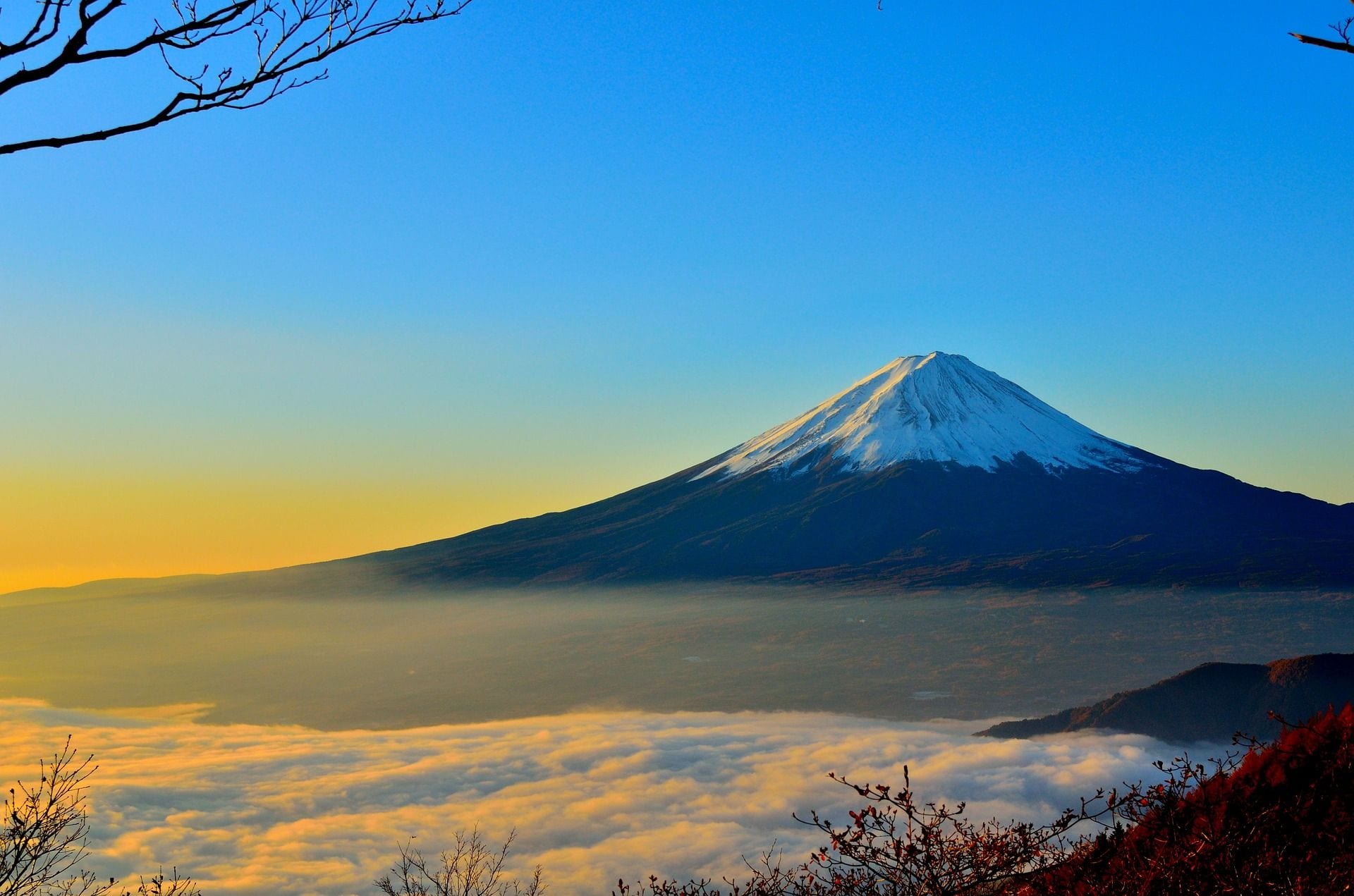
Kamchatka Volcanoes: Ski Touring, Volcano Climbs and Verified Guide Reviews
Russia's Kamchatka peninsula has more than 300 volcanoes, about 29 of them active, and its "Volcanoes of Kamchatka" are a UNESCO World Heritage site. The most-climbed peak is Avachinsky (about 2,741 m), a non-technical summer ascent near Petropavlovsk-Kamchatsky, and the region is known for spring ski touring with descents from volcano summits towards the Pacific. The highest volcano, Klyuchevskaya Sopka (about 4,750 m), is a serious and often erupting objective. On ExpedReview, as of 23 October 2026, one operator has one verified client review for Kamchatka: Hohenbergsteigen, based in Germany (4.4★, ski touring, February 2020). Many governments currently advise against all travel to Russia, so check official advice before planning a trip. Below are the review, the main volcanoes, seasons and how to choose an operator.
Kamchatka volcanoes: key facts | | | |---|---| | Location | Russian Far East, between the Sea of Okhotsk and the Pacific Ocean | | Volcanoes | More than 300, about 29 active | | Highest | Klyuchevskaya Sopka, about 4,750 m (varies with eruptions) | | Most climbed | Avachinsky, about 2,741 m | | Gateway | Petropavlovsk-Kamchatsky (no road link to the rest of Russia) | | UNESCO listing | Volcanoes of Kamchatka, 1996 (extended 2001) | | Seasons | Ski touring late winter–spring; climbing and trekking July–September | | Operators reviewed on ExpedReview | 1, with 1 verified review (as of 23 Oct 2026) |
Operators with verified reviews
ExpedReview ranks operators by their verified client reviews for each place: the star rating, adjusted so one or two reviews, or only old ones, count for less than many recent ones. Every review is checked by hand before it is published, and operators cannot pay to appear or rank higher. Data as of 23 October 2026.
| Rank | Operator | Based in | Rating here | Reviews | Latest review | Price |
|---|---|---|---|---|---|---|
| 1 | Hohenbergsteigen | Germany | 4.4★ | 1 | February 2020 | No recent price listed |
What the client says
The reviewer joined a volcanic ski touring trip and calls it "simply unforgettable". They praise the preparation and guiding, describe Kamchatka as a remote and wild country, and say their first lines on steep volcanoes were matched only by the meals cooked by a local chef. They add that safety came first throughout, which matters in a region this remote.
One review from early 2020 is not enough to judge an operator, and it was written before current travel restrictions. Ask any operator whether it is running Kamchatka trips now, and how.
Travel advice: read this first
Kamchatka is part of Russia. Since 2022, many governments, including the UK, US and Australia, have advised against all travel to Russia. Consequences include limited flight routes, difficulties paying with foreign cards, limited consular help and travel insurance that may not cover you. Most Western operators have suspended trips. If you are considering going, read your government's current advice, check your insurance carefully and make sure your operator has a realistic plan for emergencies. The rest of this page describes the mountains themselves, for reference and future planning.
The main volcanoes
Avachinsky (Avacha)
Avachinsky, about 2,741 m, rises just north of Petropavlovsk-Kamchatsky and is the volcano most visitors climb. In summer the ascent is a long, non-technical walk on scree, snow and volcanic rock, with roughly 1,900 m of ascent from camps at the saddle between Avachinsky and Koryaksky. It takes most of a day up and back. The reward is a steaming crater and views of the Pacific and neighbouring volcanoes. In spring it is a classic ski tour.
Koryaksky
Koryaksky, about 3,456 m, stands beside Avachinsky and is a steeper, more serious climb, with snow and ice on its upper slopes for much of the year. It needs crampons, an ice axe and mountaineering experience, and is usually done with a guide.
Mutnovsky and Gorely
South of the capital, Mutnovsky (about 2,323 m) and Gorely (about 1,829 m) are popular for their craters, fumaroles, crater lakes and glaciers inside an active volcano. They are reached by four-wheel-drive vehicles in summer and by snowmobile in winter. Mutnovsky's crater is one of the most striking sights in Kamchatka, with steam vents and a glacier inside the crater. Gas and unstable ground make a local guide essential.
Klyuchevskaya Sopka
At about 4,750 m, Klyuchevskaya Sopka is the highest active volcano in Eurasia and one of the most active in the world, with frequent eruptions. Its first recorded ascent was in 1788. The climb is long and serious, with glacier travel, falling rock and volcanic bombs, sulphurous gas and fast-changing weather. Ascents depend on volcanic activity and are often impossible. It sits in the Klyuchevskaya group with Kamen, Bezymianny and Tolbachik, whose 2012–2013 fissure eruption produced large lava flows.
Ski touring in Kamchatka
Kamchatka is a famous ski touring destination thanks to its deep snowpack, long spring days and huge, open volcanic slopes. Typical trips run from about February to May. They use a base near Petropavlovsk-Kamchatsky and reach the volcanoes by snowmobile, tracked vehicle or, at greater cost, helicopter. Descents can be very long, sometimes 1,500 m or more, and some trips ski down to the Pacific coast.
You should be a confident off-piste skier, comfortable on steep slopes and variable snow, with avalanche training and fitness for long climbs on skins. The main hazards are avalanches, whiteouts, wind-scoured ice, cold, volcanic gas, crevasses on glaciated volcanoes and being far from medical help.
Summer trekking and wildlife
In summer, Kamchatka offers trekking across lava fields and tundra, hot springs and wildlife. The Kronotsky Nature Reserve includes the Valley of Geysers, one of the largest geyser fields in the world, discovered in 1941 by the geologist Tatyana Ustinova. Kurile Lake, in the south, is known for brown bears fishing for salmon. Kamchatka has one of the highest densities of brown bears in the world, so camping safety, food storage and bear awareness are essential. Access to protected areas usually requires permits and a guide, and some areas can only be reached by helicopter.
Choosing a Kamchatka operator
- Check whether trips are running. Many have stopped. Ask how the operator handles flights, payments and emergencies.
- Check guiding qualifications. For ski touring and glaciated volcanoes, look for IFMGA or national guide qualifications and avalanche training.
- Ask about local partners. International operators normally work with local outfitters for transport, permits and camps. Ask who they are and how long they have worked together.
- Ask about evacuation. Find out how long it would take to reach a hospital from each camp, and whether helicopter evacuation is realistic.
- Ask about volcanic monitoring. Good operators follow volcanic alerts and change plans when activity increases.
- Confirm what is included. Snowmobiles, helicopters, permits, food and accommodation make a big difference to the price.
Geography and history
Kamchatka is about 1,250 km long and up to about 450 km wide. Two mountain ranges, the Sredinny (Central) Range and the Eastern Range, run along its length, separated by the Kamchatka River valley. The volcanoes sit above the subduction zone where the Pacific Plate dives beneath the Okhotsk Plate, the same process that builds the volcanoes of Japan and the Kuril Islands to the south.
The peninsula has long been home to Indigenous peoples, including the Itelmen, Koryak and Even, whose reindeer herding, fishing and culture continue today. Russian Cossacks reached Kamchatka in the late 17th century, and Petropavlovsk was founded in 1740 by the expedition of Vitus Bering, named after his two ships, the St Peter and St Paul. During the Soviet era, Kamchatka was a closed military zone, and it only opened to foreign visitors in the early 1990s. That long isolation is one reason its wilderness is still so intact.
Climate and weather
Kamchatka's climate is shaped by the cold Pacific and the Sea of Okhotsk. Winters are long and very snowy, especially on the east coast, with deep snow lasting into May or June on the volcanoes. Summers are short and cool, with frequent fog, rain and low cloud, particularly near the coast. Weather can change in minutes on the volcanoes, and strong winds are common. Plan for flexible days in any itinerary so you can wait for a clear summit day.
Getting there and around
Petropavlovsk-Kamchatsky has no road link to the rest of Russia; almost all visitors fly in to Yelizovo airport, nearby, usually via Moscow or other Russian cities. There are few roads outside the south of the peninsula. Volcano trips depend on rugged six-wheel-drive trucks in summer, snowmobiles in winter and helicopters for remote areas. That makes trips expensive and weather-dependent. A helicopter flight that cannot leave because of cloud can delay a whole programme.
A sample ski touring week
A typical guided ski touring trip might spend a week to ten days on the peninsula, with:
- Arrival and preparation: a day in Petropavlovsk-Kamchatsky to sort out kit, check avalanche equipment and meet the local team.
- Avachinsky and Koryaksky area: several days of touring from a base near the two volcanoes, starting with lower tours and building up to a summit descent of Avachinsky.
- Mutnovsky and Gorely: two or three days touring around craters and fumaroles, reached by snowmobile.
- Optional extras: a helicopter day for remote descents, or a visit to hot springs to recover.
Programmes depend on snow, weather and volcanic activity, so good operators keep plans flexible.
Gear
For ski touring, you need touring skis, skins, boots and bindings, ski crampons, an avalanche transceiver, shovel and probe, a helmet, warm layers and windproof clothing, goggles and a face mask for wind. On glaciated or icy volcanoes, add crampons, an ice axe and a harness. In summer, sturdy boots, gaiters for scree, waterproofs, warm layers, insect repellent and bear spray where allowed. Carry plenty of water and sun protection.
For the wider region, including Mount Fuji and Japanese ski touring, see our Japan & Kamchatka guide.
How hard is it?
Kamchatka trips range from moderate to very demanding. A summer ascent of Avachinsky needs good fitness for a long day of steep walking on loose ground but no technical skills. Koryaksky needs crampon and ice axe experience. Ski touring trips need solid off-piste skiing and the ability to climb 1,000–1,500 m a day on skins, often in cold wind. Klyuchevskaya Sopka is a serious expedition-style climb for experienced mountaineers.
Beyond the physical challenge, the main difficulty is remoteness. Help can be hours or days away, especially if helicopters cannot fly. Choose an operator with strong local partners, satellite communications, good medical training and a clear evacuation plan, and make sure you are fit enough to enjoy the trip rather than just survive it.
Responsible travel
Kamchatka's ecosystems are fragile and its protected areas are tightly regulated. Stay on agreed routes in reserves, take all rubbish out, never feed bears or foxes, and keep well away from salmon rivers at dusk, when bears are most active. Use operators who employ local guides, drivers and cooks, so that money from tourism supports local communities. Helicopter-based trips have a large carbon and noise footprint; consider trips that use the volcanoes closest to the capital, which can be reached by vehicle.
Frequently asked questions
Can tourists climb volcanoes in Kamchatka?
Yes. Avachinsky is climbed by many visitors in summer without technical skills, although a local guide is recommended. Koryaksky and Klyuchevskaya Sopka are serious mountaineering objectives. Check current travel advice before planning.
When is the best time to ski tour in Kamchatka?
From about February to May, with spring often giving longer days and more stable conditions.
What is the highest volcano in Kamchatka?
Klyuchevskaya Sopka, at about 4,750 m. Its exact height changes with eruptions.
Is Kamchatka safe to visit?
Many governments currently advise against all travel to Russia. In the mountains, the main risks are volcanic activity, avalanches, bears, weather and remoteness from medical care.
Which operators have verified reviews for Kamchatka?
As of 23 October 2026, Hohenbergsteigen has 1 verified review (4.4★, February 2020).
Can operators pay to rank higher on ExpedReview?
No. Operators cannot pay to appear, rank higher or have reviews removed.
How do I get to Kamchatka?
By air to Yelizovo airport near Petropavlovsk-Kamchatsky, usually via Moscow or another Russian city. There is no road link to the rest of Russia.
Do I need avalanche training to ski tour in Kamchatka?
Yes. You should carry and know how to use a transceiver, shovel and probe, and ideally have completed an avalanche course before a guided touring trip.
Are there bears in Kamchatka?
Yes, Kamchatka has one of the world's highest densities of brown bears. Follow your guide's advice on food storage and camping.
Related articles
- How to choose a guide
- Best operators
- Japan & Kamchatka Guides: Mount Fuji, Japanese Alps and Kamchatka Volcanoes
Guided climbing and ski touring in Japan and Russia's Kamchatka peninsula: Mount Fuji in summer and winter, the Japanese Alps, Hokkaido and Kamchatka's volcanoes, with verified ExpedReview reviews and how to choose an operator.