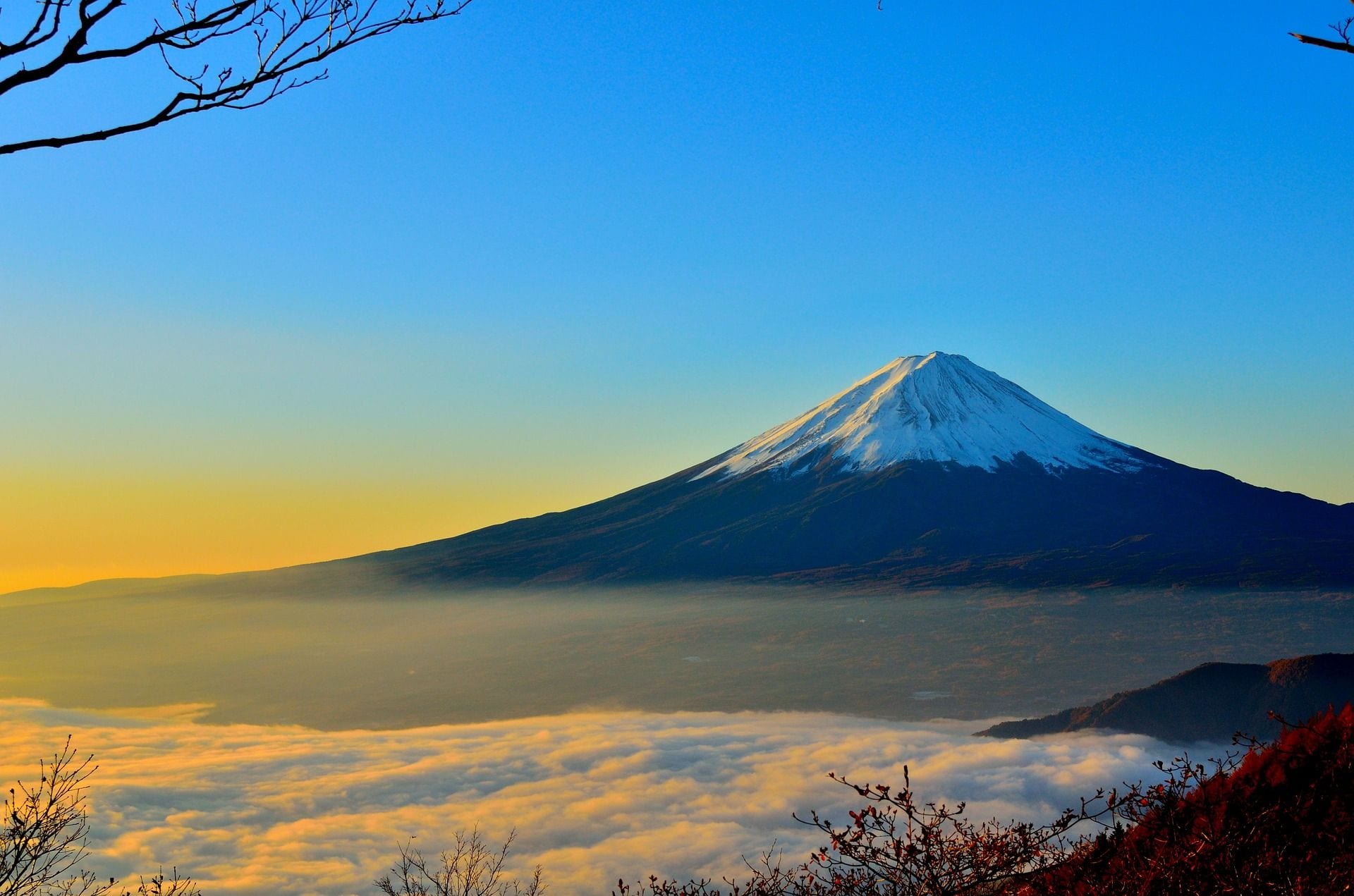
Mount Fuji Guides: Verified Reviews and Climbing Guide
Mount Fuji (3,776 m) is Japan's highest mountain, an active stratovolcano about 100 km south-west of Tokyo. In the official summer season, roughly early July to 10 September, it is a non-technical but tiring hike of about 5 to 7 hours up from the 5th stations, usually with a night in a mountain hut and a sunrise at the summit. Outside that season the trails are closed, and the mountain becomes a serious winter climb. For 2026, the Yoshida Trail season runs from 1 July to 10 September, with a fee of 4,000 yen per climber and a gate closed from 2 p.m. to 3 a.m. for climbers without a hut booking. On ExpedReview, as of 23 October 2026, 1 operator has 3 verified client reviews for Mount Fuji: Feeding The Rat Expeditions (5.0★ from 3 reviews, latest February 2022). Below are the rankings, then a guide to climbing Fuji.
Mount Fuji: key facts | | | |---|---| | Height | 3,776 m (12,388 ft) | | Location | Yamanashi and Shizuoka prefectures, Honshu, Japan; about 100 km south-west of Tokyo | | Type | Active stratovolcano; last eruption 1707 | | Trails | Yoshida, Subashiri, Gotemba and Fujinomiya, each from a 5th station | | 2026 season | Yoshida and Subashiri: 1 July–10 September; Fujinomiya and Gotemba: 10 July–10 September | | Yoshida Trail fee (2026) | 4,000 yen per person per climb | | Typical climb | 1–2 days, often with a night in a hut | | World Heritage | UNESCO cultural site since 2013 | | Operators reviewed on ExpedReview | 1, with 3 verified reviews (as of 23 Oct 2026) |
Mount Fuji guides ranked by verified reviews
Rankings use each operator's verified ExpedReview client reviews for Mount Fuji: the star rating, adjusted so that one or two reviews, or only old ones, count for less than many recent ones. Every review is checked by hand before it is published, and operators cannot pay for a better position. Data as of 23 October 2026.
| Rank | Operator | Based in | Rating here | Reviews | Latest review | Price |
|---|---|---|---|---|---|---|
| 1 | Feeding The Rat Expeditions | Australia | 5.0★ | 3 | February 2022 | No recent price listed |
With only one operator and three reviews, all from February 2022, there is little to compare. Many local guiding companies and tour operators run summer Fuji climbs, and we will add them to this ranking as verified reviews come in.
What clients say
All three reviews are about Feeding The Rat Expeditions. One reviewer climbed Fuji with the company several times in 2021: they were unprepared for the difficulty the first time, but with tips from their guide went back and tried again. Another, preparing for 8,000 m peaks, said few places in Japan offer the difficulty and weather needed for training, and that Fuji is probably the best, but only with someone who has climbed it many times in winter. A third reviewer described a self-supported ten-day trip over a mountain and down canyons and a river to the ocean, and remembered one of the most beautiful sunrises they had ever seen, on the summit.
The mountain
Fuji is a nearly symmetrical volcanic cone, rising alone from the plains south-west of Tokyo, and on a clear day it can be seen from the city. It is classed as active, and its last eruption, the Hōei eruption of 1707, covered Edo, now Tokyo, with ash. The summit is a crater rim about 3 km around, with several high points; the highest, Kengamine, is on the south-west side. Fuji has been sacred for centuries in Shinto and Buddhist traditions, and pilgrims climbed it long before modern mountaineering; the first ascent is traditionally credited to a monk in the 7th century. In 2013, UNESCO listed "Fujisan, sacred place and source of artistic inspiration" as a World Heritage cultural site, recognising both its religious role and its influence on artists such as Hokusai.
The four trails
Each trail starts from a 5th station, reached by road, and has its own huts, first aid and toilets during the season.
- Yoshida Trail (Yamanashi, from about 2,300 m): the most popular, with the most huts. The official estimate from the Fuji Subaru Line 5th station is about 6 hours 40 minutes up and 3.5 hours down, without rests.
- Fujinomiya Trail (Shizuoka, from about 2,400 m): the shortest and steepest, closest to the true summit.
- Subashiri Trail (Shizuoka): through forest lower down, with a sandy descent; it joins the Yoshida Trail higher up.
- Gotemba Trail (Shizuoka): starts lowest and is the longest, with few huts and a fast run down the sand.
Rules and fees
Since 2024, Yamanashi Prefecture has controlled access to the Yoshida Trail to reduce crowding and "bullet climbing", the practice of climbing through the night without rest. For 2026, the official rules are a fee of 4,000 yen per person per climb, a gate at the 5th station closed from 2 p.m. to 3 a.m. and a daily limit of 4,000 climbers; climbers staying in a mountain hut can pass at any time but still pay. Staff at the gate check that climbers have warm clothing, rain gear and suitable footwear. Advance booking is recommended. The Shizuoka trails have their own entry procedures and fees. Rules change, so check the official Mt. Fuji climbing website before you go.
When to climb
The official season is short: on the Yoshida Trail, 1 July to 10 September in 2026, and on the Fujinomiya and Gotemba trails from 10 July. Opening can be delayed by snow. July and August are busy, especially at weekends and in the Obon holidays in mid-August, and summer is also the wettest time of year, with storms and strong winds on the summit. Even in summer, temperatures at the top are often near or below freezing at dawn. Outside the season, the trails above the 5th stations are closed, huts and first aid are shut, and authorities strongly discourage climbing.
Winter Fuji
From autumn to spring, Fuji is covered in snow and ice, with very strong winds, and it becomes a serious mountaineering objective needing crampons, an ice axe and winter experience. Accidents happen every year, and rescue is difficult. The reviews here show that some climbers use winter Fuji as training for high-altitude expeditions, with experienced guides. If you are considering it, check the current local rules first, use a guide who knows the mountain in winter well, and expect to turn back often because of wind.
A typical summer climb
Most climbers follow a similar plan. They reach a 5th station by bus or car around midday, spend an hour or so there to adjust to the altitude, then climb for four to six hours to a hut at the 7th or 8th station. After an early dinner and a few hours of sleep, they set off again around 1 or 2 a.m., climbing by headlamp in a long line of climbers, to reach the summit for the sunrise, known in Japanese as goraikō. After sunrise, many walk around the crater rim, the ohachi-meguri, which takes about 1.5 hours, before descending to the 5th station by late morning. Splitting the climb with a night in a hut is much safer than climbing straight through the night, which is why the rules now discourage it.
Mountain huts
Huts on Fuji are basic: shared sleeping platforms, simple meals and limited toilets, often paid for with a small tip. They fill up quickly in July and August, especially at weekends, so book early. A hut booking also lets you pass the Yoshida Trail gate after 2 p.m. Most huts are open only during the season, and some take card or online payment while others are cash only.
Altitude and health
At 3,776 m, Fuji is high enough to cause altitude sickness, especially because most climbers start at about 2,300 m and gain about 1,400 m in a day. Headache, nausea, dizziness and tiredness are common. Climb slowly, rest at the 5th station first, drink plenty of water and stop at a hut overnight. If symptoms get worse, go down. Hypothermia is another real risk, since climbers often arrive at the cold, windy summit wet with sweat or rain and wait for sunrise. First-aid stations operate on the main trails during the season.
Gear
Even in summer, you need warm layers, a down or synthetic jacket, a hat and gloves, two-piece rain gear (a jacket and trousers, which gate staff check on the Yoshida Trail), sturdy hiking boots, a headlamp with spare batteries, water, snacks and cash in yen. Trekking poles help on the loose volcanic gravel of the descent, and gaiters keep the grit out of your boots. In winter, you need full mountaineering equipment.
Getting there
Fuji is about 100 km south-west of Tokyo. Buses run from Shinjuku and other parts of Tokyo to the Fuji Subaru Line 5th station during the season, and from towns such as Gotemba, Fujinomiya and Kawaguchiko to the other 5th stations. Private cars are banned on the main 5th-station roads for much of the season, with shuttle buses from parking areas. Many guides meet clients in Tokyo or at Gotemba or Fuji station and arrange transport.
Crowds and etiquette
Fuji is one of the most climbed mountains in the world, and on busy summer nights the upper Yoshida Trail can be a slow queue of headlamps before sunrise. To avoid the worst crowds, climb on a weekday, avoid the Obon holidays, or choose a quieter trail such as the Subashiri or Gotemba. Carry all your rubbish down, since there are no bins on the mountain, use the hut toilets and pay the small tip, keep to the marked trails, and do not take volcanic rocks as souvenirs. Respect the shrines at the summit, which are still places of worship. Be patient and courteous in the queues, and step aside on wider sections to let faster climbers pass. On the descent, which uses a separate trail on the Yoshida side, take care on the loose gravel, especially in the dark or rain.
Seeing Fuji without climbing
Many visitors enjoy Fuji from below. The Fuji Five Lakes area, especially Lake Kawaguchiko, Hakone and the Chureito Pagoda near Fujiyoshida are famous viewpoints, and the 5th stations can be visited by bus for a short walk, such as the Ochudo trail on the Yoshida side, without paying the trail fee. Clear views are most likely in the colder, drier months from late autumn to early spring.
Do you need a guide?
In summer, many people climb Fuji without a guide, because the trails are marked, busy and serviced. The authorities, however, advise climbers without enough mountain experience to go with a guide. A guide helps with planning, hut bookings, pacing, weather and altitude, and can make the climb much safer and more enjoyable for first-timers and families. In winter, a guide with long experience of the mountain is essential for most climbers.
Cost
Climbing Fuji costs much less than most mountains in this guide. Budget for the trail fee, transport to the 5th station, a hut night with meals, and food and water on the mountain, which are expensive higher up. Guided tours cost more, but usually include transport, hut bookings and meals. Ask what is included, and check current prices with the operator.
How to choose a guide
Ask the guide or operator how many times they have climbed Fuji, and in which seasons; how big the group is; which trail they use and where you will sleep; how they manage altitude sickness and bad weather; and whether they arrange hut bookings and the trail fee. For winter climbs, ask about their experience of Fuji in winter, their safety equipment and how they decide to turn back. Read the reviews above and our Japan and Kamchatka page for other climbs in the region.
Frequently asked questions
When is the Mount Fuji climbing season in 2026?
The Yoshida and Subashiri trails open from 1 July to 10 September 2026, and the Fujinomiya and Gotemba trails from 10 July to 10 September, subject to snow.
How much does it cost to climb Mount Fuji?
The Yoshida Trail fee is 4,000 yen per person per climb in 2026, plus transport, a hut and food. The Shizuoka trails have their own fees.
How long does it take to climb Mount Fuji?
From the Fuji Subaru Line 5th station, the official estimate is about 6 hours 40 minutes up and 3.5 hours down, without rests. Most people take two days with a night in a hut.
Can you climb Mount Fuji in winter?
The trails are closed outside the summer season and climbing is strongly discouraged. Winter ascents are serious climbs for experienced mountaineers with proper equipment.
Which operator is ranked first for Mount Fuji on ExpedReview?
As of 23 October 2026, Feeding The Rat Expeditions is the only ranked operator, with 5.0★ from 3 verified reviews, the latest from February 2022.
Related articles
- How to choose a guide
- Best operators
- Japan & Kamchatka Guides: Mount Fuji, Japanese Alps and Kamchatka Volcanoes
Guided climbing and ski touring in Japan and Russia's Kamchatka peninsula: Mount Fuji in summer and winter, the Japanese Alps, Hokkaido and Kamchatka's volcanoes, with verified ExpedReview reviews and how to choose an operator.