Lenin Peak Climbing Guide: Route, Season, Difficulty and Verified Operator Reviews
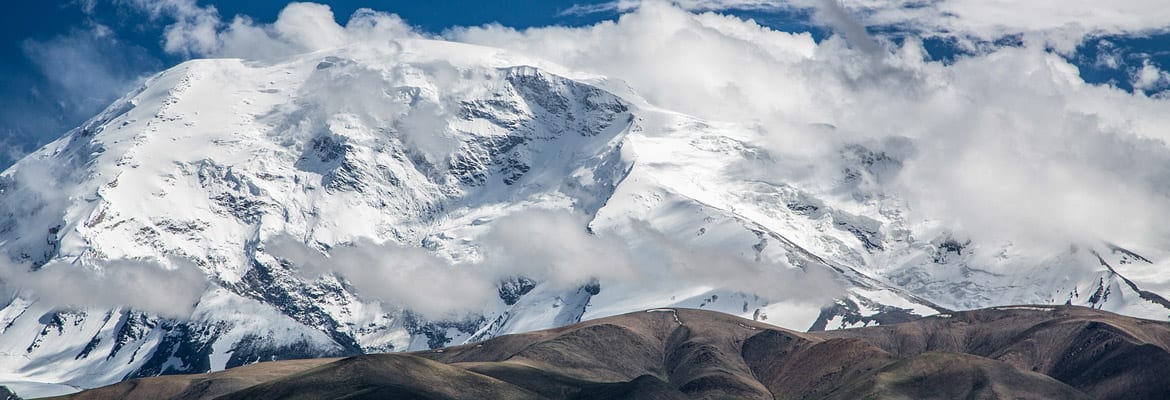
Lenin Peak (7,134 m), on the Kyrgyzstan–Tajikistan border in the Pamirs, is widely considered the most accessible 7,000 m peak in the world. The standard Razdelnaya route from the north is a long, non-technical snow climb with crevassed glaciers, fixed lines on steeper sections and a long, exposed summit plateau. Expeditions take about 18 to 21 days from Osh, and the season is July and August. It is a popular step for climbers working towards an 8,000 m peak, but its high winds and avalanche history mean it should not be underestimated. On ExpedReview, as of 23 October 2026, 1 operator has a verified client review for Lenin Peak: Adventure Consultants, based in New Zealand (5.0★ from 1 review, August 2026). Below you will find the review, the route and camps, season, difficulty, permits, risks and how to choose an operator.
Lenin Peak: key facts | | | |---|---| | Elevation | 7,134 m (23,406 ft) | | Location | Trans-Alai range, Pamirs; Kyrgyzstan–Tajikistan border | | Other names | Peak Lenin; Ibn Sina Peak (official name in Tajikistan) | | First ascent | 25 September 1928: Karl Wien, Eugen Allwein and Erwin Schneider | | Standard route | Razdelnaya (north side), from Achik-Tash base camp | | Gateway | Osh, Kyrgyzstan | | Typical length | 18–21 days from Osh | | Season | July and August | | Operators reviewed on ExpedReview | 1, with 1 verified review (as of 23 Oct 2026) |
Lenin Peak operators with verified reviews
ExpedReview ranks operators by their verified client reviews for each place: the star rating, adjusted so one or two reviews, or only old ones, count for less than many recent ones. Every review is checked by hand before it is published, and operators cannot pay to appear or rank higher. Data as of 23 October 2026.
| Rank | Operator | Based in | Rating here | Reviews | Latest review | Guide-listed price |
|---|---|---|---|---|---|---|
| 1 | Adventure Consultants | New Zealand | 5.0★ | 1 | August 2026 | No recent price listed |
With only one review, this is a thin data set. Many other international and Kyrgyz operators run Lenin Peak expeditions, so ask any operator you are considering for references from recent clients.
What clients say
Adventure Consultants. An August 2026 review from a team of three friends on their first 7,000 m peak says they chose the company for its professionalism and were glad they did. The reviewer praises the thorough pre-trip information and gear lists, and the smooth logistics in the country, from airport and bus transfers to hotels, internal flights and tents on the mountain. The highlight was their guide, Rob, described as calm, humble and "a true professional", who briefed the team on the weather every day, trained them and planned rotations carefully to keep them rested and avoid bad weather. The reviewer saw "many teams failing on the mountain because of poor decision making" and says that paying a little more than some local operators is worth it for the experience.
Why climb Lenin Peak?
Lenin Peak is many climbers' first 7,000 m mountain. It is reached by road, its standard route needs no difficult technical climbing, and base camp services in the Achik-Tash meadows are well developed. It is also one of the five peaks of the Soviet-era Snow Leopard award, alongside Ismoil Somoni Peak, Jengish Chokusu (Pobeda), Khan Tengri and Korzhenevskaya. For climbers aiming for an 8,000 m peak, Lenin Peak is a good test of how they cope with altitude, cold, long summit days and life at high camps, at a much lower cost than a Himalayan 8,000 m expedition.
History
When the German-Soviet Alai-Pamir expedition made the first ascent in 1928, Lenin Peak was thought to be the highest point in the Soviet Union. That honour later went to what is now Ismoil Somoni Peak in Tajikistan. In Soviet times, the mountain became a major training ground for climbers, with large international climbing camps. On 13 July 1990, an earthquake triggered an avalanche that destroyed the camp at about 5,300 m, killing 43 climbers. It remains one of the deadliest single incidents in mountaineering history. Tajikistan renamed its side of the mountain Ibn Sina Peak in 2006, after the Persian philosopher and physician, but most climbers still call it Lenin Peak.
The Razdelnaya route
Osh to Achik-Tash
Most expeditions start in Osh, in southern Kyrgyzstan, reached by flights from Bishkek or international hubs. From Osh, a drive of around six to eight hours crosses the Alai valley via Sary-Mogol to the Achik-Tash meadows, where base camp sits at about 3,600 m. Base camp is in grassland with views of the north face and has mess tents, showers and other facilities run by local companies.
Camp 1 (about 4,400 m)
From base camp, the route crosses the Travellers' Pass, or follows the Lukovaya Polyana valley, to the Lenin Glacier and Advanced Base Camp, also called Camp 1, at about 4,400 m. Many local companies run a well-equipped camp here, and climbers use it as their main base during acclimatisation rotations.
Camp 2 (about 5,300 m)
Above Camp 1, the route crosses the crevassed Lenin Glacier and climbs a long snow slope, the site of the 1990 avalanche, to Camp 2 at about 5,300 m. This is often the hottest and most draining day, as the glacier basin traps heat. Fixed lines are usually in place on the steeper ice.
Camp 3 (about 6,100 m)
From Camp 2, the route climbs to the top of Razdelnaya peak (about 6,148 m) and camps on the shoulder at about 6,100 m. Some teams camp lower on the slope instead. Strong winds are common here.
Summit day
Summit day is long, often ten to fourteen hours round trip. The route descends a little from Razdelnaya to a col, then climbs a series of slopes and ridges and the long summit plateau to the top at 7,134 m. The plateau is broad and featureless, so whiteouts and strong winds can make navigation very difficult. This is where most unsuccessful attempts turn back.
Acclimatisation and timing
A typical expedition includes a rotation, climbing to Camp 2 or sometimes Camp 3 and returning to Camp 1 or base camp to rest before the summit push. Some climbers also acclimatise on Yukhin Peak (about 5,130 m) above Camp 1. A sensible itinerary allows several spare days for weather.
Season and weather
The season is July and August, with the most stable weather usually from mid-July to mid-August. Base camp is pleasant in summer, with days of 10 to 20 °C, but nights drop below freezing. Above 6,000 m, temperatures fall to −20 °C or lower, and strong winds can blow for days. Storms can bring heavy snow, increasing avalanche danger on the slopes below Camp 2.
How hard is Lenin Peak?
Technically, Lenin Peak is a straightforward snow climb. But it is a serious undertaking because of its height, the length of the summit day, the extreme cold and wind, and the avalanche and crevasse hazards. Climbers should be comfortable using crampons, an ice axe and fixed lines, travelling roped on glaciers, and living at high camps. Ideally, have climbed at least one 6,000 m peak, such as a Himalayan trekking peak or an Andean volcano, before attempting it.
Permits
The Kyrgyz side of the mountain is in a border zone, so foreign climbers need a border-zone permit, and climbing and park fees apply. Local operators usually arrange these. Fees and rules change, so ask your operator for the current details. Climbing from the Tajik side requires separate permits and is much less common.
Risks
- Avalanches on the slopes between Camp 1 and Camp 3, especially after fresh snow.
- Crevasses on the Lenin Glacier. Travel roped.
- Altitude illness. Acclimatise slowly and descend at the first signs of serious illness.
- Cold and wind. Frostbite is a real risk on summit day.
- Whiteouts on the summit plateau. Teams sometimes mark the route with wands.
Choosing an operator
- Decide between a full guided expedition and base camp services. Many climbers book only base camp and Camp 1 services from a local company and climb independently. A guided team gives you an experienced leader, as the reviewer above valued.
- Ask about the guide-to-client ratio, especially for summit day.
- Ask how rotations and weather forecasting are handled.
- Check what is included: permits, transfers from Osh, base camp and Camp 1 services, high-camp tents and fuel, and fixed lines.
- Ask about rescue arrangements and insurance.
- Read reviews and ask for references from recent clients.
For other Central Asian peaks, see our Central Asia guide.
Life at base camp and Camp 1
Lenin Peak is unusual among 7,000 m peaks because its lower camps are run as semi-permanent tent villages. In a busy season, hundreds of climbers from many countries pass through Achik-Tash, with Russian the main working language among local staff. Camp 1 often has cooked meals, dining tents and sometimes showers, so climbers can rest well between rotations. Above Camp 1, teams are usually self-sufficient or rely on their operator's high-altitude porters and tents. Ask your operator exactly which services are provided at each camp, because this varies a lot between packages.
Gear
You will need gear suitable for a cold 7,000 m peak:
- Double or insulated high-altitude boots
- Crampons, an ice axe, a harness, ascender, carabiners and a belay device
- A down suit or a down jacket and insulated trousers
- Mitts and several pairs of gloves
- A sleeping bag rated to about −25 °C or colder
- Glacier glasses, goggles and high-factor sun cream
- Trekking poles and a headlamp
Your operator will give you a detailed list. The reviewer above praised Adventure Consultants' gear lists.
Training
Prepare with months of endurance training: long hill days carrying a loaded pack, stair or step work and strength training for your legs and core. Practise using crampons and fixed lines, and glacier travel and crevasse rescue if you have not done them before. A previous high-altitude climb, such as a Himalayan trekking peak, Aconcagua or one of the Ecuadorian volcanoes, will help you understand how your body responds to altitude.
Travel in Kyrgyzstan
Kyrgyzstan offers visa-free entry to citizens of many countries, but check the current rules for your passport. Osh is one of Central Asia's oldest cities, with a large bazaar and the Sulaiman-Too sacred mountain, a UNESCO World Heritage site. The national currency is the Kyrgyz som. ATMs are available in Osh and Bishkek but not in the mountains, so carry enough cash for tips and extras. Mobile coverage ends well before base camp, though some camps offer satellite internet for a fee.
Lenin Peak compared with other 7,000 m peaks
Compared with Himalayan 7,000 m peaks such as Baruntse or Himlung Himal, Lenin Peak is cheaper and easier to reach, with no long trek to base camp. It is colder and windier than many Himalayan summer peaks, though, and the summit day is long. Khan Tengri and Korzhenevskaya, also Snow Leopard peaks, are harder and more remote. Many climbers return to the Pamirs after Lenin Peak for these more difficult objectives.
Frequently asked questions
How hard is Lenin Peak?
It is technically straightforward but physically very demanding, with long days, strong winds, extreme cold and avalanche and crevasse hazards.
How long does a Lenin Peak expedition take?
About 18 to 21 days from Osh.
When is the best time to climb Lenin Peak?
July and August, with the most stable weather usually from mid-July to mid-August.
Do I need oxygen on Lenin Peak?
Most climbers do not use supplementary oxygen on Lenin Peak.
Is Lenin Peak a good preparation for an 8,000 m peak?
Yes. Many climbers use it to test themselves at high altitude before attempting an 8,000 m peak.
Which operators have verified reviews for Lenin Peak?
As of 23 October 2026, Adventure Consultants (5.0★ from 1 review, August 2026).
Where do Lenin Peak expeditions start?
In Osh, southern Kyrgyzstan. From there it is a drive of around six to eight hours to the Achik-Tash base camp at about 3,600 m.
What happened on Lenin Peak in 1990?
On 13 July 1990, an earthquake triggered an avalanche that destroyed the camp at about 5,300 m, killing 43 climbers.
Can I climb Lenin Peak without a guide?
Yes. Many experienced climbers book only base camp services and climb independently, though permits are still arranged through a local company.
Can operators pay to rank higher on ExpedReview?
No. Operators cannot pay to appear, rank higher or have reviews removed.
Related articles
- How to choose a guide
- Best operators
- Pamir, Kunlun and Mongolia Expedition Guides: Verified Reviews
Expeditions in the Pamir, Kunlun and Mongolia: operators ranked by verified ExpedReview client reviews, plus a guide to Lenin Peak, Muztagh Ata, the Pamir 7,000ers, Khan Tengri and Mongolia's Altai, with seasons, access, permits and how to choose.