Caucasus & Iran Climbing Guides: Elbrus, Kazbek, Damavand
By Blake Penson, Founder of ExpedReview · Everest summiter · Seven Summits climber · 20-year mountaineer · Industry expert
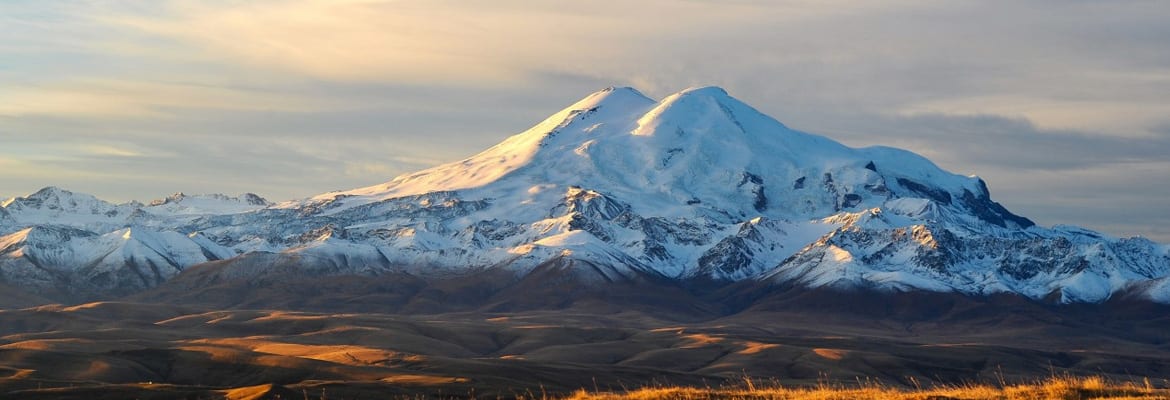
The Caucasus and northern Iran hold three of the most popular non-technical high peaks outside the Himalaya: Elbrus (5,642 m) in Russia, the highest mountain in Europe on most definitions; Kazbek (5,054 m) in Georgia; and Damavand (about 5,610 m), Iran's highest peak. All three are big glaciated or volcanic snow climbs that suit climbers moving on from Kilimanjaro. On ExpedReview, as of 23 October 2026, 4 operators have 11 verified client reviews in this region across 2 places. Ranked first is 360 Expeditions (4.9★ from 5 reviews, latest March 2021), followed by Beyond Red Square (4.7★ from 3 reviews, September 2019), Pilgrim Tours (4.5★ from 2 reviews, February 2024) and Caucasus Quest (5.0★ from 1 review, April 2024). Below are the ranking, a comparison of the peaks and how to choose a guide.
Caucasus & Iran: key facts | | | |---|---| | Main peaks | Elbrus 5,642 m (Russia), Kazbek 5,054 m (Georgia), Damavand c. 5,610 m (Iran) | | Type | Dormant volcanoes; glacier and snow climbs | | Typical guided trip | 8–12 days | | Main season | Late June to early September | | Technical level | Crampons, ice axe and rope on glaciers; no hard climbing on normal routes | | Operators reviewed on ExpedReview | 4, with 11 verified reviews (as of 23 Oct 2026) | | Places with reviews | Elbrus (10 reviews), Kazbek (1 review) |
Caucasus & Iran guides ranked by verified reviews
Rankings use each operator's verified ExpedReview client reviews in this region: the star rating, adjusted so that one or two reviews, or only old ones, count for less than many recent ones. Every review is checked by hand before it is published, and operators cannot pay for a better position. Data as of 23 October 2026.
| Rank | Operator | Based in | Rating here | Reviews | Latest review | Reviewed for |
|---|---|---|---|---|---|---|
| 1 | 360 Expeditions | United Kingdom | 4.9★ | 5 | March 2021 | Elbrus |
| 2 | Beyond Red Square | United States | 4.7★ | 3 | September 2019 | Elbrus |
| 3 | Pilgrim Tours | Not listed (unclaimed profile) | 4.5★ | 2 | February 2024 | Elbrus |
| 4 | Caucasus Quest | Not listed (unclaimed profile) | 5.0★ | 1 | April 2024 | Kazbek |
All 11 reviews are four stars or above, but most are several years old. Nine of the 11 date from 2019 to 2021, before travel to Russia changed sharply in 2022. Treat the Elbrus reviews as evidence of how these companies ran trips then, and ask each one how they operate now.
What clients say
360 Expeditions has five Elbrus reviews from early 2021. Several clients describe the north–south traverse, climbing from the quieter north side and descending to the ski area on the south, as the highlight, and praise the pre-trip information and the named leader. One of these five reviews is actually about Mera Peak in Nepal rather than Elbrus, so the Elbrus evidence here is really four reviews.
Beyond Red Square has three reviews from 2019. Two clients single out the owner, Andrew, for clear advice before booking, and one says the company offered better value and more personal contact than others they compared.
Pilgrim Tours has two short reviews (2019 and 2024). Both describe a professional, safety-minded crew and good value; one marks food and logistics down a little because the trip is not luxury.
Caucasus Quest has one Kazbek review from April 2024, from a couple who travel often and call it the most professionally run company they have used. See our Kazbek guide for the climb.
The three peaks compared
| Elbrus | Kazbek | Damavand | |
|---|---|---|---|
| Height | 5,642 m | 5,054 m | c. 5,610 m |
| Country | Russia | Georgia | Iran |
| Normal route | South side from Azau ski lifts | Gergeti Glacier from Stepantsminda | South route from Polour |
| Glacier travel | Yes | Yes, crevassed | Little; mainly scree and snow |
| Typical guided trip | 8–10 days | 7–9 days | 6–8 days |
| Key hazard | Sudden storms and whiteout on a broad slope | Crevasses, rockfall on the approach | Cold, wind, sulphur fumes near summit |
Elbrus
Elbrus is a double-summited dormant volcano in the Kabardino-Balkaria and Karachay-Cherkessia republics of Russia. The west summit (5,642 m) is the higher; the east summit is about 5,621 m. The east summit was first reached in 1829 during a Russian scientific expedition, and the west in 1874 by a British party led by Florence Crauford Grove. On the south side, cable cars and a chairlift carry climbers to about 3,800 m, and snowcats often take groups higher on summit night. That makes it one of the most accessible 5,000 m peaks in the world, and also one that catches out the unprepared: a whiteout on its broad upper slopes has led many climbers astray. The north side has no lifts, more camping and a more expedition-like feel.
For a full guide to the climb see our Elbrus page.
Kazbek
Kazbek (Mkinvartsveri in Georgian) is an extinct stratovolcano above the town of Stepantsminda on the Georgian Military Road, a few hours' drive from Tbilisi. The first recorded ascent was in 1868 by Douglas Freshfield, A. W. Moore and C. C. Tucker with guide François Devouassoud. The normal route passes the Gergeti Trinity Church, climbs to the old weather station hut at about 3,650 m and crosses the crevassed Gergeti Glacier to the summit. It is a step up from Elbrus in glacier terrain, and a good first rope-team peak.
Damavand
Damavand is a dormant volcano in the Alborz range north-east of Tehran and the highest peak in Iran. The normal south route is a long, steep walk on scree and snow from the village of Polour, with a hut at about 4,200 m. It needs little technical skill in summer, but the summit area has sulphur vents, and the height and cold should not be underestimated. Nationality rules for visas, and whether a licensed local guide is required, change, so check with the operator and your government's travel advice.
Seasons
The climbing season for all three peaks is short. Late June to early September gives the most stable snow and weather, with July and August the busiest months. Outside summer, snow conditions, cold and wind make all three serious winter climbs that only experienced mountaineers should attempt. Early in the season there is more snow cover on the glaciers, which can bridge crevasses; by late August the snow has thinned, crevasses open on Kazbek and the scree on Damavand is bare. Book reserve days whichever month you choose, because a single storm can close a summit for two or three days.
Travel and safety in 2026
Political conditions matter more here than in most mountain regions. Since 2022, many governments, including the United Kingdom and the United States, have advised their citizens against all travel to Russia. That affects insurance, payment and the ability to get help, and several Western operators no longer run Elbrus. Georgia is generally easier to visit, and Kazbek has grown in popularity partly as a result. Iran also carries government travel warnings for many nationalities. Check your own government's current advice and confirm that your insurance covers the country and the activity before you pay a deposit.
Skills and fitness
None of these peaks needs hard technical climbing on its normal route, but all of them need:
- Comfort walking in crampons and using an ice axe
- Experience of long summit days, often 10 to 14 hours
- Good acclimatisation; above 5,000 m, altitude sickness is common
- For Kazbek, rope-team glacier travel and basic crevasse awareness
Kilimanjaro is the usual stepping stone, but it does not teach crampon and ice-axe skills. A winter skills course or a guided Alpine peak first is a good idea.
How to choose a guide
- Ask how they run the trip now. For Elbrus especially, ask whether the company still operates there, how payments work and what insurance covers.
- Ask for the guide-to-client ratio on summit day. On a glacier peak this matters more than almost anything else.
- Check the acclimatisation plan. Ask for every night's sleeping height and how many rest days are built in.
- Check the summit-day plan. Ask about snowcat use on Elbrus, the turn-around time and what happens in a whiteout.
- Read reviews closely. Note when they were written and what peak they actually describe.
Typical itineraries
Elbrus south route (about 9 days)
| Day | Plan |
|---|---|
| 1 | Arrive Mineralnye Vody, transfer to the Baksan valley |
| 2–3 | Acclimatisation walks in the valley, for example to the Cheget slopes or the Maiden Plaits waterfall |
| 4 | Cable car to about 3,800 m, move into huts or barrels at about 3,900–4,000 m |
| 5 | Acclimatisation climb to the Pastukhov Rocks, about 4,700 m |
| 6 | Skills training and rest |
| 7 | Summit day, often with a snowcat to about 5,000 m and a 2 a.m. start |
| 8 | Reserve day for weather |
| 9 | Descend and depart |
Kazbek normal route (about 7 days)
| Day | Plan |
|---|---|
| 1 | Tbilisi to Stepantsminda by the Georgian Military Road |
| 2 | Walk past Gergeti Trinity Church to camp at about 3,000 m |
| 3 | On to the weather station hut, about 3,650 m |
| 4 | Acclimatisation climb towards the Gergeti Glacier and skills practice |
| 5 | Summit day, usually 10 to 14 hours round trip |
| 6 | Reserve day |
| 7 | Descend to Stepantsminda and drive to Tbilisi |
Damavand south route (about 6 days)
| Day | Plan |
|---|---|
| 1 | Tehran to Polour, about 2,300 m |
| 2 | Drive to Goosfand Sara (about 3,000 m), walk to Bargah-e Sevom hut, about 4,200 m |
| 3 | Acclimatisation walk to about 4,800 m |
| 4 | Summit day and return to the hut |
| 5 | Reserve day |
| 6 | Descend and return to Tehran |
Reserve days are not padding. On all three peaks the summit-day weather window decides whether you get up, and the trips that leave no spare day have the lowest success.
What it costs
ExpedReview does not hold current prices from the reviewed operators for these peaks, so ask each one for a written quote. Local operators in Georgia, Russia and Iran are usually far cheaper than Western companies, which add a Western leader, more support and fuller insurance cover. A quote should list the guide-to-client ratio, all transfers, huts or camps, meals, park or permit fees, any snowcat or lift tickets on Elbrus, and what happens if you have to come down early.
Gear
Mountaineering boots that take crampons (insulated double or warm single boots for Elbrus), crampons, ice axe, harness, helmet, a warm down jacket, mitts, goggles and a sleeping bag rated to about −15 °C cover most trips. Operators usually rent harder items locally, but bring your own boots and break them in.
Which peak should you choose?
- First 5,000 m snow peak with the least technical ground: Elbrus south route, if travel and insurance are workable for you.
- First real glacier climb with a rope team: Kazbek, which also combines well with a trip around Georgia.
- A big volcano with almost no glacier and a strong cultural trip: Damavand, if your nationality and travel advice allow it.
- Training for the Seven Summits: Elbrus is on the list, so many climbers do it between Kilimanjaro and Aconcagua.
Hazards on the normal routes
Weather and whiteout. All three peaks stand alone or near the edge of their ranges and catch the full force of storms. On Elbrus the upper slopes are wide and featureless, and in cloud it is easy to drift off the line, particularly on the descent towards the crevassed ground to the east and west of the route. Guides use GPS tracks and wands, and the best operators will turn round early rather than push into a building storm.
Cold. Summit nights on Elbrus can fall well below −20 °C with wind chill, even in summer. Frostbite to fingers and toes is one of the commonest injuries. Warm mitts, insulated boots and a guide who checks hands and feet on the way up matter more than speed.
Crevasses. Kazbek's Gergeti Glacier is crevassed, and clients rope up for the crossing. Elbrus has crevasses off the main route. Ask whether you will practise crevasse rescue before summit day.
Altitude. Above 5,000 m altitude sickness is common, and the quick access by lift on Elbrus makes it easier to climb too fast. A good plan spends several nights at 3,800 m or higher and makes an acclimatisation climb to about 4,700 m before going for the top.
Rockfall and loose ground. The approach to the Kazbek weather station crosses moraine and slopes below loose rock, and Damavand's south route is long scree. Helmets are standard on Kazbek.
Altitude and fitness
Plan on at least two months of steady training: long hill walks with a pack, stair climbing and some running or cycling for aerobic base. The summit days are the hard part, often 10 to 14 hours of continuous effort at low oxygen. If you have been above 5,000 m before, for example on Kilimanjaro, you will have an idea of how you react, but each trip is different.
Frequently asked questions
Which is harder, Elbrus or Kazbek?
Kazbek is usually considered more technical because its glacier is more crevassed and the approach has rockfall, even though it is lower. Elbrus is higher and colder, and its main danger is bad weather on a broad, featureless slope.
Is Elbrus the highest mountain in Europe?
On the most common definition, which puts the Caucasus watershed as the border of Europe, yes. Some lists use Mont Blanc (about 4,806 m) instead.
When is the best time to climb in the Caucasus?
Late June to early September, with July and August the most reliable months.
Can I climb Elbrus in 2026?
Many governments advise against all travel to Russia, and some operators no longer run trips. Check your government's advice and your insurance before booking.
Who are the best-reviewed guides in the Caucasus on ExpedReview?
As of 23 October 2026, 360 Expeditions is ranked first (4.9★ from 5 reviews), followed by Beyond Red Square, Pilgrim Tours and Caucasus Quest.
Can operators pay to rank higher on ExpedReview?
No. Operators cannot pay to appear, rank higher or have reviews removed.
Do I need climbing experience for Elbrus, Kazbek or Damavand?
You need to be fit and comfortable walking in crampons with an ice axe. Many operators include a skills day. Kazbek also needs rope-team glacier travel, which a guide will teach, but previous experience on an Alpine glacier helps.
How long does a guided trip take?
About 8 to 10 days for Elbrus, 7 to 9 days for Kazbek and 6 to 8 days for Damavand, including reserve days for weather.